
V-Line Surgery + Square Jaw Reduction
from 700,000 KRW* VAT Not Included
This contouring procedure improves both the angular jawline beneath the ears and the blunt anterior chin contour in a single operation to create a slimmer V-line. A T-osteotomy or, depending on the location of the nerve line, an inverted V-osteotomy is performed to adjust the width and length of the chin tip. It is performed under general anesthesia and takes approximately 1 to 1.5 hours.
Surgery Overview
V-Line Square Jaw Reduction is a Facial Contouring Surgery that improves everything from the angular Jaw Angle below the ears to a blunt chin tip in one procedure. T-genioplasty or inverted V-genioplasty reduces the width and length of the chin tip and smooths the side jawline to create a slim V-line. It can also be used to correct Protruding Chin and asymmetry in patients with normal dental occlusion.

Achieve a slim V-line by addressing both an angular Jaw Angle and a blunt chin tip at once. Unlike conventional Square Jaw Reduction, Opera's V-Line Square Jaw Reduction uses T-genioplasty to reduce the width of a blunt chin tip, adjust the length of a long chin tip, and reposition the chin tip as needed.
Recommended for
· Those concerned about both an angular Jaw Angle below the ears and a blunt, wide U-shaped chin tip · Those with normal dental occlusion who have a Protruding Chin or asymmetry
For Jaw Angle surgery, isn't removing a lot of bone always better?
Not necessarily. The jawline consists of various elements in addition to the jawbone, including muscles and subcutaneous fat. Therefore, the surgical approach for achieving a slim jawline differs depending on which areas are developed. Jaw Angle surgery is not simply about removing a large amount of bone; a surgical plan is established after a precise assessment of the bone shape and thickness, muscle thickness, and amount of subcutaneous fat.
Features of Opera's V-Line Square Jaw Reduction
· A smooth line extending from the jaw below the ears to the chin · A natural, refined Face shape · A harmonious facial line suited to your features · Adjustment of excessively developed muscles and subcutaneous fat · Customized surgery that considers chin length, nerve line location, and jawline width
V-Line Square Jaw Reduction Procedure
Method 1. T-Genioplasty
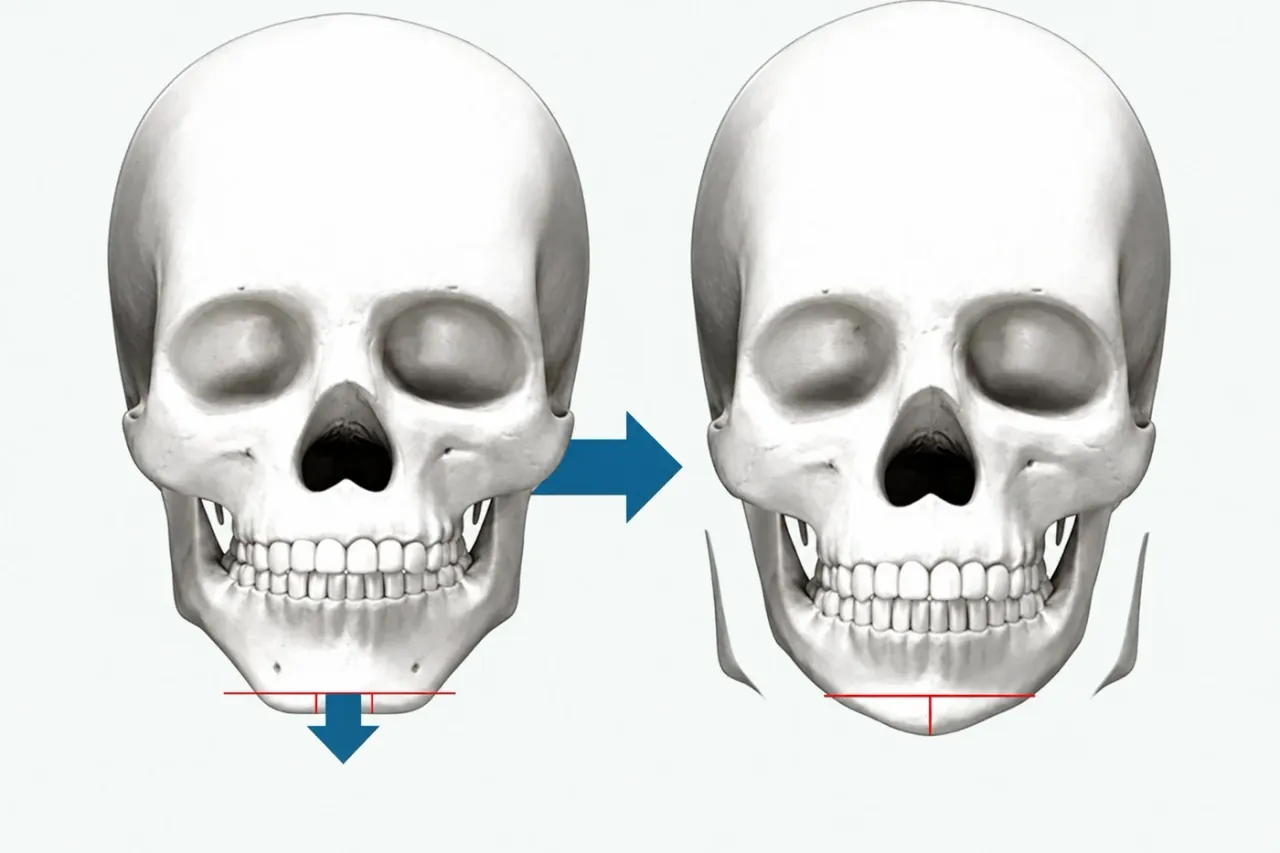
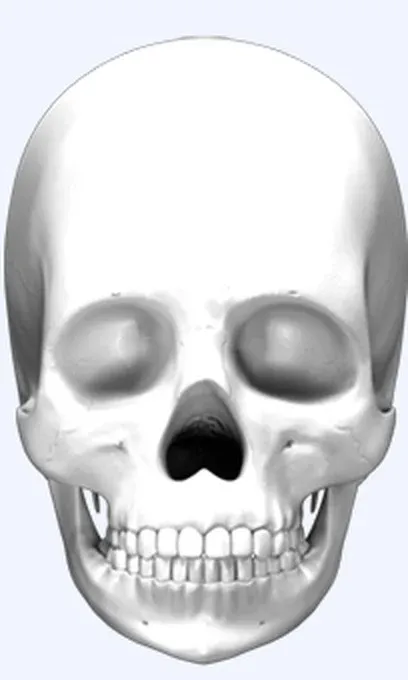
This method corrects both a blunt, wide U-shaped chin tip and the side jawline at the same time. It is effective for reducing the width of an angular Jaw Angle and blunt U-shaped chin tip to create a V-line, with significant frontal-view improvement. · 01 The front chin bone is cut in a T shape, and the center sections are brought together. · 02 The line from the jaw below the ears to the chin tip is tapered to create a V-line.
Method 2. Inverted V-Genioplasty
This is an effective method even when T-genioplasty cannot be performed because the nerve line is positioned low. The chin tip bone is resected in an inverted V shape to refine the chin tip and side jawline, reducing both the width and height of the jawline.
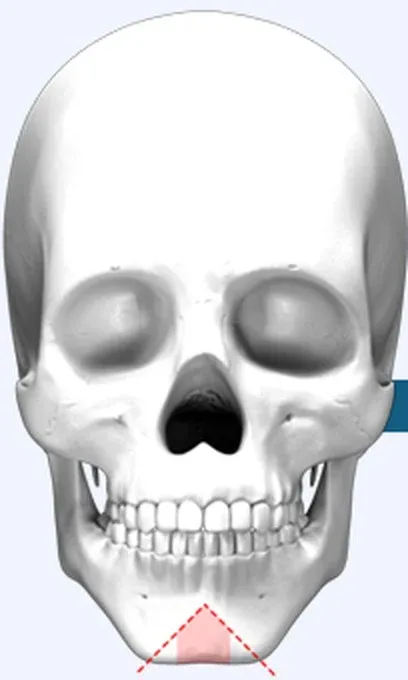
STEP 1. Inverted V Osteotomy
The chin tip bone is appropriately resected in an inverted V shape while avoiding the nerve line.
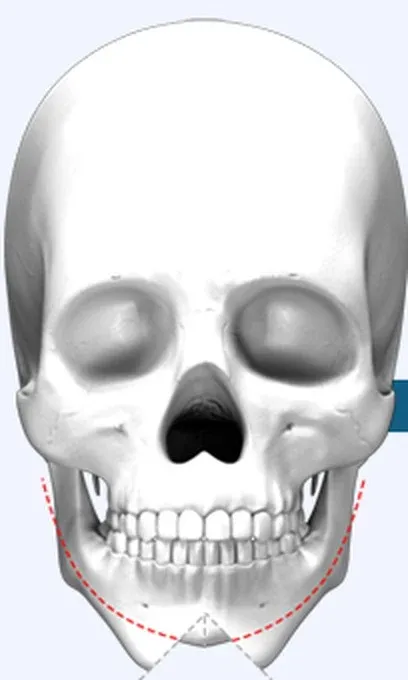
STEP 2. Bringing the Chin Tip Together
After removing the central bone segment, both sides of the chin tip are brought toward the center to reduce its length and width.
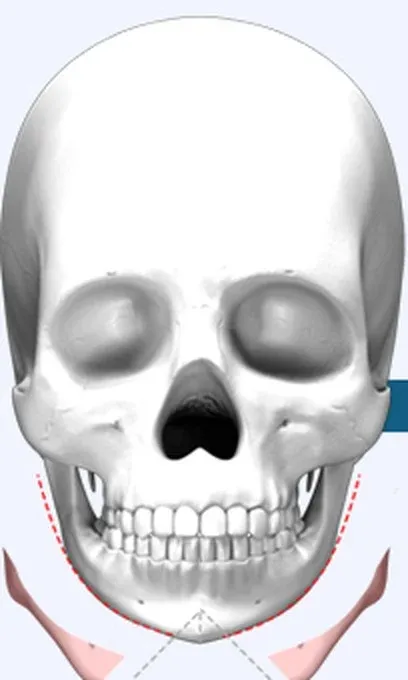
STEP 3. Side Jawline Resection
The remaining side jawline is smoothly resected.
STEP 4. Finishing
The area is contoured to prevent secondary angles or depressions.
Surgery Information
| Surgery time Approximately 1 to 1.5 hours | Anesthesia General anesthesia | Suture removal None | Hospitalization Same-day discharge or 1-night hospitalization depending on the patient's condition | Recovery period Daily activities can be resumed immediately
System for Safe Surgery
· A board-certified anesthesiologist provides individualized anesthesia care, from preoperative testing through recovery. · A one-on-one customized anesthesia method is selected through preoperative consultation according to each patient's constitution and characteristics. · Dantrolene, a treatment for malignant hyperthermia, is available to prepare for unforeseen situations. · University hospital-level surgical equipment, including cardiac defibrillators and blood pressure monitoring devices, as well as an emergency backup power generation system, are available. · Medical staff conduct regular rounds to monitor progress from awakening from anesthesia until return to daily life.
Pre- and Postoperative Precautions
After Surgery
· To prevent infection, use mouthwash after eating and every 3 hours. Do not rinse with water afterward. · Take prescribed medication three times a day, 30 minutes after meals. · Do not check the wound area with your tongue. · Avoid spicy, salty, hot, and irritating foods for about 1 month, and tough or hard foods for about 3 months. · Straws may be used after 1 month. · For 5 days after surgery, lie down with your upper body elevated at least 45 degrees, keeping your face upward and using a high pillow. · Use ice packs to reduce swelling for the first 5 days after surgery; beginning on day 6, use warm compresses. · Keep the facial compression bandage on for approximately 5 days. · Avoid alcohol, smoking, and saunas for 1 month after surgery (refrain from alcohol for 3 months if possible).
Please Note
The surgical method and results may vary depending on the individual’s condition and are determined through consultation with a specialist.
 OPERA PLASTIC SURGERY