
Upper Epicanthoplasty + Lateral canthoplasty + Lower Canthoplasty
from 1,700,000 KRW* VAT Not Included
This is Wonjin Plastic Surgery’s canthoplasty procedure designed to improve an obstructed-looking eye shape caused by epicanthal folds or a short horizontal eye width through upper canthoplasty, lateral canthoplasty, and lower canthoplasty. Upper canthoplasty adjusts the intercanthal distance by modifying the muscles and ligaments, while lateral canthoplasty extends the outer corner of the eye and uses double fixation to the periosteum to reduce reattachment. The surgical method is determined according to the condition of the eyes.
Surgery Overview
Open Eye is Wonjin Plastic Surgery's canthoplasty procedure that selectively performs upper epicanthoplasty and Lateral canthoplasty (Lower Canthoplasty) according to the condition of the eyes to widen constricted-looking eyes. Rather than a simple skin incision, it adjusts the Glabella distance through muscle and ligament adjustment and double fixation, reduces re-adhesion, and places scars on the inner side of the eye.

Bright and open, without a constricted appearance: Open Eye canthoplasty It creates clear, open-looking eyes while preserving a natural appearance. Upper epicanthoplasty can adjust the distance and shape between the eyes like Epicanthoplasty, while Lateral canthoplasty combined with Lower Canthoplasty lowers the outer corners to create a softer, more open eye shape.
Recommended for
· Those with epicanthal folds that make their eyes look constricted · Those with wide-set eyes · Those with pointed inner eye corners · Those whose eyes appear constricted due to short horizontal eye width · Those for whom Epicanthoplasty is difficult because their eyes are close together · Those whose upturned outer eye corners create a sharp appearance
Before-and-after photos
Clear, open-looking eyes while preserving a natural appearance
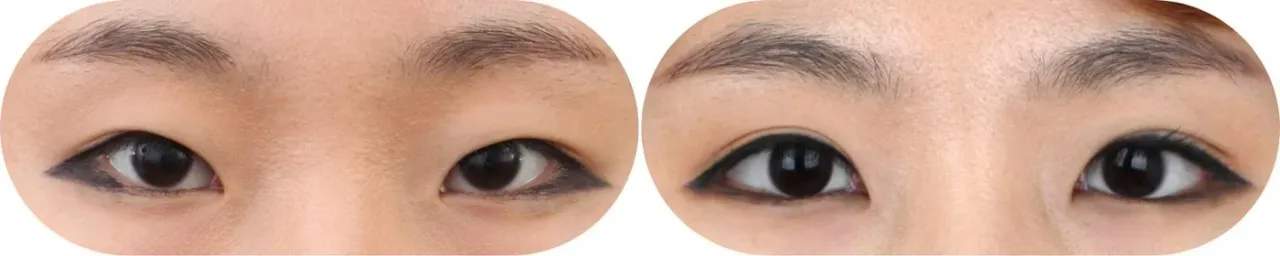
Before surgery → After surgery
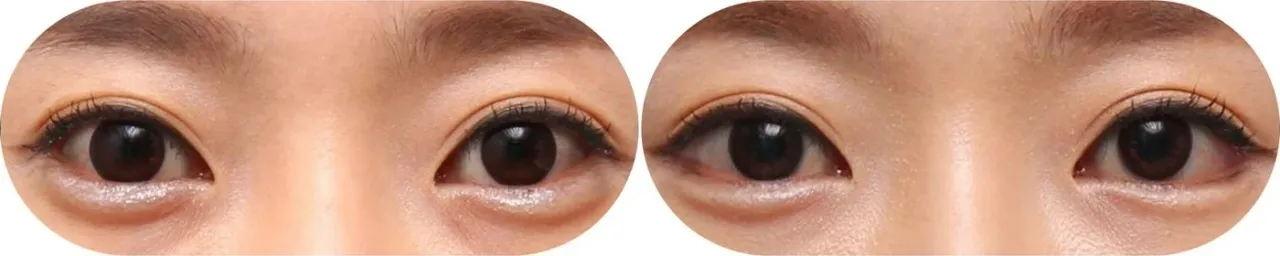
Before surgery → After surgery
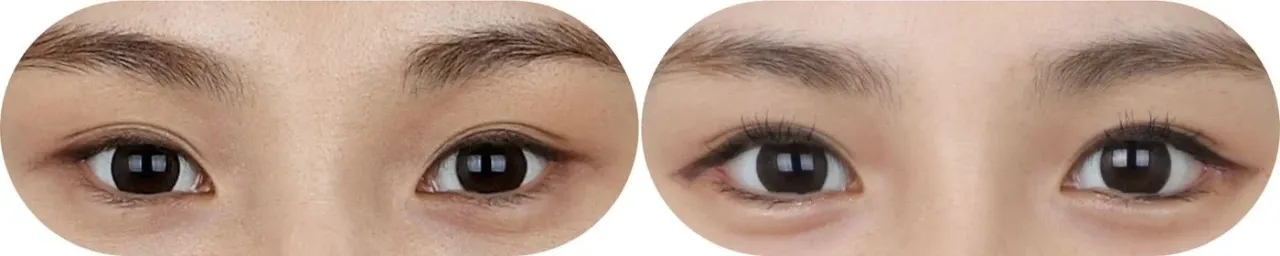
Before surgery → After surgery
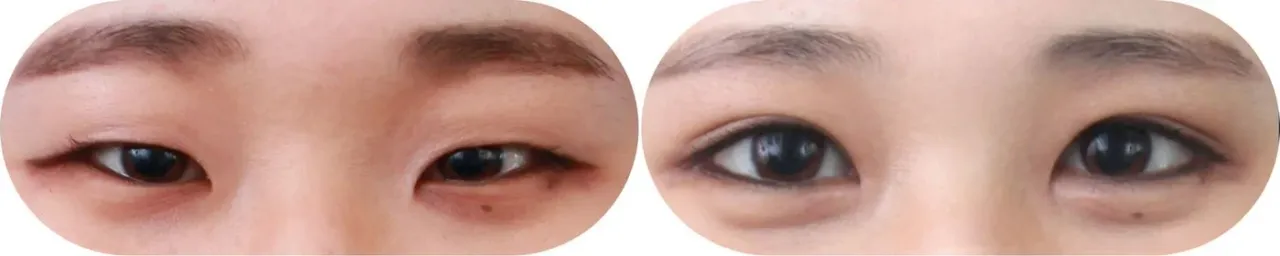
Before surgery → After surgery
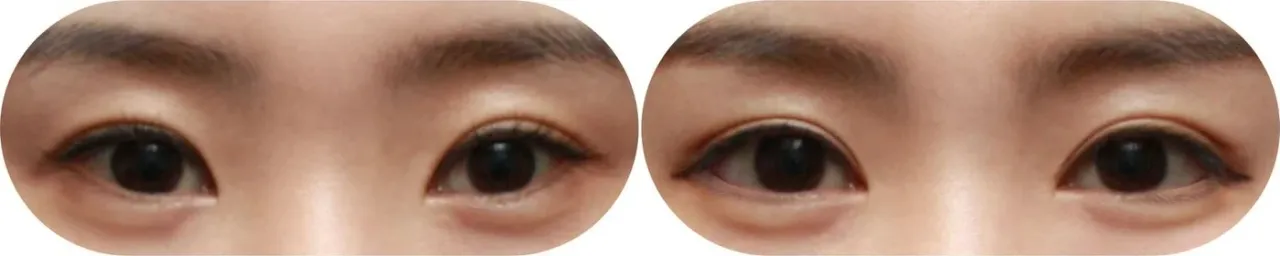
Before surgery → After surgery
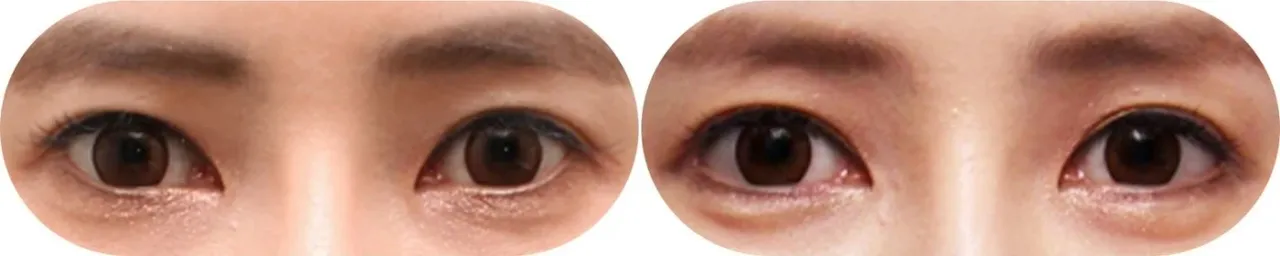
Before surgery → After surgery
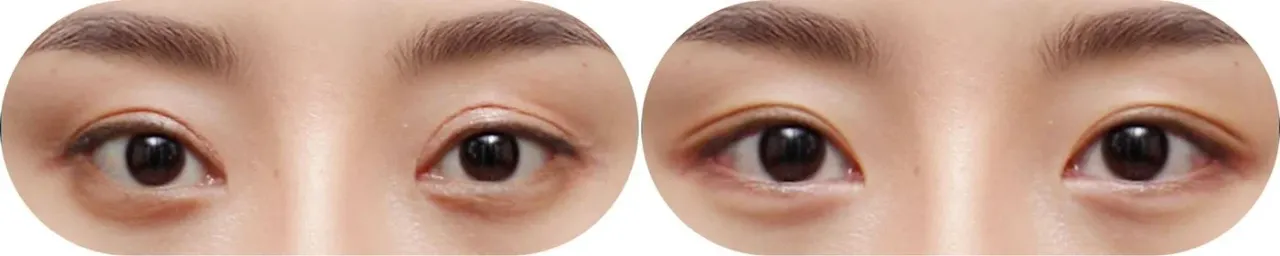
Before surgery → After surgery
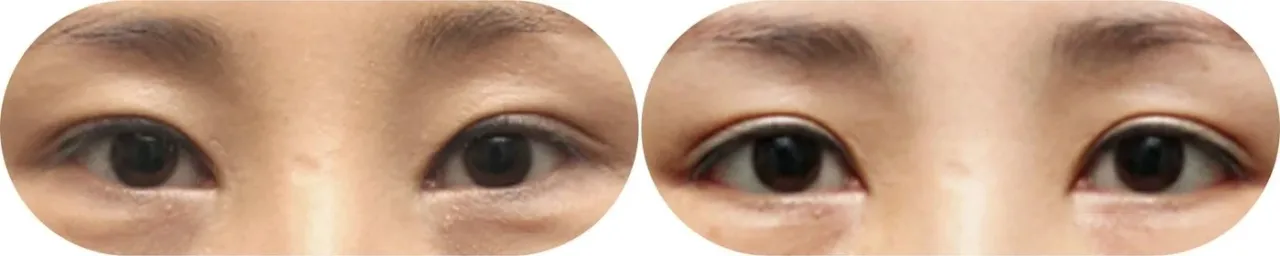
Before surgery → After surgery
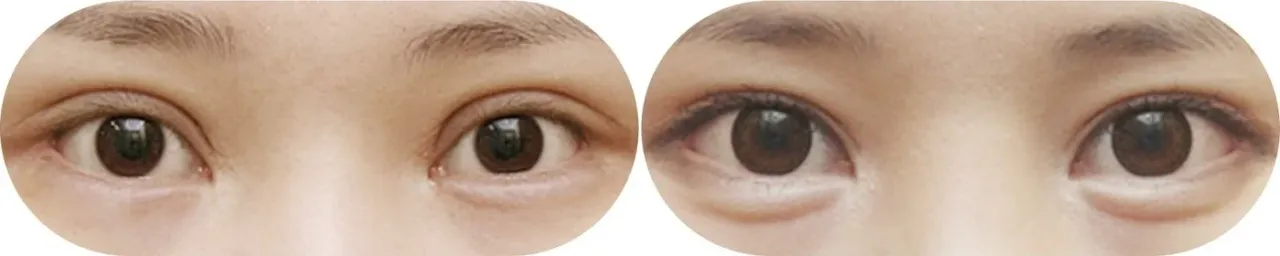
Before surgery → After surgery
Features of Wonjin Open Eye
This procedure creates clear, open-looking eyes while preserving a natural appearance and was introduced in a 2014 Severance Hospital live surgery lecture.
Point 1. Scars are barely visible
With minimal incisions and suturing on the inner side of the eye, scars are barely visible.
Point 2. Less swelling and fewer side effects
There is less scarring and swelling, with fewer side effects such as scleral show and conjunctival edema.
Point 3. Double fixation prevents re-adhesion
Double fixation results in almost no re-adhesion after surgery.
Point 4. Glabella distance adjustment
The Glabella distance can be adjusted as desired through muscle and ligament adjustment rather than a simple skin incision.

Open Eye Upper Epicanthoplasty
It addresses the underlying cause of epicanthal folds by adjusting the muscles and ligaments. The spacing can be adjusted as desired, and swelling, bruising, and scarring are reduced compared with conventional procedures, while maintaining a natural crescent-shaped eye contour. When performing Epicanthoplasty, upper epicanthoplasty is also secured to create a natural, open appearance extending to the inner eye line.
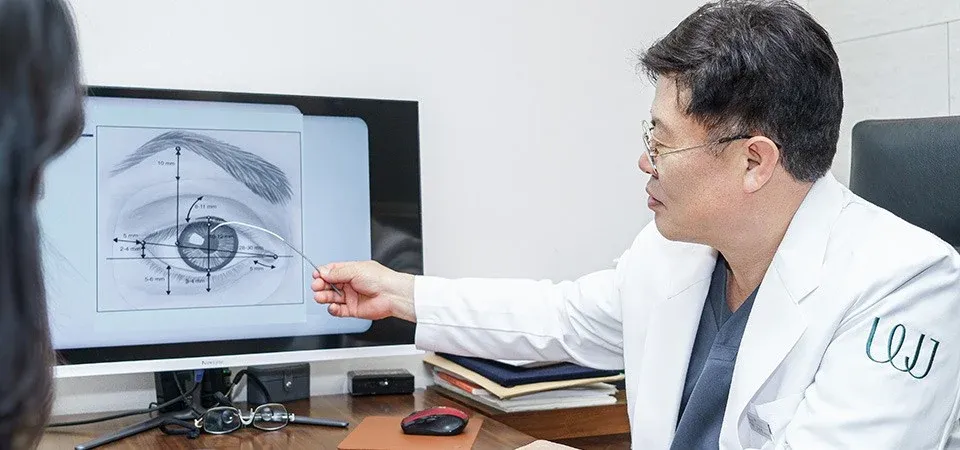
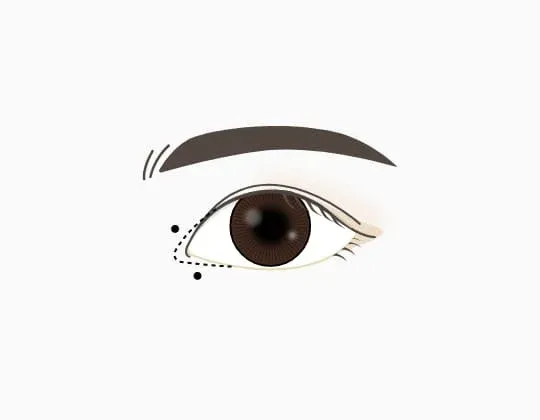
STEP 1. Assess eye structure
The eye structure and muscles are accurately assessed before surgery.
STEP 2. Expand the canthoplasty area
The obstructed area is expanded by addressing the cause of the epicanthal fold.
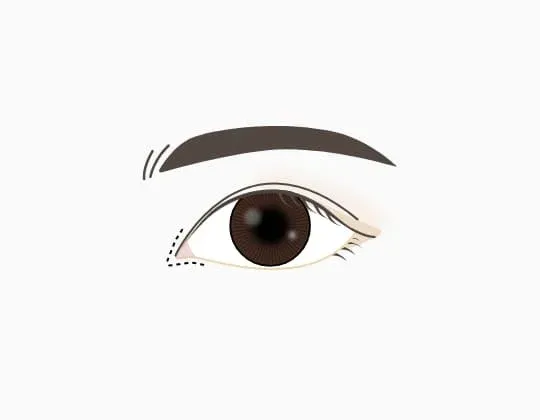
STEP 3. Improve eye shape
After assessing the shape of the hidden lacrimal caruncle, it is refined into an aesthetically pleasing shape.
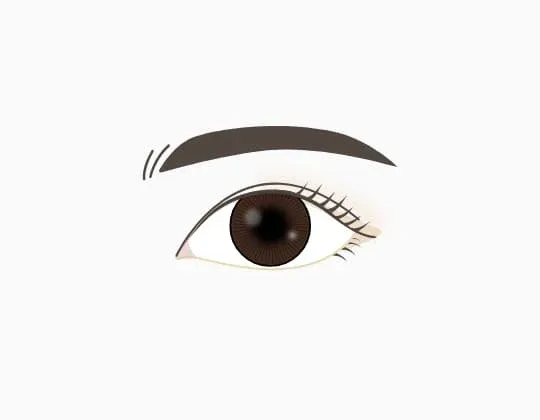
STEP 4. Adjust Glabella distance
The Glabella distance is adjusted as desired through muscle and ligament adjustment rather than a simple skin incision.
Open Eye Lateral canthoplasty
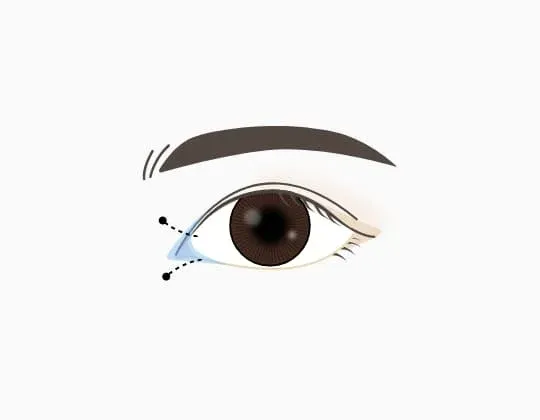
This procedure widens the horizontal eye width through an incision at the outer corner of the eye, creating a more open-looking eye shape. Upturned outer eye corners are lowered by changing the angle of the lower eyelid, creating clear, open-looking eyes. When the outer eye corners are upturned, combining it with Lower Canthoplasty provides a greater effect and can create bright, larger-looking eyes.
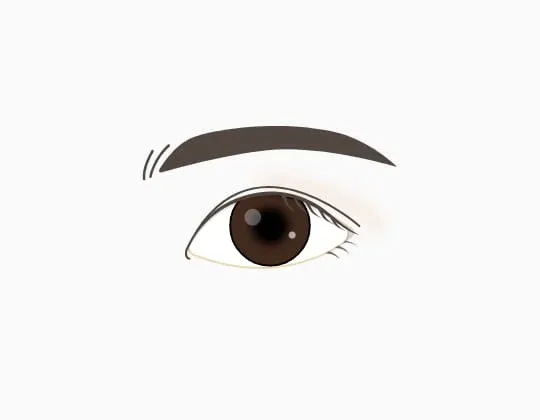
STEP 1. Assess eye structure
Before surgery, the structure of the eye, periosteum, and position of the orbit are assessed.
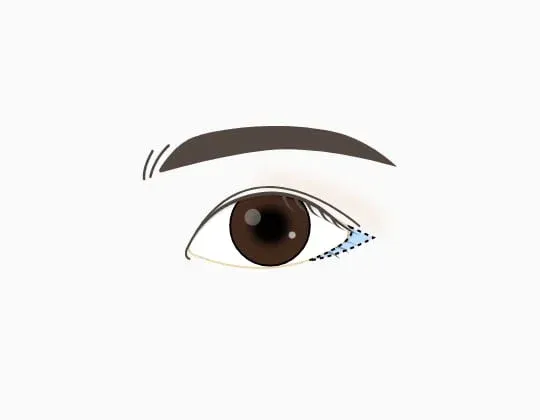
STEP 2. Expand the canthoplasty area
The outer eye corner is expanded through a fine incision.
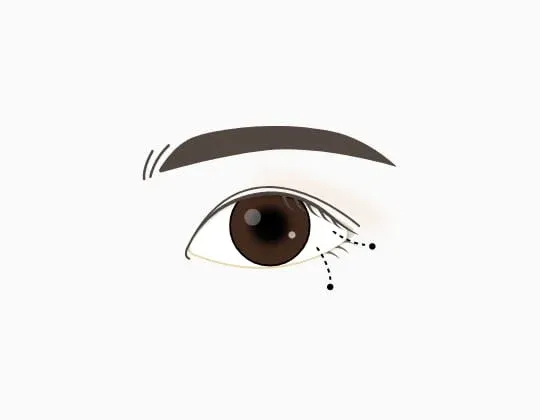
STEP 3. Double fixation
Double fixation to the periosteum results in almost no re-adhesion after surgery.
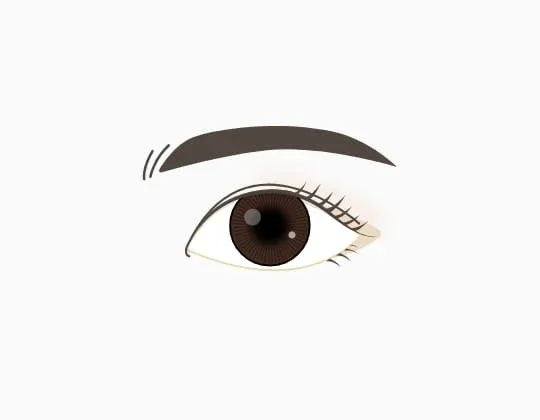
STEP 4. Conceal scar inside the eye
The procedure positions the scar toward the conjunctiva so that it is not visible.
Surgical Information
| Surgery duration: 40 minutes | Anesthesia: Short-term sedation anesthesia or local anesthesia | Hospitalization: Same-day discharge | Suture removal: After 5–7 days | Return to daily activities: Possible after 5–7 days | Follow-up visits: Within 5–7 days
Please note
Complications that may generally occur after surgery and treatment, including bleeding, infection, and inflammation, may vary in severity depending on the individual, so caution is required. Surgical methods and results may vary depending on the individual's condition and are determined through consultation with a specialist.
 WJ WONJIN PLASTIC SURGERY