Surgical Facelift
from 1,500,000 KRW* VAT Not Included
This is an incision facelift procedure that lifts and secures the lax SMAS fascial layer, soft tissue, and overlying skin simultaneously. While minimizing incisions within the hairline and in front of the ears, the fascia is widely dissected from the nasolabial folds to the chin line, aiming to improve overall facial sagging, including jowls, a drooping jawline, cheek fullness, and neck wrinkles.
Facelift is a Lifting procedure that lifts and secures the SMAS fascial layer, Soft Tissue, and outer skin at once, starting from the SMAS fascial layer where skin sagging begins. Through minimal incisions inside the hairline and in front of the ears, the fascia is widely dissected from the nasolabial folds to the chin line, securing the muscle and skin layers simultaneously. The effects tend to last longer than those of a Thread Lift.

Creates a natural, smooth facial contour by lifting the SMAS fascial layer and skin, which cause sagging.
Why is it emphasized that a Lift should begin with the SMAS fascial layer?
As we age, the loss of elasticity and skin sagging begin in the SMAS fascial layer beneath the skin. The SMAS fascial layer is a fibrous membrane intricately woven like a mesh in the space between the skin and muscles, and is also referred to as the facial expression muscle layer. With age, this SMAS fascial layer loses strength and becomes lax, causing the outer skin to sag as well. Therefore, no matter how much the outer skin is lifted, if the SMAS fascial layer remains unchanged, the treatment effect may be limited or the skin may soon return to its original sagging state. Facelift is a traditional method that lifts and secures the lax SMAS fascial layer, Soft Tissue, and outer skin all at once, and its effects tend to last longer than those of a Thread Lift. At Opera, we minimize incision areas along the hairline and use meticulous suturing to help ensure that scars are not visibly exposed.
Recommended for

· Those concerned about overall facial sagging, including jowls, a sagging jawline, cheek fullness, nasolabial folds, and neck wrinkles · Those who have not seen significant results from a Thread Lift · Those with an unclear boundary between the jaw and neck due to sagging skin · Those with severe sagging after double-jaw surgery or Facial Contouring Surgery · Those seeking more definitive, longer-lasting results
Facelift treatment area
“For longer-lasting and better Lifting results, we keep the incision range minimal while widely dissecting the fascia.” If the fascial dissection area is narrow, the lifting area is reduced, making it difficult to achieve the desired Lifting effect and shortening its duration. Therefore, Opera performs wide dissection from the nasolabial folds around the nose to the chin line, then lifts and secures the muscle and skin layers simultaneously for more long-lasting and definitive Lifting results.
Facelift procedure
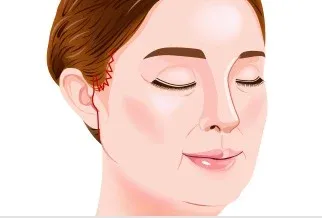
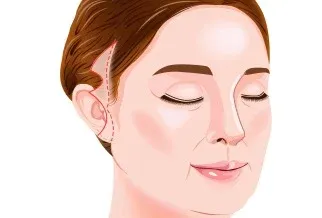
STEP 1. Lifting area design
The incision sites inside the hairline and in front of the ears are designed, then incisions are made.
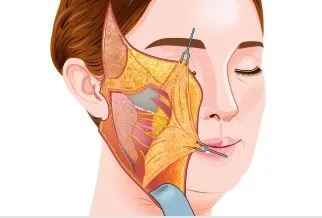
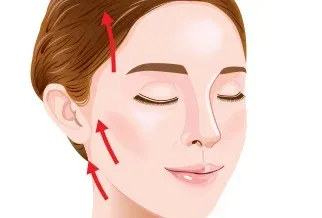
STEP 2. SMAS layer Lifting
After dissection, the lax SMAS layer, Soft Tissue, and subcutaneous fat layer are closely repositioned and lifted.
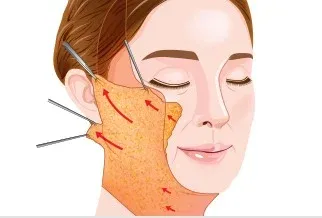
STEP 3. Secure the skin and muscles together
The remaining tissues and skin are naturally lifted, securing the skin and muscles together.
STEP 4. Excision and fixation
Excess skin and tissue are removed, and the incision sites are secured.
STEP 5. Finishing
Meticulous suturing is performed with sufficient time to minimize visible signs of surgery.
Surgery information
| Surgery time: Approximately 30 minutes | Anesthesia: Sedation anesthesia | Stitch removal: Approximately 7 days later | Hospitalization: None | Recovery period: Daily activities possible after 1 week
Pre- and post-operative precautions
After surgery
· Swelling or bruising around the eyes may occur during the first two days after surgery and will gradually subside afterward. · Apply cold compresses for about 4 days after surgery. Place gauze or a thin towel underneath to prevent water from contacting the surgical area. · Exercise other than light walking, as well as public baths, steam rooms, and saunas, may be resumed 3 weeks after surgery. A simple shower is possible from the following day. · When sleeping, elevate your head with 2–3 pillows and sleep on your back. · Take only the pain relievers and antibiotics prescribed by the hospital, and avoid aspirin-based medications. · If you experience severe warmth or swelling after returning home, contact the hospital at any time.
Please be sure to note
The surgical method and results may vary depending on individual conditions and are determined through consultation with a specialist.
 OPERA PLASTIC SURGERY