Surgical Facelift
from 800,000 KRW* VAT Not Included
This is R&Wood Plastic Surgery’s signature lifting procedure, in which the retaining ligaments are dissected below the SMAS layer (sub-SMAS) to reposition sagging facial tissues from the deep layer. It is indicated for concerns such as midface sagging, nasolabial folds, marionette lines, and loss of jawline definition. When necessary, additional high-SMAS manipulation is performed to address the anterior cheekbones and lower face as well. Director Minhee Ryu personally performs only one procedure per day.
Procedure Overview
A deep plane facelift is a Lifting procedure that releases retaining ligaments beneath the SMAS layer (sub-SMAS) and repositions sagging facial tissues from the deeper layers. It is indicated for concerns such as midface sagging, nasolabial folds, Marionette Lines, and loss of jawline definition. When necessary, high-SMAS manipulation may be added to address the anterior cheeks and lower face as well.
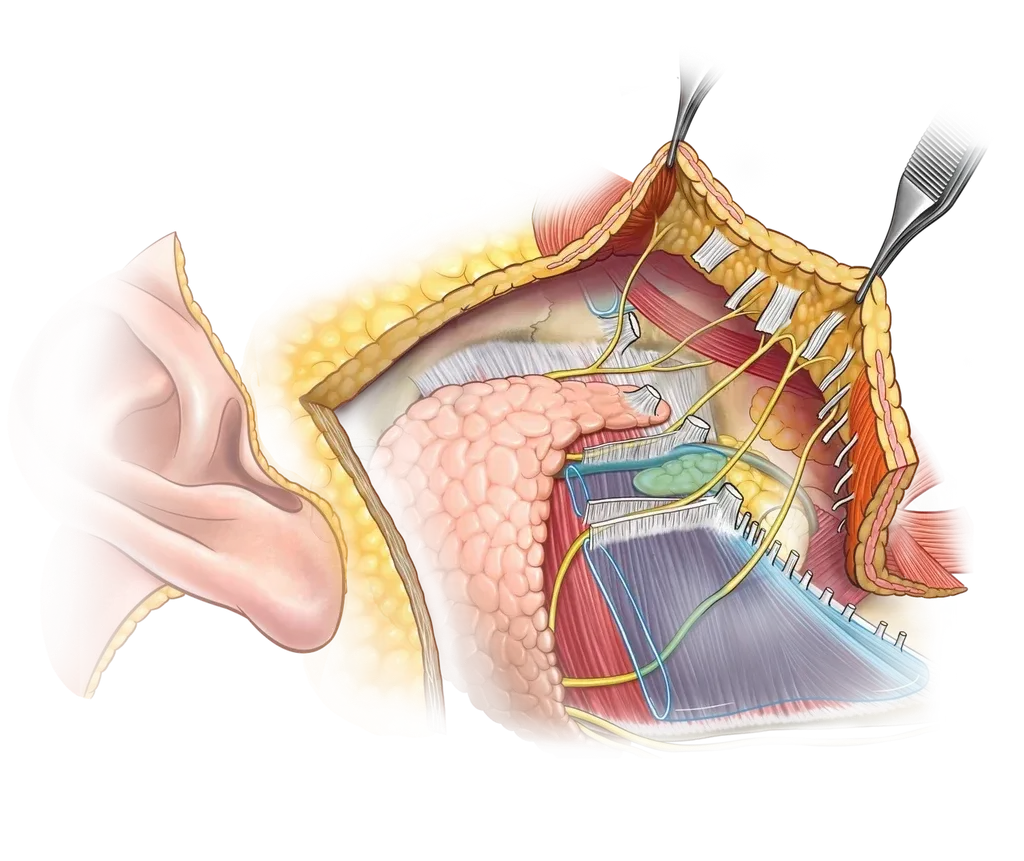
RNW Plastic Surgery's Deep Plane Facelift Rather than relying solely on pulling the skin, this procedure releases retaining ligaments beneath the SMAS layer and repositions deep tissues. The degree of change varies depending on each individual's facial anatomy and skin and tissue condition. · Improvement of midface sagging · Reduction of nasolabial folds and Marionette Lines · Improvement of jawline definition · Improvement of lower-face laxity
Recommended for
· Those concerned about midface (cheek) sagging · Those with more pronounced nasolabial folds and Marionette Lines · Those with loss of jawline definition · Those with skin laxity in the lower face · Those in good overall health with realistic goals
Why RNW Deep Plane Facelift Is Special
Point 1. Tissue Repositioning in the Sub-SMAS Layer
Selected retaining ligaments are released beneath the SMAS layer (sub-SMAS) to reposition tissues in the deep layers. While the goal is not to rely solely on skin tension, this does not guarantee invisible scars or safer, longer-lasting results.
Point 2. Combined High-SMAS Manipulation
When necessary, high-SMAS manipulation is added to address the anterior cheeks and lower face together. The extent of dissection and lifting direction vary according to each individual's facial anatomy.
Point 3. Surgical Schedule Limited to One Procedure per Day
Only one deep plane facelift is performed per day.
Point 4. Advance Review of Incisions, Risks, and Costs During Consultation
During the consultation, facial anatomy, health condition, medications, nicotine exposure, and previous treatment and surgical history are reviewed, after which the planned incision sites, risks, and costs are explained.
Before-and-After Cases
These photographs show the same patients treated at RNW Plastic Surgery. They are cases in which multiple procedures were performed together, and results may vary depending on the individual's condition.
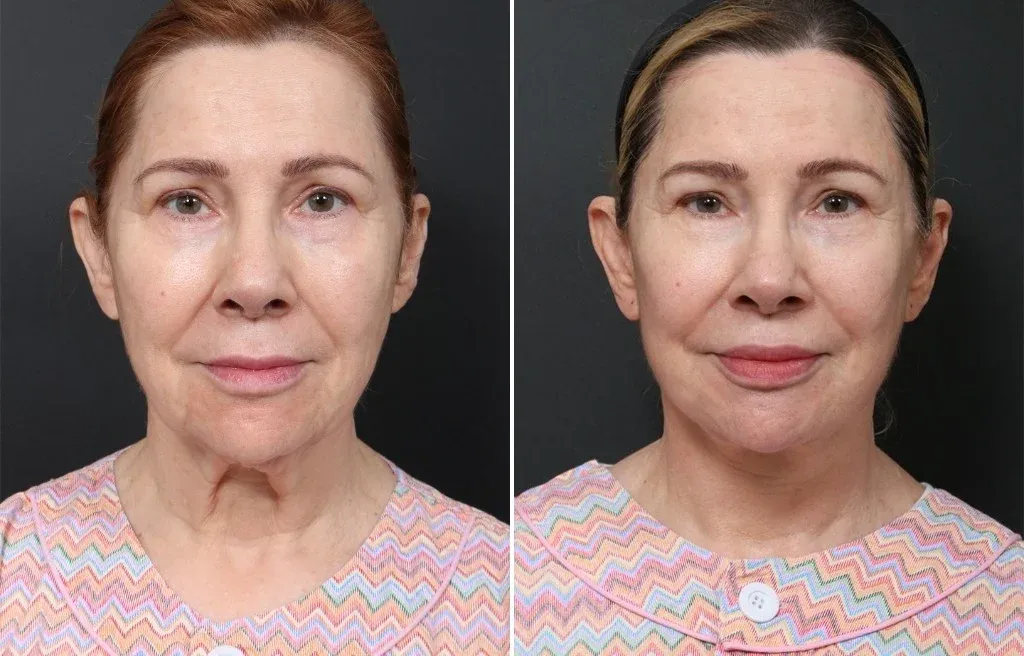
Case 01 · Front View Before → 1 year after surgery Combined procedures: Deep plane facelift · Neck lift · Double chin surgery · Fat Grafting
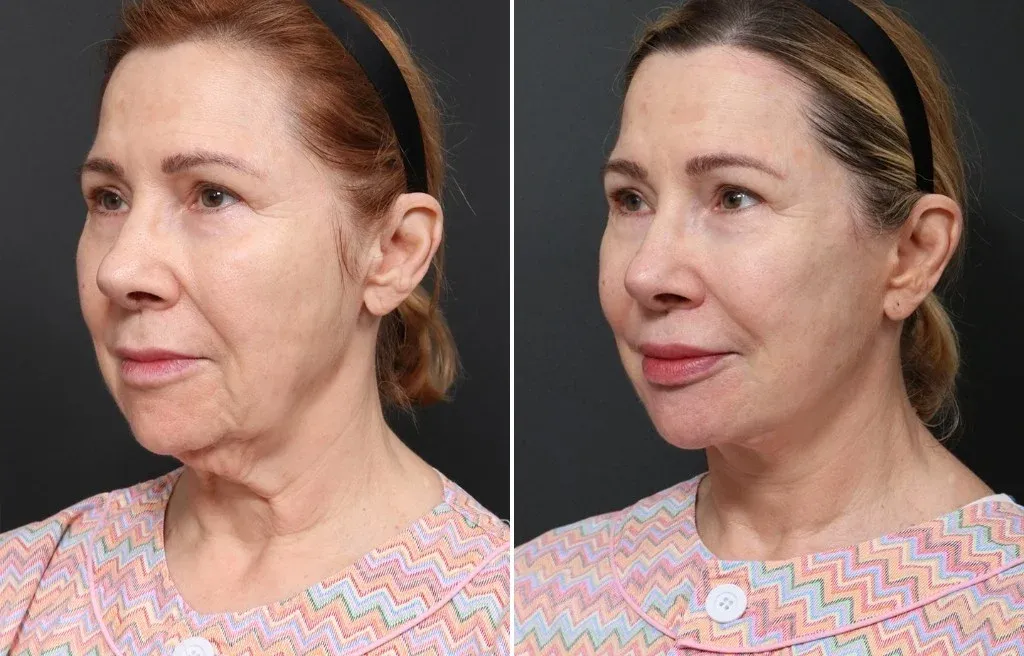
Case 01 · 45-Degree View Before → 1 year after surgery Combined procedures: Deep plane facelift · Neck lift · Double chin surgery · Fat Grafting
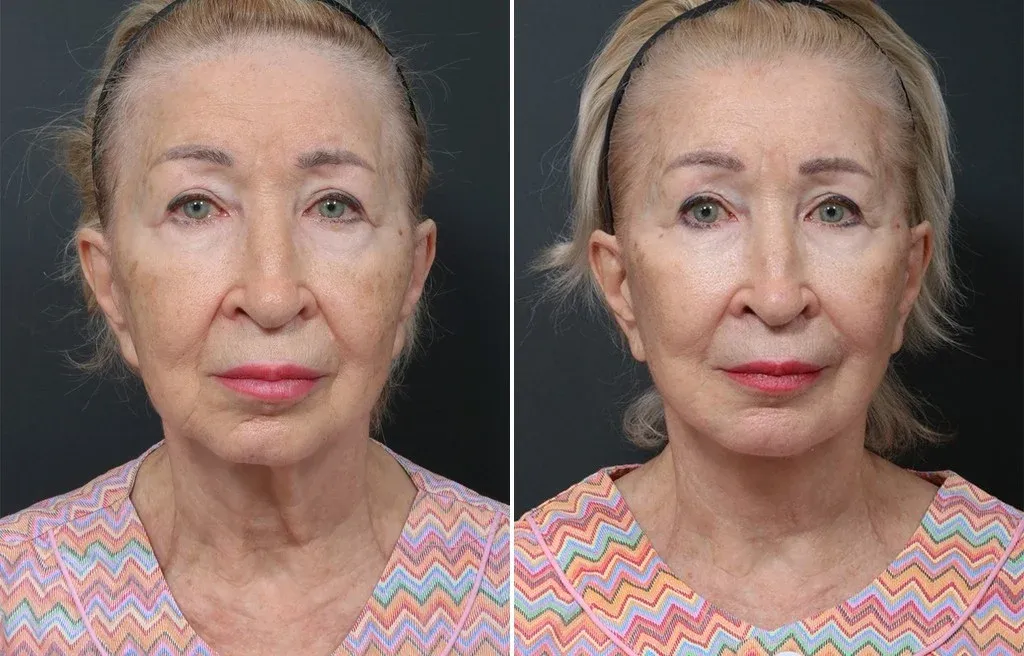
Case 04 · Front View Before → 1 year after surgery Combined procedures: Revision surgery deep plane facelift · Neck lift · Endoscopic brow lift · Fat Grafting
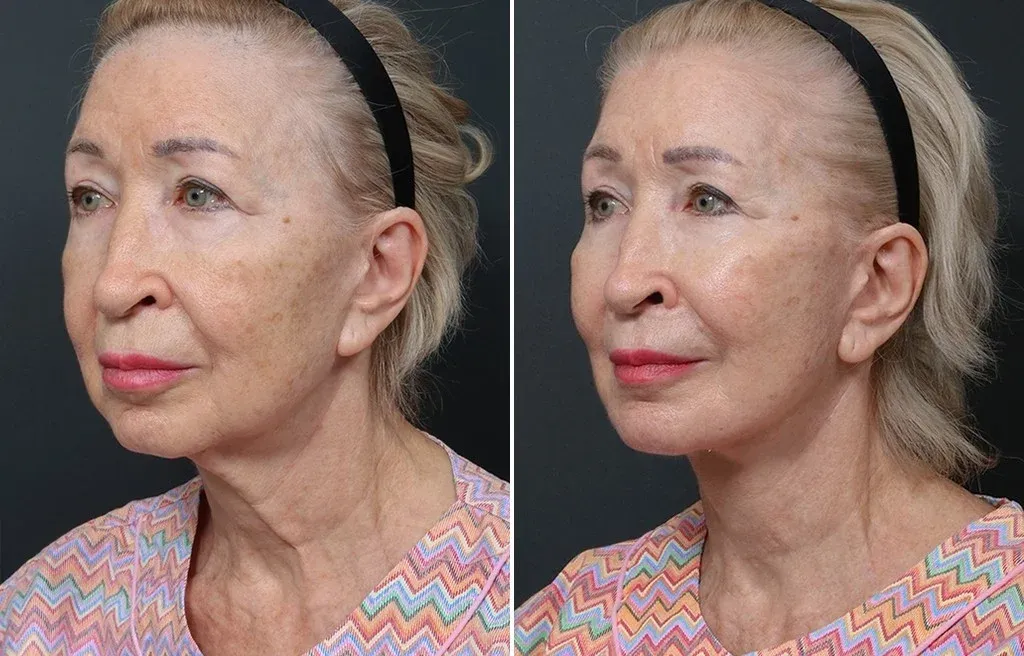
Case 04 · 45-Degree View Before → 1 year after surgery Combined procedures: Revision surgery deep plane facelift · Neck lift · Endoscopic brow lift · Fat Grafting
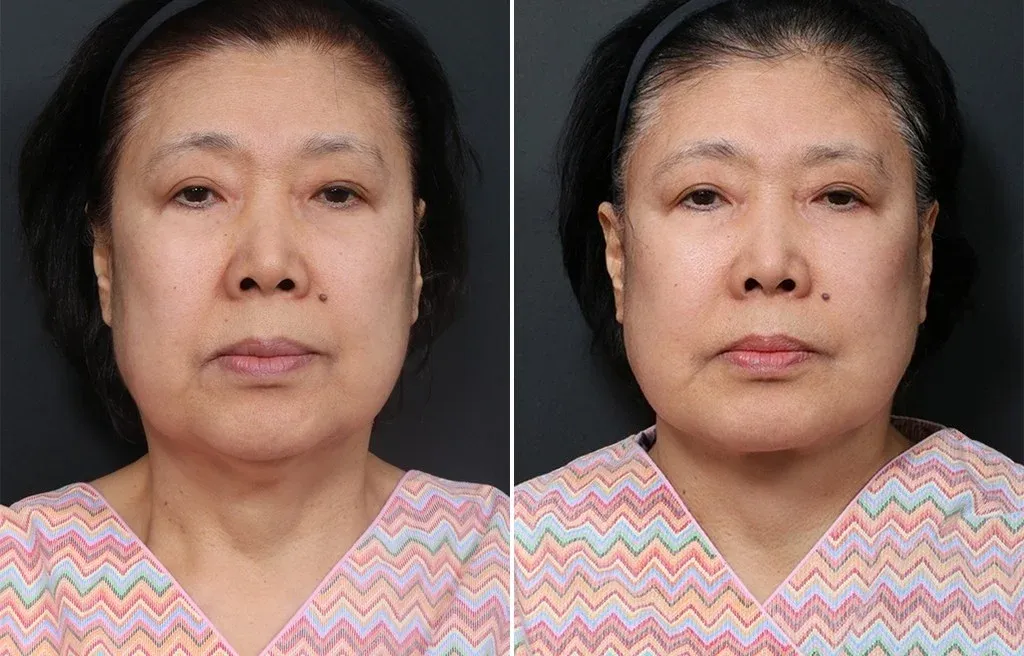
Case 13 · Front View Before → 1 month after surgery Combined procedures: Deep plane facelift · Neck lift · Double chin surgery · Fat Grafting
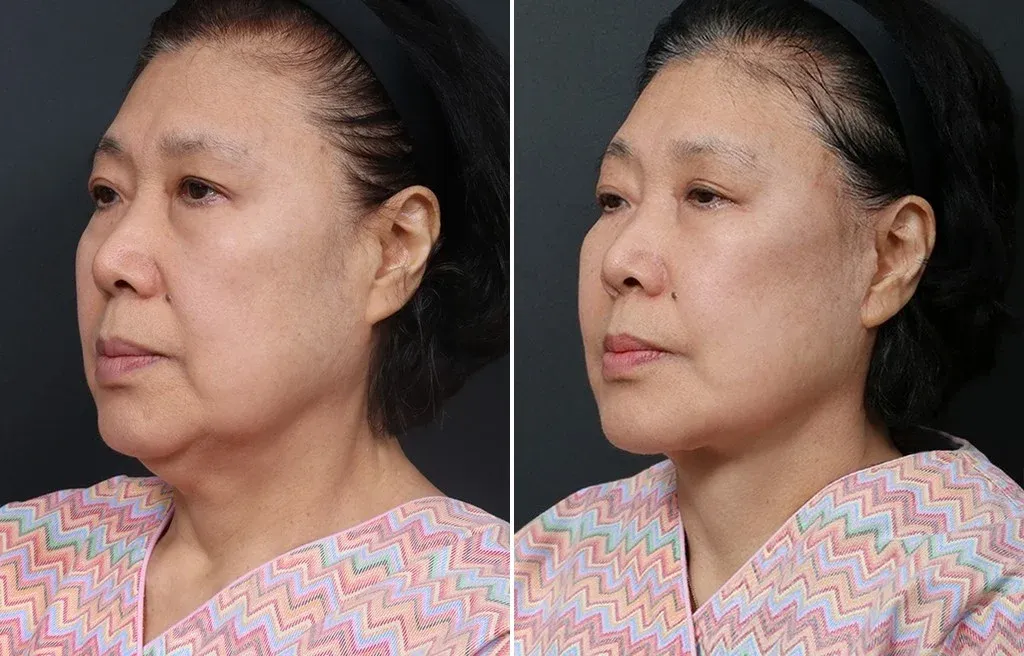
Case 13 · 45-Degree View Before → 1 month after surgery Combined procedures: Deep plane facelift · Neck lift · Double chin surgery · Fat Grafting
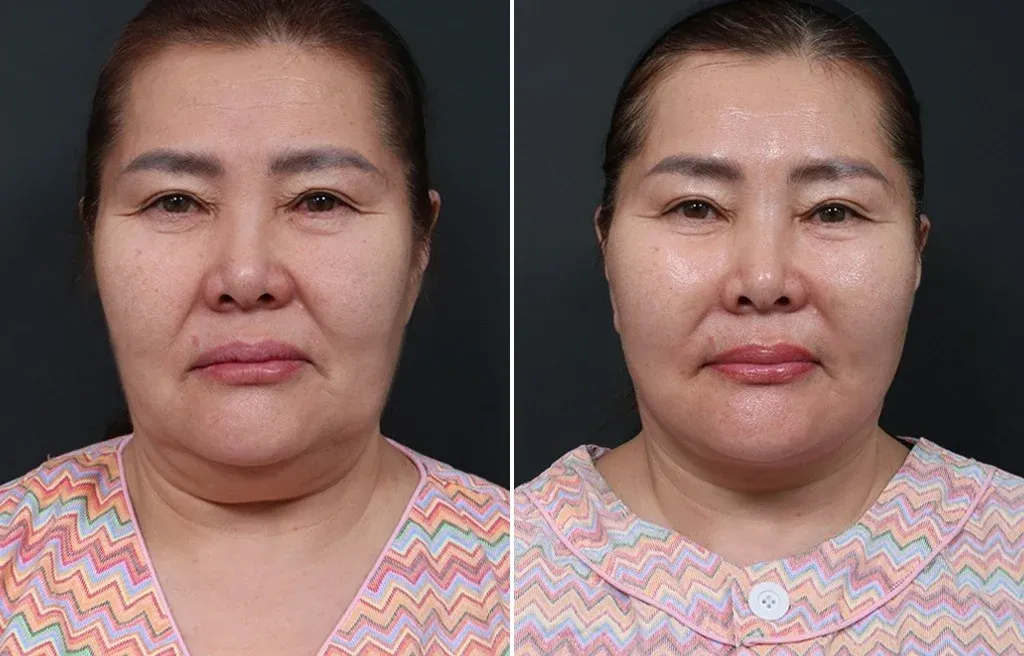
Case 14 · Front View Before → 20 days after surgery Combined procedures: Deep plane facelift · Neck lift · Double chin surgery · Endoscopic brow lift · Stem Cell-enriched Fat Grafting
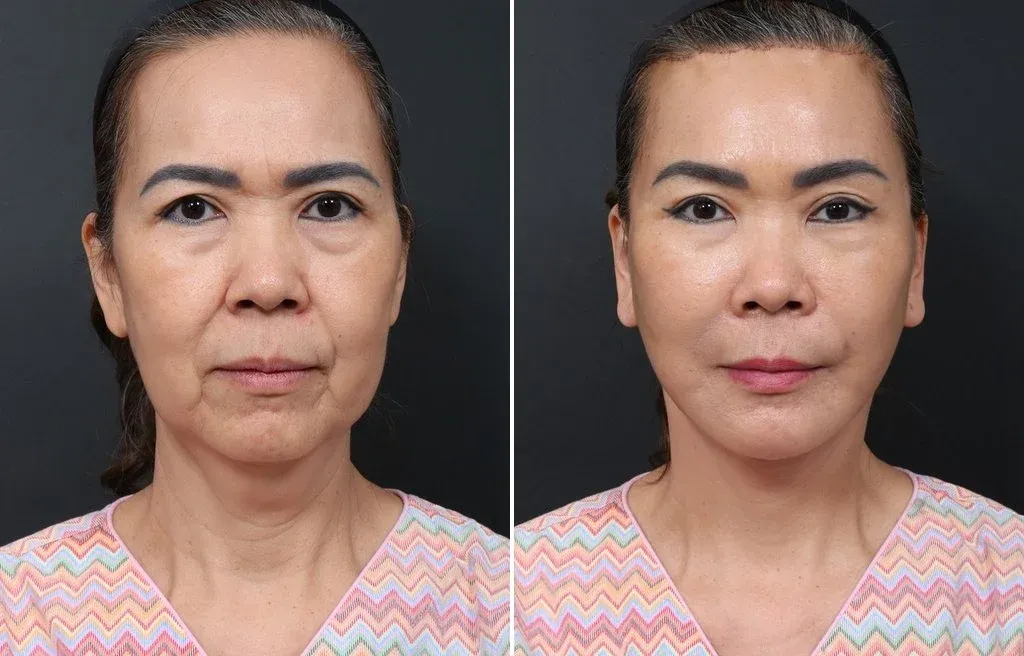
Case 12 · Front View Before → 10 days after surgery Combined procedures: Deep plane facelift · Neck lift · Coronal forehead lift · Stem Cell-enriched Fat Grafting
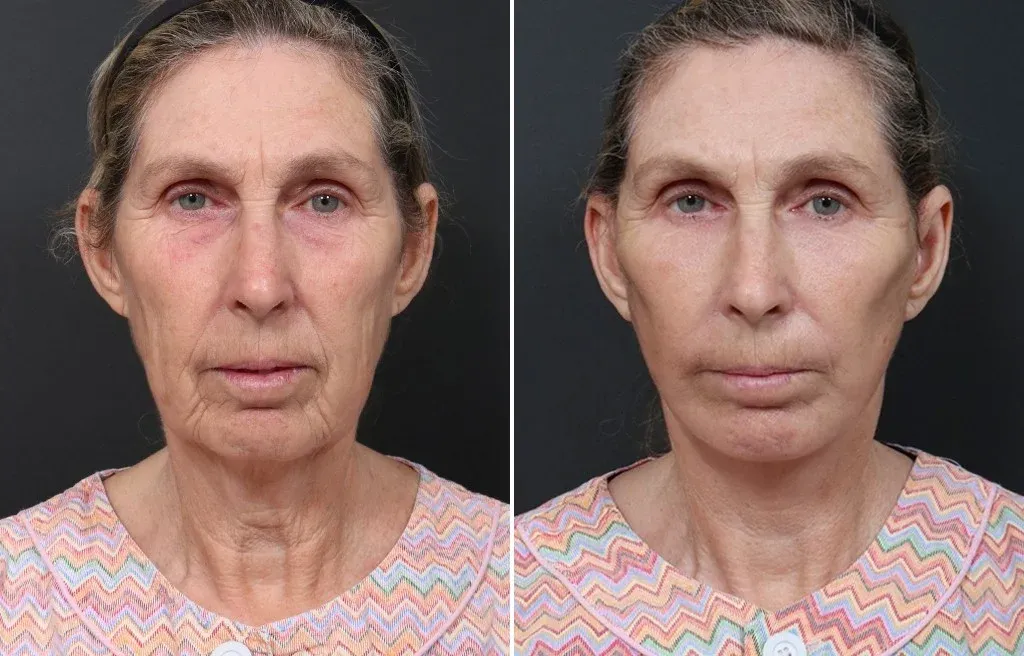
Case 03 · Front View Before → 14 days after surgery Combined procedures: Deep plane facelift · Neck lift · Double chin surgery · Fat Grafting
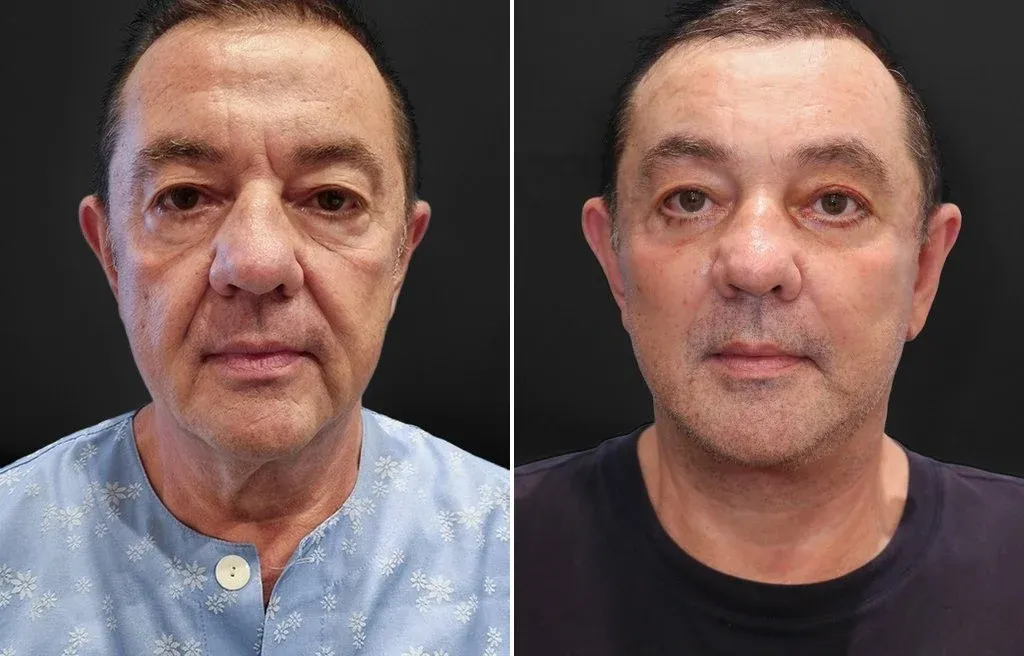
Case 08 · Front View Before → 1 month after surgery Combined procedures: Deep plane facelift · Neck lift · Double chin surgery · Endoscopic brow lift · Lower blepharoplasty · Fat Grafting
Surgical Procedure
STEP 1. Consultation and Facial Anatomy Assessment
Facial anatomy, health condition, medications, nicotine exposure, and previous treatment and surgical history are reviewed to establish an individualized plan.
STEP 2. Incisions Along the Hairline and Around the Ears
According to the treatment plan, incisions are made along the Temple hairline and the natural contours around the ears.
STEP 3. Sub-SMAS Layer Dissection
Selected retaining ligaments are released beneath the SMAS layer.
STEP 4. Tissue Repositioning (High-SMAS Manipulation if Needed)
Deep facial tissues are repositioned, and when necessary, high-SMAS manipulation is used to address the anterior cheeks and lower face together.
STEP 5. Suturing and Compression
The incision sites are sutured, and compression garments are worn. Sutures are removed on the seventh day after surgery.
Surgical Information
| Anesthesia: Sedation anesthesia (in collaboration with an anesthesiologist) | Recovery period: 7–10 days | Suture removal: 7 days after surgery
Pre- and Postoperative Precautions
Before Surgery
· Current medications, nicotine exposure (smoking), and previous treatment and surgical history are reviewed during the consultation. · Depending on your health condition, medications, nicotine exposure, and other factors, surgery may be postponed or may not be recommended.
After Surgery
· Wearing compression garments for approximately 3 days is generally recommended, although instructions may vary depending on recovery progress. · Sutures are removed on the seventh day after surgery, and care may continue through the tenth day depending on recovery progress. · Swelling and bruising may obscure the results for several months, while firmness, tightness, reduced sensation, scars, and hair changes may persist for more than one year. · Patients traveling from a distance are advised to return home only after the medical team confirms that travel is appropriate.
Please Be Sure to Review
Side effects such as swelling, bruising, infection, hematoma, asymmetry, facial nerve injury, hair loss, scarring, and reduced sensation may occur after deep plane facelift surgery. Complications that may generally occur after surgery, including bleeding, infection, and inflammation, can vary in severity by individual and require caution. Eyebrow position, eyelids, fine lines, pores, pigmentation, scars, and photoaged skin are not directly corrected by this surgery. The surgical method and results may vary depending on the individual's condition and are determined through consultation with a specialist.
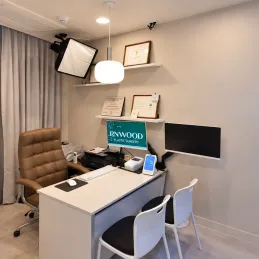 RNWOOD PLASTIC SURGERY