
Square Jaw Reduction
from 6,000,000 KRW* VAT Not Included
This procedure refines the jawline by combining, according to the individual’s condition, long curved osteotomy extending smoothly from the angular area beneath the ear to the anterior chin, cortical bone resection, deep buccal fat removal, and masseter muscle reduction. It considers not only the bone but also the surrounding soft tissues.
Surgery Overview
This procedure refines the jawline by combining long-curve osteotomy, which gently extends from the angled area below the ear to the chin, with cortical bone reduction, Buccal Fat Removal, and masseter muscle reduction tailored to each individual’s condition. Only the necessary amount of bone is safely osteotomized, while Soft Tissue contributing to the Jaw Angle is also reduced.

Recommended for
· Those whose angled jaw below the ears makes the Face appear larger · Those whose jaw appears wide even from the front · Those with a curved, uneven jawline due to Buccal Fat · Those whose developed masseter muscle makes the jaw appear large and angular

We design and perform surgery using the optimal combination that considers everything from bone to fat and muscle. An angular jaw cannot be refined to the desired degree by shaving bone alone. Only the necessary amount of bone should be osteotomized, while Soft Tissue such as the outer cortical layer of the jawbone, Buccal Fat, and masseter muscle should also be reduced to achieve the desired slimmer contour.
Features of View Jaw Angle Surgery
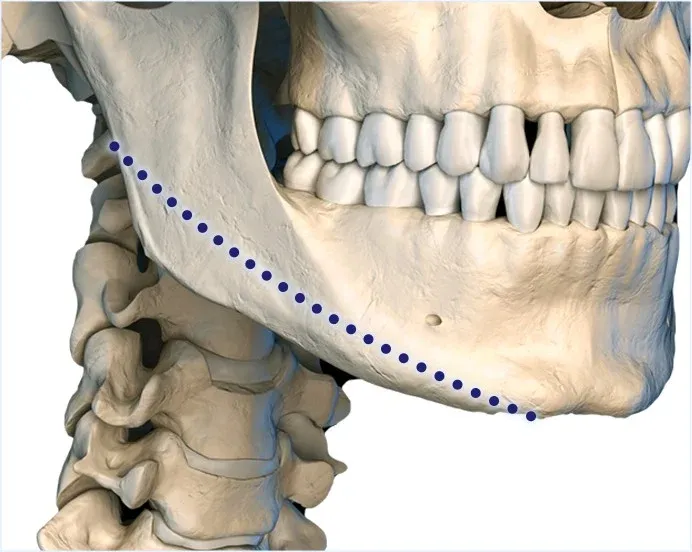
Point 1. Long-curve Jaw Angle Resection
By gently resecting along a long curve from the angled jaw below the ear to the chin, issues such as secondary angles and step deformities can be reduced, creating the expectation of a slimmer line from the side profile to the front view.
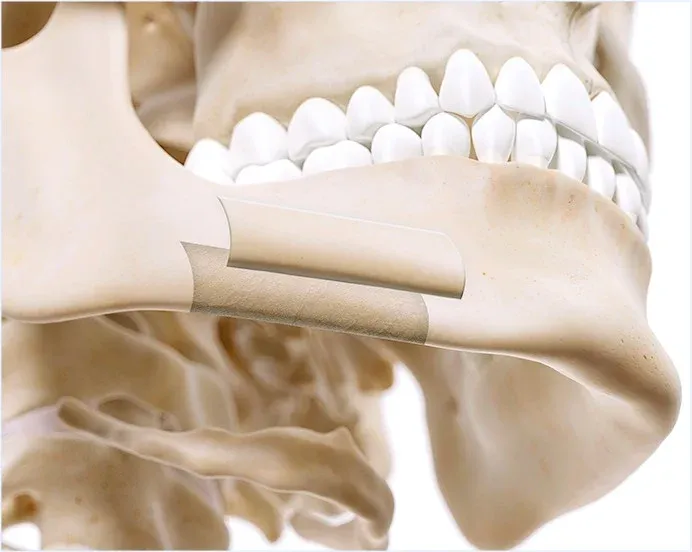
Point 2. Cortical Bone Resection
Thinning the outer cortex of the jawbone reduces its thickness, creating a slimming effect when viewed from the front. The resected area and chin are smoothly contoured for a natural result.
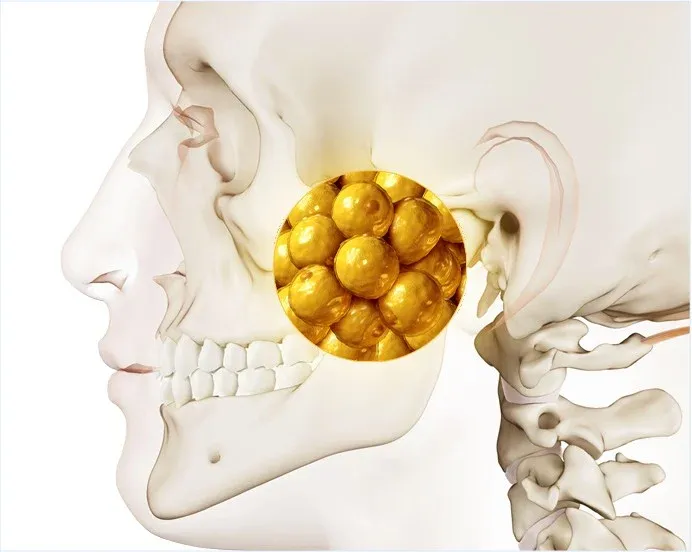
Point 3. Buccal Fat Removal
When the jawline is curved and uneven due to Buccal Fat, located at the lowest part of the cheek fat pads, improvement can be difficult through dieting alone. In such cases, only the Buccal Fat is selectively removed.
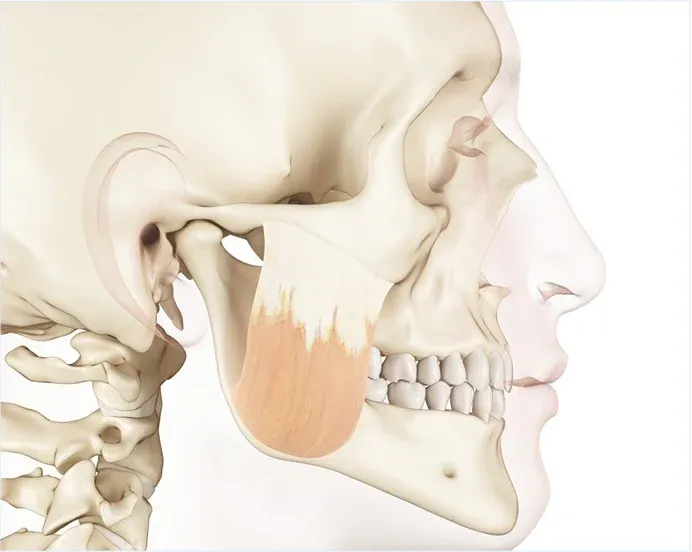
Point 4. Masseter Muscle Reduction
When the masseter muscle is excessively developed, the Face may still appear large and angular even after bone reduction. The causative masseter muscle is selectively reduced to decrease jaw volume.
Surgical Method at a Glance
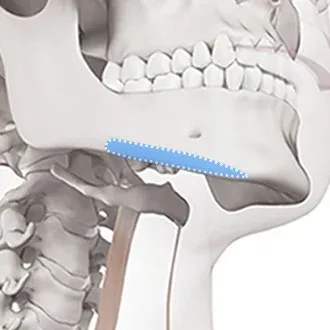
Gentle resection from below the ear to the chin
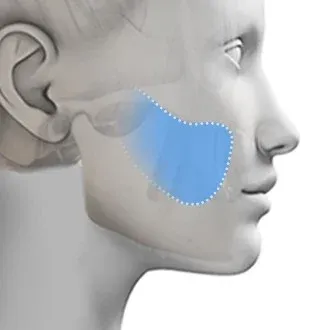
Reduced bone thickness through cortical bone resection
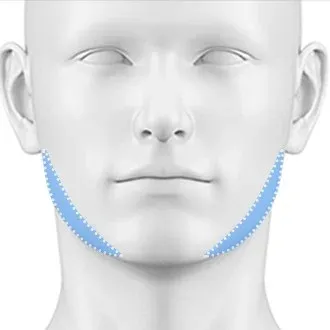
Buccal Fat Removal area
View Facial Contouring Surgery System
Detailed 3D-CT and X-ray Analysis
High-resolution 3D-CT and X-rays are used to precisely analyze facial features, bone shape and size, nerve pathways, and the characteristics of muscle and fat tissue, allowing for careful surgical planning. Without unnecessary resection, reduction is performed only as needed within a safe range while considering the Face's natural proportions.
Safety-First System
· An anesthesiology and pain medicine specialist on site, with dedicated one-on-one anesthesia care · Special treatment medication for malignant hyperthermia (dantrolene) available for initial emergency response · Real-name surgeon responsibility system from consultation through surgery and follow-up · In-house inpatient ward · One-on-one rounds by the operating surgeon and specialized nursing staff available 365 days a year
Before and After Photos

Before surgery → 3 months or more after surgery

Before surgery → 6 months after surgery
Recovery Progress 1

Before surgery

1 month after surgery

3 months after surgery

8 months after surgery
Recovery Progress 2

Before surgery

3 months after surgery

5 months after surgery

6 months after surgery
Surgery Information
| Surgery duration: 1 hour to 1 hour 30 minutes | Anesthesia: General anesthesia | Hospitalization: Same-day discharge or 1 day | Follow-up visits: Approximately 2 visits | Return to daily activities: After 5–7 days
Postoperative Care
· 3 days after surgery: Disinfection and progress check, shampoo care · 1 week after surgery: Cleansing and exfoliation, care to support Skin Regeneration and swelling relief, follow-up CT scan · 2 weeks after surgery: Cleansing, radiofrequency or ultrasound care to support recovery and reduce swelling · 1–6 months after surgery: Regular progress checks Hyperbaric oxygen chamber treatment, prescriptions and gargling, swelling injections, and Omega Light therapy may also be provided. After 3D-CT and X-ray imaging, the dedicated attending physician reviews progress one-on-one. * The care program and CT scan schedule may change depending on the individual’s condition.
Please Note
Before-and-after photos are published with the patient’s consent. Surgical results and recovery periods may vary depending on individual circumstances, and the surgical method is determined through consultation with a specialist.
 VIEW PLASTIC SURGERY