SMILE LASIK
From 3,500,000 KRW/ surgery
With a biconvex lenticule, safe and precise lenticule removal even for low corrections! A procedure suitable for various curvatures, advantageous even for patients with large pupils
Surgery Overview
GS SMILE SURGERY
SMILE Surgery, created in 2006 with ZEISS's 175 years of optical technology
What is SILK LASIK?
SILK LASIK is an abbreviation for Smooth Incision Lenticule Keratomileusis, a procedure that uses the lowest energy currently available to deliver laser treatment as smooth and delicate as silk. ※ Like SMILE (Small Incision Lenticule Extraction), SILK LASIK is a procedure involving a minimal Cornea incision.
SILK LASIK (SILK SMILE) CHECK POINTS
✓ With a bi-convex design, reduced Dry Eye Disease
✓ With ultra-precise 1 μm laser spots, creates a smooth Lenticule surface
✓ With low-energy pulses, minimizes tissue stress
✓ With a post-docking alignment system, precise alignment of the visual axis and Astigmatism axis
✓ Even for flat-shaped Corneas, stable docking is possible
✓ With electronic Cornea fixation, reduced pressure applied to the Cornea ↓
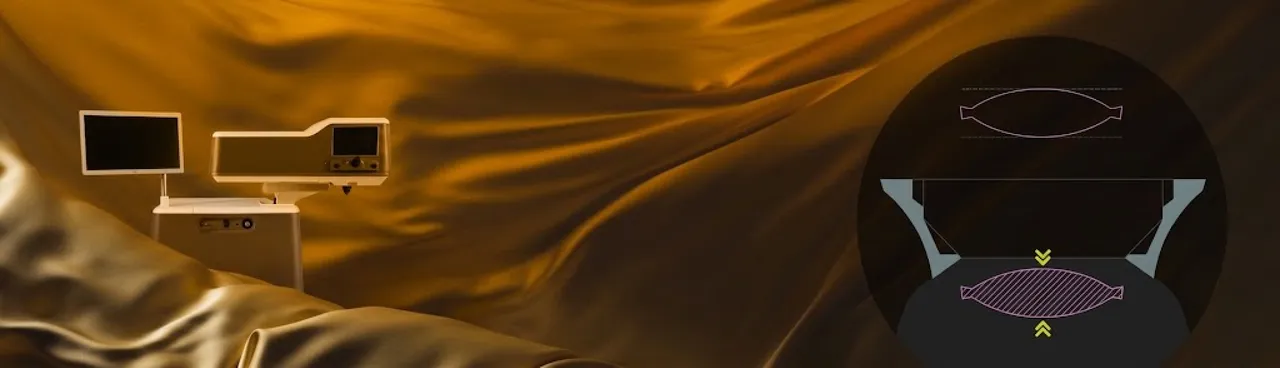
✓ The BI-CONVEX design, with equal lengths on the upper and lower surfaces of the Lenticule, minimizes nerve damage and reduces Dry Eye Disease symptoms!
✓ Bi-Convex Design (convex lens shape)
Low-energy pulse technology with ultra-fine 1 μm spots
A small 1 μm lasermore precisely ablates the Cornea stroma, enabling smooth Lenticule removal.
In addition, it uses the lowest energy among currently available lasers to reduce thermal damage and minimize damage to surrounding tissue, enabling faster recovery and reducing side effects.
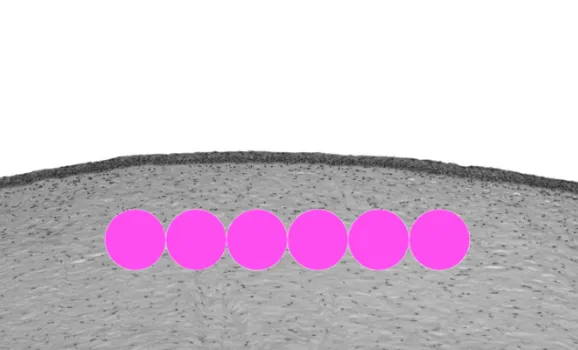
Conventional Laser Spots
Using high laser energy, may cause damage to Cornea nerves or surrounding tissues이 있을 수 있음
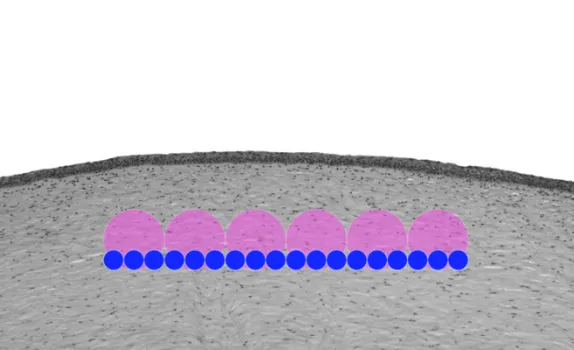
SILK Laser Spots
Using low laser energy to minimize damage to Cornea nerves or surrounding tissues 손상 최소화
Conventional Lenticule LASIK vs. SILK LASIK
Compared with conventional Lenticule LASIK, SILK LASIK forms a Cornea flap beneath the Lenticule, reducing damage to Cornea nerves and further lowering the likelihood of postoperative Dry Eye Disease.
Conventional Lenticule LASIK: Cornea stromal separation above the Lenticule
SILK LASIK: Cornea stromal separation below the Lenticule
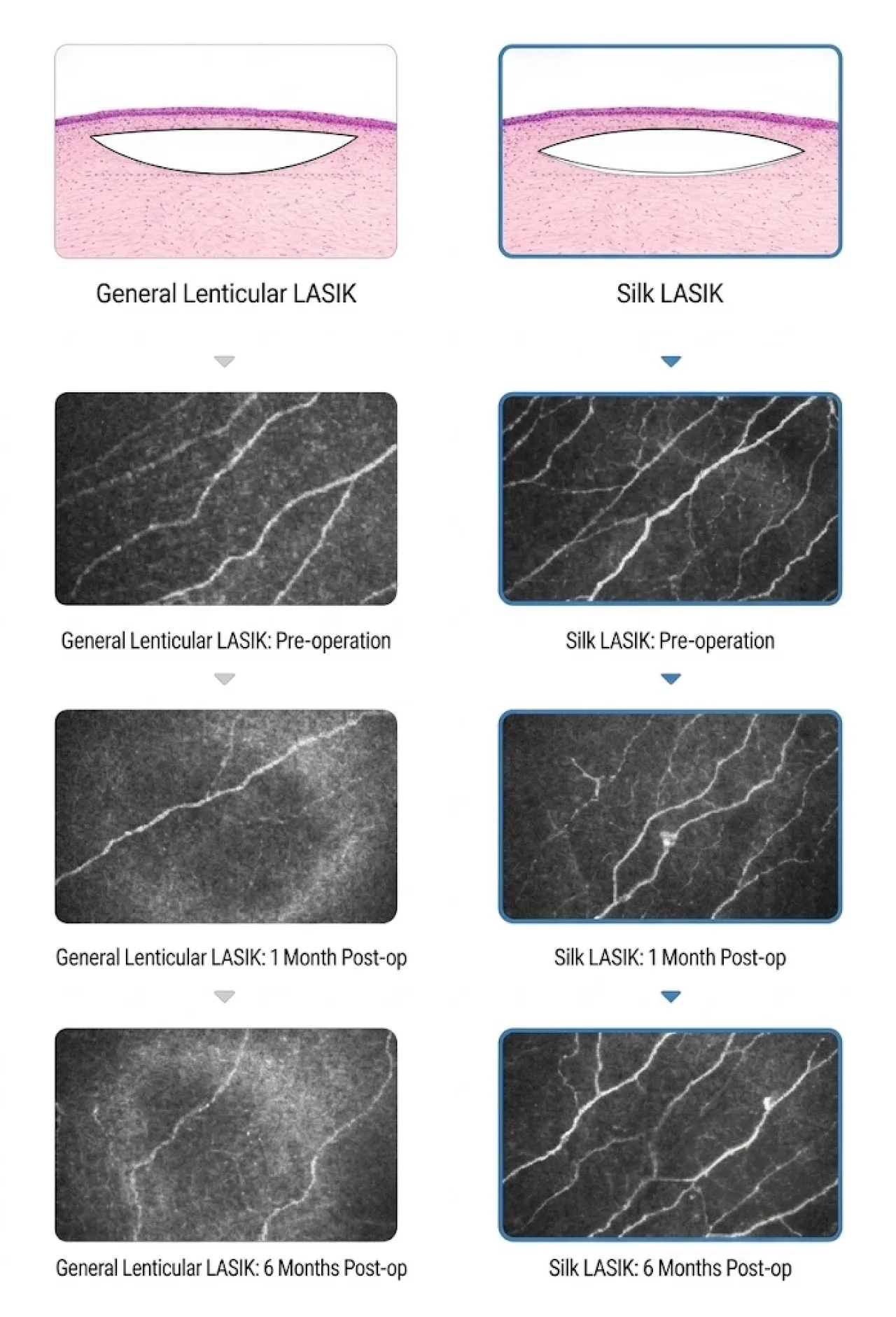
SILK LASIK (SILK SMILE): Fast visual recovery and high patient satisfaction!
Achieved 1.0 vision the day after surgery! 89%
Satisfied with postoperative recovery speed! 98%
Achieved 1.0 vision after 6 months! 96%
More predictable, precise alignment system for the visual axis & Astigmatism axis
SILK LASIK enables precise alignment even after suction fixation, providing clear vision optimized for each individual. Its post-docking precision alignment system adjusts the visual axis and Astigmatism axis to reduce error and provide enhanced vision correction results.
❶ Adjustment of the patient's visual axis after suction fixation
✓ Precise alignment tailored to the visual axis, which determines quality of vision!
✓ Clear vision through surgery customized to each individual's visual axis!
✓ Reduced surgery time to minimize fatigue for both physician and patient!
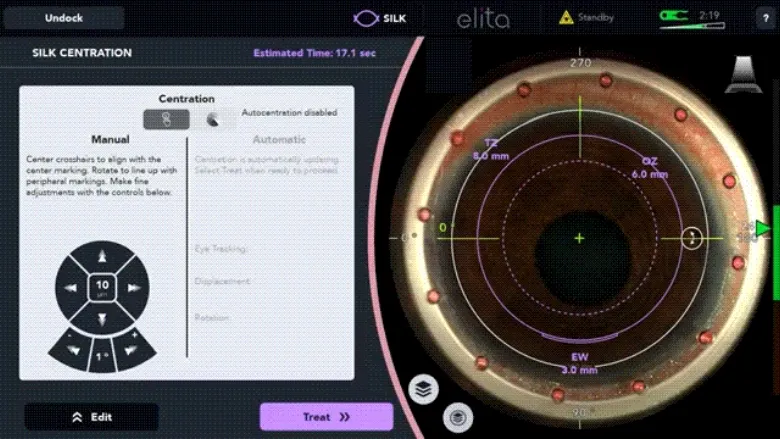
Provides the best results by centering the visual axis that determines quality of vision!
❷ Adjustment of the patient's Astigmatism axis after suction fixation
✓ Real-time display of the Astigmatism axis position measured in advance during the examination!
✓ Surgery proceeds after rotation to align with the Astigmatism axis following suction fixation!
✓ Reduces Astigmatism axis errors for clearer surgical outcomes!
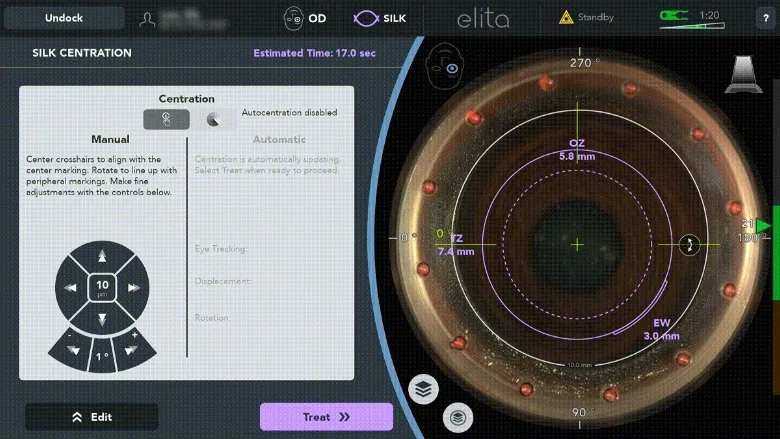
The [Automatic Astigmatism Axis Alignment System] provides optimal results for patients with Astigmatism!
Auto-Z & thickness compensation technology for enhanced safety and precision!
SILK LASIK enhances precision by recognizing the thickness of the glass docked to the eye during each procedure and compensating for variations. In addition, the Auto-Z Technology system accurately predicts the stromal separation depth and detects even subtle eye movements to provide safe, high-quality surgery.
✓ Detects and compensates for subtle height differences that may occur during suction docking!
✓ Detects Z-axis movement during surgery and automatically adjusts with uniform pressure for precise laser delivery!
✓ Enables precise separation of the Amount of Corneal Ablation based on examination data!
Detects subtle variations in the thickness of the glass surface docked to the eye, adjusting laser depth and position for customized surgery!
Detects the patient's Pupil movement along the Z-axis in real time during surgery,enabling even more precise laser delivery!
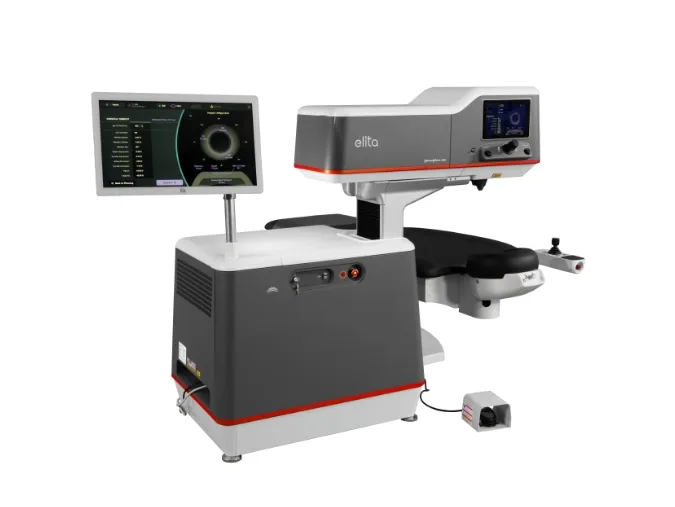
ELITA
AMERICA IS BACK! Ultra-precise laser developed by Johnson & Johnson
The laser system with the lowest energy currently available!
Frequently Asked Questions
Q. What are the advantages of SILK LASIK's bi-convex Lenticule design?
A. Unlike the Lenticule used in conventional SMILE Surgery, which has one flat surface and one convex surface (plano-convex), the Cornea Lenticule created during SILK LASIK is designed with a bi-convex shape, with both the front and back surfaces convex. As a result, the curvatures of the upper and lower surfaces are matched to prevent wrinkles or microfolds from forming inside the Cornea after Lenticule removal. This reduces higher-order aberrations and promotes Cornea nerve regeneration, improving postoperative visual clarity and stability with respect to Dry Eye Disease. In addition, because the Lenticule is removed while preserving as much of the strong Bowman layer at the top of the Cornea as possible, structural stability of the Cornea is high and nerve damage is reduced.
Q. What are the advantages of SILK LASIK's low laser energy?
A. The femtosecond laser used in the ELITA laser system for SILK LASIK uses very low energy, approximately 40 nJ per pulse. Low-energy pulses applied to Cornea tissue reduce keratocyte activation within the Cornea stroma, significantly reducing inflammatory responses and microdamage. This suppresses haze formation and may support faster healing and visual recovery after surgery.
Q. What are the advantages of SILK LASIK's distinctive Bridgeless spot separation method?
A. A distinctive feature of SILK LASIK is bridgeless laser spot separation, which enables the Lenticule to be dissected as smoothly as possible. This precision gave rise to the procedure name SILK (Smooth Incision Lenticule Keratomileusis), reduces surgical manipulation, swelling, and inflammation, and improves visual recovery.
Q. Are there any features that enhance precision during SILK LASIK?
A. An automatic alignment technology called Auto-Z has been introduced. During each procedure, it detects and compensates for subtle height differences that may arise during docking of the patient's eye at submicron levels, allowing the laser to ablate at the precisely intended stromal depth and improving accuracy. This reduces the risk of overcorrection or undercorrection due to Cornea thickness variations and improves ablation accuracy.
Q. What is the 5Post Docking Alignment System?
A. It detects eye movements more accurately during surgery, centers the visual axis that determines quality of vision, and provides optimal surgical outcomes for each individual. Its automatic Astigmatism axis alignment system also enables more precise surgery for patients with Astigmatism.
 GS EYE CENTER