
Short Nose
Price upon consultation
This rhinoplasty corrects a short, upturned nose with excessive nostril visibility by extending the nasal tip downward using septal cartilage or other graft materials. Before surgery, 3D CT imaging is used to assess the cartilage and skeletal structure, and the procedure is performed under sedation anesthesia for approximately 1 to 1.5 hours.
Surgery Overview
Short Nose Correction is a procedure that corrects a short nose with an upturned Nasal Tip and highly visible nostrils by lengthening the Soft Tissue and nasal length within a range that does not place excessive strain on the skin, and lowering the Nasal Tip to a length proportionate to the Face. It is planned after evaluating the skeletal structure with 3D CT and performed with precision.

A refined nasal line without an upturned Nasal Tip Short Nose Correction is among the more difficult rhinoplasty procedures. For optimal results, we recommend undergoing surgery with an experienced board-certified plastic surgeon.
Recommended For
· Those with a short nose and an upturned Nasal Tip · Those whose nasal length is normal but whose nostrils are highly visible from the front · Those whose Nasal Tip has become upturned due to capsular contracture after rhinoplasty · Those seeking Revision surgery because there was no significant improvement after previous surgery
Why Grand Short Nose Correction Is Special
Point 1. Lengthening to a nasal length harmonious with the Face
The nose is lengthened to a proportion harmonious with the Face, creating a natural and refined appearance.
Point 2. Improvement of excessive nostril visibility
The raised Nasal Tip is lowered to reduce excessive nostril visibility.
Point 3. A dimensional, refined, youthful-looking Face
Short Nose Correction creates a dimensional, refined, youthful-looking Face.
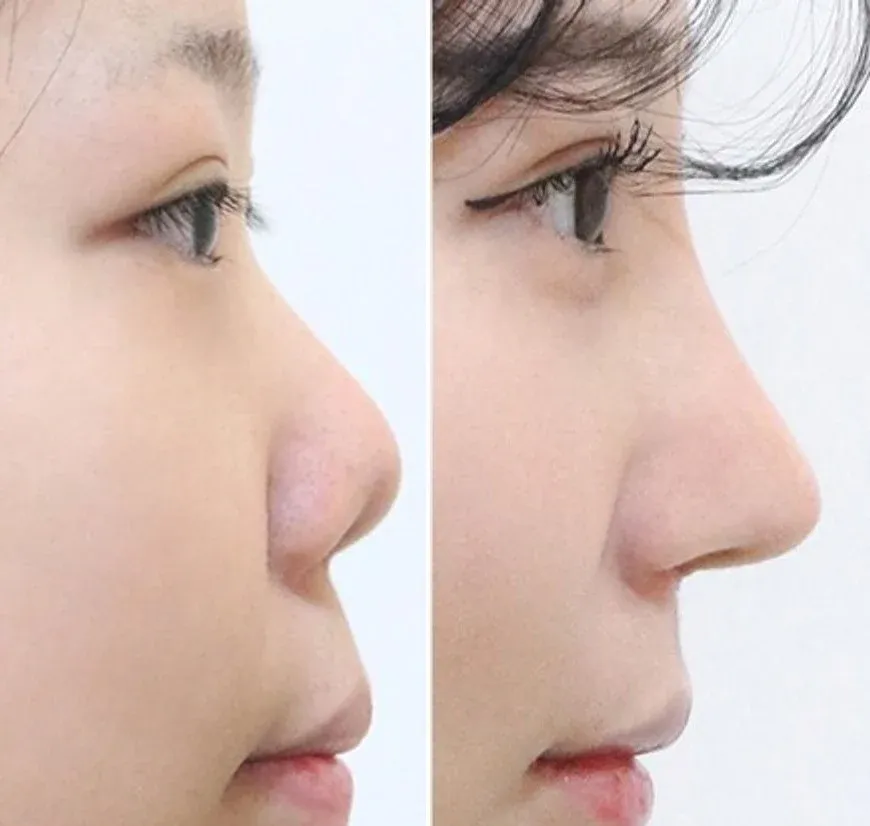
Short Nose Correction before-and-after photos (left: before surgery · right: after surgery)
Surgical Methods
The method varies depending on the condition of the nose.
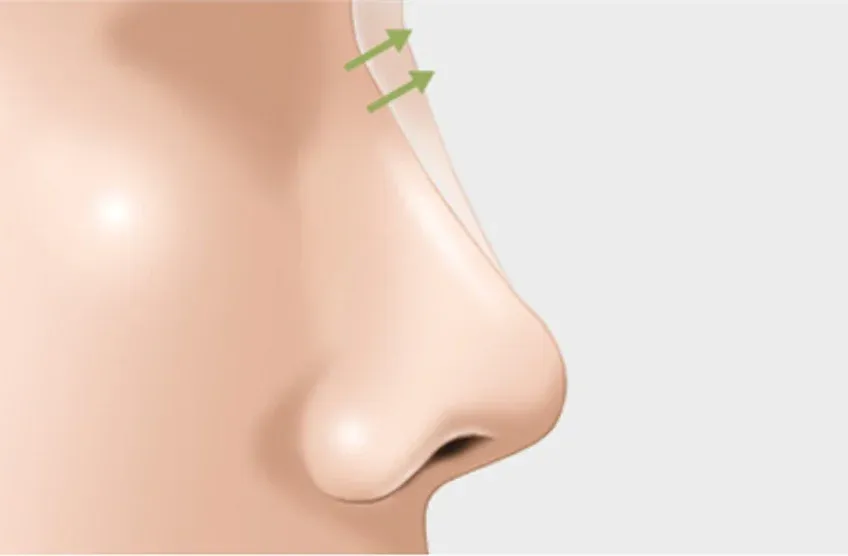
CASE 1. Low Glabella
Simply raising the Nasal Bridge can elevate the starting point of the nose.
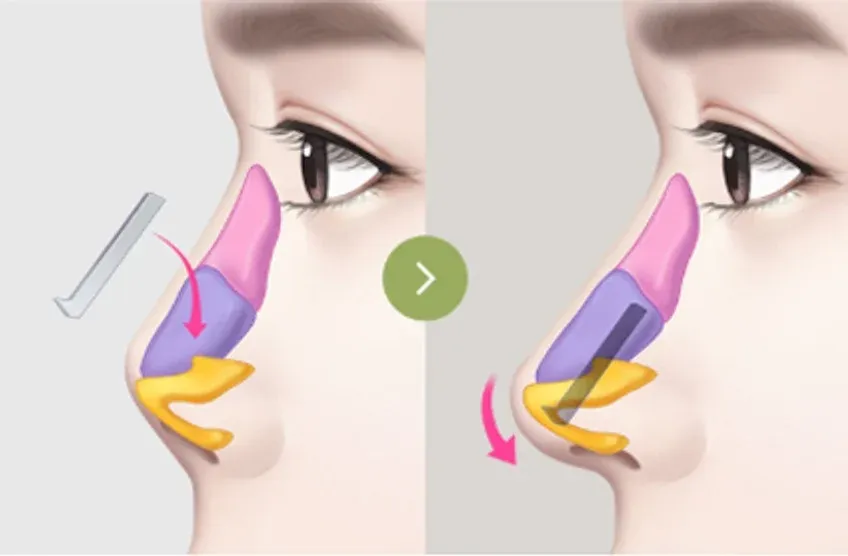
CASE 2. Upturned Nasal Tip
When the Nasal Bridge and Nasal Tip are high but only the Nasal Tip is upturned, Septal Cartilage is used to lengthen the Nasal Tip downward for Short Nose Correction.
Customized Design That Does Not Compromise Harmony
By adjusting the nasolabial angle between the nose and philtrum (ideal: 95°–110°) and the Columella length, we create a nasal line that is balanced with the Face from every angle.
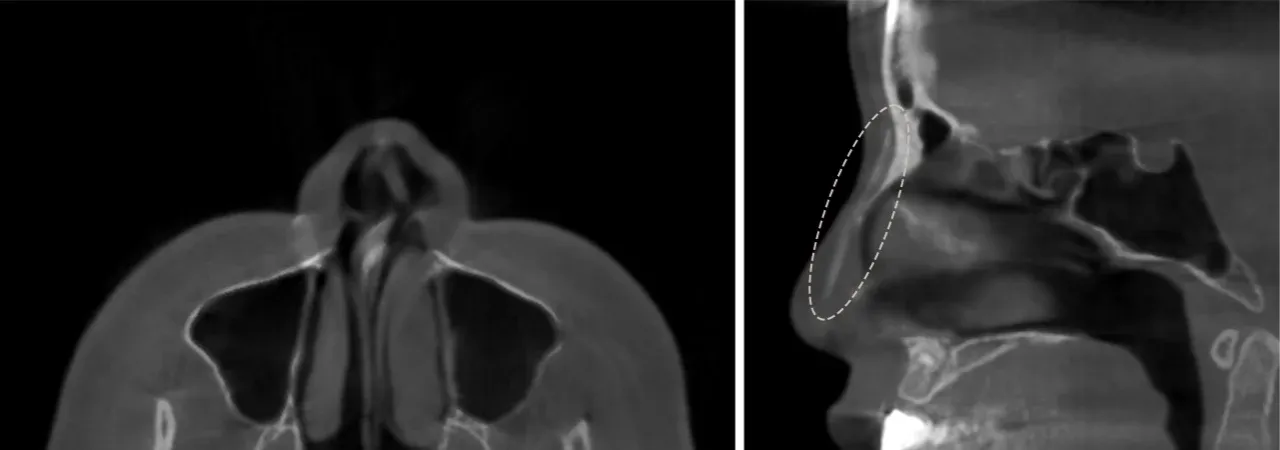
Preoperative Precision Analysis with 3D CT
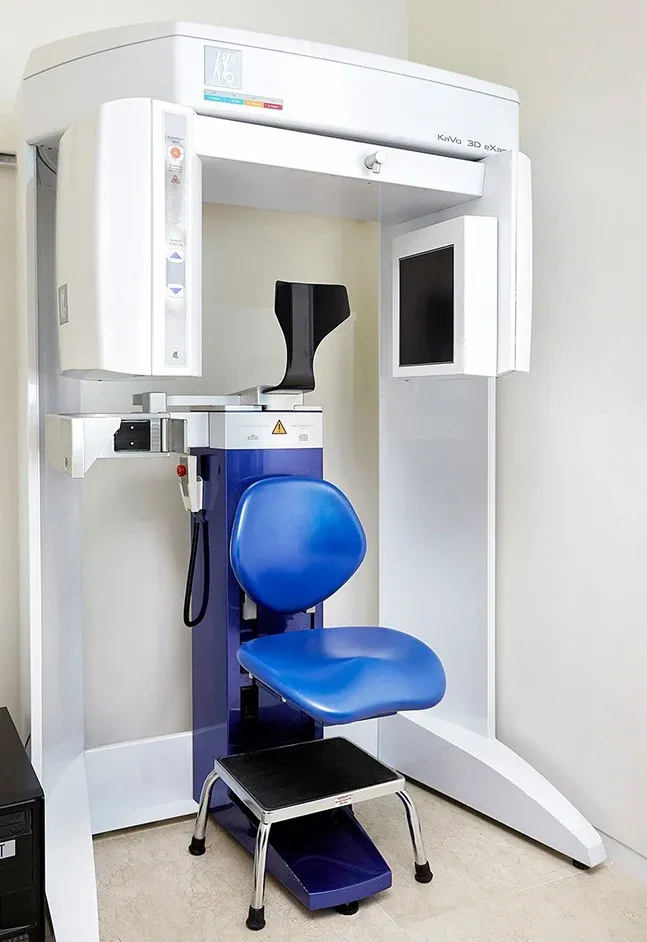
Regardless of whether it is a primary or Revision surgery, preoperative 3D CT is used to analyze the amount and strength of each individual's Cartilage, select the most suitable materials, and establish a one-on-one surgical plan. · Assessment of nasal Cartilage condition, subcutaneous tissue, and bone thickness and position · Precise analysis of nasal function and internal structural issues · Reduced risk of nerve damage and complications
Various Rhinoplasty Materials
Materials appropriate for each individual's nasal type are used, such as artificial Implants for the Nasal Bridge and Autologous Tissue for the Nasal Tip. · Autologous Tissue: Septal Cartilage, autologous dermal graft, Autologous Fat, Ear Cartilage, Autologous Rib Cartilage, autologous fascia · Artificial Implants: Silicone implant, Gore-Tex, Silitex, artificial dermis, artificial rib cartilage, Medpor
Surgery Information
| Surgery duration: approximately 1 hour to 1 hour 30 minutes | Anesthesia: sedation anesthesia | Hospitalization: none | Suture removal: sutures and splint removed after 1–2 weeks
Before-and-After Photos
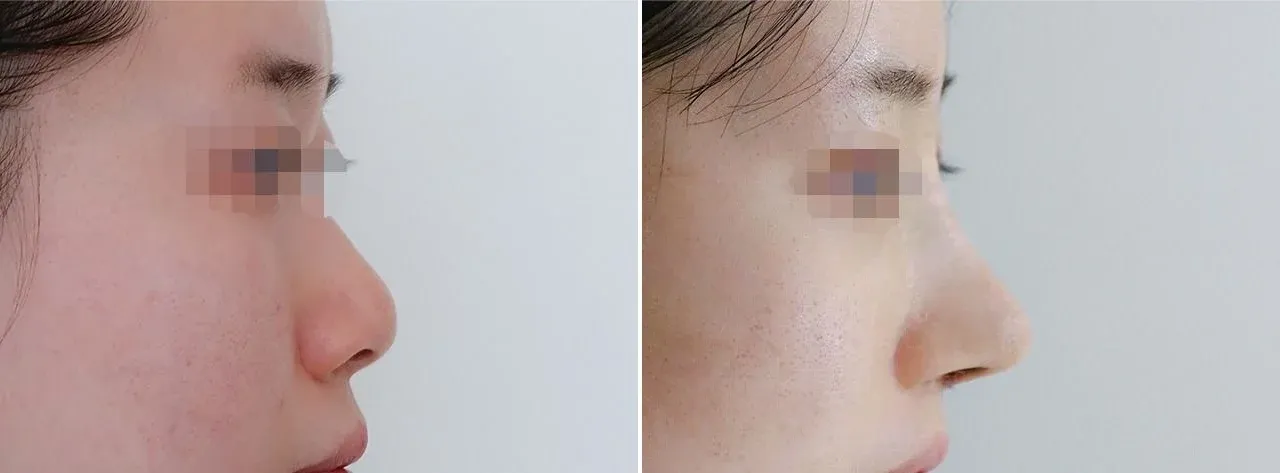
Grand rhinoplasty before-and-after photos (left: before surgery · right: after surgery) · Before surgery → 1 month after surgery
Please Note
Surgical methods and results may vary depending on individual conditions and are determined through consultation with a specialist.
 GRAND PLASTIC SURGERY