
Revision surgery
from 2,200,000 KRW* VAT Not Included
This is a revision procedure performed when, after previous double-eyelid surgery, the crease is too high (sausage eyelid), has multiple folds, has loosened, or is asymmetric. After assessing crease height, degree of adhesion, ptosis, fat volume, and the epicanthal fold, an incisional or non-incisional approach is selected.
Surgery Overview
Double eyelid revision surgery analyzes the cause of issues after previous Double Eyelid Surgery—such as a high crease (sausage eyelids), multiple creases, a loosened crease, or asymmetry—and corrects them accordingly. After assessing crease height, degree of Adhesion, Ptosis Correction, fat volume, and epicanthal folds, an incisional or Non-incisional method is selected.

With years of accumulated surgical experience, POP Plastic Surgery improves both aesthetic and functional aspects and strives to achieve satisfying results through a surgical plan that enables the cleanest possible restoration.
Recommended for the Following
· Thick double eyelid creases resembling sausage eyelids · Eyes that appear indistinct due to loosened double eyelid creases · Uneven eyes caused by asymmetry or multiple creases · Those dissatisfied with their existing double eyelid crease design
Double Eyelid Revision Process
The foundation of optimal results begins with a precise one-on-one customized analysis.
· STEP 1. Analyze the cause of the previous surgery's failure · STEP 2. Identify the individual's periorbital skin and tissue characteristics · STEP 3. Design a customized crease harmonious with the Face

Accurate Cause Analysis
These are the eight factors assessed for accurate cause analysis.
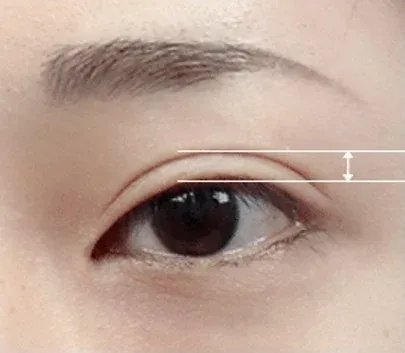
01 Crease Height
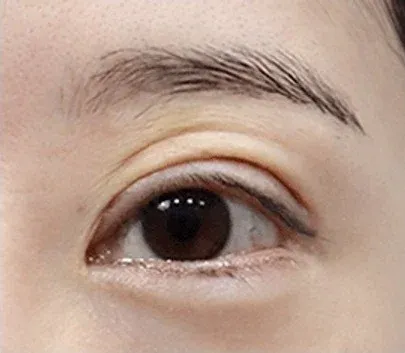
02 Crease Shape
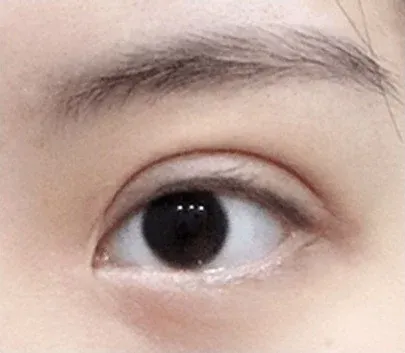
03 Degree of Adhesion
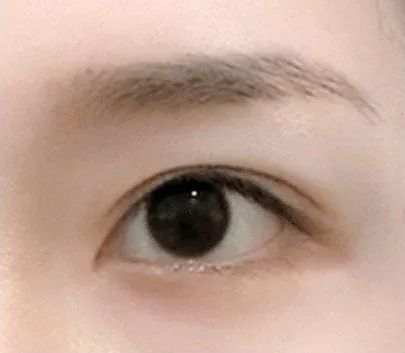
04 Fixation Depth and Degree
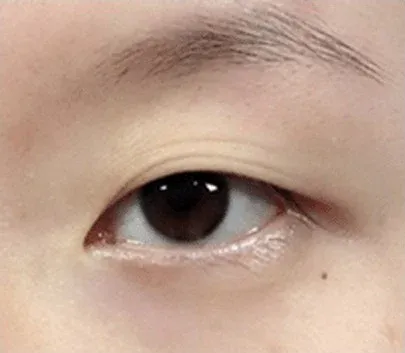
05 Presence of Ptosis Correction
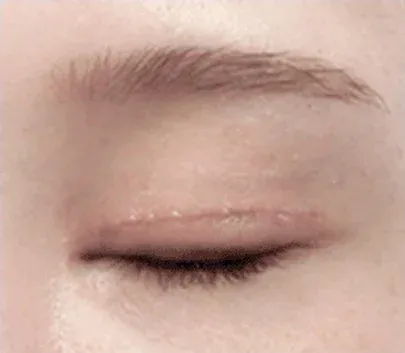
06 Degree of Crease Scarring
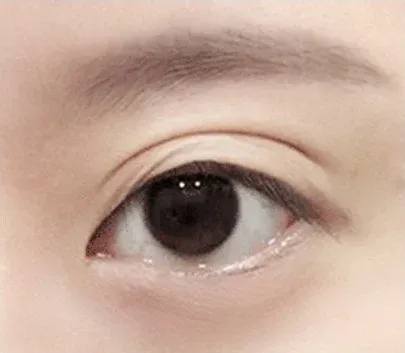
07 Eyelid Fat Volume
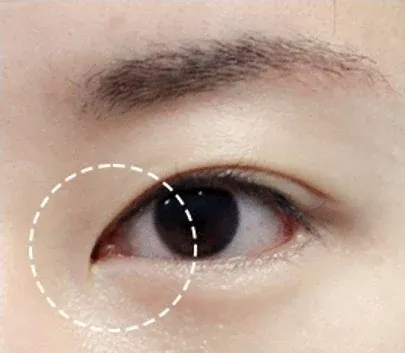
08 Presence of Epicanthal Folds
Double Eyelid Revision by Case
CASE 1. High Double Eyelid Crease (Sausage Eyelids)

Before-and-after photos (left: before surgery · right: 1 month after surgery) Considering the eye shape and skin condition, the crease height is adjusted and unnecessary tissue is minimized to create a harmonious, natural double eyelid crease.
CASE 2. Multiple Double Eyelid Creases

Before-and-after photos (left: before surgery · right: 1 month after surgery) After evaluating the current eye condition, tissue is repositioned through Fat Grafting, or if the crease has loosened due to weak fixation, the crease is revised for a more defined appearance.
CASE 3. Loosened Crease After Surgery

Before-and-after photos (left: before surgery · right: 1 month after surgery) If the crease has loosened due to weakened double eyelid fixation, the crease is redesigned and secured firmly to minimize recurrence and create long-lasting results.
CASE 4. Asymmetrical Creases on Both Sides

Before-and-after photos (left: before surgery · right: 1 month after surgery) When asymmetry occurs because the height or shape of the left and right creases differs, both creases are corrected to achieve balanced symmetry.
CASE 5. Low or Unsatisfactory Crease

Before-and-after photos (left: before surgery · right: 1 month after surgery) The crease is newly designed according to the eye structure and desired image to create a harmonious result.
Choose Your Desired Crease
Revision surgery allows detailed adjustment to achieve your desired crease height and style.
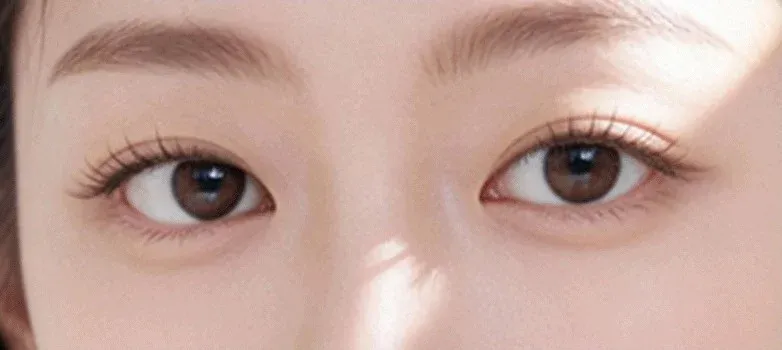
In-Out Crease
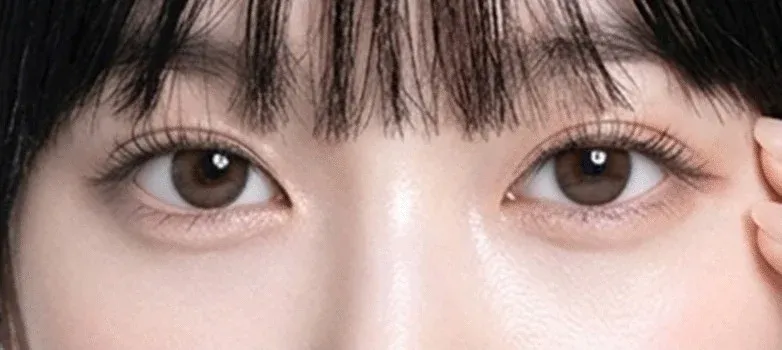
Out Line Crease
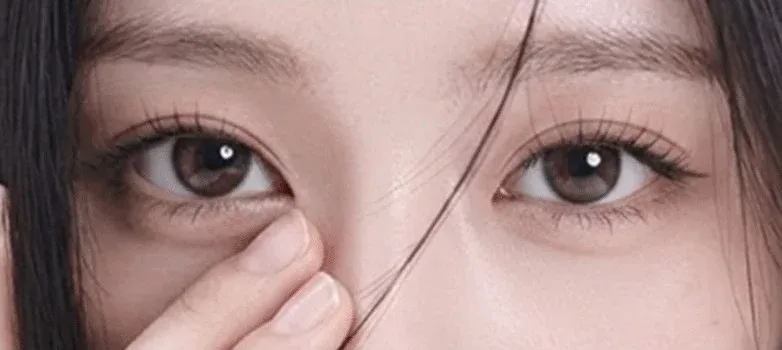
Semi-Out Line Crease
Appropriate Timing for Double Eyelid Revision
· Immediately after surgery — Early correction if the result is unsatisfactory or daily activities are difficult · Within 2 weeks — If significant discomfort is present before scars settle, consider revision within 2 weeks · After 6 months — The usual timing for revision surgery after tissues have stabilized · After 1 year or more — For those with multiple prior revisions, proceed after observing for at least 1 year
Before & After Photos
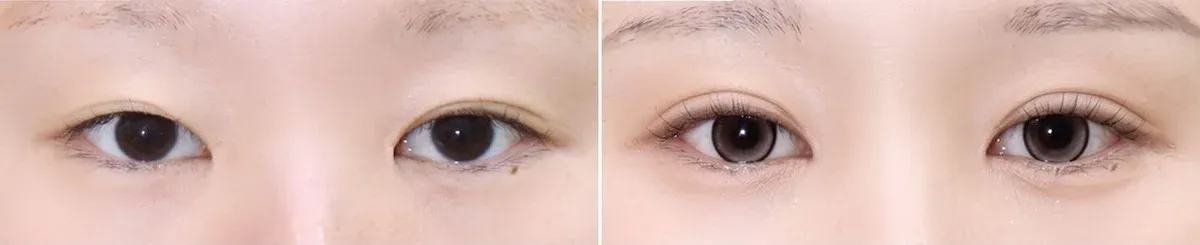
Double Eyelid Revision + Epicanthoplasty · Before surgery → 3 months after surgery

Double Eyelid Revision (12-point Natural adhesion method) + Upper Epicanthoplasty · Before surgery → 6 months after surgery
Surgery Information
| Surgery time: 1 hour | Anesthesia: Local anesthesia with sedation | Follow-up visits: 1–2 | Return to daily activities: 1 week
Please Note
Double eyelid revision surgery must take into account Adhesion, scarring, and tissue condition resulting from the previous procedure. Even when symptoms appear similar, the surgical method (incisional or Non-incisional method) may vary depending on the cause. Surgical results vary by individual, and side effects such as bleeding, infection, and inflammation may occur.
 POP PLASTIC SURGERY
Medical Staffs
 Chief Medical OfficerKIM DONGGEOL1205
 DirectorRYU ANYEONG3435
 DirectorJEON JEONGJIN2995
 DirectorLEE ILSEOK8824
 DirectorJEONG IRUM3136
 DirectorKIM HYOBONG7171
 DirectorPARK JUHYEOK7190
 DirectorKIM SUHWAN3450
 DirectorKANG HUIYONG4230
 DirectorLEE JUHO9850
 DirectorJEONG YEONSU6530
 DirectorKO EUNJEONG8860
 DirectorLEE JONGGU9870
 DirectorYOON INA1610
 Consultation SpecialistPOP8760