
Revision surgery
from 4,066,667 KRW* VAT Not Included
Category of revision surgeries to correct dissatisfaction/complications/deformity from previous surgery
Surgery Overview
AI-generated information for reference only. Please consult a doctor for accurate, personalized advice.
Eye revision surgery is a procedure that reanalyzes the eyelid structure and the causes related to the existing crease line when you are dissatisfied after previous eye surgery, such as double-eyelid surgery, Epicanthoplasty, or Ptosis Correction, due to asymmetrical crease lines, loosened double eyelids, thick puffy eyelids, pronounced scars, or multiple crease lines. ID Hospital evaluates your current eye condition and signs of previous surgery, then selects an appropriate method, such as the Non-incisional method, Incisional method, double-line revision surgery, or Medial canthal reconstruction.

More beautiful than the first time! Eye Revision Surgery
Cases That Require Revision Surgery
This may be considered when the double-eyelid crease line does not maintain the desired shape after previous surgery, or when the line shape and surgical marks are a concern.

Asymmetrical Double-Eyelid Crease Lines

Thick Puffy Eyelids

Low Double-Eyelid Crease Line

Loosened Double Eyelids
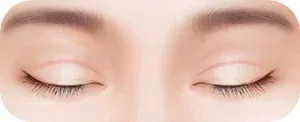
Prominent Scarred Crease Line

Multiple Double-Eyelid Crease Lines
ID Eye Revision Surgery: Clearly Different
We securely fix loosened crease lines more firmly and beautifully, without visible signs of failure. Because even subtle differences can change the appearance of the eyes, we design every detail with care, down to 1 mm.
Surgical Methods
The appropriate method for eye revision surgery may vary depending on loosening of the existing double-eyelid crease line, scars, degree of Adhesion, excess skin, and the condition of the Epicanthoplasty. ID Hospital evaluates your current eye condition and signs of previous surgery, then selects the necessary method to establish a revision surgery plan.
Non-incisional Method
Clear and natural results with ID Seven-Point Natural Adhesion! · Suitable for: Cases requiring the existing crease line to be recreated naturally and clearly · Procedure: After designing the double-eyelid crease line, tiny holes are created and secured at seven points

STEP 1. Double-Eyelid Crease Line Design
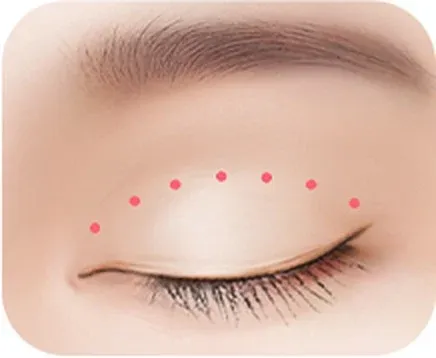
STEP 2. Create Tiny Holes
Tiny holes are created along the crease line.
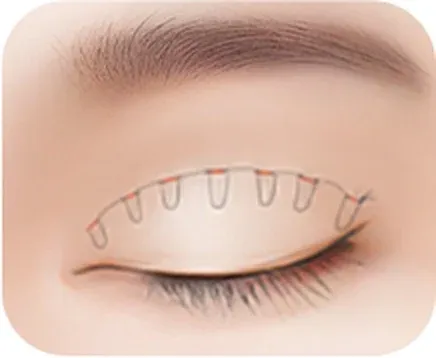
STEP 3. Secure at Seven Points
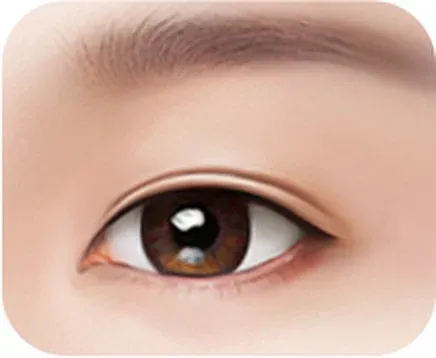
STEP 4. After Surgery
Incisional Method
A clean and defined double-eyelid crease line from end to end! · Suitable for: Cases requiring refinement of the crease line all the way to the end or adjustment of unnecessary fat and muscle · Procedure: After an incision, unnecessary fat and muscle are removed, and the incision site is sutured

STEP 1. Double-Eyelid Crease Line Design
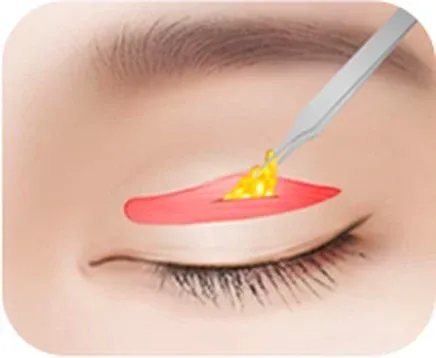
STEP 2. Remove Unnecessary Fat and Muscle
After the incision, unnecessary fat and muscle are removed.
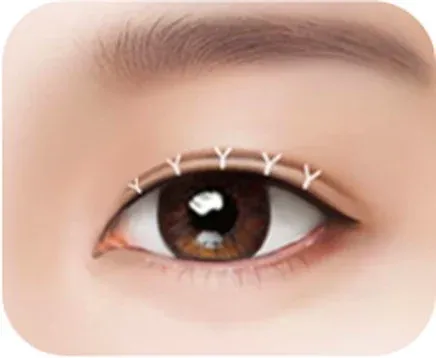
STEP 3. Suture the Incision Site

STEP 4. After Surgery
Double-Line Revision Surgery
More beautiful results without issue, even when excess skin tissue is insufficient for skin removal! · Suitable for: Cases where skin removal is difficult due to insufficient excess skin tissue · Procedure: Release the existing crease line and create a new double-eyelid crease line below it
STEP 1. Release the Existing Crease Line
The previously created double-eyelid crease line is released.
STEP 2. Create a New Crease Line
A new double-eyelid crease line is created below the existing line.
STEP 3. Wide Dissection and Suturing
After making an incision along the new line, Dissection is performed over a wider area than the existing Adhesion range, followed by suturing.
STEP 4. New Crease Line Complete
When the eyes are opened, only the newly created double-eyelid crease line is visible.
Medial Canthal Reconstruction
Even eyes that appear unnatural due to excessive Epicanthoplasty can be restored to a natural appearance without scars. · Suitable for: Cases where the inner corner of the eye looks unnatural due to excessive Epicanthoplasty or requires reconstruction · Procedure: V-shaped Dissection, reconstruction of the restoration surface, repositioning of ligaments and muscles, followed by customized adjustment
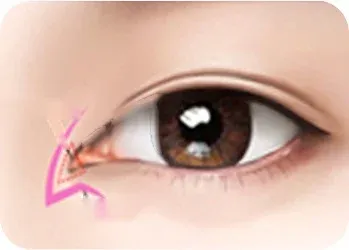
STEP 1. V-Shaped Dissection
The skin at the inner corner of the eye is dissected in a V shape to create a double flap (triangular flap, V flap).
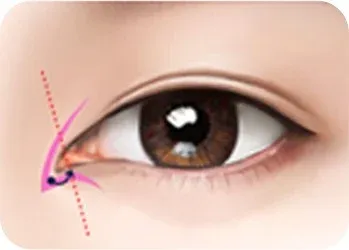
STEP 2. Reconstruct the Medial Canthal Reconstruction Surface
After reconstructing the posterior wall of the Medial Canthal Reconstruction surface, the ligaments and muscles are repositioned.
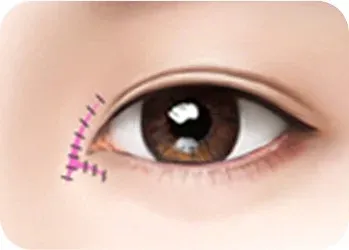
STEP 3. Complete the Reconstruction
The customized flaps, adjusted for width, length, and size, are gathered and sutured.
STEP 4. Natural Eye Shape Complete
A natural and attractive eye shape is achieved after approximately one month.
Please Be Sure to Check
Surgical methods and results may vary depending on individual conditions and are determined through consultation with a specialist.
 ID Plastic Surgery
Medical Staffs
 Consultation SpecialistID41749