
Revision Facial Contouring Surgery
from 1,200,000 KRW* VAT Not Included
This is a revision procedure that analyzes the causes of insufficient results after initial facial contouring surgery, secondary angles, unnatural appearance, asymmetry, nonunion, and other issues using 3D CT imaging, and corrects the cheekbones, square jaw, and chin areas accordingly. The minimum necessary amount of bone is resected, and double fixation, implant replacement, fat grafting, and other techniques are applied based on the patient’s condition.
Surgery Overview
Revision Facial Contouring Surgery analyzes the causes of failure in the initial surgery through precise diagnostics such as 3D-CT and corrects them with a revision plan tailored to the cause of each type, including cheekbones, Jaw Angle, and a weak chin. The goal is to create a natural Facial Contouring Surgery line by removing only the minimum amount of bone necessary and addressing issues such as nonunion, cheek sagging, and secondary angles.

By accurately identifying the causes of the initial surgery, we create a natural line.

“Secondary angles, an unnatural appearance, asymmetry...” Can this surgery avoid failure? Opera’s Facial Contouring Surgery specialists, who have performed revision cases for many years, precisely analyze the causes of failure in the initial surgery and provide a revision plan and procedure appropriate to the cause to help prevent further revision surgery.
Features of Opera Revision Facial Contouring Surgery
· Accurate analysis of the cause of surgical failure for each individual · Natural Facial Contouring Surgery lines that complement the facial features · Systematic surgery with university-hospital-level diagnostic and surgical systems · Prevention of an unnatural appearance through minimal bone removal, only as much as necessary · Customized surgery designed to be effective from the front, side, and 45-degree angles
Causes and Correction Methods for Each Type of Revision Surgery
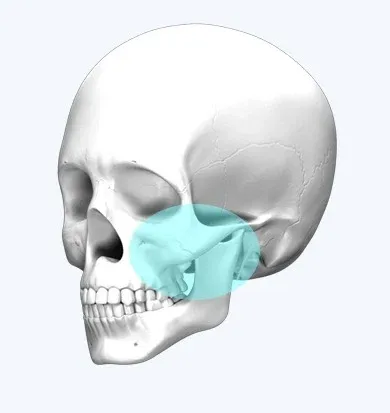
01. Cheekbone Revision Surgery
Causes · No noticeable change before and after surgery · The front cheekbone has been moved excessively, resulting in depression · Improper bone fixation causes pain or a sensation of bone movement when touched · Cheek sagging or skin laxity has developed Correction Methods · If the amount of bone removal was insufficient, 3D-CT is used to determine how much additional bone can be removed, followed by revision surgery within the range that can be safely improved. · In cases of nonunion where the bone has not healed properly, double fixation is used, and superior fixation helps prevent cheek sagging and skin laxity. · Depending on the symptoms, sagging may also be improved with procedures such as lifting laser treatment.
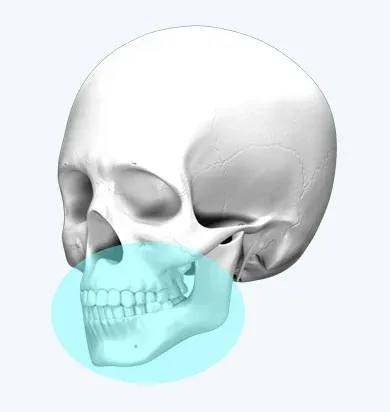
02. Jaw Angle Revision Surgery
Causes · The frontal result is less noticeable than the side profile result · An unnatural appearance due to excessive bone removal (dog-like jaw) · The Jaw Angle line is not smooth and feels angular or uneven (secondary angle) · No difference before and after surgery · Asymmetry Correction Methods · If there is no noticeable change before and after surgery, diagnostic evaluation is used to determine how much additional bone can be removed, followed by customized surgery within the range that can be improved. · If excessive bone removal is the cause, insufficient volume is restored using bone cement, Implant, or other materials to reconstruct a natural line.
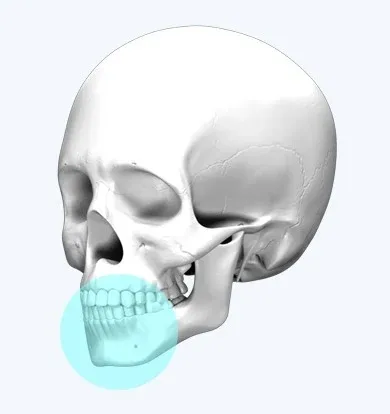
03. Weak Chin Revision Surgery
Causes · The chin shape appears awkward because the Implant size is unsuitable · The inserted Implant shifts or becomes visible through the skin · Chin advancement surgery was performed, but the before-and-after effect was minimal Correction Methods · For Implant revision surgery, the existing Implant is removed and a customized Implant is made for revision surgery. If the skin has become thin, Autologous Tissue such as Fat Grafting or a Dermal Graft is placed over the Implant for added coverage. · For chin advancement surgery, revision surgery is performed to reposition it appropriately.
Surgery Information
| Surgery time: Approximately 1 to 1.5 hours | Anesthesia: General anesthesia | Suture removal: Approximately 1 week after cheekbone surgery | Hospitalization: Not required (1-day hospitalization for Jaw Angle surgery) | Recovery period: Daily activities possible after approximately 3–5 days
System for Safe Surgery
· An anesthesiology and pain medicine specialist provides dedicated, individualized anesthesia care from preoperative testing through recovery. · A one-on-one customized anesthesia method suited to your constitution and characteristics is selected through preoperative consultation. · Dantrolene, a treatment for malignant hyperthermia, is available for unexpected situations. · University-hospital-level surgical equipment, including a cardiac defibrillator and blood pressure monitoring devices, as well as an emergency backup power generation system, are in place. · Medical staff conduct regular rounds to monitor your progress from awakening from anesthesia until returning to daily life.
Pre- and Postoperative Precautions
After Surgery
· To prevent infection, use mouthwash after eating and every 3 hours. Do not rinse with water afterward. · Take the prescribed medication three times a day, 30 minutes after meals. · Do not check the surgical area with your tongue. · Avoid spicy, salty, hot, and irritating foods for about one month, and tough or hard foods for about three months. · Straws may be used after one month. · For 5 days after surgery, rest with your upper body elevated at least 45 degrees, keep your Face facing upward, and use a high pillow. · Use an ice pack to reduce swelling for the first 5 days after surgery, then use warm compresses starting on day 6. · Keep the facial compression bandage on for approximately 5 days. · Avoid alcohol, smoking, and saunas for 1 month after surgery (avoid alcohol for 3 months whenever possible).
Please Note
Surgical methods and results may vary depending on the individual’s condition and are determined through consultation with a specialist.
 OPERA PLASTIC SURGERY