
Protruding Chin (Underbite)
Price upon consultation
This procedure corrects prognathism, in which excessive mandibular growth causes the jaw to protrude forward and results in a crossbite. Depending on overall facial balance and occlusal condition, either mandibular surgery, in which only the lower jaw is osteotomized and moved backward, or bimaxillary surgery, in which both the upper and lower jaws are repositioned, may be selected. It may be performed using a surgery-first approach, in which surgery is performed before orthodontic treatment, followed by orthodontic correction.
Protruding Chin surgery is a procedure to correct a Protruding Chin caused by excessive growth of the lower jaw, in which the chin projects forward and there is an underbite. The method is selected according to the overall balance of the Face and occlusal condition: either mandibular surgery, in which only the lower jaw is osteotomized and moved backward, or Orthognathic Surgery, in which both the upper and lower jaws are moved. It may be performed using a surgery-first approach, in which surgery is performed before Orthodontic Treatment.

Protruding Chin surgery is designed to create overall facial balance, considering not only the chin but also the maxilla and mandible.
What Is Protruding Chin Surgery?
Protruding Chin is a general term for a facial shape caused by excessive growth of the lower jaw. A typical Protruding Chin involves a forward-projecting lower jaw, a prominent chin tip, a flat or concave facial profile, and an underbite. Protruding Chin surgery is divided into mandibular surgery, which addresses only the lower jaw, and Orthognathic Surgery, which addresses both the upper and lower jaws.
Various Types of Protruding Chin

A typical Protruding Chin involves a forward-projecting lower jaw, a prominent chin tip, a flat or concave facial profile, and an underbite. Other forms of Protruding Chin may also occur.
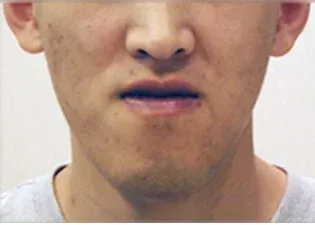
CASE 1
Generally, the chin tip and Face are long, while other areas are relatively small.
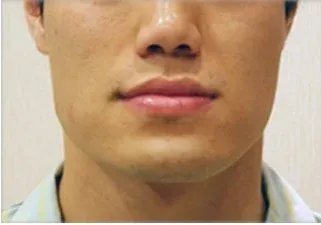
CASE 2
In some cases, when multiple areas of the jaw are also developed, the overall jawline is strong, creating a very pronounced appearance.
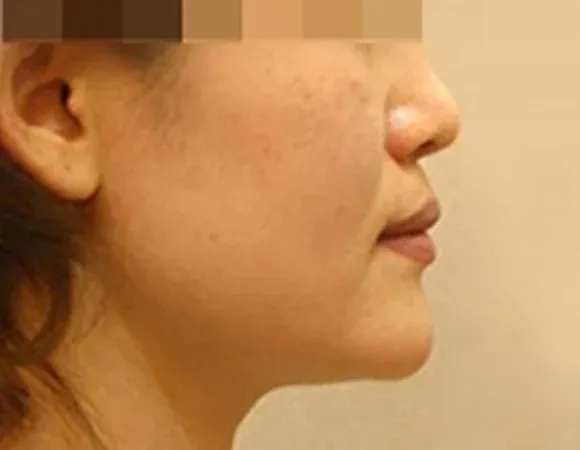
CASE 3
When both the chin tip and alveolar bone are prominently developed, causing both the mouth and chin tip to protrude, the appearance of a Protruding Chin may be less noticeable.
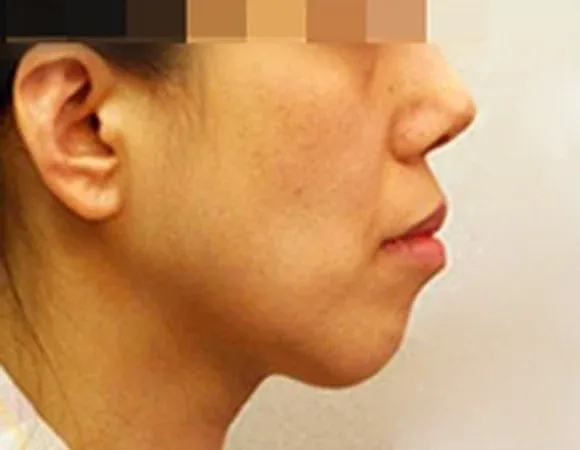
CASE 4
When the lower jaw itself is developed but the chin tip is less developed and the alveolar bone is relatively prominent, it may easily be considered Mouth Protrusion, but it falls within the category of Protruding Chin.
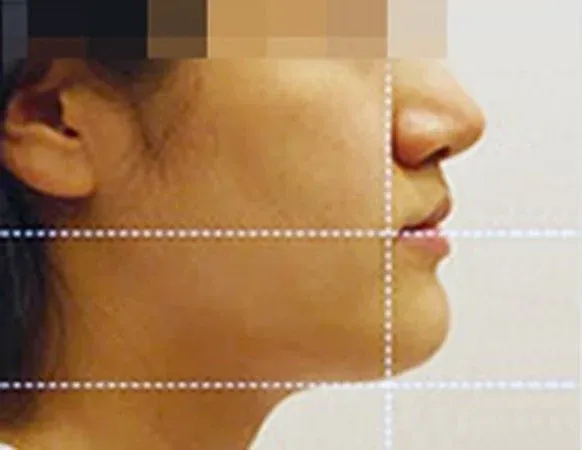
CASE 5
When the occlusion is relatively normal but the jaw has a strong appearance suggesting a Protruding Chin, this is considered a Protruding Chin tendency.
Features of Faceline Protruding Chin Surgery
Safety, function, and aesthetics are considered together. · We pursue the simultaneous achievement of a beautiful facial shape and functional facial skeletal structure. · We maximize patient satisfaction through surgical consultation. · We maximize patient satisfaction through detailed and accurate preoperative analysis. · You can receive safe and thorough postoperative care.
Diagnostic Process for Protruding Chin Surgery
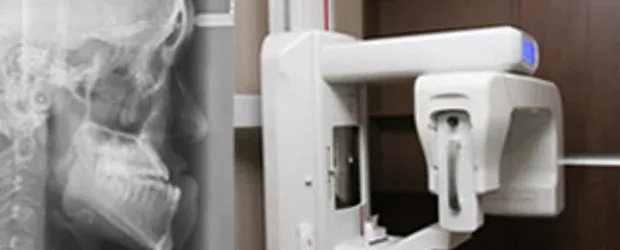
STEP 1. 3D X-ray Imaging
First, advanced digital facial bone X-rays are taken, followed by systematic facial bone analysis using a computer.
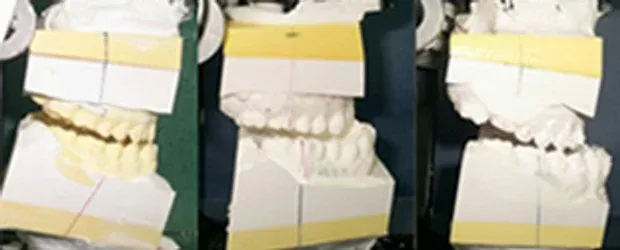
STEP 2. Dental Occlusion Assessment
Dental impressions are taken to create dental models and assess the occlusal condition.
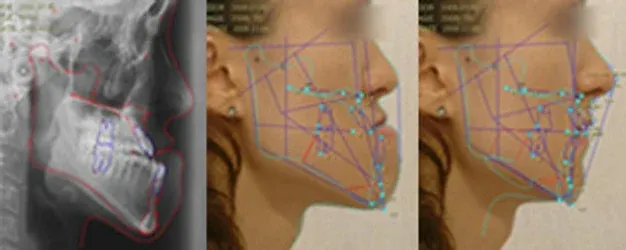
STEP 3. Simulation
Based on facial bone imaging and occlusal assessment, an optimal surgical plan is established and simulated using a virtual surgery system.
Surgical Process for Protruding Chin Surgery
The procedure is performed either through mandibular surgery, which treats only the lower jaw, or Orthognathic Surgery, which treats both the upper and lower jaws.
What Is Mandibular Surgery?
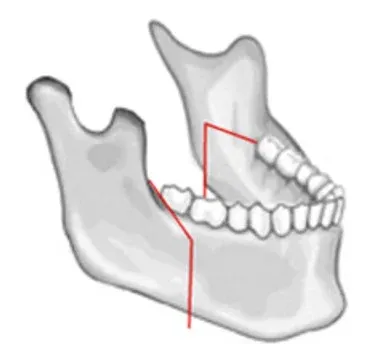
The jawbone behind the molars is osteotomized, and the entire jawbone, including the lower teeth, is moved backward. 1. In a Protruding Chin, the jaw joint area and tooth-bearing area are separated, and the entire jawbone, including the teeth, is moved backward. 2. The contacting bone surfaces are trimmed to achieve maximum contact, and the separated bone segments are then fixed together.
What Is Orthognathic Surgery?
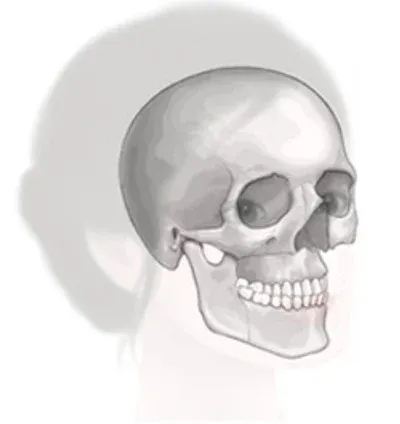
This refers to surgery performed simultaneously on the upper and lower jaws. 1. Maxillary surgery: The bone above the upper teeth is osteotomized, moved in the desired direction, and fixed in its new position. 2. Mandibular surgery: The bone behind the lower teeth is osteotomized, and the entire lower jaw is repositioned and fixed to achieve the desired occlusion.
When Orthognathic Surgery Is Needed
· Asymmetry: When the teeth and lips are tilted · When Protruding Chin correction is insufficient with mandibular surgery alone · Open bite: When the front teeth do not meet · When the appearance of a Protruding Chin is pronounced but the occlusion is relatively normal · Long Face: When accompanied by gum exposure · Severe protrusion or retrusion of the upper alveolar bone
Advantages of Faceline Protruding Chin Surgery
1. It provides both functional benefits through improved occlusion and aesthetic benefits by shortening the jaw and making the Face appear smaller. 2. While conventional Protruding Chin surgery focuses on treating the Protruding Chin, Faceline incorporates aesthetic concepts alongside treatment, allowing optimal aesthetic results to be expected. 3. When moving the jaw backward, jaw reduction surgery can be performed on the angular areas on both sides of the jaw, making the Face appear shorter and slimmer at the same time.
Surgery-First Approach Without the Inconvenience of Preoperative Orthodontic Treatment
Unlike conventional Protruding Chin correction, which required approximately one year of preoperative Orthodontic Treatment, the surgery-first approach is a newer surgical method in which Protruding Chin correction is performed first without preoperative orthodontics, followed by finishing Orthodontic Treatment. · Conventional Protruding Chin treatment: Preoperative Orthodontic Treatment (1 year) → Surgery (1 month) → Postoperative Orthodontic Treatment (6 months) · Surgery-first Protruding Chin treatment: Surgery (1 month) → Postoperative Orthodontic Treatment (6 months) · Advantages of the surgery-first approach: There is no inconvenience from preoperative Orthodontic Treatment. In other words, there is no period during which the occlusion worsens and the Protruding Chin becomes more severe. Because preoperative orthodontics is not needed, surgery can be performed immediately at the desired time. Protruding Chin correction provides both functional and aesthetic benefits.
Please Check
Bleeding, infection, inflammation, and other complications may occur after surgery, so caution is required. Subjective satisfaction may vary among individuals. Surgical methods and results may differ depending on the individual’s condition and are determined through consultation with a specialist.
 FACELINE PLASTIC SURGERY