
Protruding Chin (Underbite)
from 2,000,000 KRW* VAT Not Included
This procedure corrects a protruding lower jaw, including the teeth, commonly known as an underbite, through maxillary and mandibular osteotomy. A treatment plan is established in collaboration with an oral and maxillofacial surgery specialist, and the jaw is repositioned posteriorly and fixed according to the occlusion. Chin surgery and liposuction may be performed concurrently if necessary.
Surgery Overview
This procedure corrects a Protruding Chin, in which the entire lower jaw including the teeth protrudes forward, through upper and lower jaw osteotomy. A treatment plan is established in collaboration with an oral and maxillofacial surgeon, and the jaw is set back according to the bite before being securely fixed. Chin surgery and Liposuction may be performed as needed.

Safe, natural bite correction Restore jaw function and confidence at the same time
Recommended for
· Those with an entire lower jaw, including the teeth, that is long and protrudes forward · Those experiencing daily discomfort, such as temporomandibular joint disorders or unclear pronunciation, due to a Protruding Chin · Those seeking to improve their bite as well as their facial contour
What Is a Protruding Chin?
A long, protruding lower jaw is called a Protruding Chin. In addition to cosmetic concerns, it may cause various everyday inconveniences such as temporomandibular joint disorders and unclear pronunciation, making it one of the most common facial contour concerns. A Protruding Chin can be broadly divided into two types depending on the condition of the bone. If the dental alignment is normal when the mouth is closed and only the chin tip is elongated, it can be improved with chin tip contouring through osteotomy. If the entire lower jaw, including the teeth, is positioned forward, it can be improved with Orthognathic Surgery.
Features of BANOBAGI Protruding Chin Orthognathic Surgery
Point 1. Stable fixation with oblique osteotomy
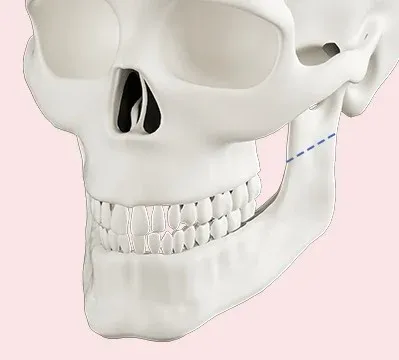
Oblique osteotomy increases the bone contact area, allowing for more stable fixation.
Point 2. Chin surgery performed as needed
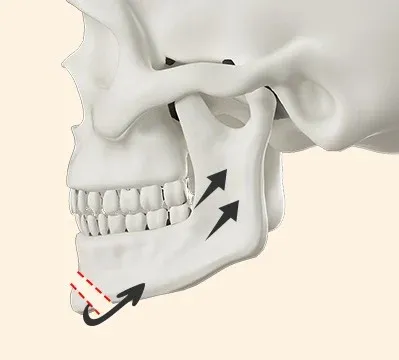
When necessary, chin surgery is performed together to improve not only jaw function but also aesthetic appearance.
Point 3. A defined jawline with Liposuction
Liposuction removes remaining unnecessary Soft Tissue to create a more defined jawline.
BANOBAGI's Methods for Improving a Protruding Chin
CASE 1. Orthognathic Surgery
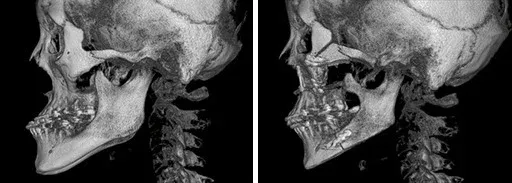
CT · Before surgery → After surgery
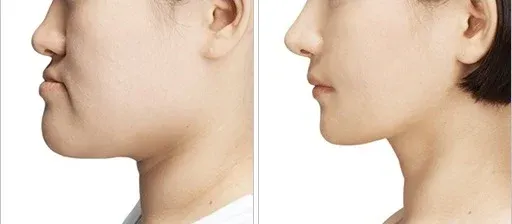
Side view · Before surgery → After surgery
When the entire lower jaw, including the teeth, is long and protrudes forward
CASE 2. Chin Surgery
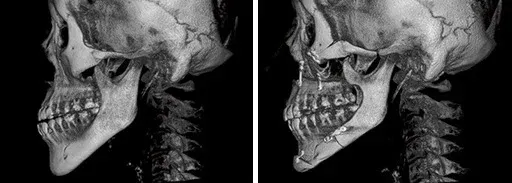
CT · Before surgery → After surgery
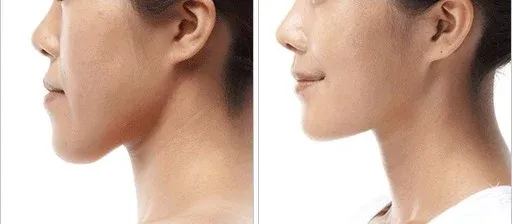
Side view · Before surgery → After surgery
When the dental bite is normal but the chin is elongated
Surgical Procedure
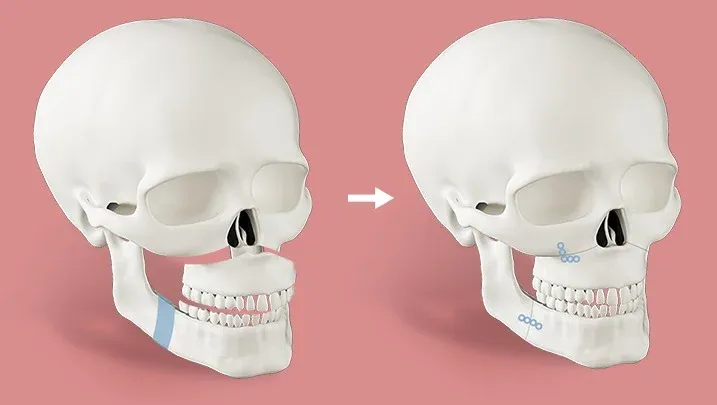
BANOBAGI Protruding Chin Orthognathic Surgery includes a process to align the dental bite.
STEP 1. Orthodontic planning through collaborative care
An Orthodontic Treatment plan is established in collaboration with an oral and maxillofacial surgeon.
STEP 2. Lower jaw or double-jaw osteotomy
The lower jaw or both jaws, including the teeth, are osteotomized.
STEP 3. Setback according to the bite
Both jaws are moved backward to align with the dental bite.
STEP 4. Secure fixation with pins
The jaw is securely fixed with fixation pins.
STEP 5. Orthodontic treatment and recovery program
Ongoing Orthodontic Treatment is provided together with the BANOBAGI recovery program.
BANOBAGI’s UNIQUE VALUE
#1 The Eye of Experience
With extensive experience and expertise in facial bone surgery, we pursue safe, high-quality results by restoring overall facial balance. We do not consider care complete with surgery; we support patients throughout the recovery process and build trust between patients and medical staff.
#2 Precise and safe surgical planning with 3D CT
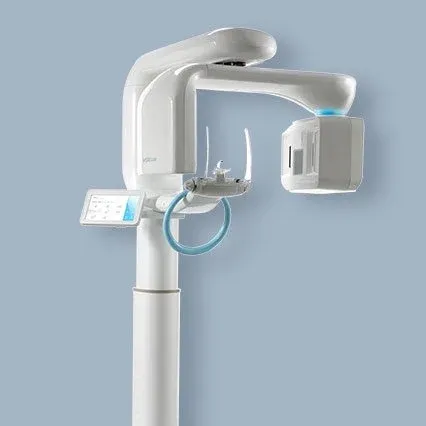
Orthognathic Surgery is not simply about cutting the visible bones and adjusting the bite. BANOBAGI precisely measures the facial bones using 3D CT and establishes a surgical plan based on these measurements.
Surgery Information
| Surgery time: Approximately 3–4 hours | Anesthesia: General anesthesia | Return to daily activities: Possible after 7–14 days | Follow-up visits: Approximately 2 visits
Pre- and Post-Operative Precautions
Before Surgery
· Fasting for 8 hours before surgery is required. · Please inform us in advance if you have any physical symptoms, such as a cold or respiratory illness. · Please be sure to disclose your past and current medical history, allergic reactions, and any medications you are taking.
After Surgery
· Swelling increases until 48–72 hours after surgery and then begins to subside rapidly. After about one month, some swelling may remain, making the area appear slightly puffy. · Consume liquids only for 3–4 days. For one month, eat soft foods such as porridge, soft noodles, tofu, and eggs. It is also best to avoid opening your mouth widely for one month. · Rinse your mouth with clean water once every hour and with the disinfectant provided by the hospital once every two hours. · Brushing is possible after 2 weeks (use a toothbrush moistened with gargle solution), and toothpaste may be used in small amounts after 2–3 weeks. · Apply cold compresses whenever you feel warmth during the first week after surgery. Thereafter, apply warm compresses for up to one month. · Light walking is allowed for one month. From two months onward, exercise is permitted except activities that may injure the jaw; there are no restrictions after six months. · Visit the hospital 1 week after surgery to check the dental bite and 3 weeks after surgery to remove the elastics. · Alcohol and smoking are strictly prohibited for one month. Please avoid excessive exercise and stress. · If pain suddenly worsens with a sensation of heat after surgery, contact the hospital immediately even if it is not your scheduled visit date.
Please Be Sure to Check
Complications such as bleeding, infection, and inflammation may occur after surgery, and subjective satisfaction may vary by individual; please consult with your doctor. Surgical methods and results may vary depending on the individual’s condition and are determined through consultation with a specialist.
 BANOBAGI PLASTIC SURGERY