
Orthognathic Surgery
from 21,800,000 KRW* VAT Not Included
This is a two-jaw surgery in which both the upper jaw (maxilla) and lower jaw (mandible) are osteotomized and repositioned. It is intended for individuals seeking to improve jawbone structural issues, such as prognathism, asymmetry, and malocclusion, from both aesthetic and functional perspectives. Plastic surgery and orthodontic specialists collaborate to develop the surgical plan, applying the REMA planning method, which first determines the desired amount of change in the frontal facial appearance and then calculates the required bone movement, as well as the JSRO osteotomy technique, which reduces the mandibular separation area. The procedure aims to shorten treatment duration and reduce recovery-related discomfort through a surgery-first approach (omitting preoperative orthodontic treatment) and elastic band fixation.
Surgery Overview
AI-generated information for reference only. Please consult a doctor for accurate, personalized advice.
Smart Orthognathic Surgery is Orthognathic Surgery that involves osteotomy and repositioning of both the upper jaw (maxilla) and lower jaw (mandible), improving jawbone structural issues such as Protruding Chin, asymmetry, and malocclusion from both aesthetic and functional perspectives. A plastic surgeon and orthodontist collaborate to establish the surgical plan, applying the REMA method, which first determines the desired amount of facial change and then calculates the bone movement in reverse, along with the JSRO osteotomy technique, which reduces the mandibular separation area.

Smart Orthognathic Surgery performed with Director Lee Jin-soo's specialized expertise in REMA, JSRO, and elastic fixation.
Safety of Smart Orthognathic Surgery
Point 1. No fatal accidents
Since opening the clinic, Chief Director Lee Jin-soo has provided consistent care for 20 years without any fatal accidents.
Point 2. No transfusions
To ensure patient safety, bleeding is minimized during surgery, and among tens of thousands of procedures since the clinic opened, no transfusions have been performed. (No transfusions have been given during Orthognathic Surgery or Facial Contouring Surgery in patients with normal hemoglobin levels, not anemia.)
Point 3. Board-certified anesthesiologist on site
For safe surgery, one board-certified anesthesiologist takes responsibility for real-time monitoring throughout the entire surgical process.
Functionality of Smart Orthognathic Surgery
For successful Orthognathic Surgery, coordinated care between the plastic surgery specialist (Director Lee Jin-soo) and orthodontic specialist (Director Lee Shin-jeong) is very important. Because chewing function is the priority in Orthognathic Surgery, orthodontic care is essential, and surgery should proceed only after a method for improving functional issues has been established. For more than 20 years, Faceline has performed Orthognathic Surgery through a coordinated care system involving the same Seoul National University-trained plastic surgery and orthodontic medical team. Through long-term integrated care, we have accumulated tens of thousands of cases' worth of data and expertise for creating balanced facial contours, and patients can receive all care required for Orthognathic Surgery in one location without the inconvenience of visiting a separate dental clinic.
· Plastic Surgery (aesthetic improvement): Establishes a surgical plan for aesthetic jaw improvement, including changes in occlusion, and performs surgery precisely according to the plan. · Orthodontics (functional improvement): Establishes a surgical plan including the amount and direction of jaw movement required to achieve normal occlusion, and completes Orthognathic Surgery with postoperative orthodontic treatment.
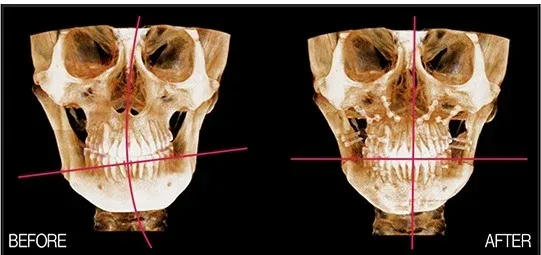
Asymmetry correction 3D CT · Before surgery → After surgery
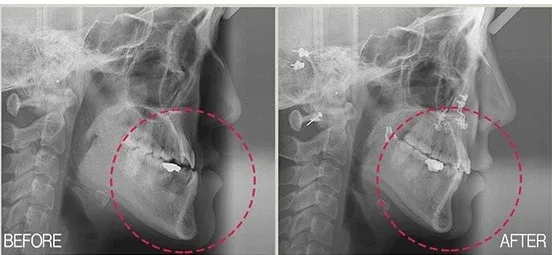
Malocclusion correction digital X-ray · Before surgery → After surgery
Two-week intermaxillary fixation period with elastic fixation for a more comfortable recovery
Only two points between the jaws are secured with elastic bands, improving patient comfort during recovery while maintaining the stability of conventional complete fixation. · First clinical results on elastic fixation presented at an academic conference in 2005, when complete fixation was standard · Intermaxillary fixation period reduced to approximately 2 weeks (compared with 4–6 weeks for conventional complete fixation) · Eating and speaking are possible during the fixation period, and maintaining the airway is easier · Applicable to all Orthognathic Surgery patients
Surgery-first treatment for patient convenience, performed since 2005
When the clinic opened in 2005, preoperative orthodontic treatment followed by surgery was standard, while surgery-first treatment followed by orthodontics was rarely performed due to difficulty predicting postoperative outcomes and concerns about relapse. For 20 years, Faceline has focused on patients and performed surgery-first treatment, which enables a more comfortable surgical experience, in more than 95% of cases. · Preoperative orthodontics: Approximately 1 year of orthodontic treatment before surgery; occlusion may become more uncomfortable and facial contours may worsen before surgery → Treatment sequence: preoperative orthodontics (1 year) → surgery → postoperative orthodontics (6 months–1 year) · Surgery-first treatment: No orthodontic treatment period before surgery; the total treatment period is shortened because there is no preoperative orthodontic period → Treatment sequence: surgery → postoperative orthodontics (6 months–1 year)
REMA — A surgical plan for enhanced aesthetics
REMA (Reverse Estimating Method of Analysis) is a surgical planning method developed through Faceline's many years of accumulated expertise in coordinated care.
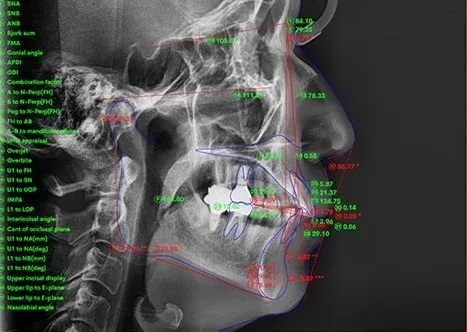
Conventional Orthognathic Surgery planning
Surgical planning based only on lateral X-ray analysis → Differences in the front view and skin condition are not reflected in the plan, and the amount of bone surgery is calculated using cephalometric analysis values, which can result in substantial discrepancies in the actual Face (front view).
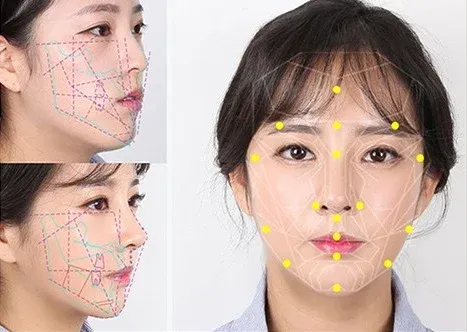
REMA
Surgical planning based on actual Face + X-ray analysis → Reflects differences in the front view and skin condition, first determines the amount of change in the Face, then calculates the amount of bone surgery in reverse, resulting in smaller discrepancies in the actual Face.
JSRO — A surgical method for enhanced aesthetics
JSRO (Jawline Control Osteotomy) is a proprietary Orthognathic Surgery technique developed by Faceline's Director Lee Jin-soo.
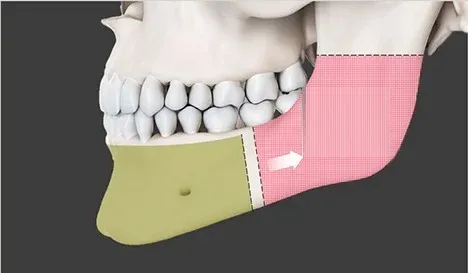
SSRO sagittal split ramus osteotomy
The mandibular separation area is broad and close to the nerve canal, creating a possibility of nerve injury, while changes to the shape and volume of the Jaw Angle area are difficult.
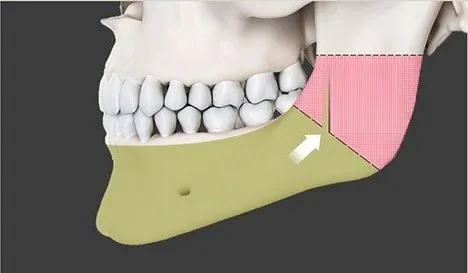
JSRO Jawline Control Osteotomy
By reducing the separation area by half, the possibility of nerve injury is also reduced, and a wider range of changes to the shape and volume of the Jaw Angle area is possible.
Faceline 1:1 personalized care

· From before to after surgery: Close care · Immediately after surgery: Pain care · Week 2: Swelling / device-based care
Please be sure to check
Bleeding, infection, inflammation, and other complications may occur after surgery, so caution is necessary. Subjective satisfaction may vary among individuals. Surgical methods and results may differ depending on the individual's condition and are determined through consultation with a specialist.
 FACELINE PLASTIC SURGERY