
Orthognathic Surgery
from 8,000,000 KRW* VAT Not Included
Repositions both the upper and lower jaws to improve facial balance, bite function, and facial harmony.
Surgery Overview
AI-generated information for reference only. Please consult a doctor for accurate, personalized advice.
Orthognathic Surgery corrects the position and bite of the upper and lower jaws together to improve functional problems and Facial Asymmetry. ID Hospital’s No-Tie Orthognathic Surgery omits intermaxillary fixation, which secures the upper and lower jaws together, reducing the burden on eating, speaking, and breathing immediately after surgery. It also enhances bite accuracy and safety through the reverse setup technique, which begins with the lower jaw, along with a 3D-CT and navigation system.

Comfortable and safe, without fixation or orthodontic treatment
Features of ID Hospital’s No-Tie Orthognathic Surgery
Point 1. Accurate bite alignment without intermaxillary fixation
By omitting the process of securing the upper and lower jaws together, patients can eat and speak immediately after surgery and breathe more comfortably, allowing for safer recovery. In addition, being able to move the mouth helps reduce pain and allows swelling to subside more quickly.
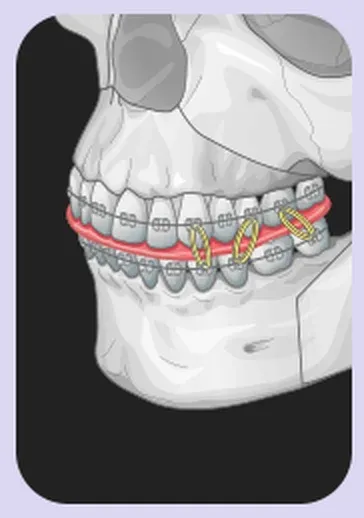
Orthognathic Surgery with intermaxillary fixation
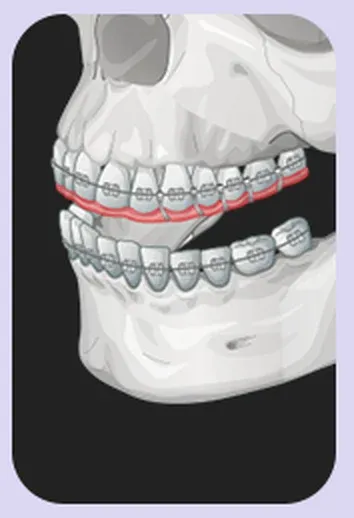
No-Tie Orthognathic Surgery without intermaxillary fixation
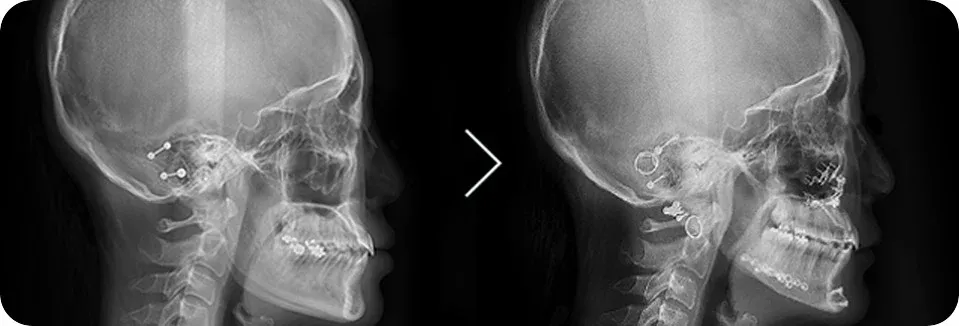
Point 2. Minimizing surgical error with the reverse setup technique
The reverse setup technique, which begins with surgery on the lower jaw, minimizes surgical error. Orthodontic Treatment may be omitted through occlusal plane rotation and joint-preserving techniques. The bite is checked a total of seven times, from before surgery through suturing of the surgical site, for precise surgery.
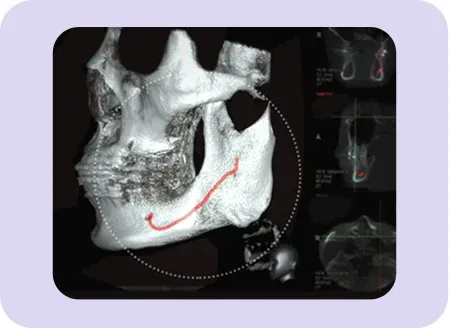
Point 3. Enhanced safety with 3D-CT and a navigation system
After identifying the course of the nerve in advance through 3D-CT imaging, a surgical plan is established and the optimal position is identified during surgery using a navigation system. An alarm sounds if surgical instruments approach the nerve, helping prevent nerve injury, while the osteotomy line is monitored in real time on screen to reduce the possibility of error.
Surgical Procedure
After planning the surgery with 3D simulation, the lower jaw is operated on first to ensure stability, followed by repositioning of the upper jaw. The procedure is then completed by confirming the temporomandibular joint position and bite before fixation.
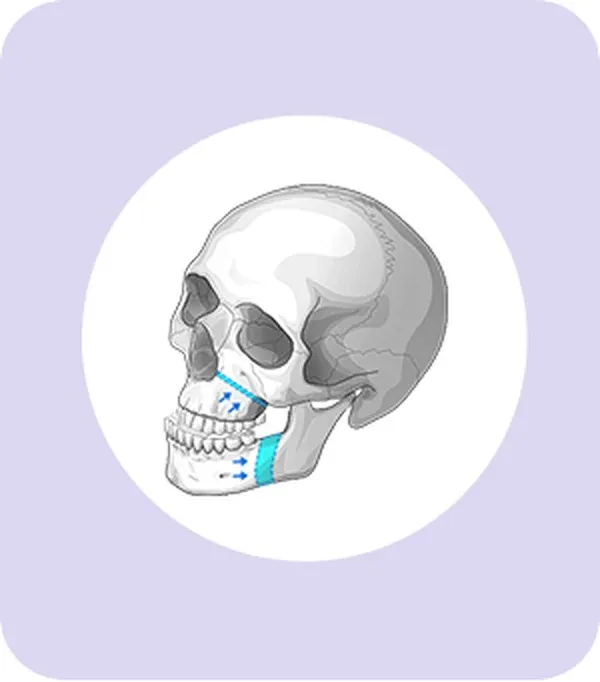
STEP 1. Lower jaw first, followed by upper jaw repositioning
After surgical planning with 3D simulation, the unstable lower jaw, which is not fixed in place, is operated on first to ensure stability, followed by repositioning of the upper jaw.
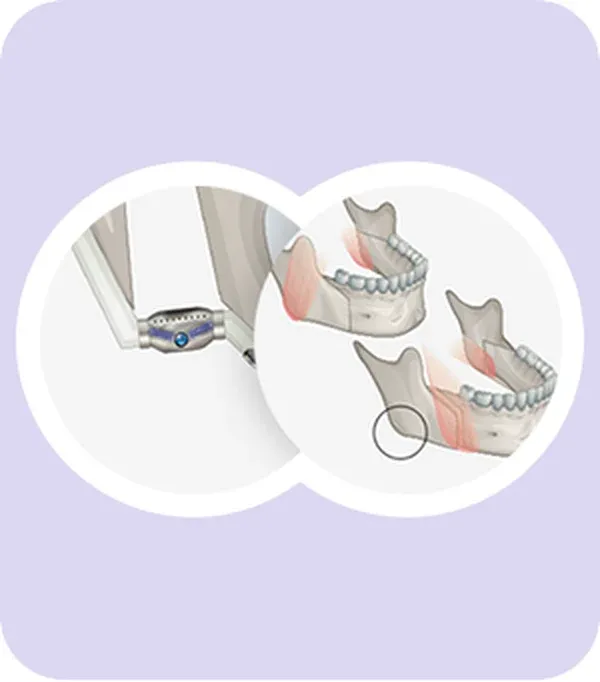
STEP 2. Accurate bite alignment
Accurate bite alignment is achieved through an ultra-precise TMJ registration system, joint-preserving techniques, and occlusal maintenance techniques.
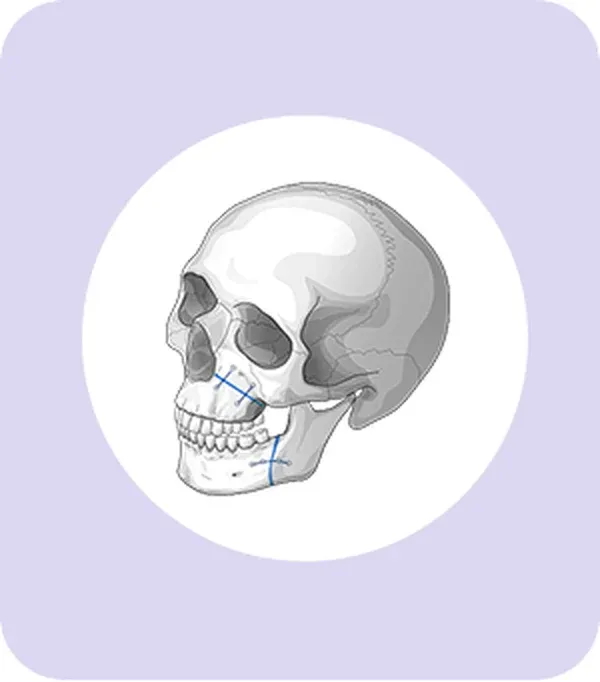
STEP 3. Fixation after confirming TMJ position
After confirming the normal position of the temporomandibular joint, it is securely fixed, allowing intermaxillary fixation and Orthodontic Treatment to be omitted.
Please Note
Surgical methods and results may vary depending on the individual’s condition and are determined through consultation with a specialist.
 ID Plastic Surgery
Medical Staffs
 Consultation SpecialistID41749