
Nose Shape Correction
Price upon consultation
Category of corrections tailored to nose shape characteristics (low nose/hooked nose, etc.)
Surgery Overview
AI-generated information for reference only. Please consult a doctor for accurate, personalized advice.
Before & After
See More
LARA Rhinoplasty by Nose Type
-
Precise diagnosis through detailed analysis of nose type
Completed with a personalized rhinoplasty solution for each individual
LARA PLASTIC SURGERY
1. Low Nose
A natural, well-defined nose line that harmonizes with the entire face
The nose is located at the center of the face and is one of the body parts that greatly influences a person's impression. It can significantly change the facial image and alter the overall three-dimensional appearance of the face.
Learn About Surgery Information
- Surgery Time
1 to 1.5 hours
- Anesthesia Method
Sedation anesthesia
- Suture Removal
After 1–2 weeks
- Follow-up Visits
2–3 visits
*This may vary depending on the patient's condition and the surgical method.
Recommended for These Patients
✅ Those with an overall low nasal bridge
✅ Those with a blunt or drooping nasal tip
✅ Those whose low nose gives a plain impression
✅ Those who want a natural, well-defined nose
What effects can LARA low nose rhinoplasty provide?

- Enhanced facial dimension and ideal proportions
- Increased confidence from any angle, front or side
- A refined image instead of a plain impression
- A natural nose line with a customized implant
LARA PLASTIC SURGERY
LARA Low Nose Surgery Method
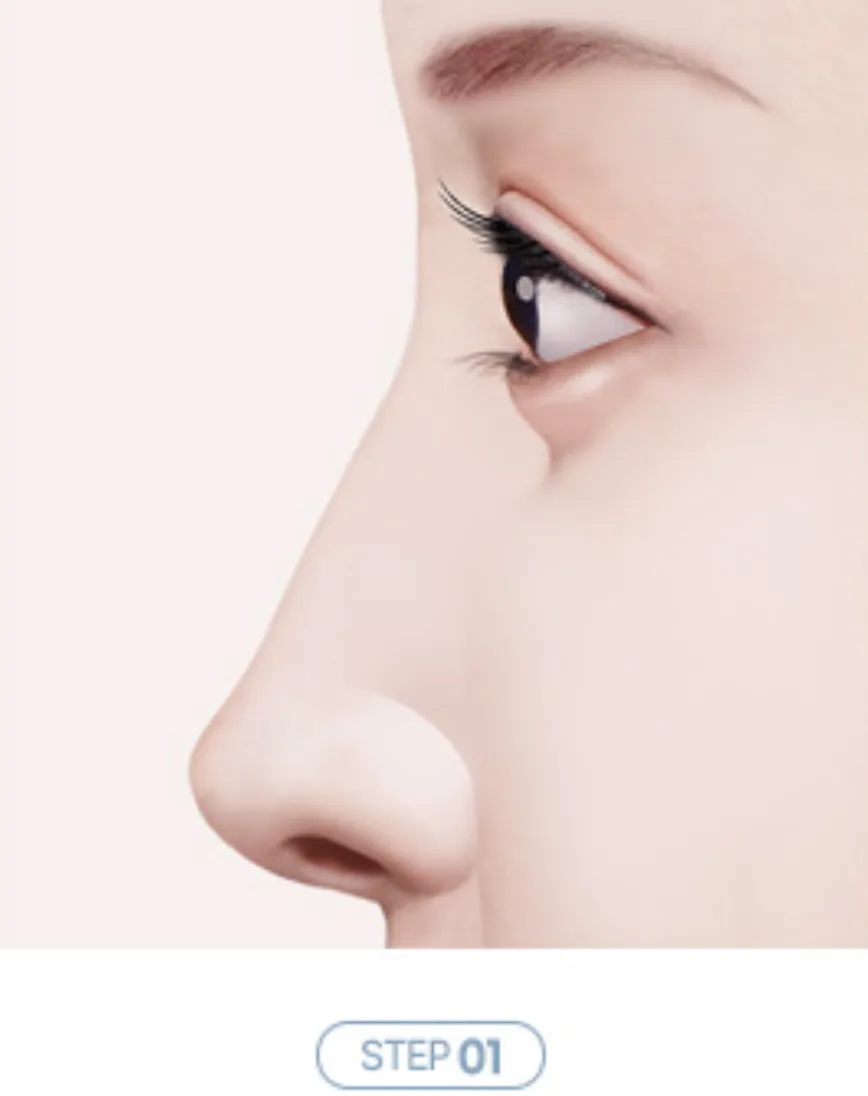
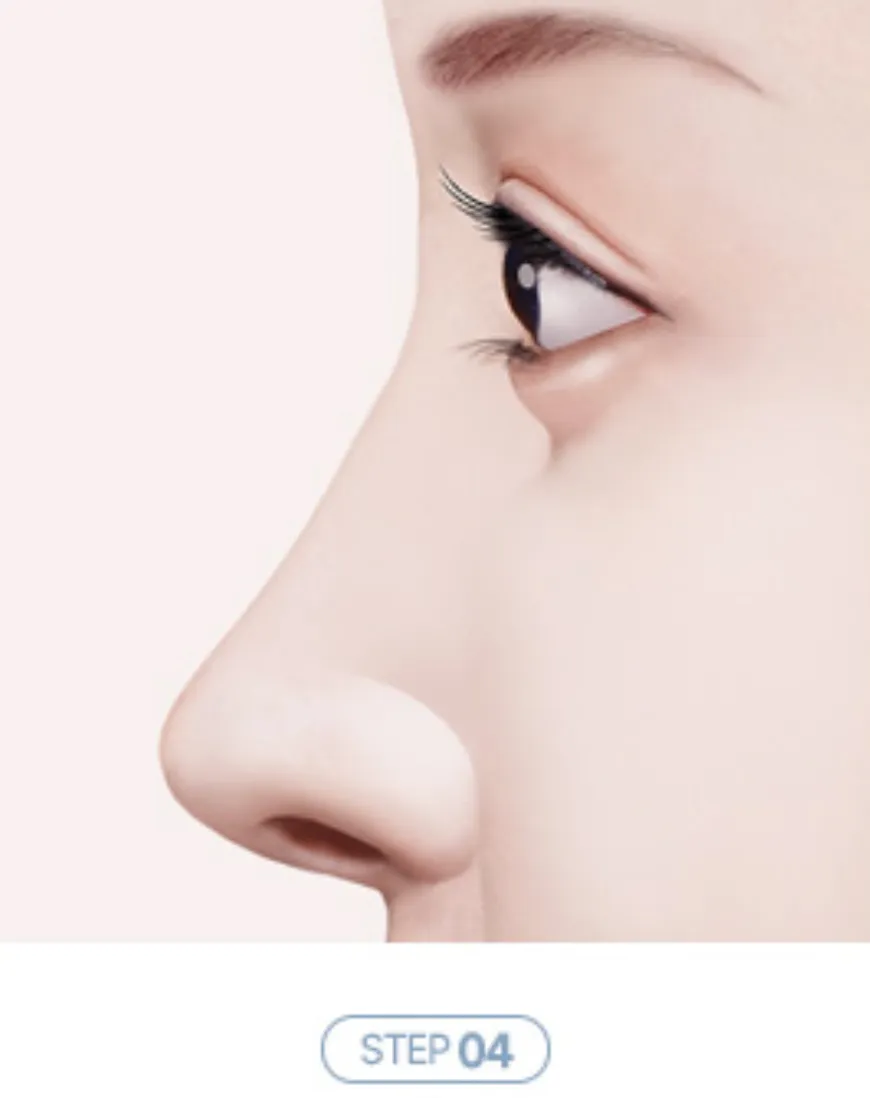
A pre-manufactured silicone implant created with a 3D printer is placed beneath the periosteum of the nasal bones to raise the bridge. The nasal tip is naturally elevated by adjusting its volume using autologous cartilage.
STEP 01 | Before Surgery
STEP 02 | Silicone Implant Insertion in the Nasal Bridge
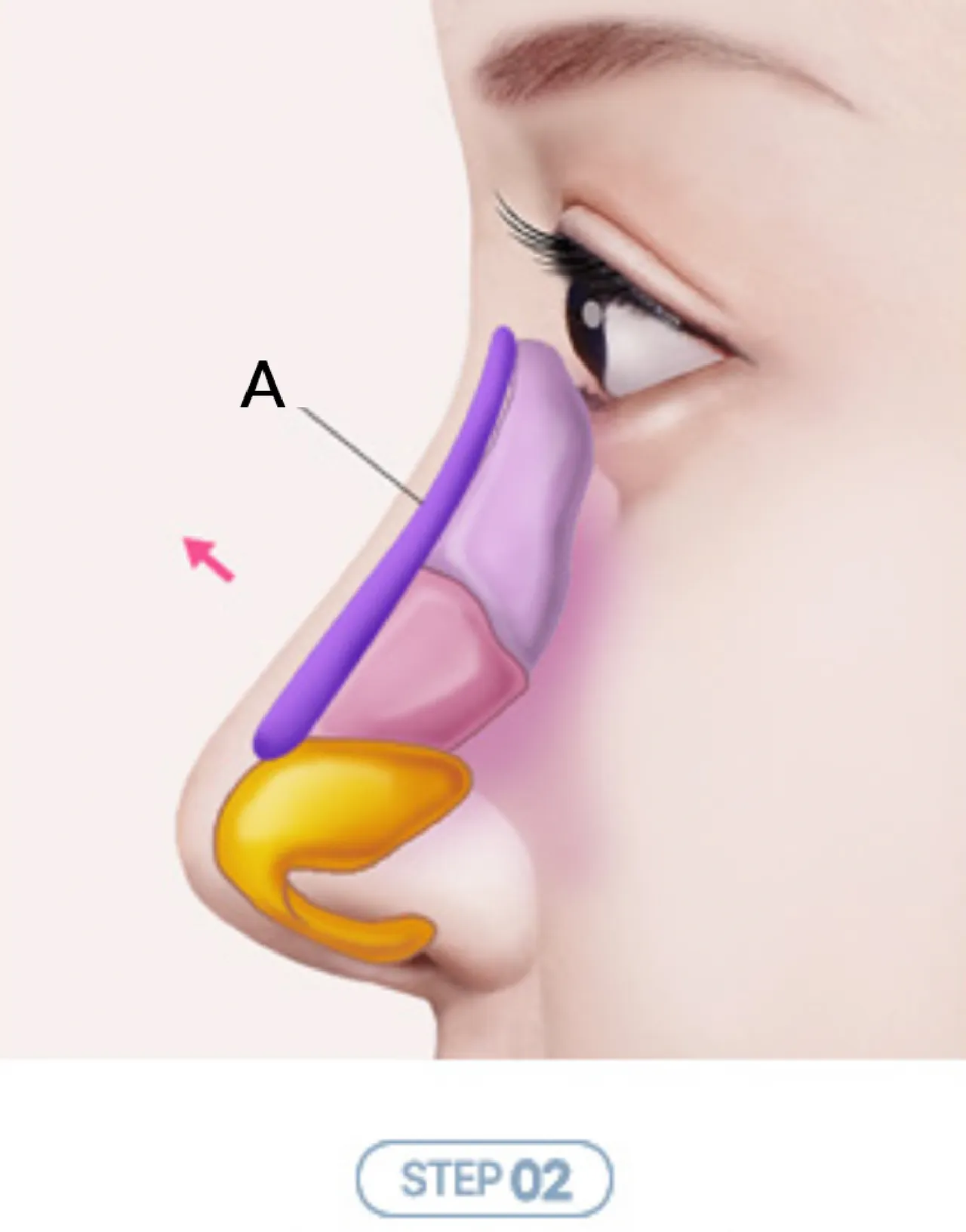
*A. Silicone
STEP 03 | Autologous Cartilage Insertion at the Nasal Tip
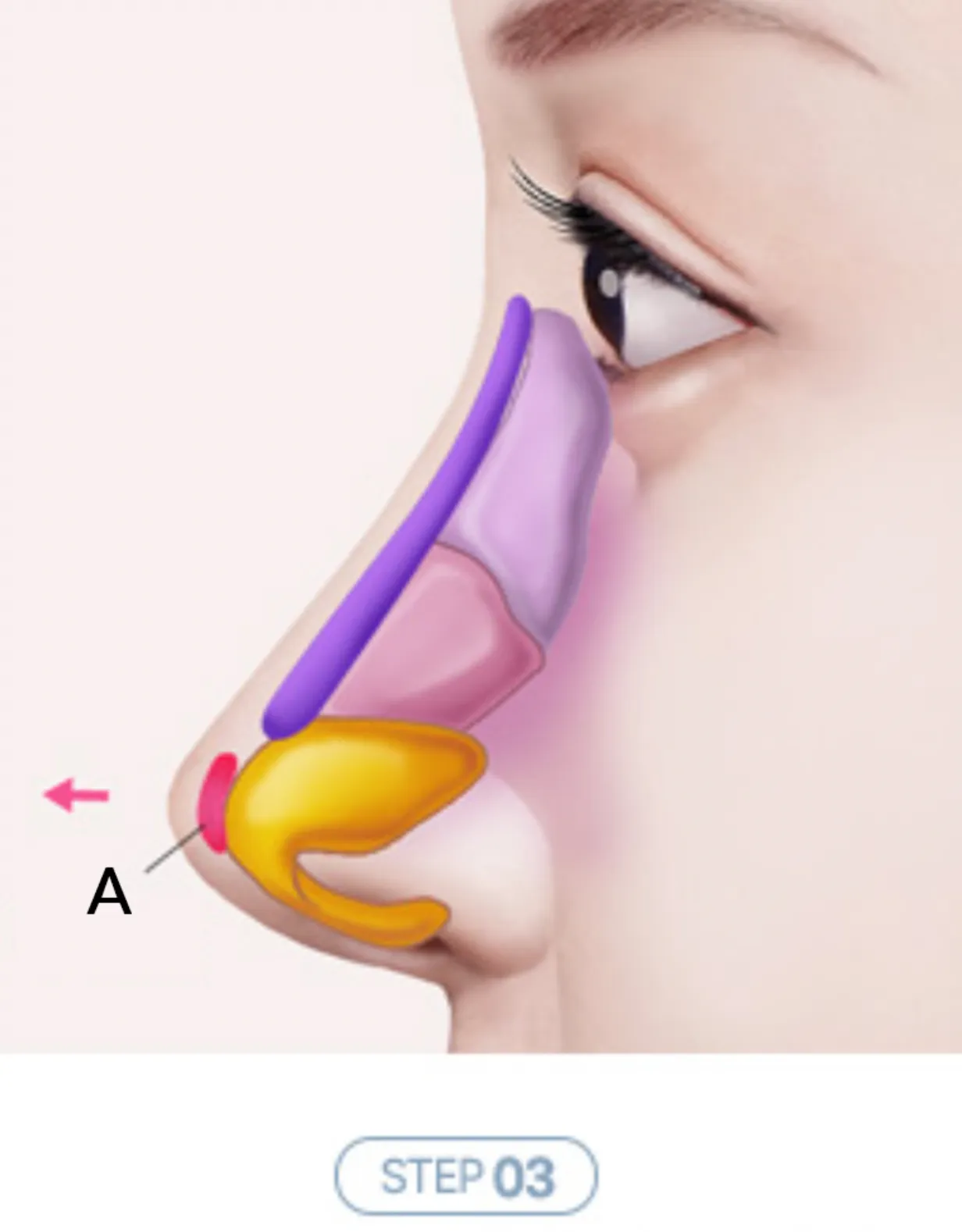
*A. Autologous Cartilage
STEP 04 | After Surgery
2. Hump Nose
Smooth and soften an uneven nasal bridge
A hump nose refers to a nose with a protruding middle portion of the nasal dorsum and a tip that droops downward like a hawk's beak, which can create a strong and older-looking impression. Correcting a hump nose can improve it to a smooth nasal bridge and a softer appearance.
Learn About Surgery Information
- Surgery Time
About 2 hours
- Anesthesia Method
Sedation anesthesia
- Suture Removal
After 1–2 weeks
- Follow-up Visits
2–3 visits
*This may vary depending on the patient's condition and the surgical method.
Recommended for These Patients
✅ Those with a low nasal tip relative to the nasal bridge
✅ Those whose nose appears long due to a hump
✅ Those with a strong or stern-looking impression
✅ Those with a protruding middle nasal dorsum
What effects can LARA hump nose surgery provide?
- A smooth, soft nasal bridge
- Increased confidence from any angle, front or side
- A softer improvement to a strong or stern-looking impression
- A refined, natural nose line
LARA PLASTIC SURGERY
LARA Hump Nose Surgery Method
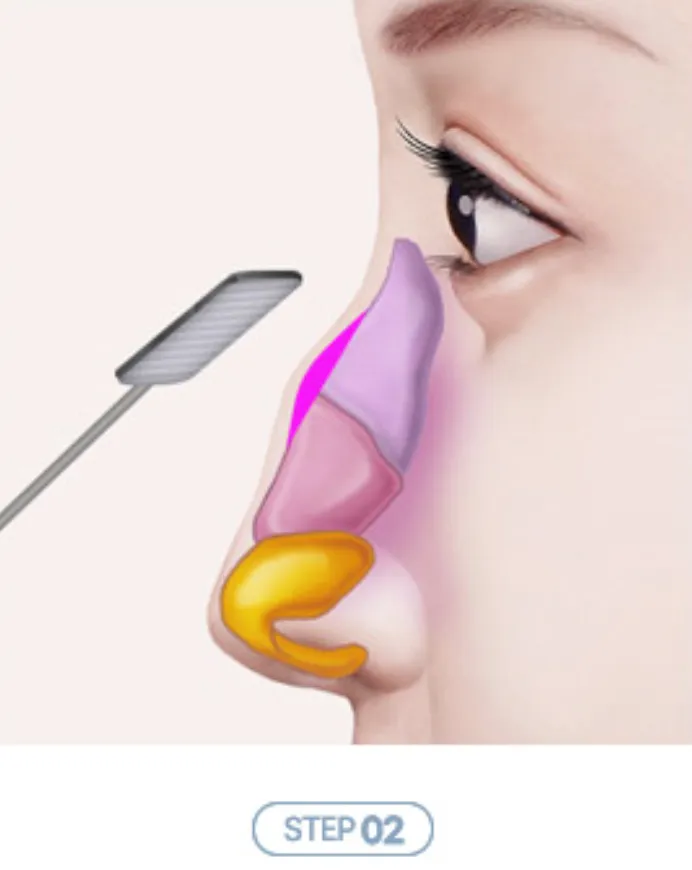
A hump composed of cartilage and bone is smoothly corrected using an osteotome. In cases of a severe hump, the protruding nasal dorsum may be resected, then the height of the flattened bridge can be supplemented with silicone or autologous tissue.
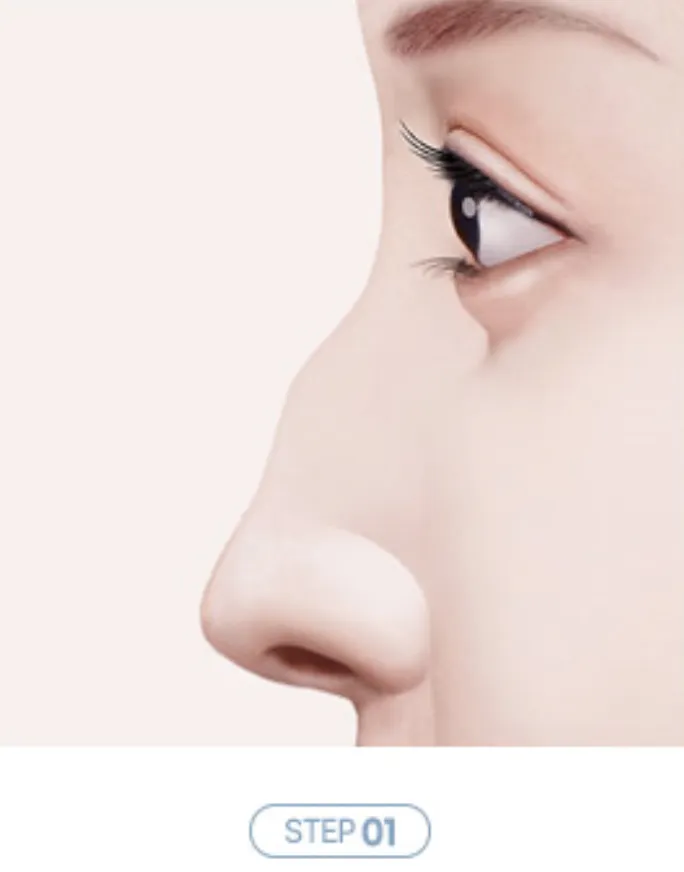
STEP 01 | Before Surgery
STEP 02 | Shave or Osteotomize the Hump Area
STEP 03 | Insert an Implant in the Nasal Bridge or Tip
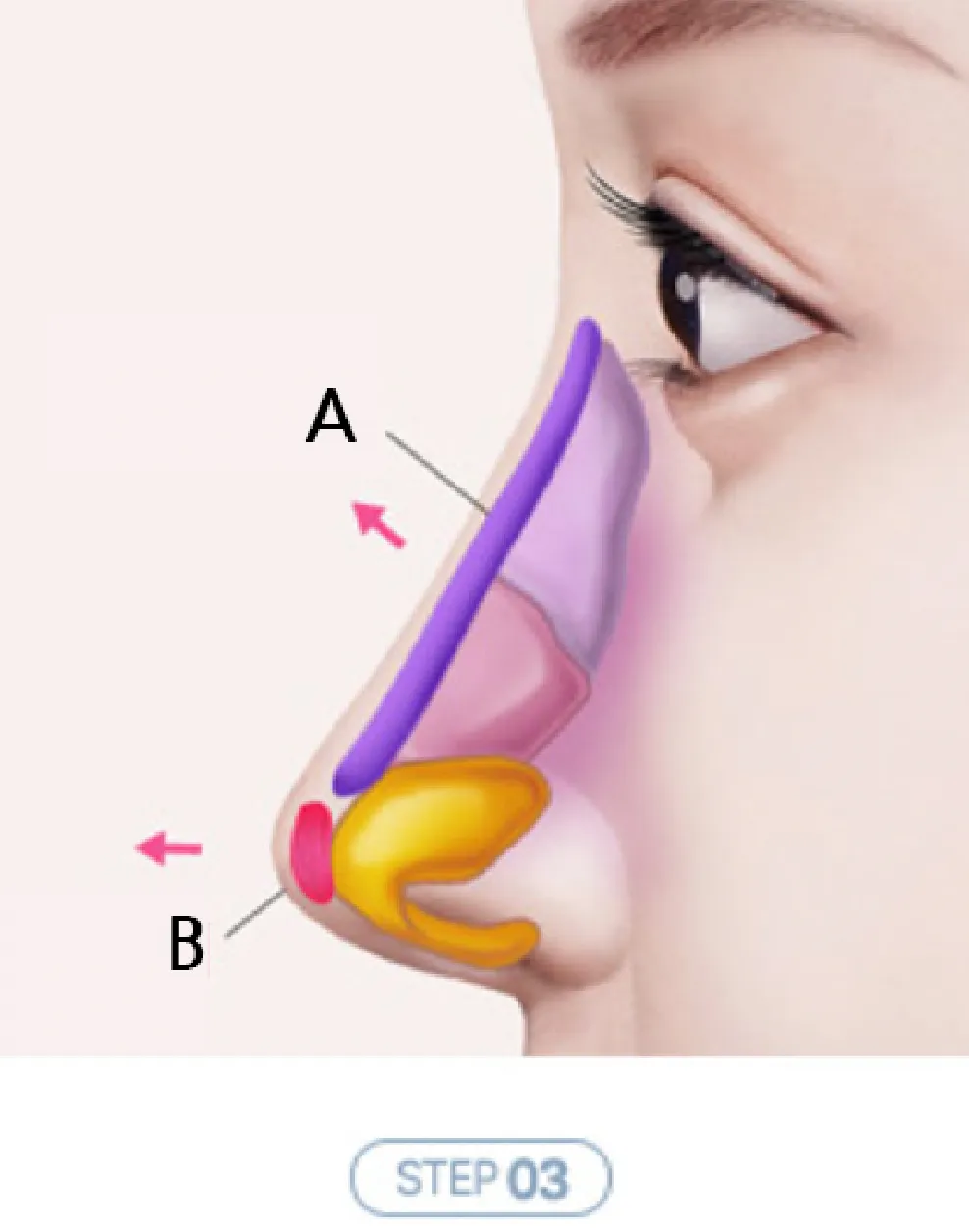
*A. Silicone / B. Autologous Tissue
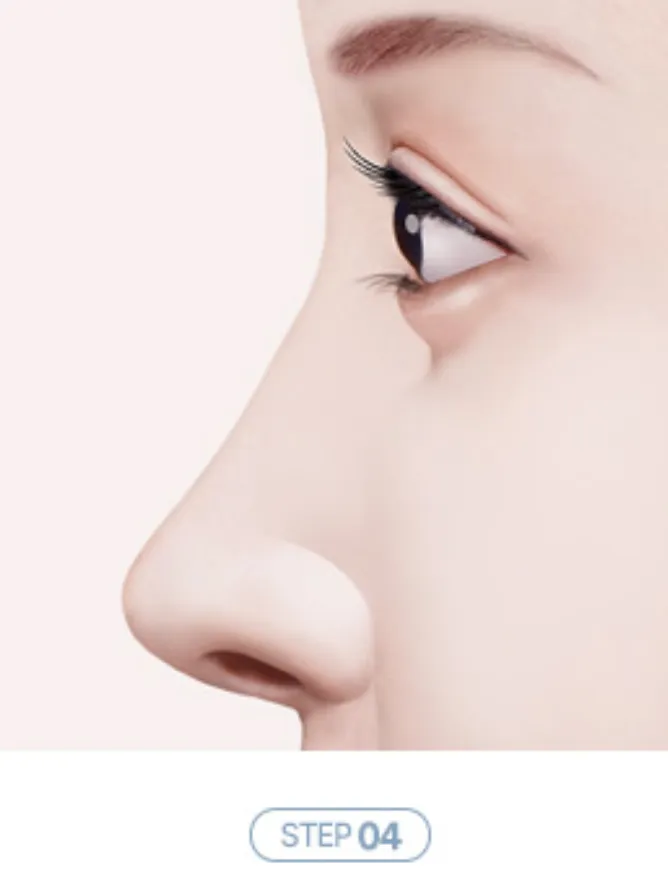
STEP 04 | After Surgery
3. Bulbous Nose
Make a large, broad nose slim and well-defined!
A bulbous nose refers to a nose with a blunt, broad tip and wide nostrils. Improving this type of nose to be slimmer and more defined can create a more refined image. Because the surgical method differs according to the cause of the bulbous nose, sufficient consultation before surgery is necessary.
Learn About Surgery Information
- Surgery Time
About 1 hour
- Anesthesia Method
Sedation anesthesia
- Suture Removal
After 1–2 weeks
- Follow-up Visits
2–3 visits
*This may vary depending on the patient's condition and the surgical method.
Recommended for These Patients
✅ Those with wide nostrils and a blunt nasal tip
✅ Those whose nose appears broad from the front
✅ Those with thick subcutaneous tissue at the nasal tip
✅ Those with large, splayed alar cartilages
What effects can LARA bulbous nose surgery provide?
- A sleek, refined nose line
- Increased confidence from any angle, front or side
- Slimmer nostrils and a more balanced impression
- Improved facial proportions
LARA PLASTIC SURGERY
LARA Bulbous Nose Surgery Method
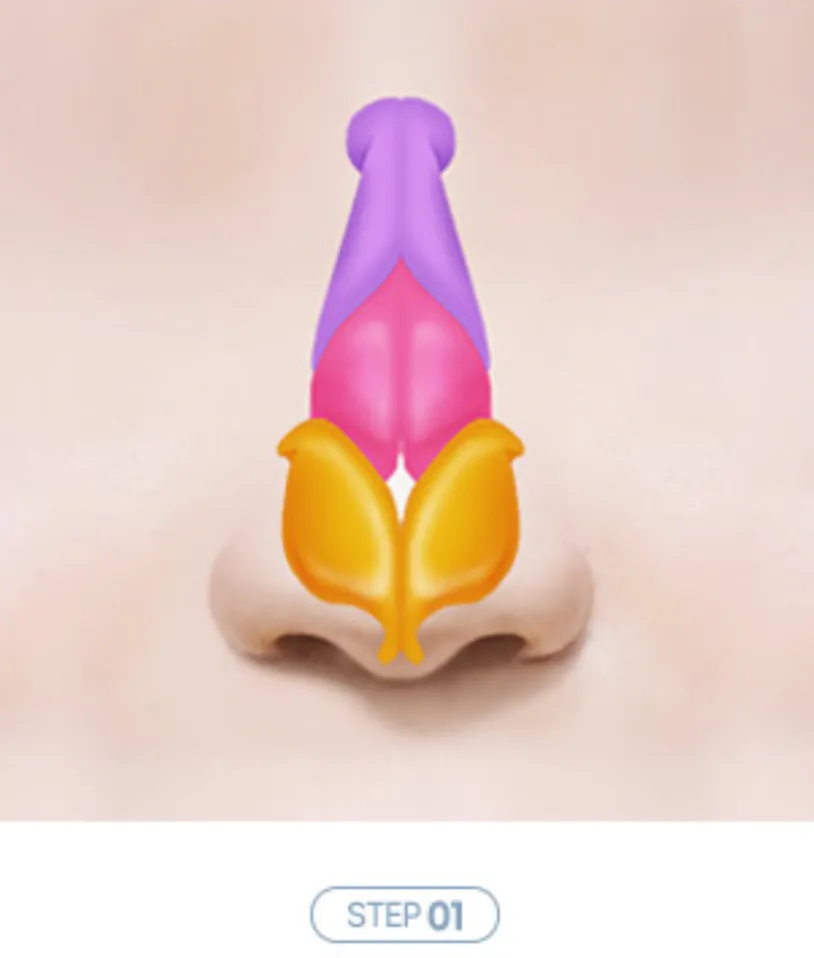
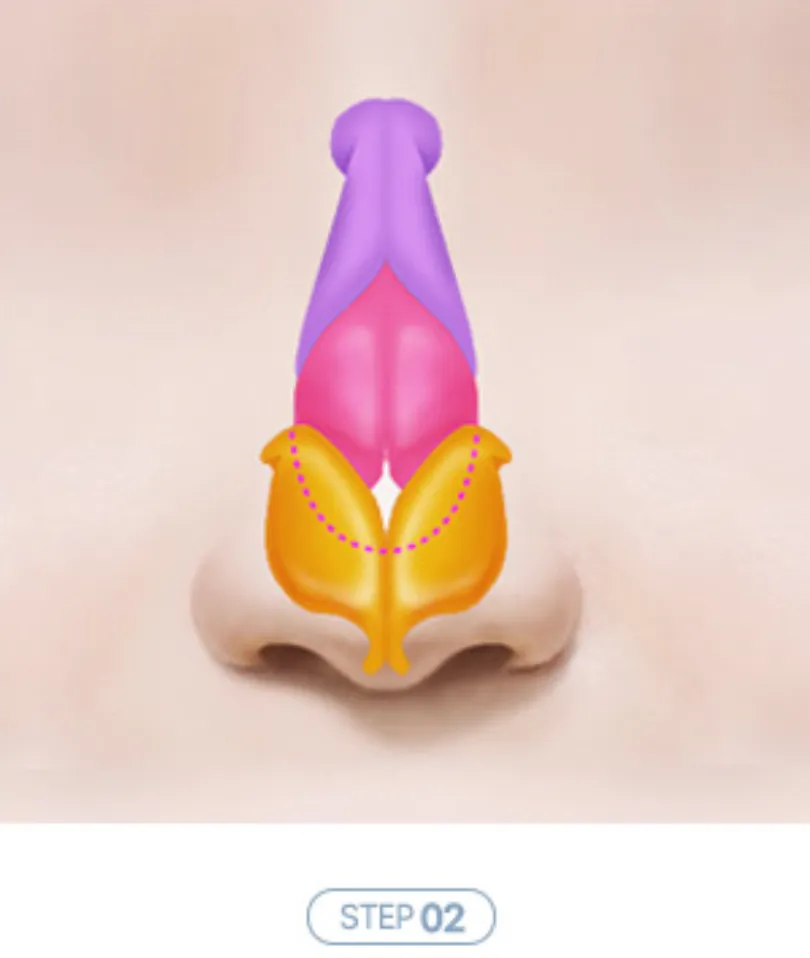
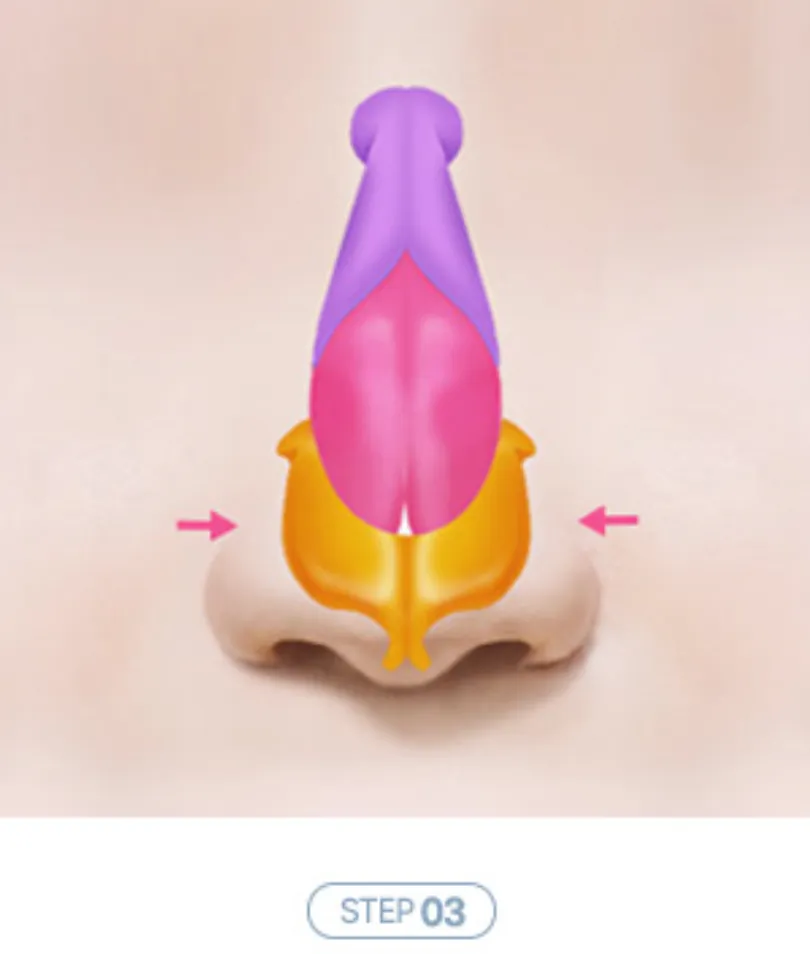
1. When the alar cartilages are wide
The tip portions of the alar cartilages are resected to an appropriate width in consideration of the overall nasal shape, and the splayed alar cartilages on both sides are sutured together to refine the nasal tip.
STEP 01 | Before Surgery
STEP 02 | Remove part of the cartilage.
STEP 03 | Bring the cartilage inward.
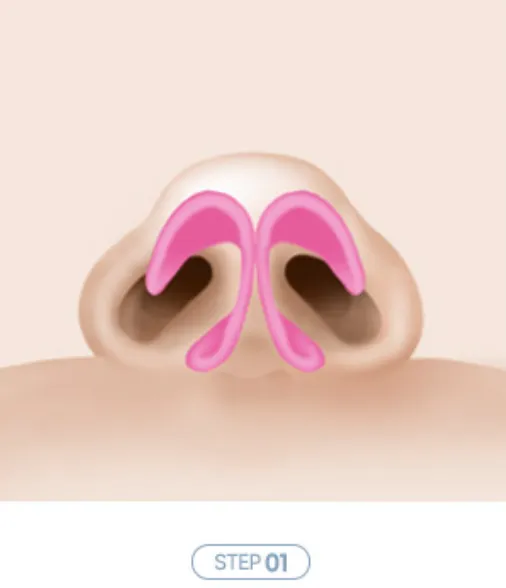
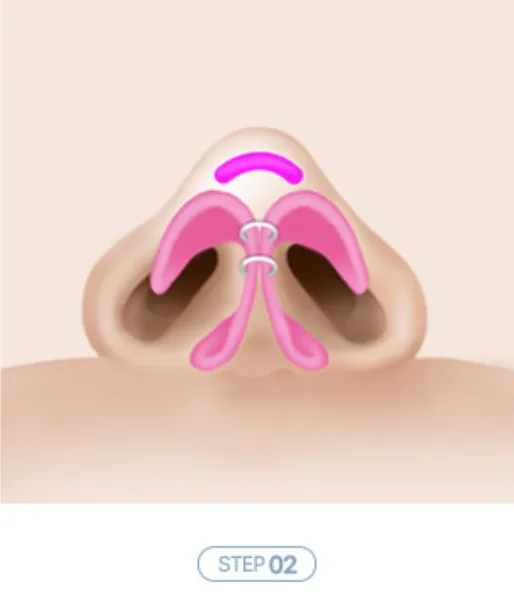
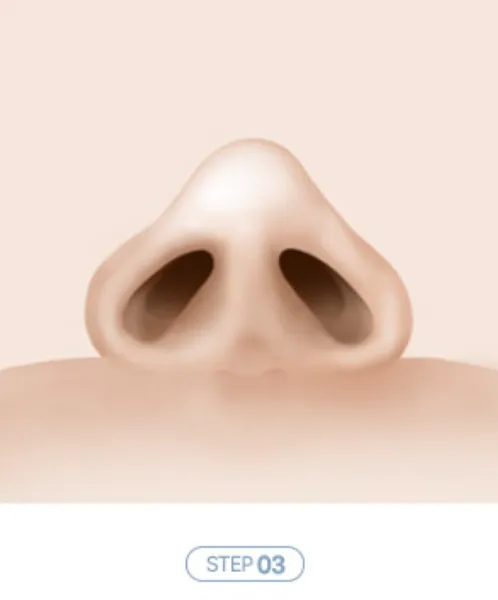
2. When the alar cartilages are splayed
Bringing the splayed alar cartilages together and securing them raises the lower portion connected to the septum, thereby elevating the nasal tip. For a more defined nasal tip, autologous cartilage may additionally be inserted.
STEP 01 | Before Surgery
STEP 02 | Bring the cartilage together and insert additional cartilage
STEP 03 | After Surgery
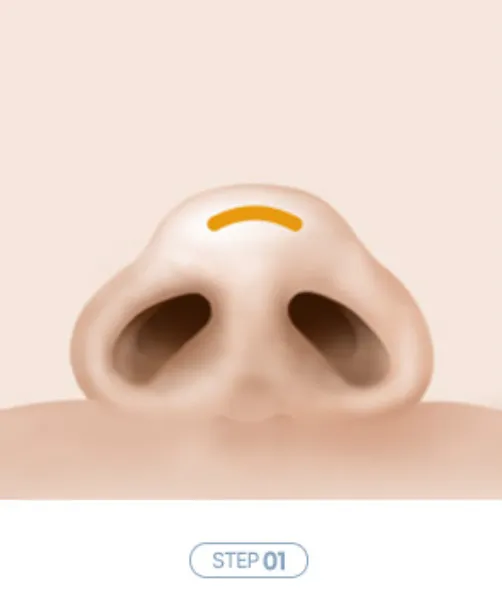
3. When the subcutaneous tissue at the nasal tip is thick
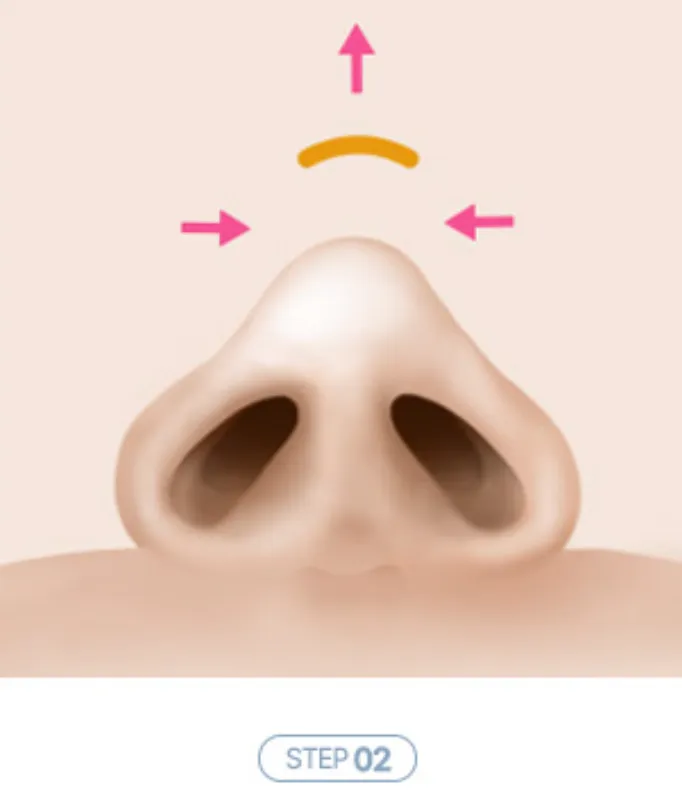
When there is excessive fat or thick subcutaneous tissue at the nasal tip, an appropriate amount is removed and the skin is contracted to improve the tip to a more defined and slimmer shape.
STEP 01 | Before Surgery
STEP 02 | Remove Fat at the Nasal Tip
STEP 03 | After Surgery
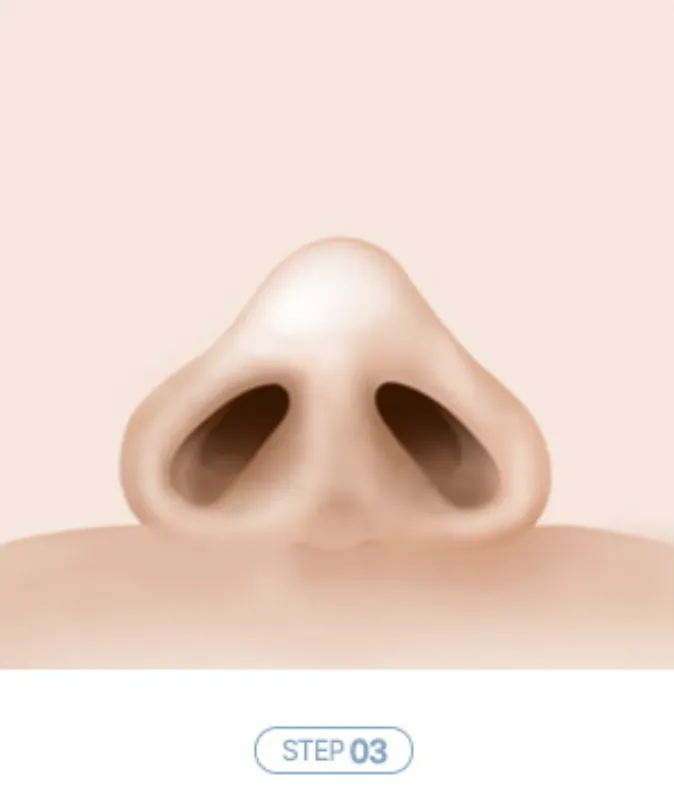
4. Short Nose
Naturally correct the nasal tip to improve an upturned nose
The ideal angle between the nasal tip and lips is 90°–105°. When the nasal tip is elevated at 110° or more, it is considered a short nose or an upturned nose.
The individual nasal condition is precisely analyzed and corrected to create a natural, well-defined line.
Learn About Surgery Information
- Surgery Time
About 1 hour
- Anesthesia Method
Sedation anesthesia
- Suture Removal
After 1–2 weeks
- Follow-up Visits
2–3 visits
*This may vary depending on the patient's condition and the surgical method.
Recommended for These Patients
✅ When the nostrils are visible due to an elevated nasal tip
✅ When the nose appears flat because it is short
✅ When the nasolabial angle is 110° or more
✅ When the nose length is shorter than one-third of the face
What effects can LARA short nose surgery provide?
- Naturally improves an elevated-looking nasal tip
- Increased confidence from any angle, front or side
- Improved appearance through correction of nostril exposure
- Improved facial proportions through nose length correction
LARA PLASTIC SURGERY
LARA Short Nose Surgery Method
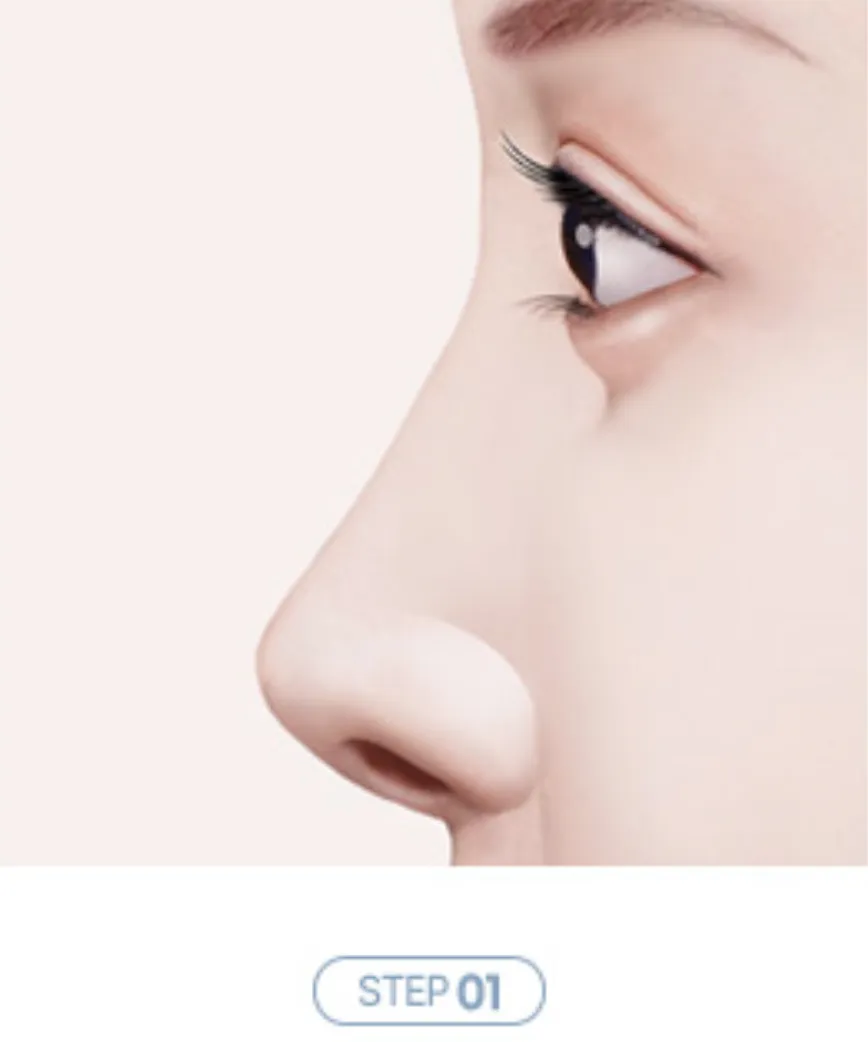
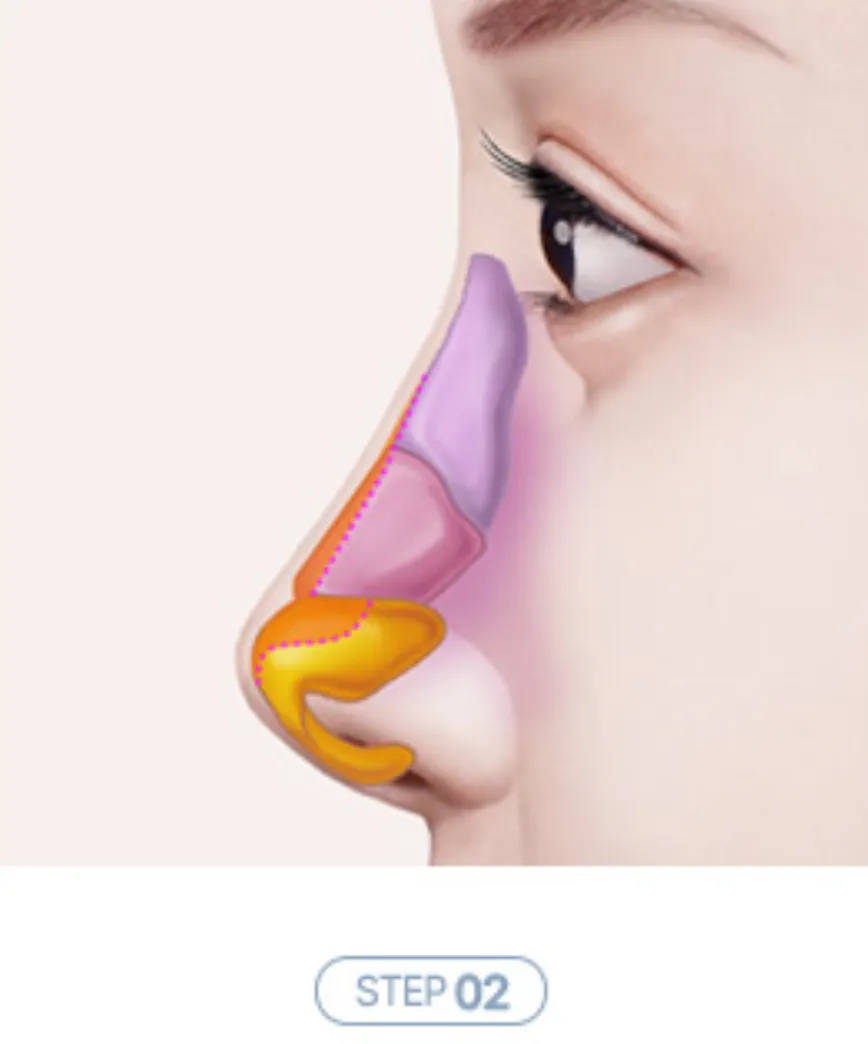
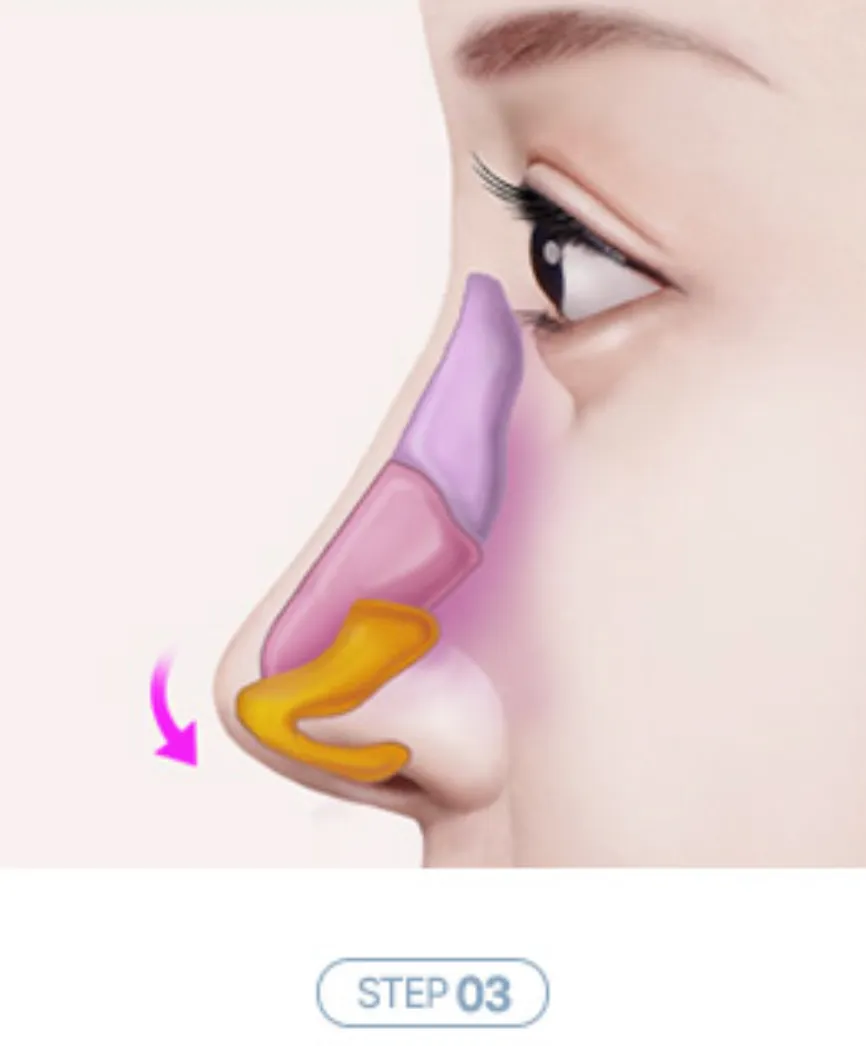
Cartilage reshaping procedure
When the alar cartilages are positioned upward, the nasal tip appears elevated.
By trimming the upper portion of the alar cartilages, lowering them, and securing them in place, the nasal tip is lowered and the nose appears longer.
STEP 01 | Before Surgery
STEP 02 | Dissection of the Alar Cartilage at the Nasal Tip
STEP 03 | Lower and Fix the Alar Cartilage
STEP 04 | After Surgery
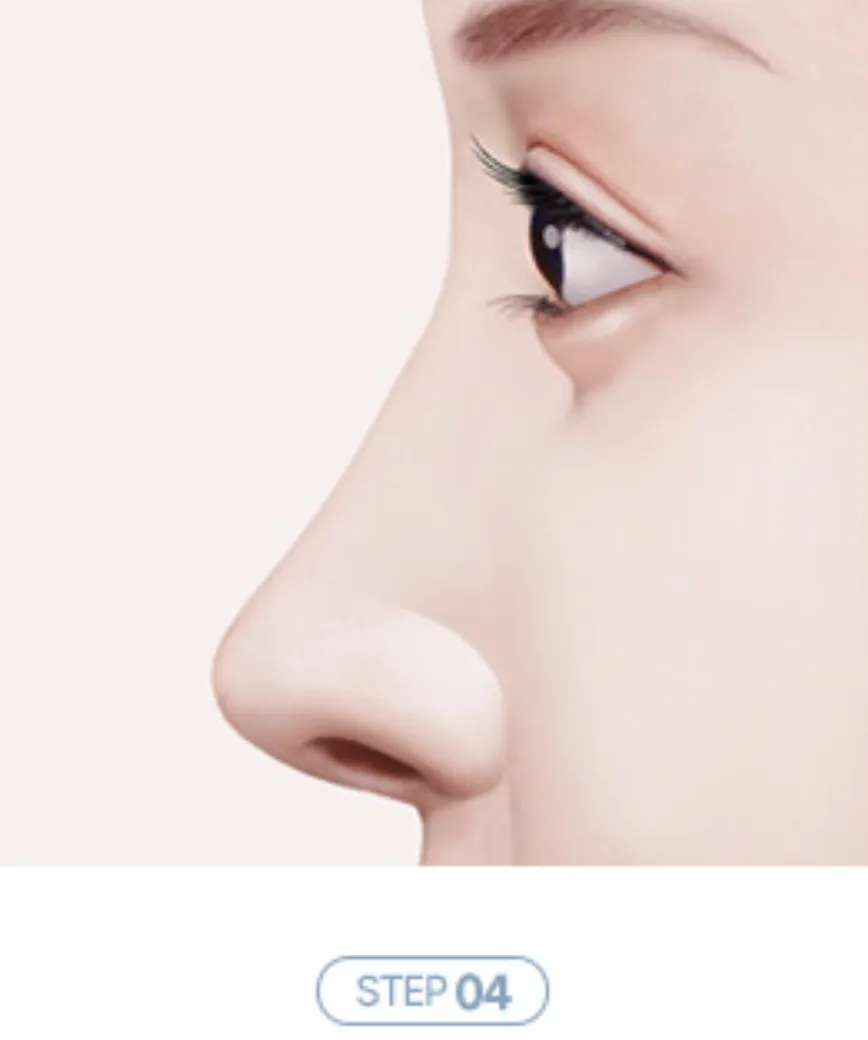
Cartilage grafting procedure
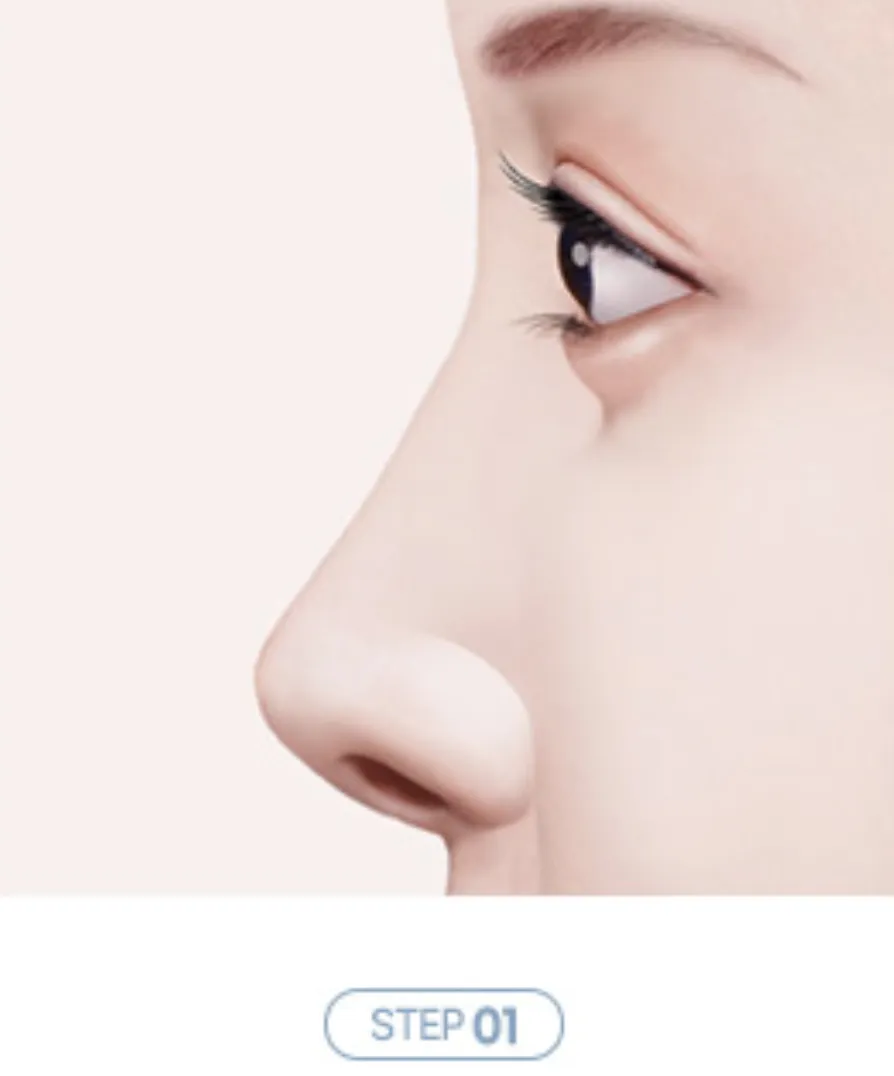
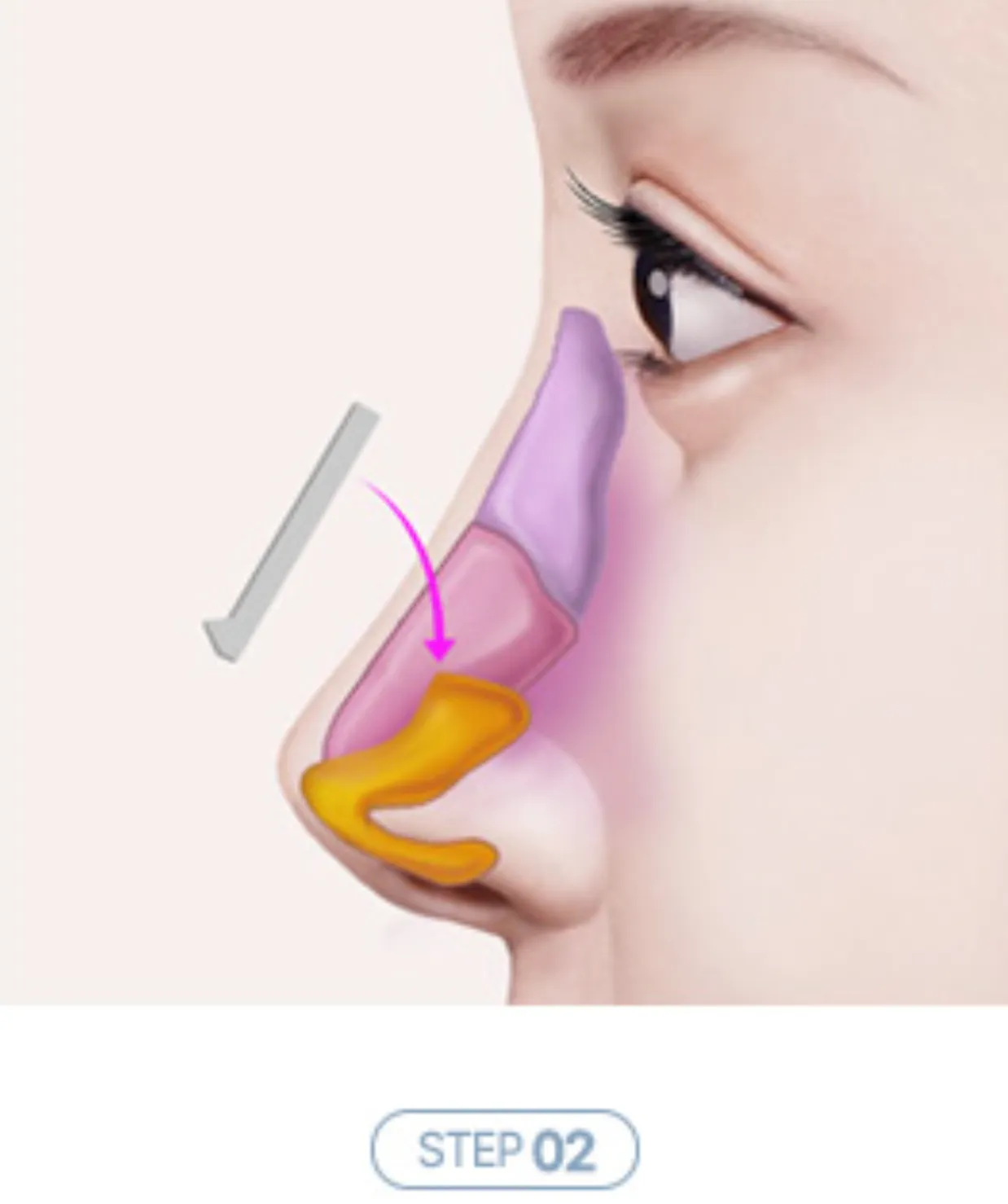
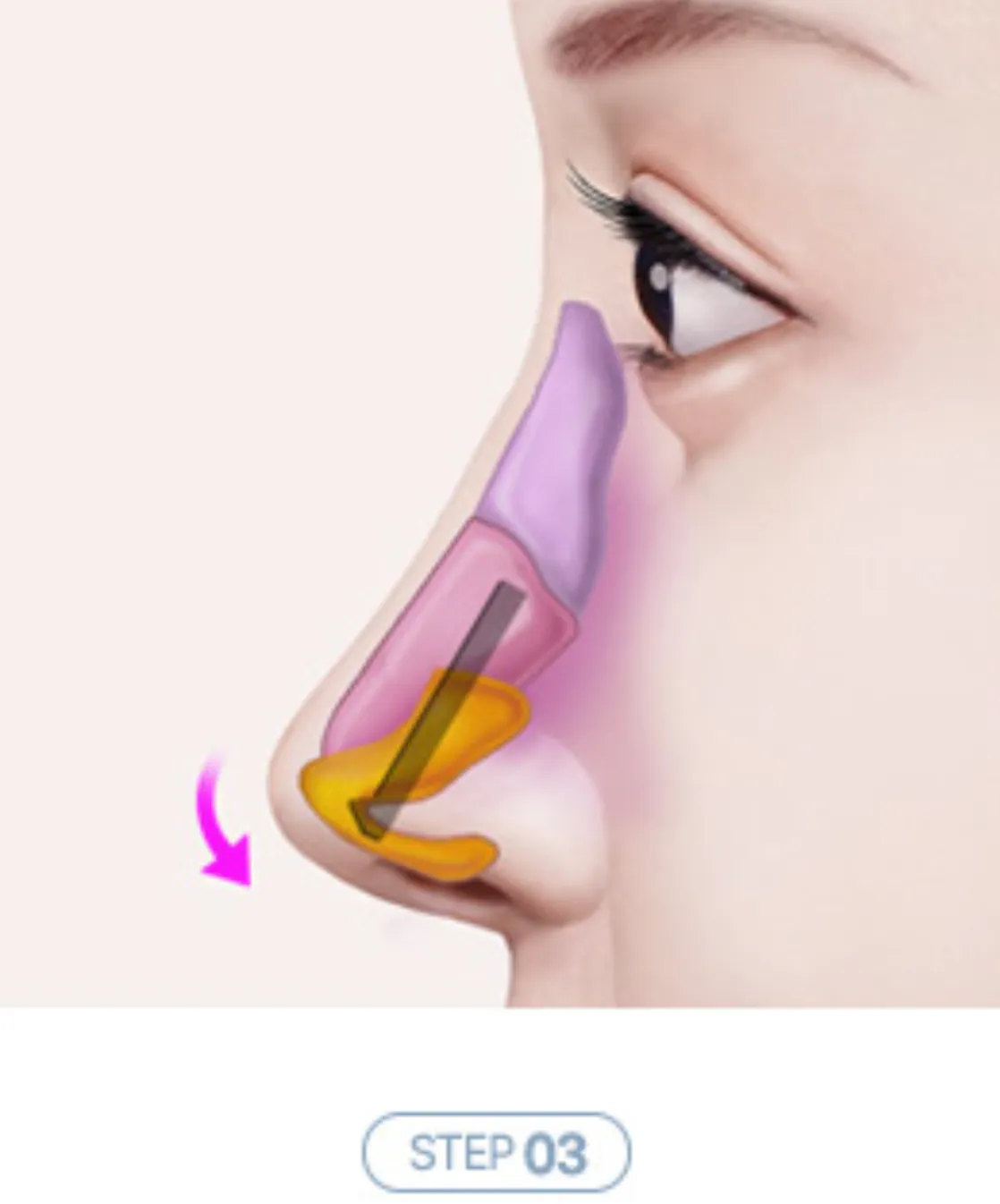
When the columella is positioned higher than the nasal tip, cartilage is grafted between the septal cartilage and alar cartilage to lower the nasal tip and make the nose appear longer.
STEP 01 | Before Surgery
STEP 02 | Autologous Tissue Grafting
STEP 03 | Lower the Nasal Tip
STEP 04 | After Surgery
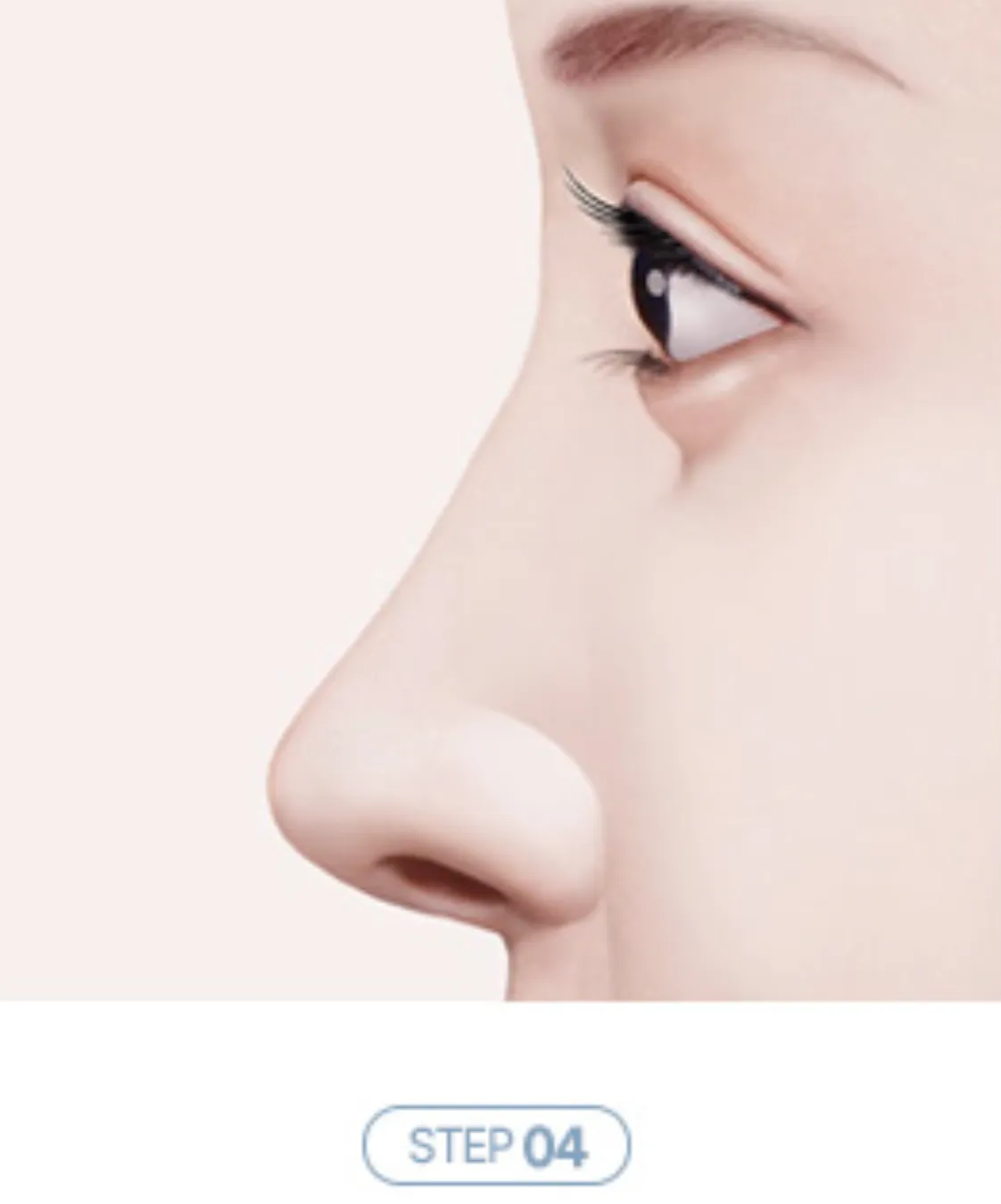
Cartilage reshaping + cartilage grafting + augmentation rhinoplasty
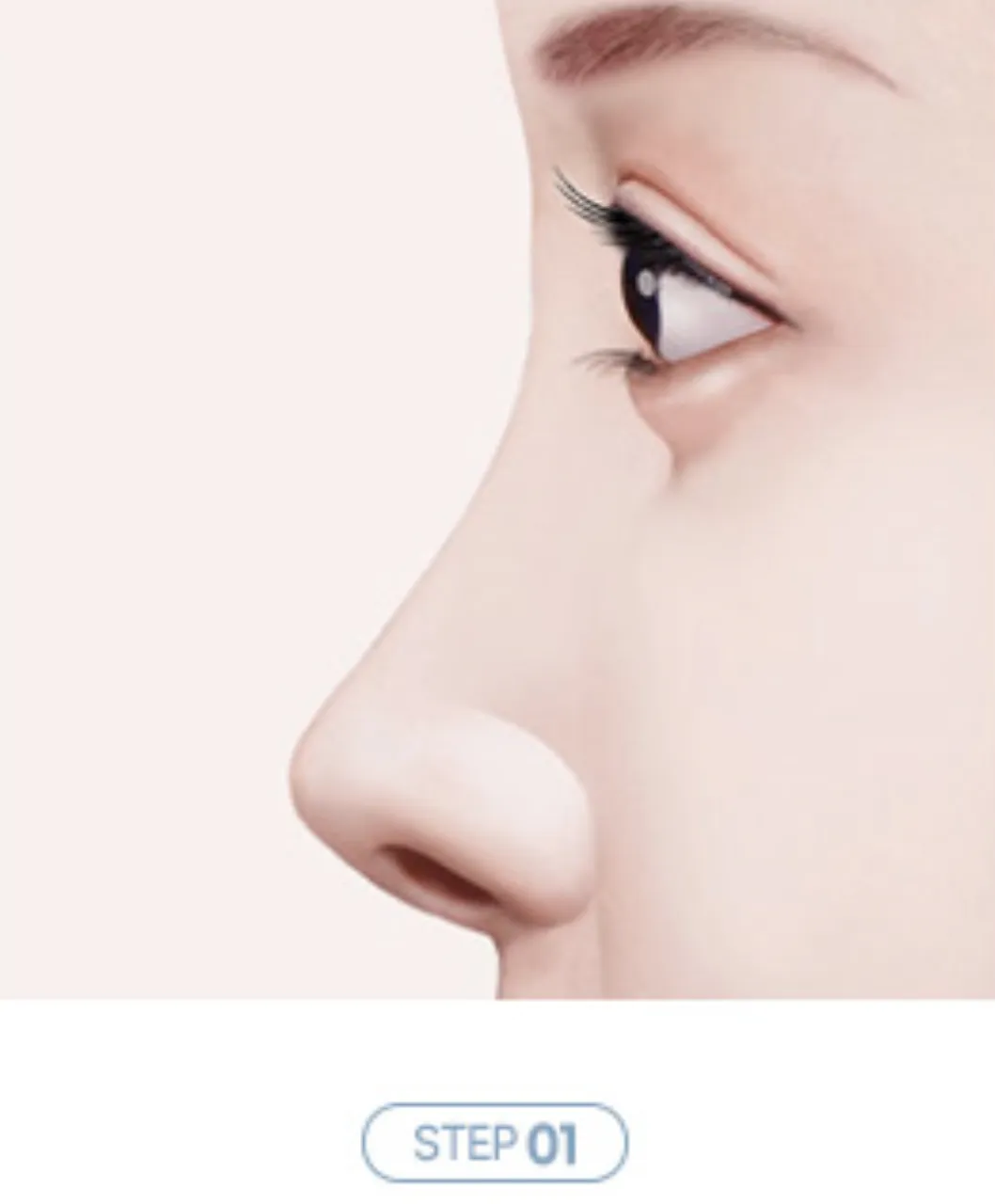
If additional nasal height is desired after cartilage reshaping and cartilage grafting, augmentation rhinoplasty is performed. The nose is corrected by inserting an implant in the nasal bridge and autologous tissue in the nasal tip.
STEP 01 | Before Surgery
STEP 02 | Insert Autologous Tissue
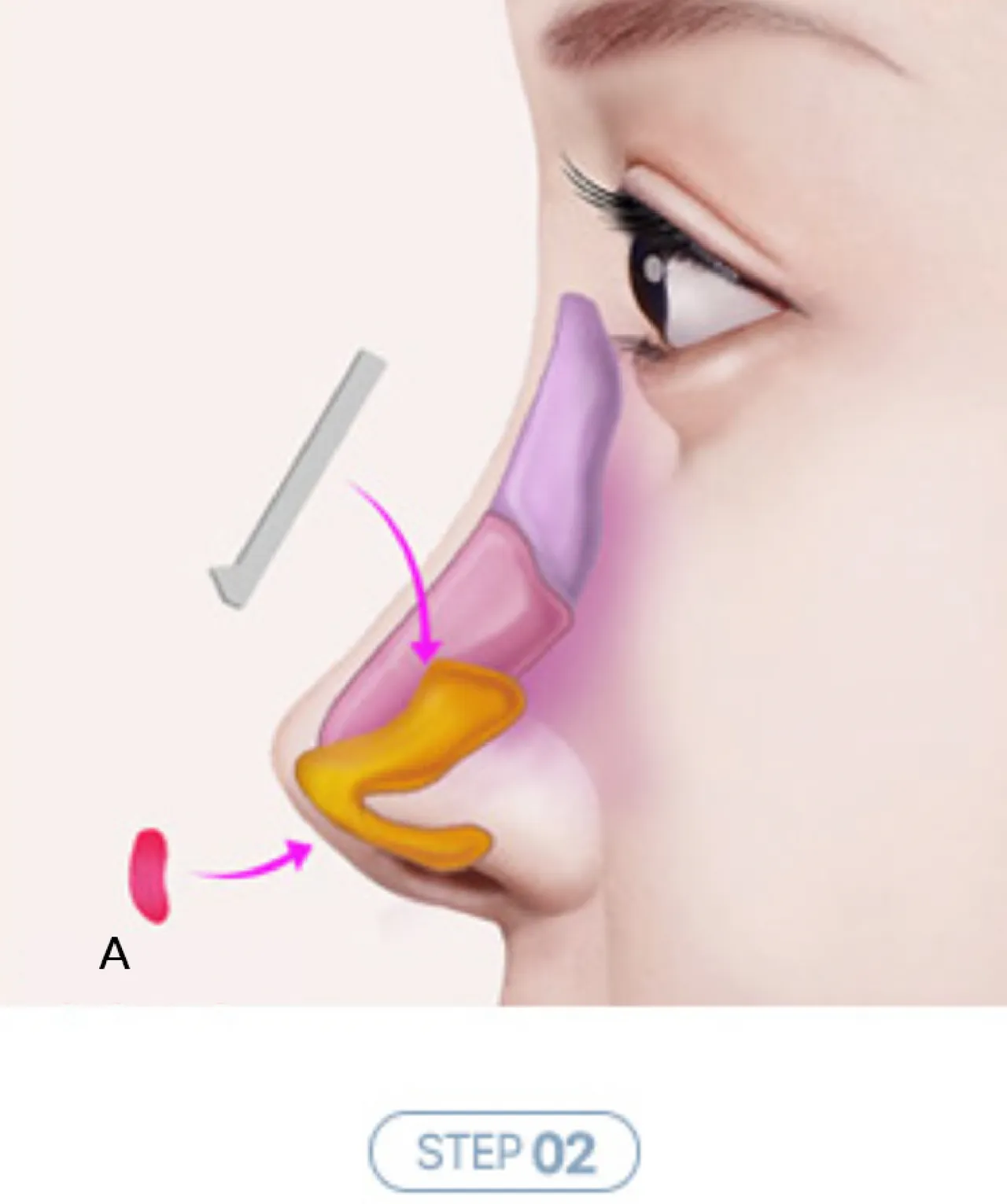
*A. Autologous Tissue
STEP 03 | After inserting autologous tissue, use dermis or fascia if necessary
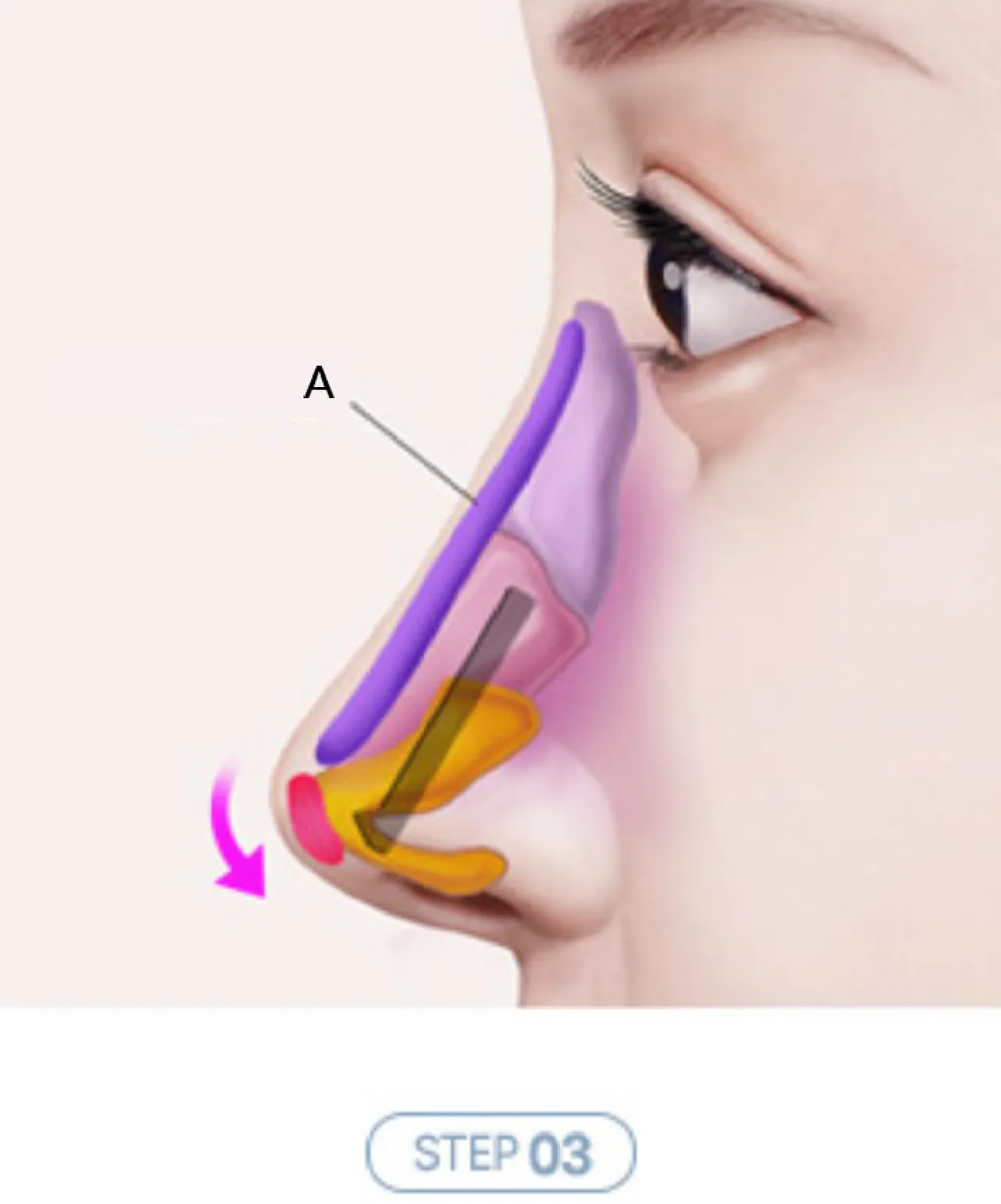
*A. Silicone
STEP 04 | After Surgery
5. Long Nose
A natural nose that harmonizes with facial proportions
A nose with a drooping tip that resembles an arrowhead is called a long nose or arrow nose. It can create a strong impression, make the nose appear low, and make the face appear less dimensional.
Long nose correction can improve facial balance.
Learn About Surgery Information
- Surgery Time
1 to 1.5 hours
- Anesthesia Method
Sedation anesthesia
- Suture Removal
After 1–2 weeks
- Follow-up Visits
2–3 visits
*This may vary depending on the patient's condition and the surgical method.
Recommended for These Patients
✅ When the face appears long because the nose is long
✅ When the nostrils are obscured due to a drooping nasal tip
✅ When the nasolabial angle is small
✅ When the nose length is longer than one-third of the face
What effects can LARA long nose surgery provide?
- Naturally improves a previously drooping nasal tip
- Improves an older-looking impression to a more youthful appearance
- Softens a strong and fierce-looking impression
- Improves facial length through nose length correction
LARA Long Nose Surgery Method
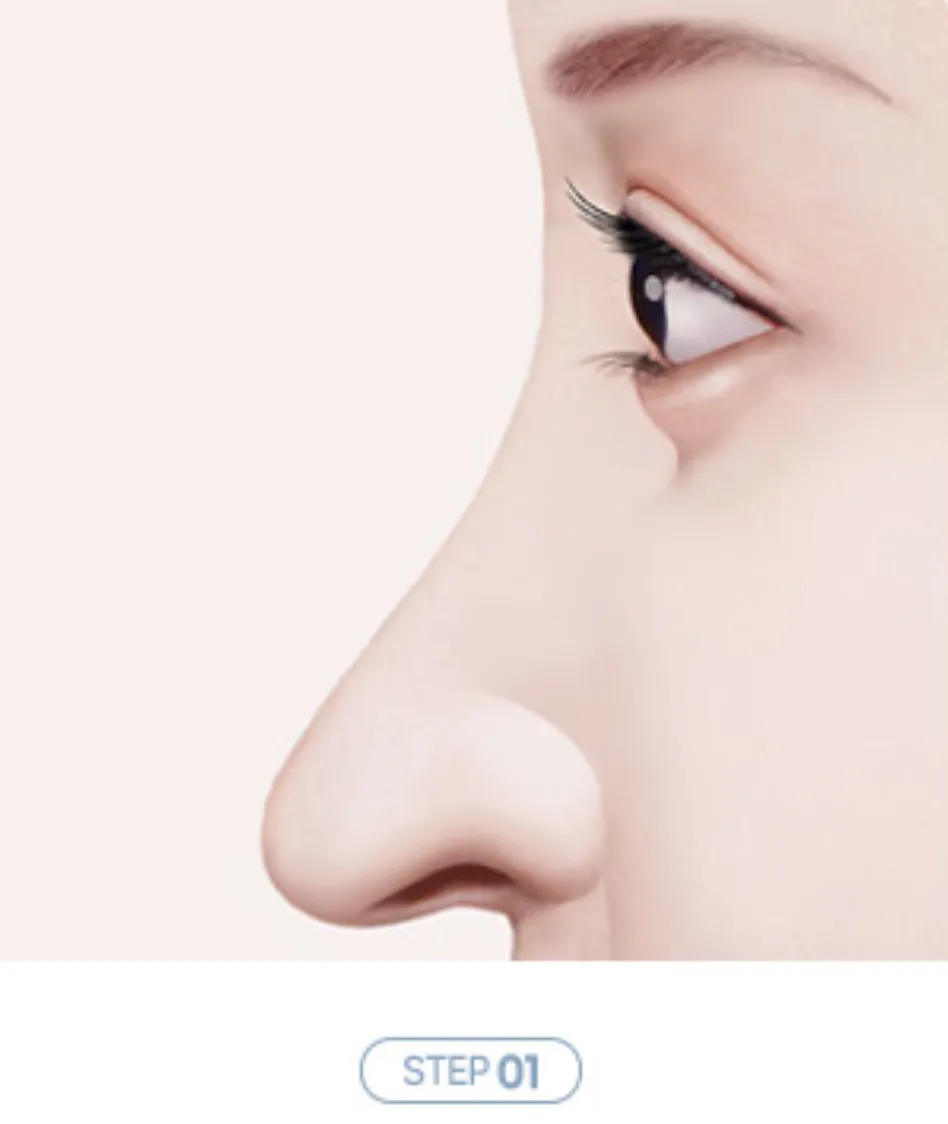
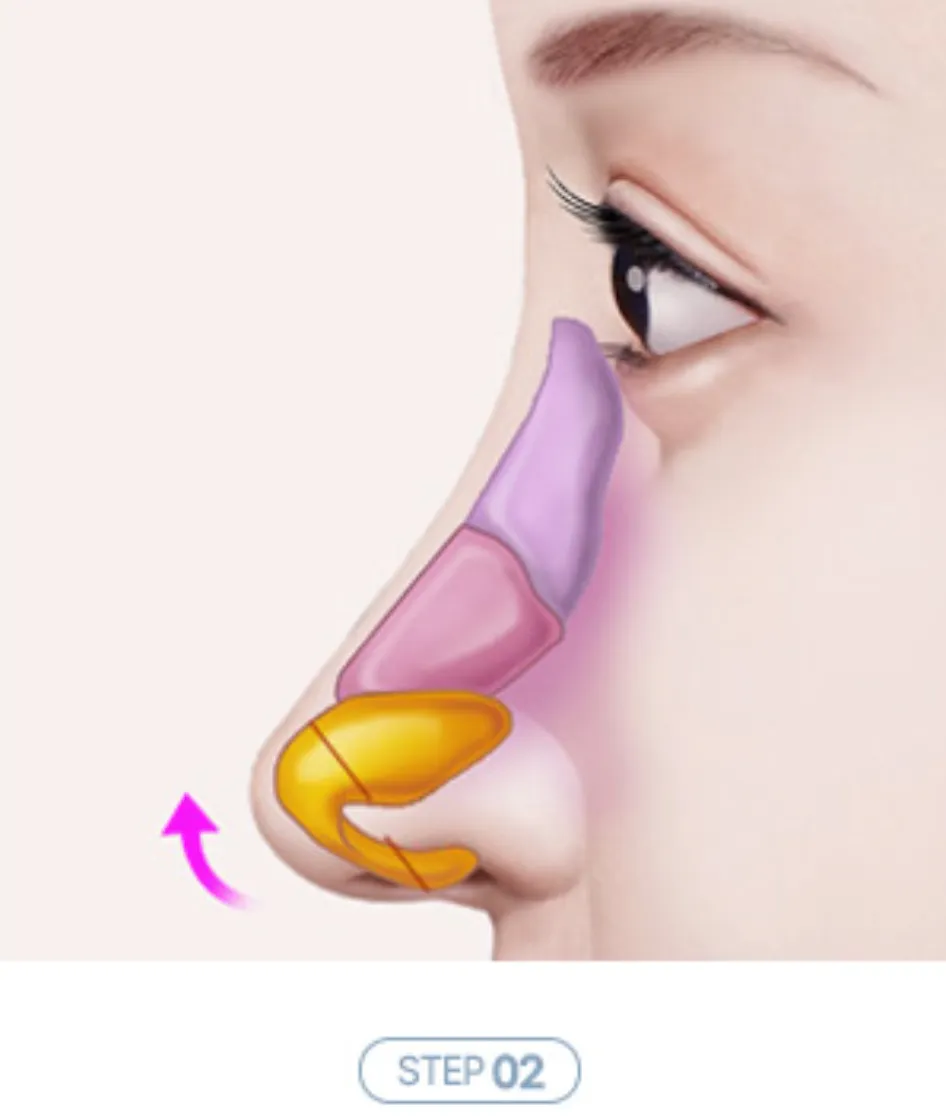
A long nose/arrow nose occurs when the septal cartilage is long or the alar cartilages at the nasal tip are drooping. The shape of the cartilage is corrected and the alar cartilages are repositioned to improve a long nose/arrow nose.
If necessary, ear cartilage may additionally be used to elevate the nasal tip, or an implant may be used to raise the nasal bridge.
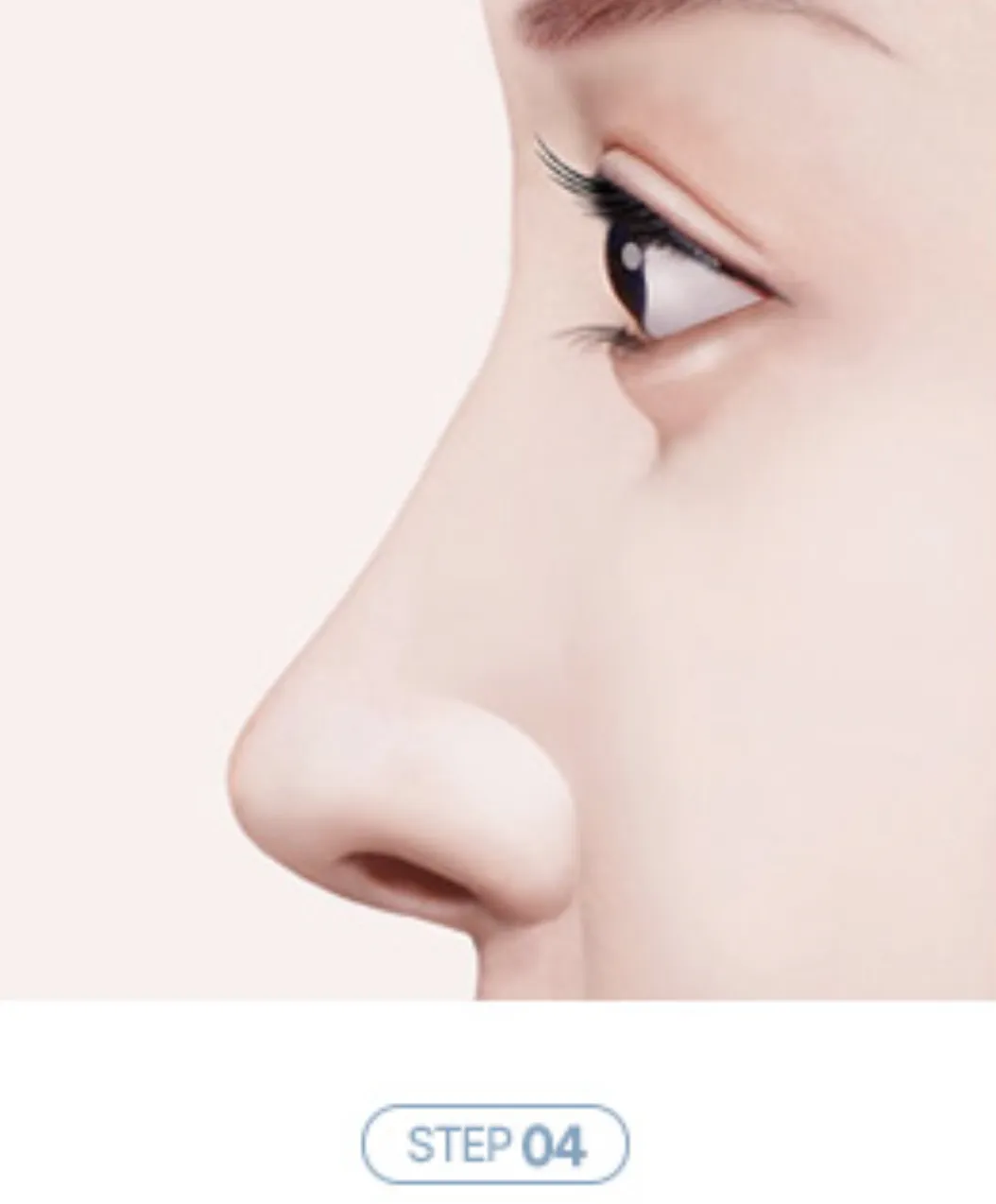
STEP 01 | Before Surgery
STEP 02 | Lift the cartilage upward and suture it
STEP 03 | Move the nasal cartilage upward using septal extension and secure it
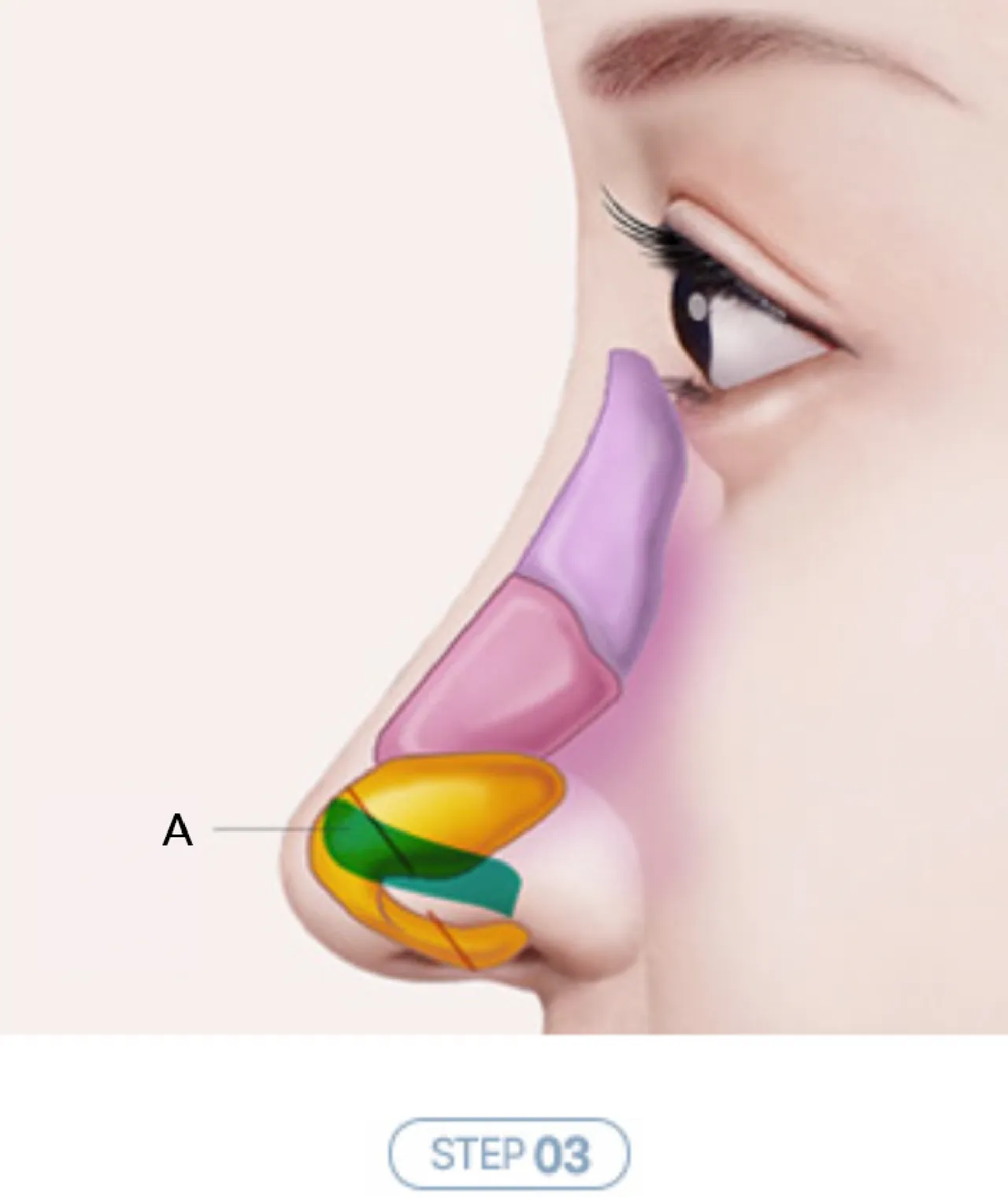
*A. Columella
STEP 04 | Resect the depressor septi nasi muscle to prevent recurrence
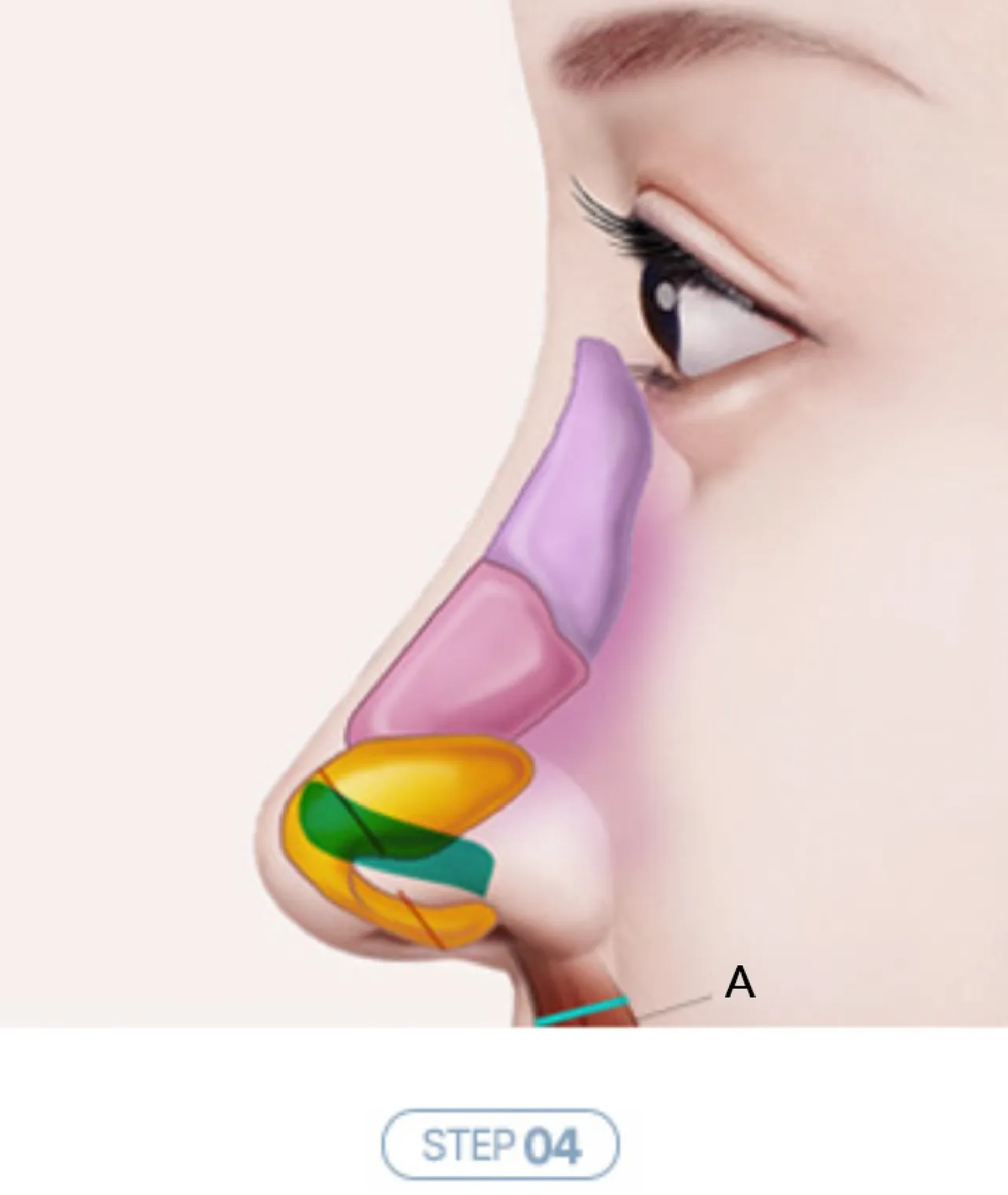
*A. Depressor Muscle
STEP 05 | Correct the nasal bridge and tip with an implant and autologous cartilage as needed
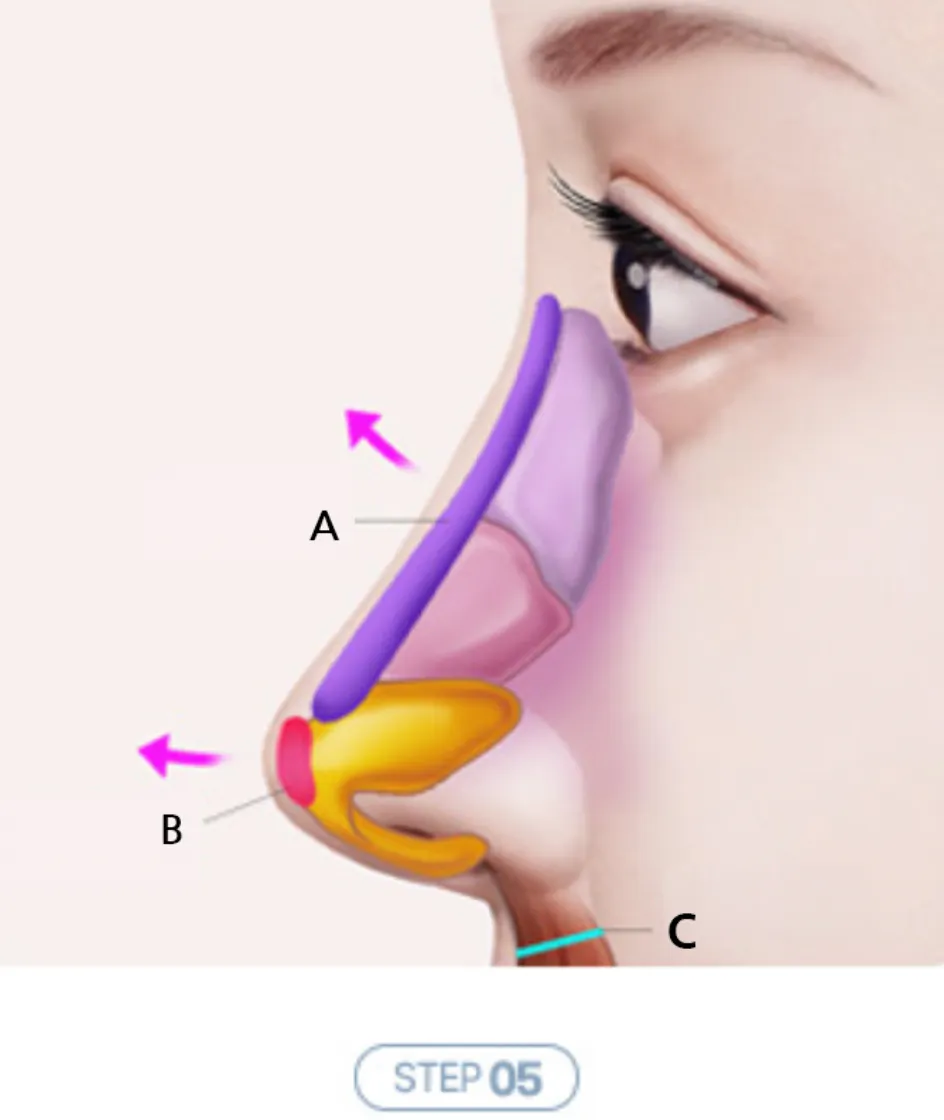
*A. Implant / B. Autologous Tissue / C. Resection
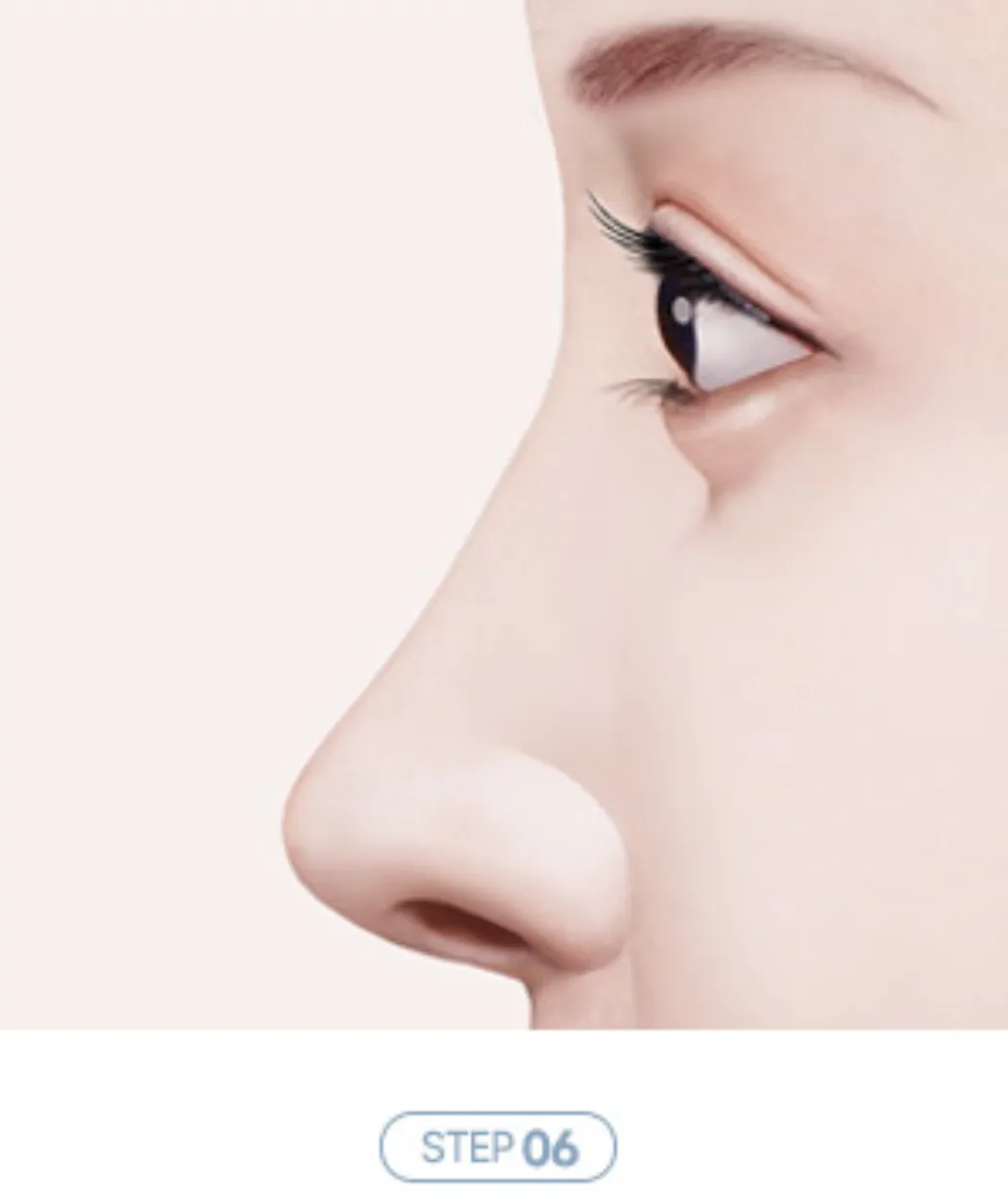
STEP 06 | After Surgery
6. Deviated Nose
LARA PLASTIC SURGERY
Straighten a crooked nose for a balanced, symmetrical nose line
When the nasal bridge is crooked, the face may appear asymmetrical and create an awkward impression.
In addition, the internal structures may also be deviated, accompanied by symptoms such as chronic rhinitis or nasal obstruction.
Both the appearance and internal structure of the nose must be considered to achieve aesthetic and functional improvement at the same time.
Learn About Surgery Information
- Surgery Time
About 2 hours
- Anesthesia Method
Sedation anesthesia
- Suture Removal
After 1–2 weeks
- Follow-up Visits
2–3 visits
*This may vary depending on the patient's condition and the surgical method.
Recommended for These Patients
✅ When a crooked nasal bridge disrupts facial balance
✅ When an implant becomes crooked after nose surgery
✅ When a deviated nose causes functional problems
✅ When the nasal bridge is congenitally or acquiredly crooked
What effects can LARA deviated nose surgery provide?
- A smooth, straight, natural nasal bridge
- Increased confidence from any angle
- Resolution of functional issues such as nasal obstruction and rhinitis
- Improved facial balance through deviated nose correction
LARA PLASTIC SURGERY
LARA Deviated Nose Surgery Method
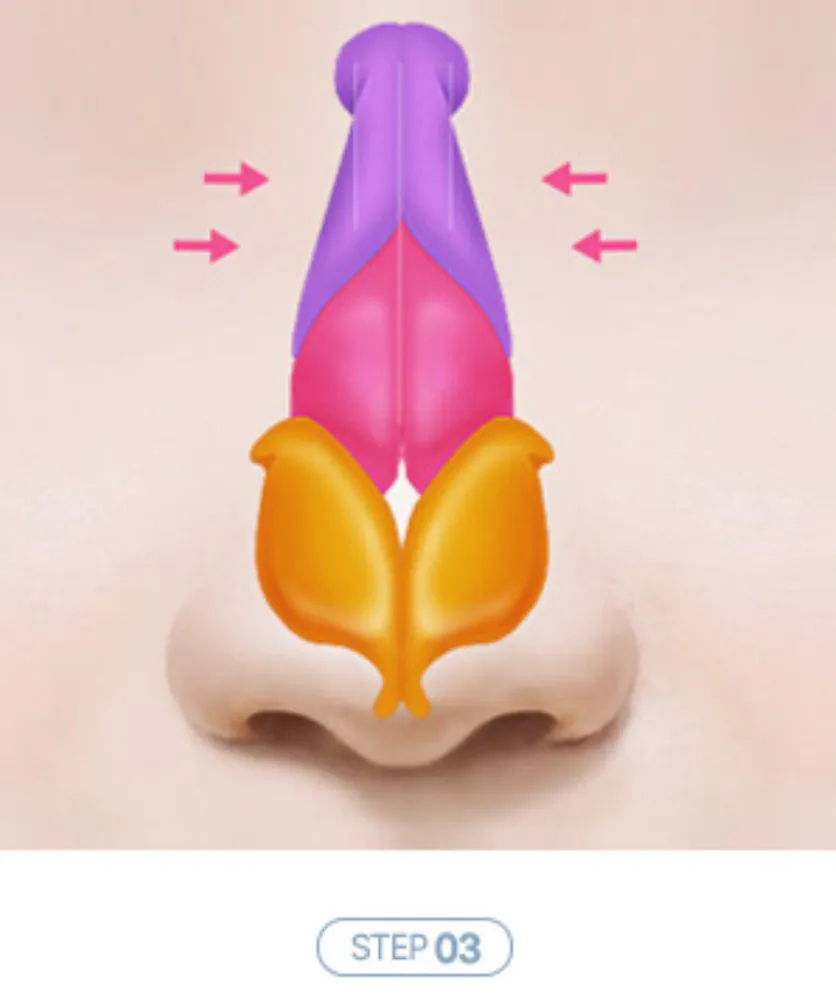
When the nasal bones are crooked
Both sides of the deviated nasal bones are osteotomized and straightened to create a straight, symmetrical nose.
STEP 01 | Deviated Nasal Bones
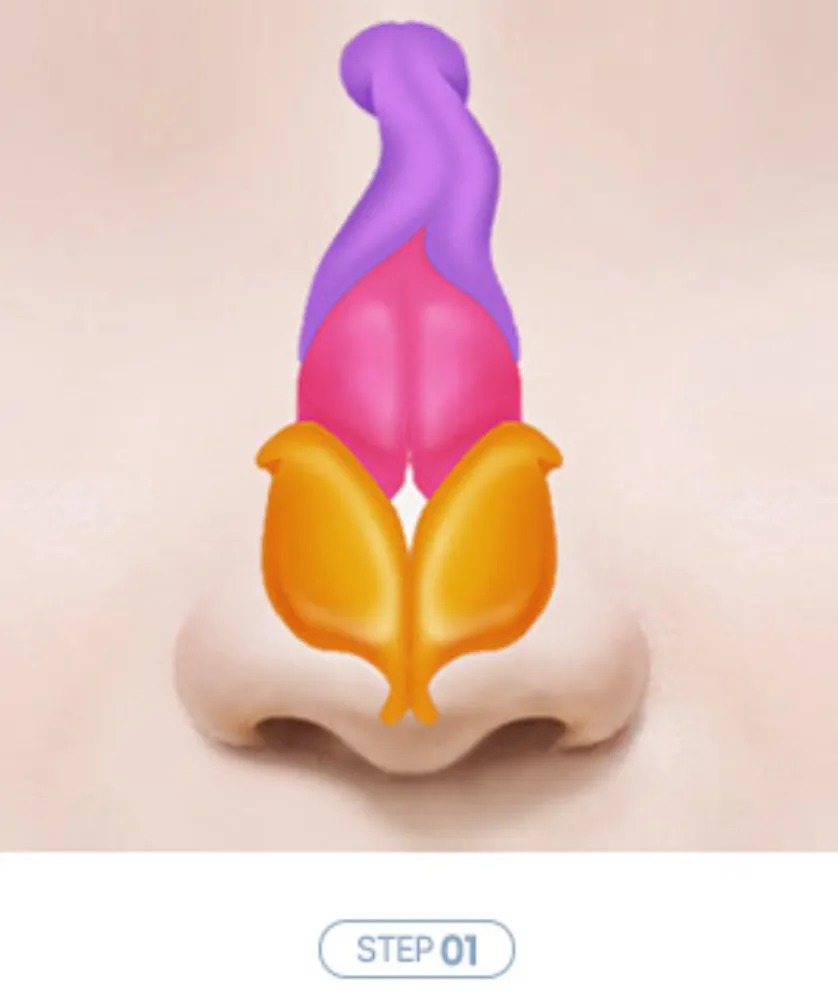
STEP 02 | Separate the nasal bones through medial and lateral osteotomies
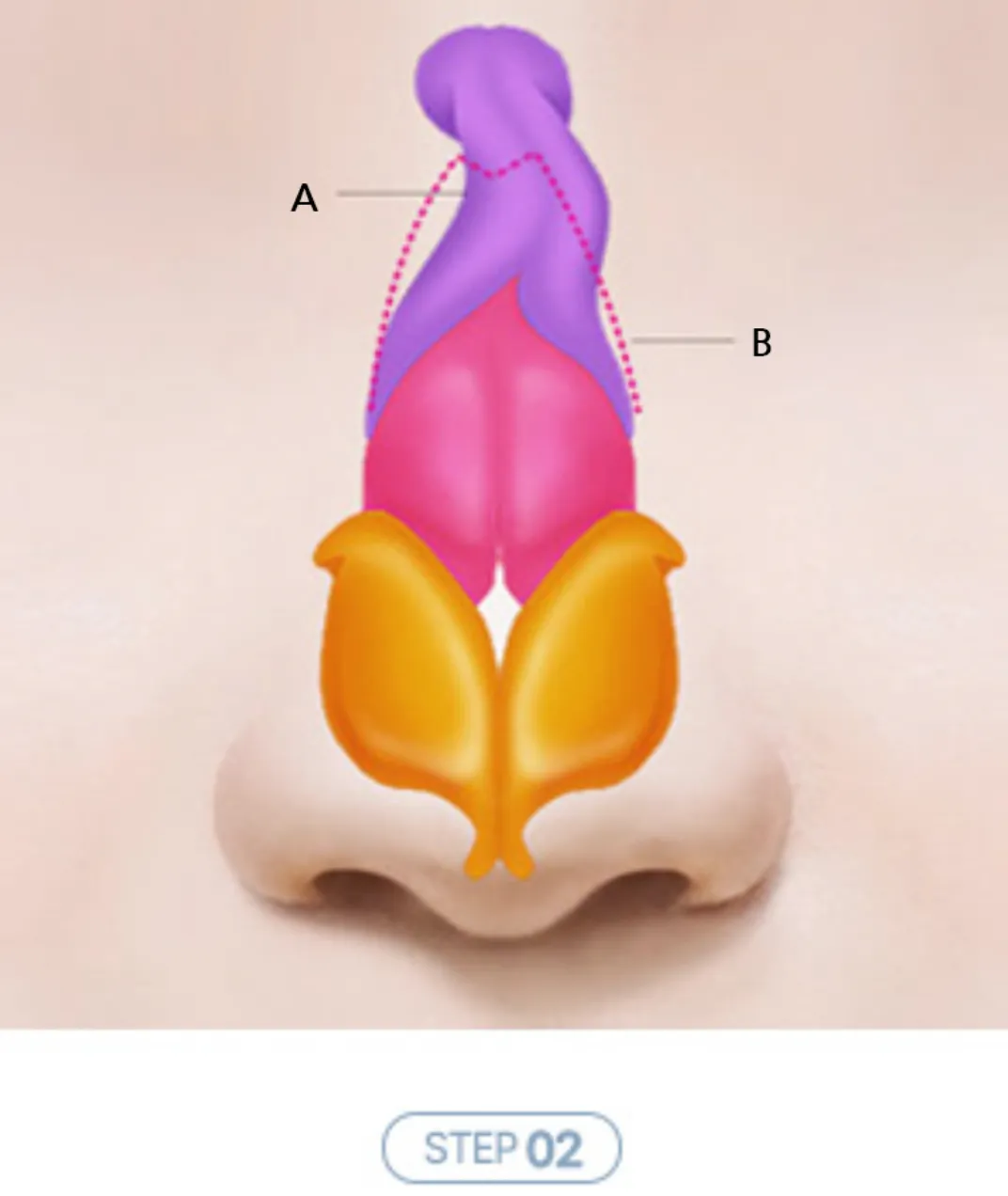
*A. Medial Osteotomy / B. Lateral Osteotomy
STEP 03 | Properly Corrected Nasal Bones
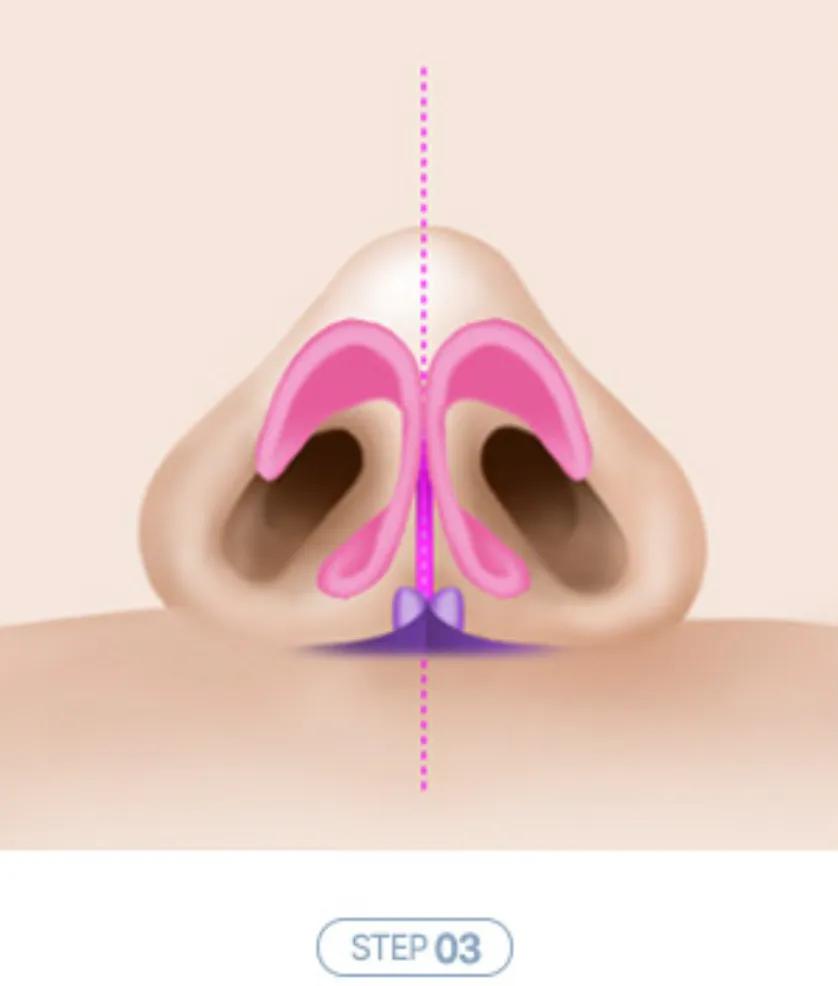
When the septal cartilage is deviated
Part of the deviated septal cartilage is resected and straightened, and the asymmetrical nasal cartilage is corrected and secured.
STEP 01 | Deviated Nasal Tip
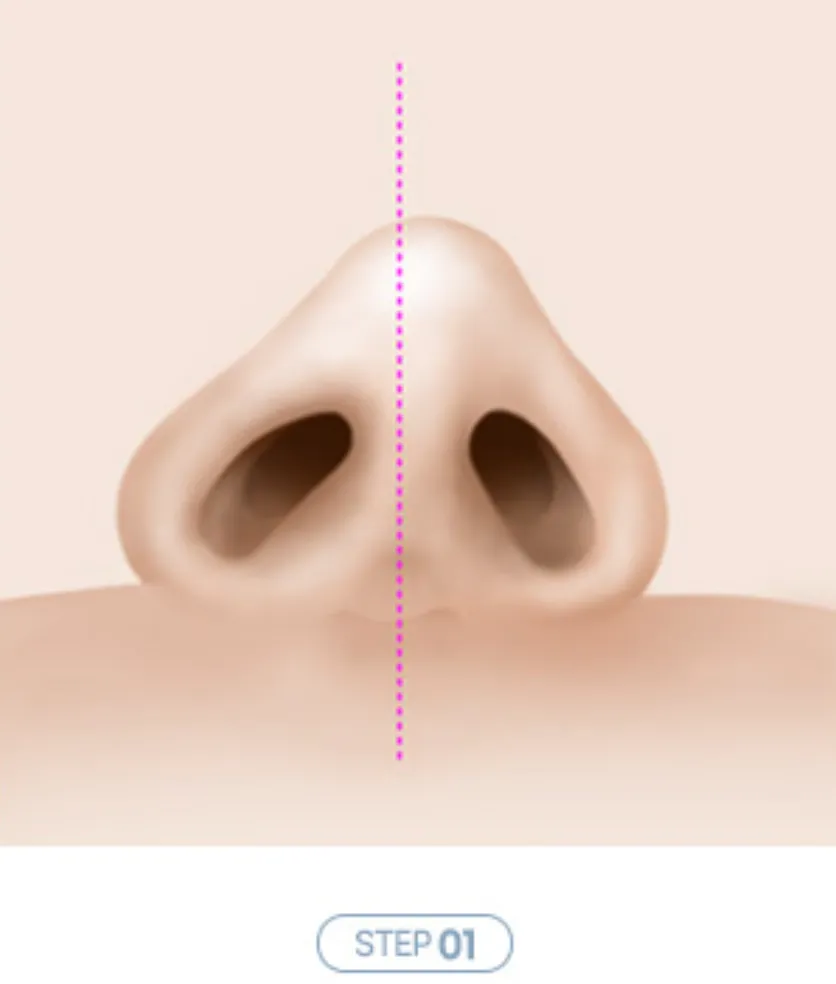
STEP 02 | Correct and secure the nasal tip cartilage and septal cartilage
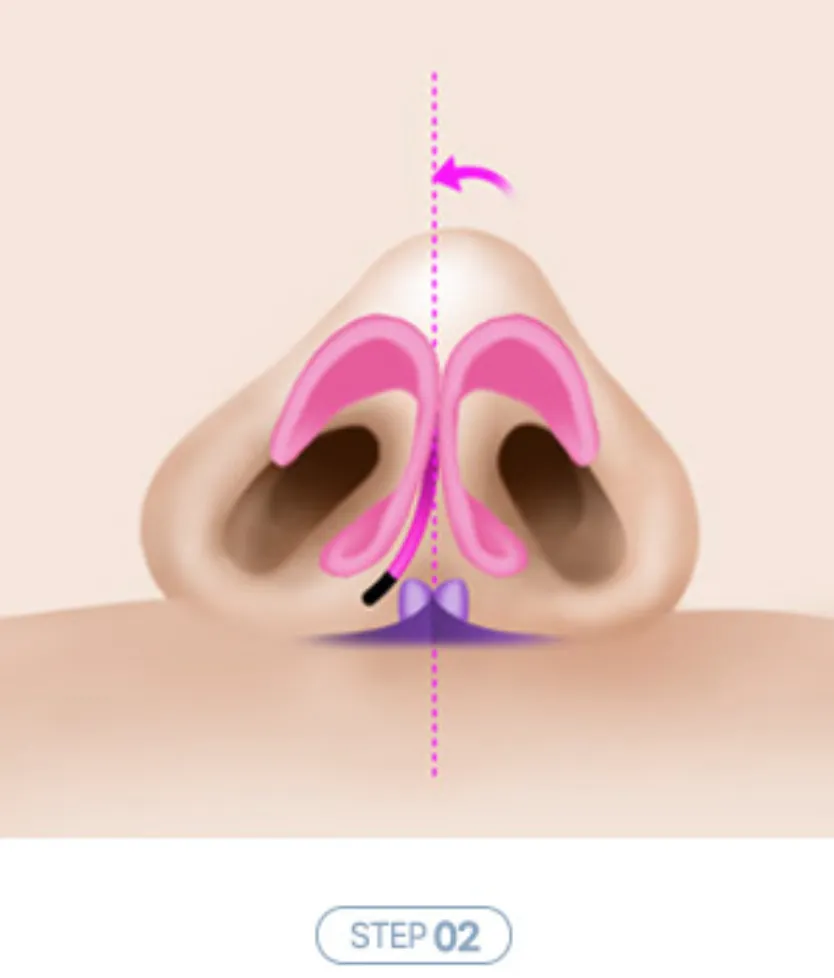
STEP 03 | Properly Corrected Nasal Tip
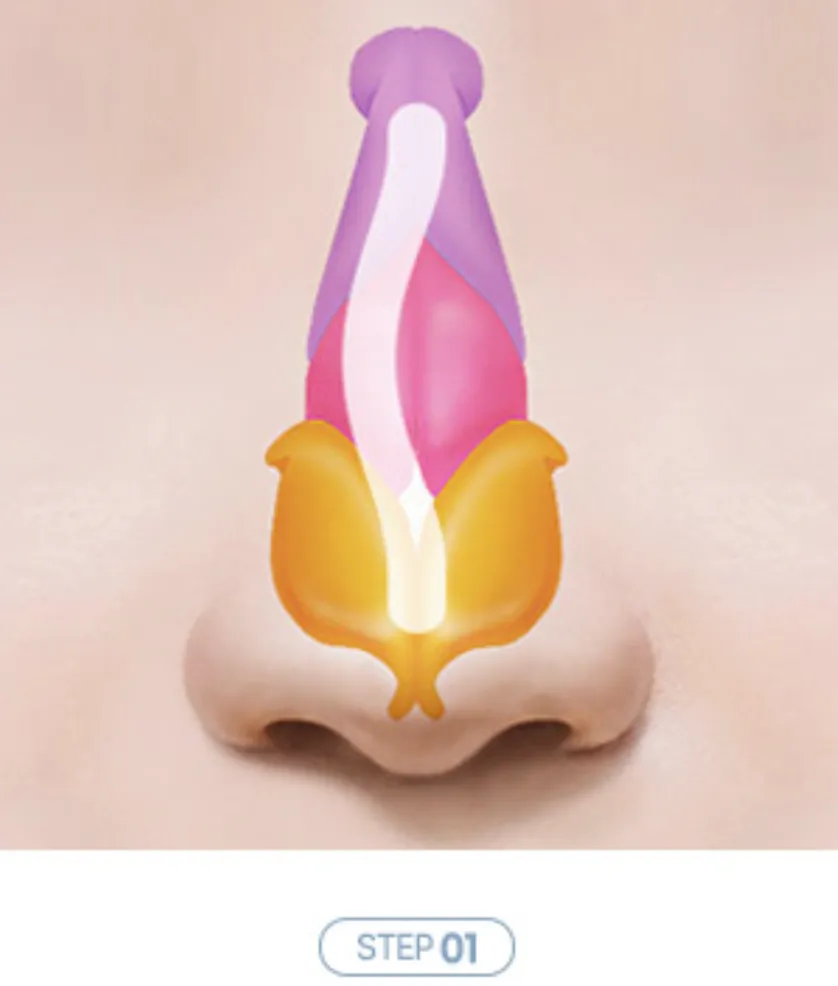
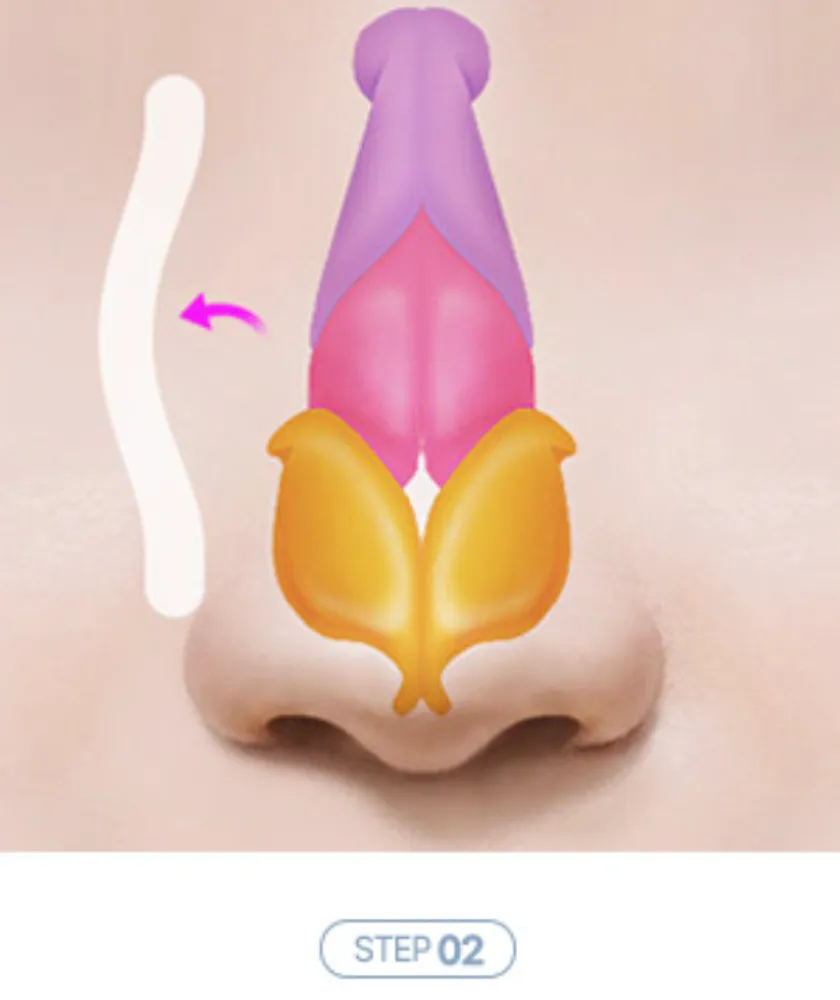
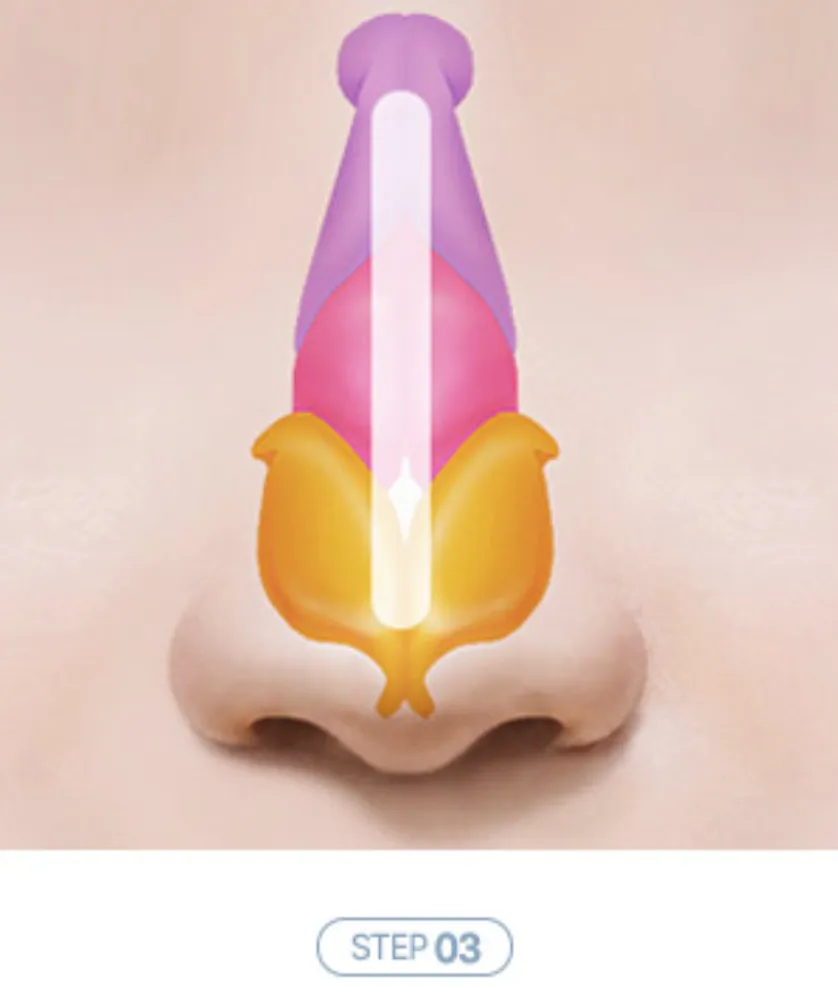
When the implant is crooked
The existing crooked implant is removed and a newly customized implant is inserted to fit the nose.
STEP 01 | Crooked Implant
STEP 02 | Remove the Existing Crooked Implant
STEP 03 | Insert a New Implant
Implant insertion
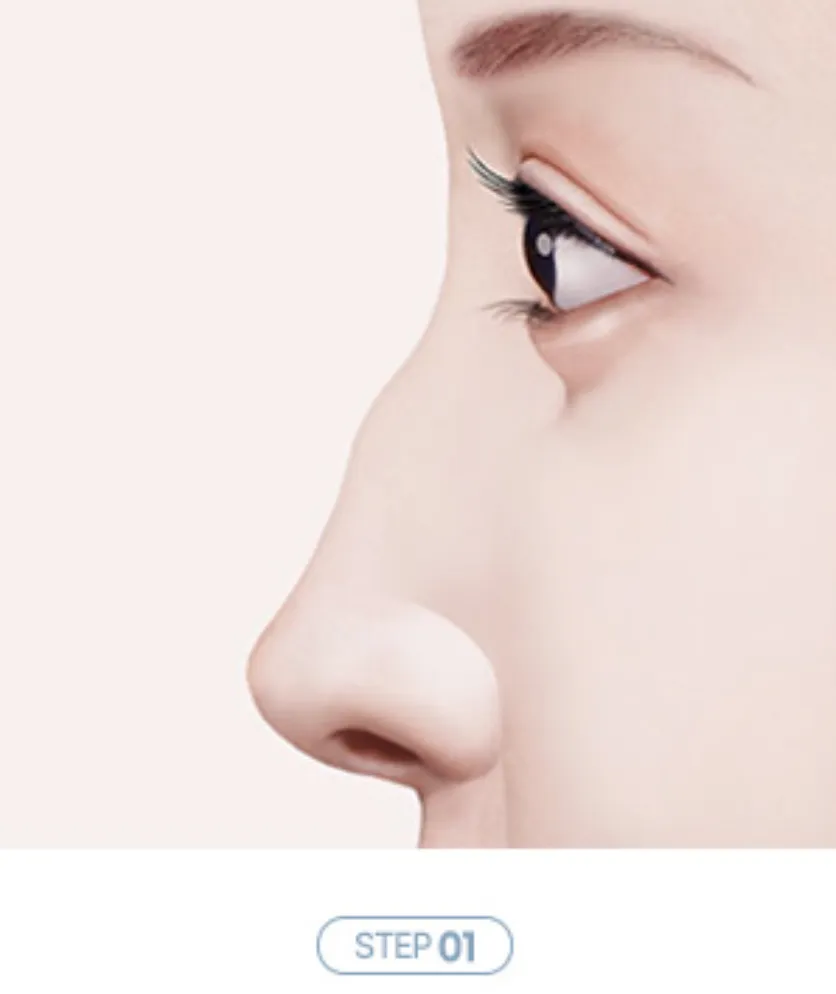
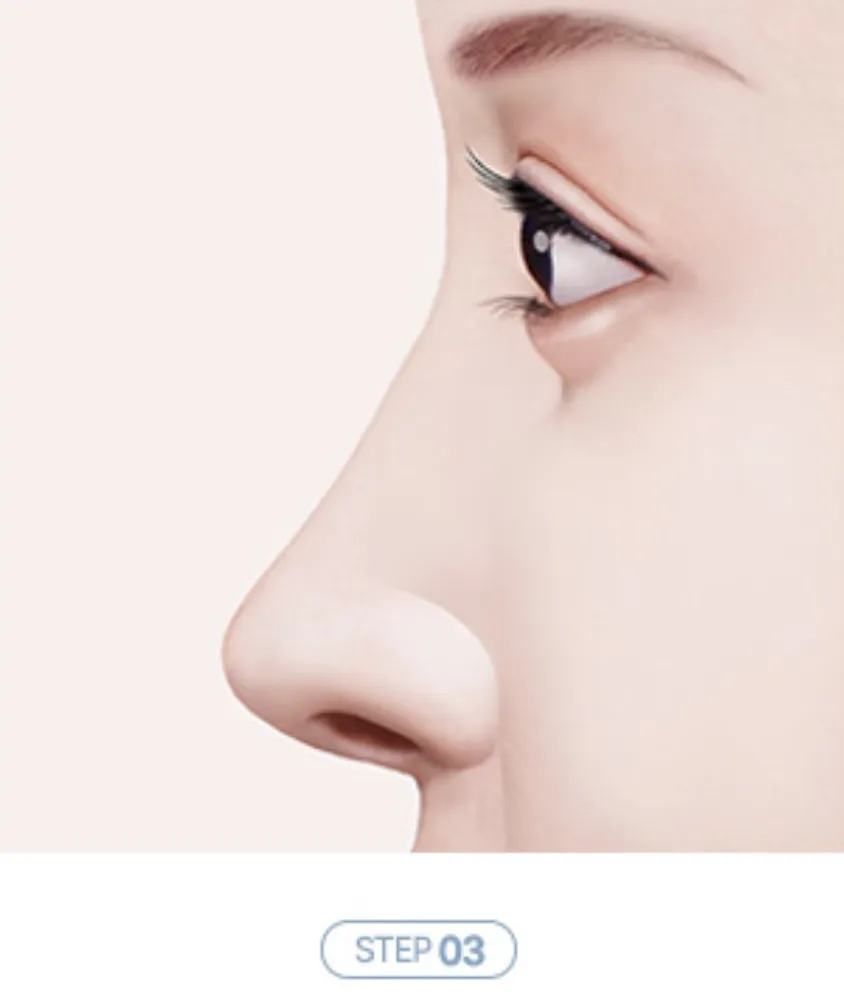
After correcting the septal cartilage, if the nose is not severely deviated, an implant is inserted to supplement the deviated area and improve nasal height.
STEP 01 | When the Deviation Is Not Severe
STEP 02 | Implant Insertion
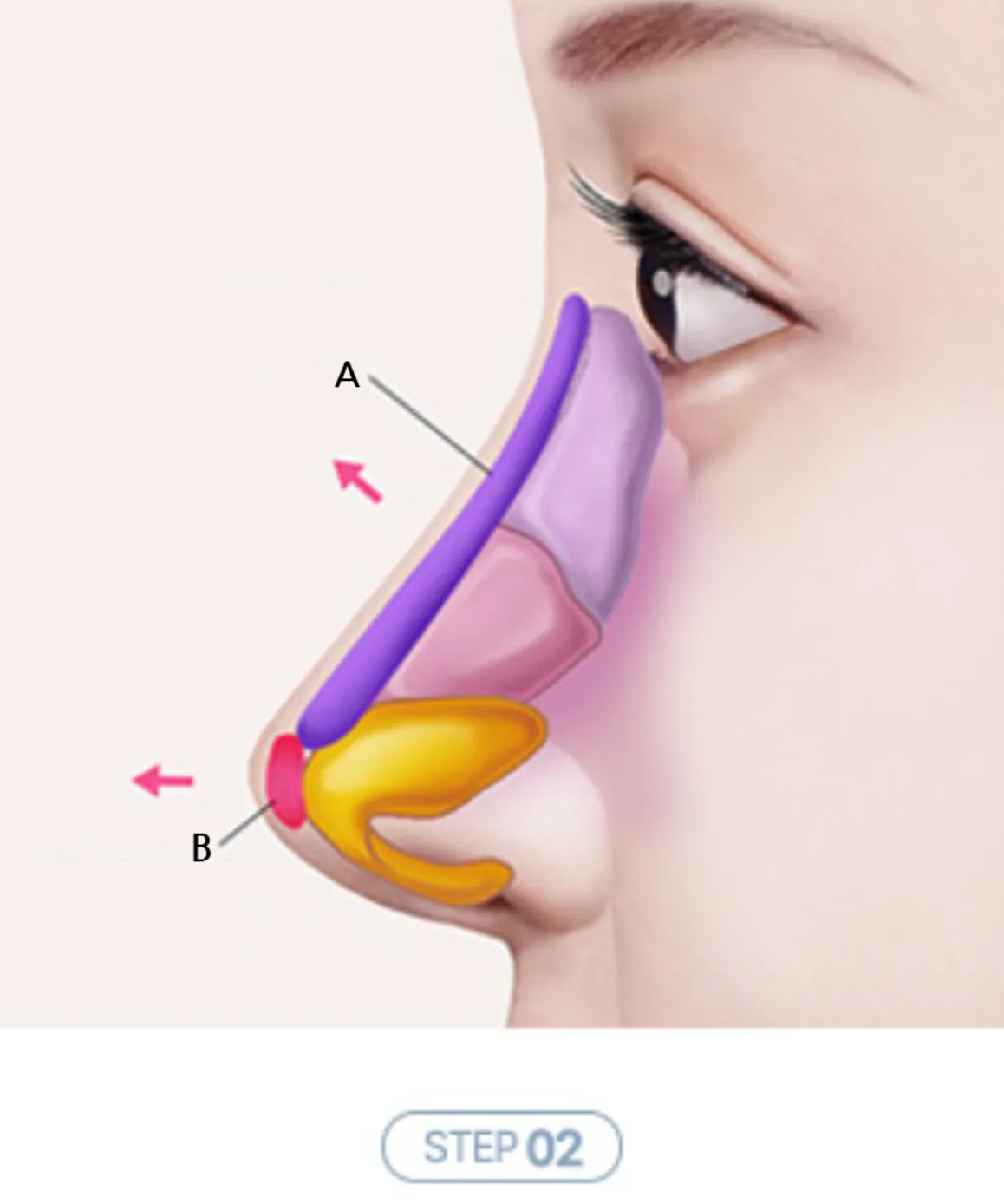
*A. Silicone / B. Autologous Tissue
STEP 03 | After Surgery
7. Alar Reduction
Refine flared nostrils for a slimmer, more sophisticated image
The final piece of nose surgery is the shape of the nostrils and nasal openings.
If the nostrils are flared or there is excessive nostril exposure, the nose may appear unbalanced even if the nose line is attractive.
Alar correction is a method for making wide or thick nostrils that appear stuffy look slimmer and more refined.
Learn About Surgery Information
- Surgery Time
About 30 minutes
- Anesthesia Method
Sedation anesthesia
- Suture Removal
After 1–2 weeks
- Follow-up Visits
2–3 visits
*This may vary depending on the patient's condition and the surgical method.
Recommended for These Patients
✅ When the nose appears broad from the front
✅ When wide nostrils make the nose appear blunt
✅ When the overall impression appears coarse
✅ When wide nostrils make the nasal openings appear large
What effects can LARA alar reduction provide?
- Slims down a broad-looking nose shape
- Reduces the appearance of large nostrils
- Increased confidence from any angle
- Refines a coarse-looking impression
LARA Alar Reduction Surgery Method
Nostril correction · nostril lowering
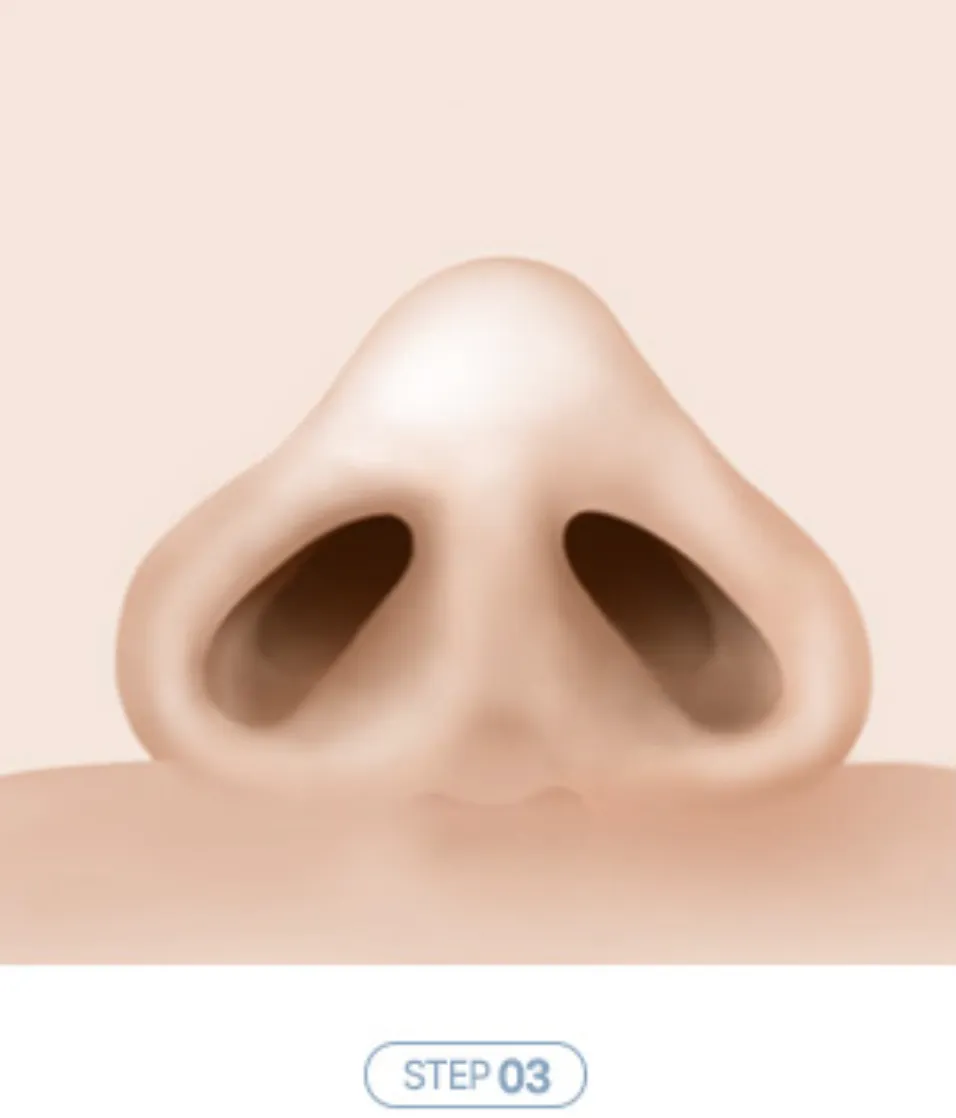
When the alar cartilage is congenitally concave and the nostrils are visible, or when nostrils become exposed due to changes in the alar cartilage after surgery, cartilage is extended at the alar cartilage to lower the nostrils.
STEP 01 | Incision
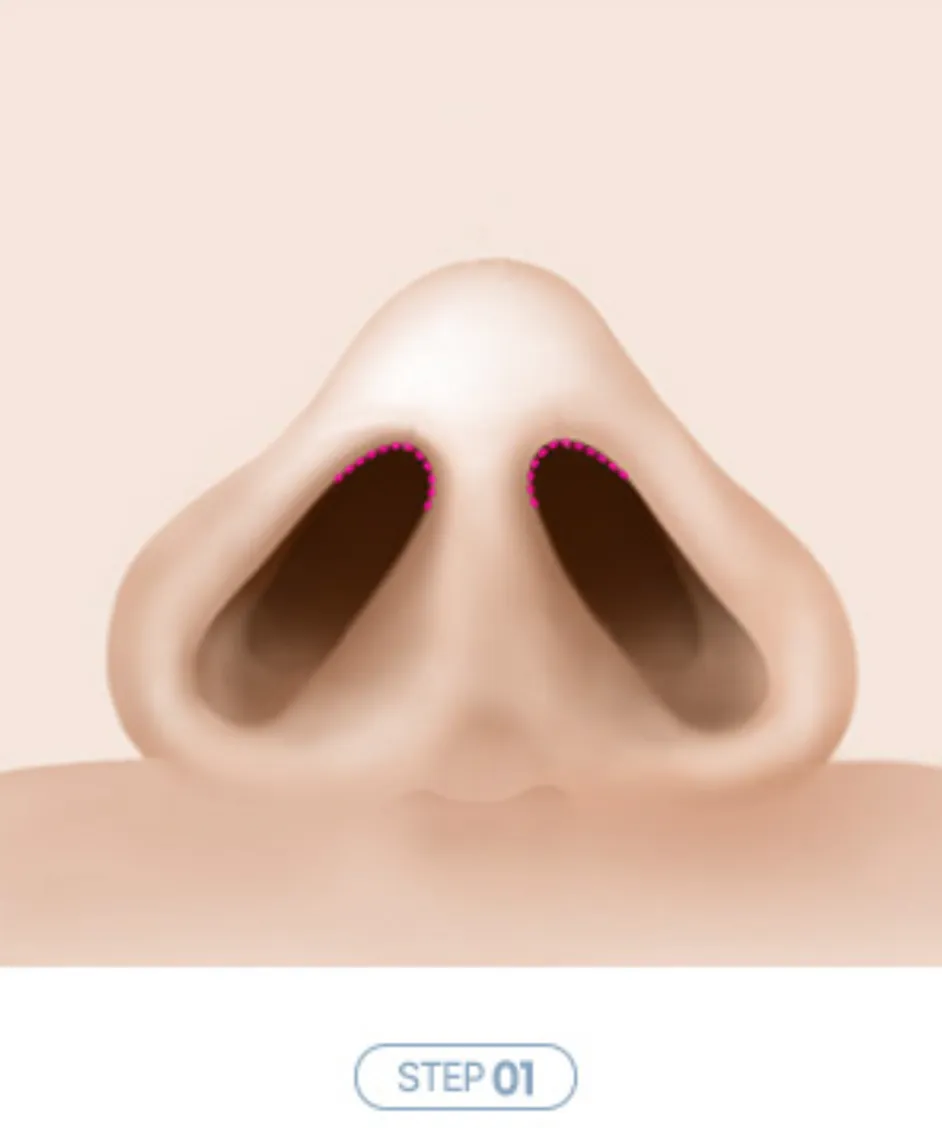
STEP 02 | Alar Cartilage Extension
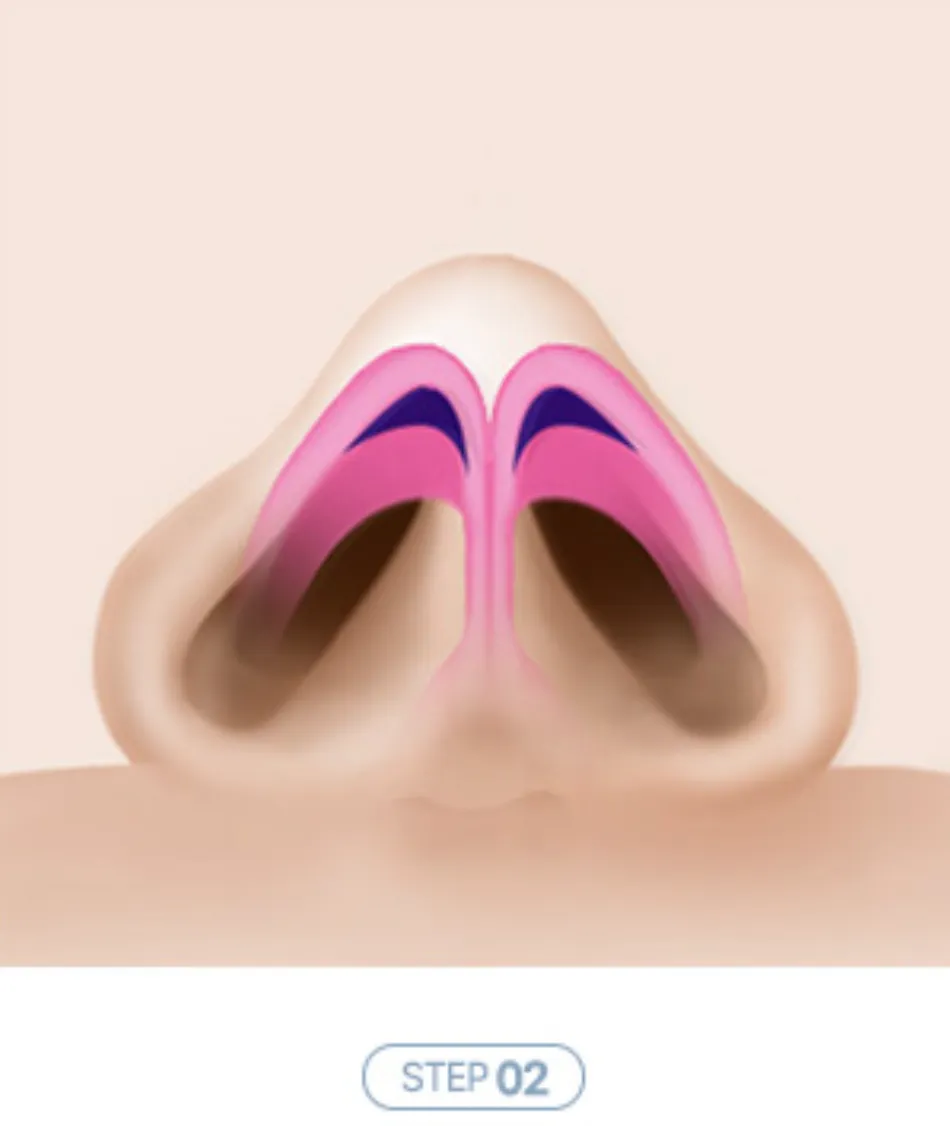
STEP 03 | Corrected Nostrils
Alar Reduction · Alar Elevation
Even if the nasal bridge and tip are ideally corrected, harmony between the nostrils, nasal bridge, and tip is important. When they are not harmonious, the nose shape may not appear ideal. The nostrils are important for an attractive and refined nose shape.
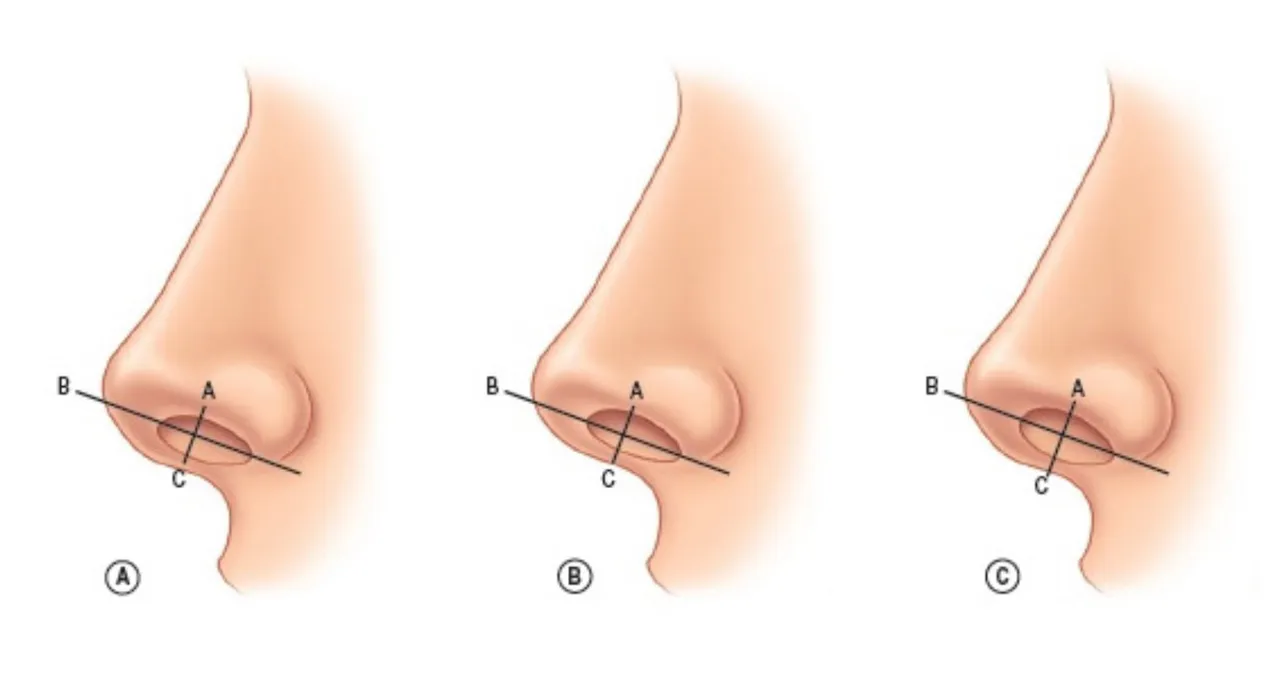
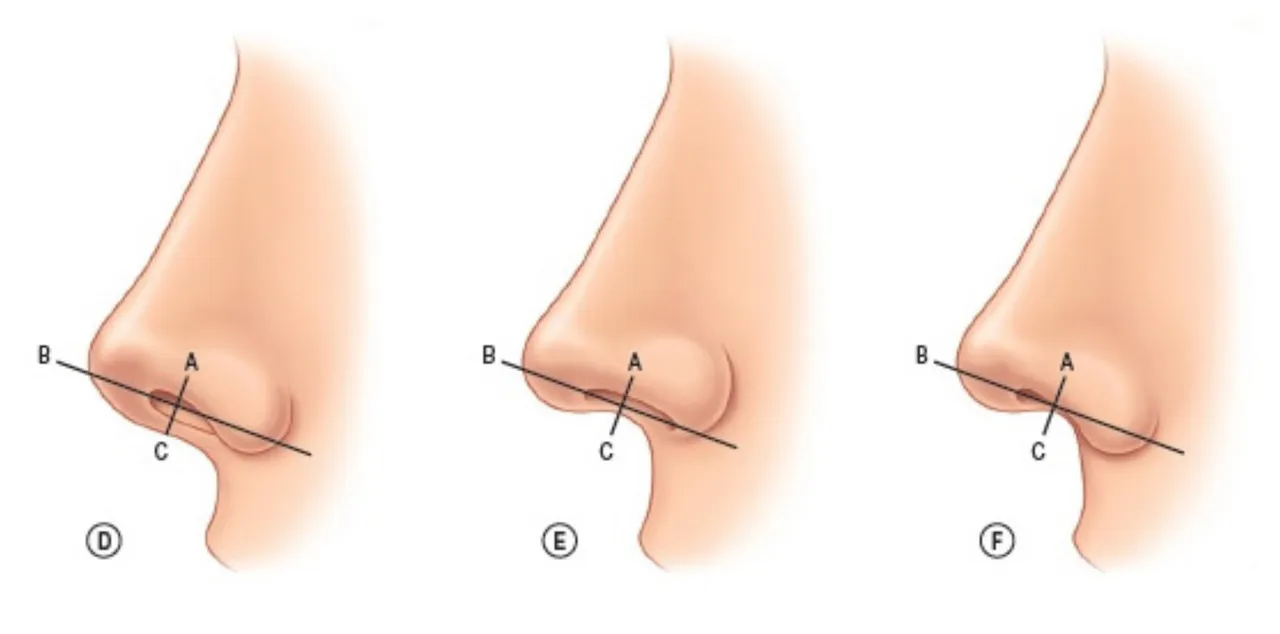

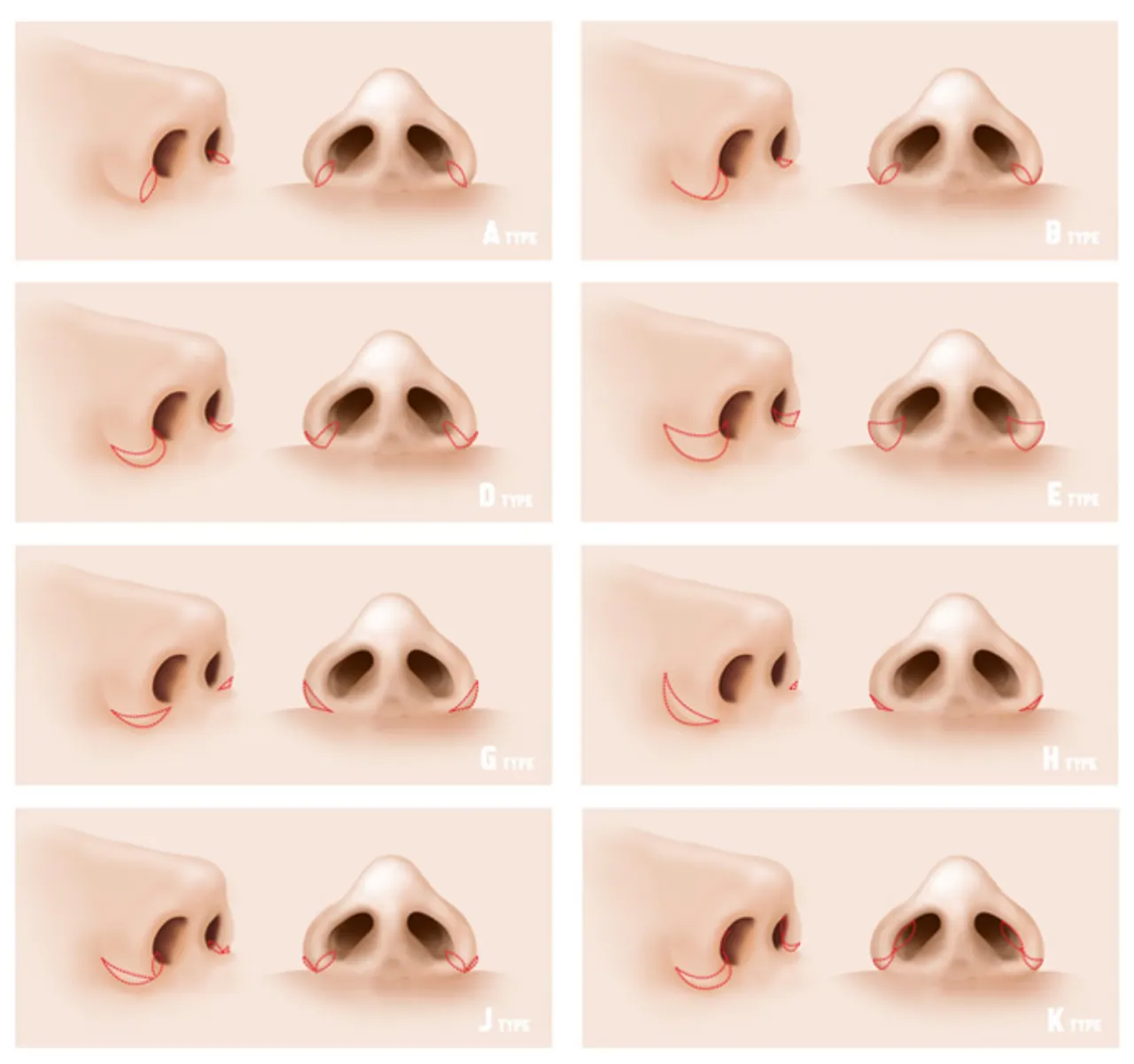
Incision Designs Related to Alar Reduction and Alar Elevation
Alar reduction and alar elevation can be approached differently depending on the incision location, and their effects also vary. Therefore, it is important to select the optimal surgical method according to the patient's condition.
LARA Rhinoplasty Advantages
-
Rhinoplasty specialists with extensive clinical experience and expertise

Board-certified plastic surgeons with diverse clinical experience and expertise in rhinoplasty and revision rhinoplasty take responsibility for every step of care through one-on-one customized treatment.
First in Korea to Introduce 3D Printing: Nasal Bone Models Produced with a 3D Printer
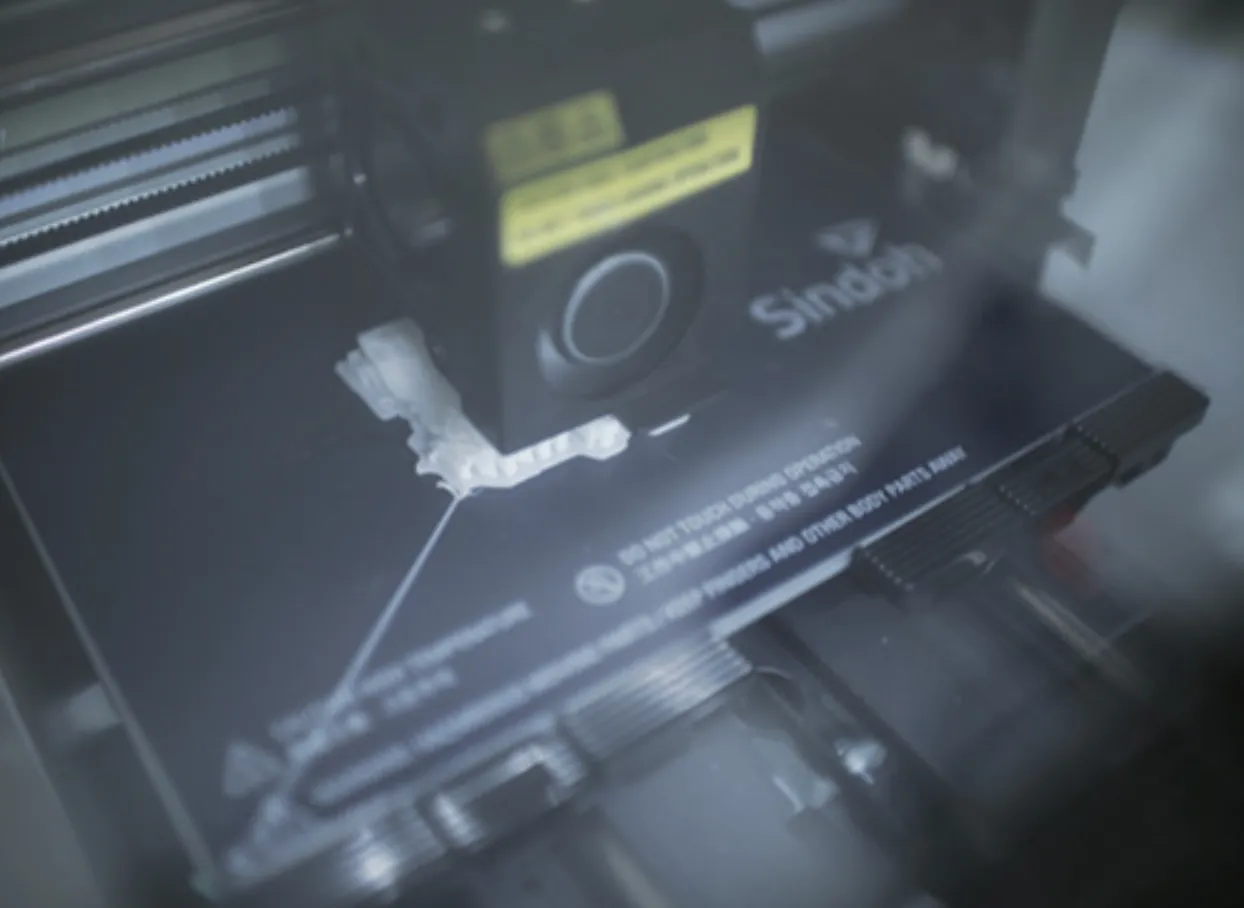
One-on-one customized bone models produced with a 3D printer enable more precise surgical planning than conventional rhinoplasty and reduce surgical time and the risk of side effects.
An Essential, Not Optional Examination: Three-Dimensional Analysis Using 3D CT
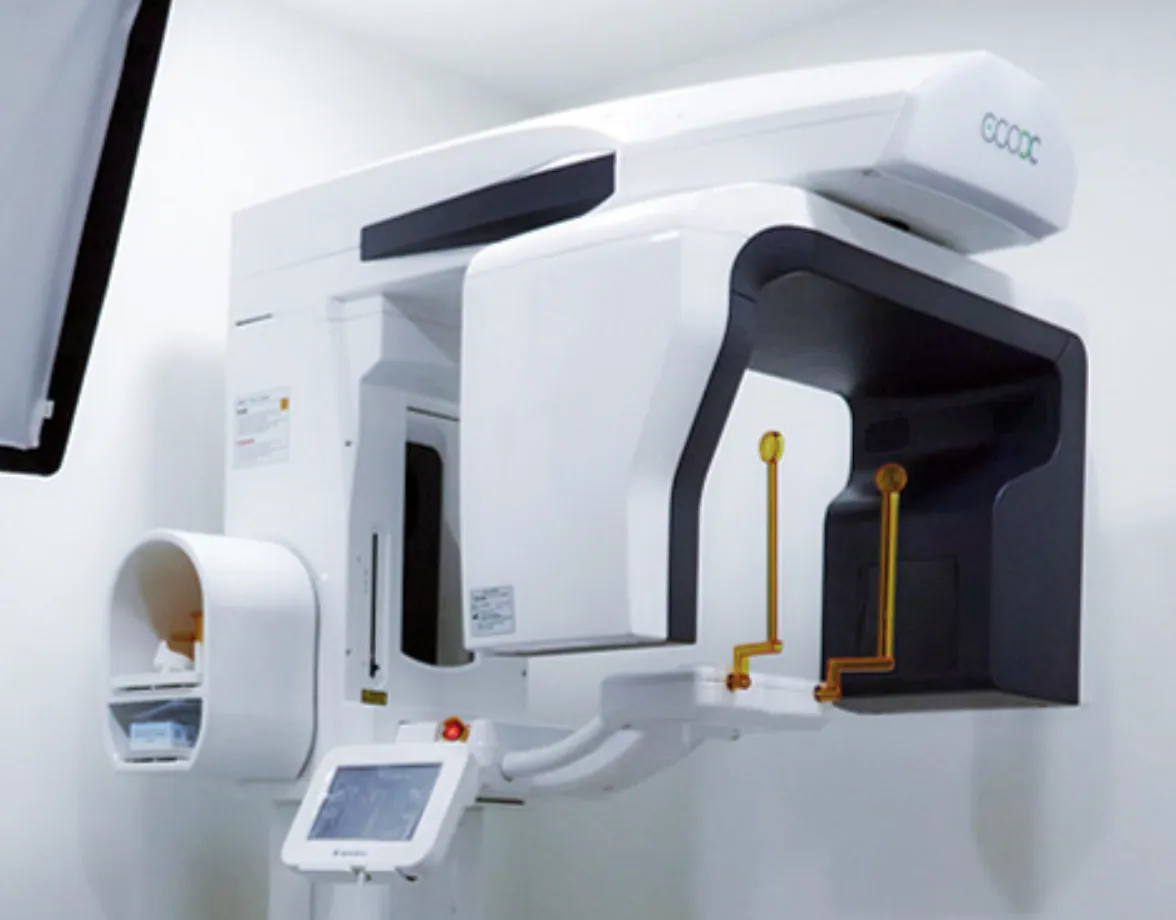
Before surgery, 3D CT is used to precisely analyze and plan for the nasal skeletal structure not visible externally, the condition of the septal cartilage, nasal deviation, skin tissue condition, and more.
LARA PLASTIC SURGERY
LARA Safe Surgery System
Safety System 01
One-on-One Dedicated Anesthesia Care & Real-Time Monitoring
The patient's anesthesia status is closely monitored one-on-one during surgery.
Safety System 02
Transparent Care / Named Surgeon System
We provide transparent care without shadow doctors or ghost doctors.
Safety System 03
Sterile System
The operating room is completely protected from contamination with positive-pressure maintenance equipment and HEPA filtration.
Safety System 04
Emergency Equipment Always Available
We prepare for emergencies with a cardiac defibrillator, emergency kit, and UPS power supply.
Safety System 05
CCTV Installed for Peace of Mind
CCTV in the operating room enables transparent surgical procedures.
LARA TV
 Lara plastic surgery


Helpful tip
Found a before & after image you're interested in? Tap the magnifying glass button in the lower right to start a consultation right away.
AI Review Summary
Clear and detailed explanation of procedures
Minor feedback regarding duration
Responsive and professional communication
Positive overall consultation experience
这次线上咨询体验很好,顾问回复速度快,也很有耐心解答我的问题。针对我的情况给出了专业建议,不会一直推销疗程,让我觉得很舒服。整个沟通过程清楚详细,对医美项目有了更深入的了解。
Clear explanationEasy to understand专业,耐心,详细,针对个人情況作出方案,感觉很好
Clear explanationDetailed consultation非常好,有中文翻译对话,很顺畅
Clear explanationEasy to understand視訊詢問之後,還有給我發消息。補充說明很細緻
Clear explanationFriendly醫生非常友善,對於我的問題耐心解答,可以中文溝通,方便!
Clear explanationShort waiting感受很好,讲述清晰,给出的方案也很综合
Clear explanationEasy to understand服务很好 专业说的很清楚详细 容易理解
Clear explanationEasy to understandThe Sales advisor is very polite and soft. She explain the details to me patiently. Good experience
Clear explanationHonest feedback小姐姐非常溫柔、指導的非常好,推薦
Short waitingPersonalized advice非常好的一次咨询体验,讲解的很清楚明白。
Well-managedHonest feedback