
Non-surgical Facial Asymmetry Care
Price upon consultation
Non-surgical Facial Asymmetry Care helps manage facial imbalance by addressing facial symmetry, jaw joint balance, and muscle tension without surgery.
If one day, the reflection in the mirror starts to feel unfamiliar?
Without shaving bone or surgery, restore the center of the face.
ODA Korean Medicine Clinic’s “Pure Alignment,” which aligns the 22 facial bones
Facial asymmetry is not merely a matter of “cosmetics.”
ODA’s facial alignment solution based on anatomical mechanisms and academic evidence

“Even without shaving, the most beautiful symmetry is already hidden within your face. I see the 22 puzzle pieces you cannot see—and the misaligned pieces among them.”
Scientific definition and prevalence of facial asymmetry
“Is your face well?”
Academically, facial asymmetry refers to a condition in which the shape, size, or position of the left and right sides is not harmonious based on the facial midline.
According to studies, approximately 34%–58% of the population recognize some degree of facial asymmetry, and when skeletal discrepancy exceeds 3 mm, it begins to be recognized as asymmetry by others.
ODA Korean Medicine Clinic does not focus simply on “becoming prettier.” We focus on the relationship between rotational displacement of the maxilla and mandible and temporomandibular disorders (TMD).
Anatomical basis: Why does the face become misaligned?
“Is your face well?”
Academically, facial asymmetry refers to a condition in which the shape, size, or position of the left and right sides is not harmonious based on the facial midline.
According to studies, approximately 34%–58% of the population recognize some degree of facial asymmetry, and when skeletal discrepancy exceeds 3 mm, it begins to be recognized as asymmetry by others.
ODA Korean Medicine Clinic does not focus simply on “becoming prettier.” We focus on the relationship between rotational displacement of the maxilla and mandible and temporomandibular disorders (TMD).
① Cranial Mobility
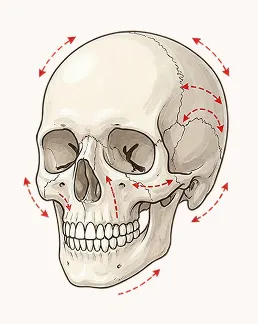
Many people think of the skull as a single solid bone, but it actually consists of 22 bones connected through tiny gaps called sutures.
Academic basis: According to studies by Upledger (1983) and others, cranial sutures are not completely fixed but have subtle movement. When these tiny gaps are subjected to improper pressure, such as unilateral chewing or mouth breathing, their alignment may begin to shift.
② Synchronization of the TMJ and Cervical Spine (The C-Spine Connection)
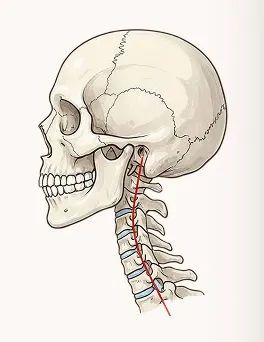
More than 80% of patients with facial asymmetry also have displacement of the upper cervical spine (C1–C2).
Mechanism: The temporomandibular joint acts as a “counterweight” for whole-body balance. When the jaw shifts to one side, the skull’s center of gravity is disrupted, and the cervical spine and vertebral column curve to compensate. This is why patients with facial asymmetry often report chronic shoulder stiffness and headaches.
Why ODA?
STEP 1 | 3D V-Ceph and Digital Analysis
Details: Through anthropometric facial analysis, differences in left-right soft-tissue volume and skeletal rotation angles are quantified.
Academic approach: Frontal and lateral cephalometric analyses are used to measure the inclination of the maxillary plane and establish individualized correction intensity.
STEP 2 | Skeletal Repositioning Chuna Manual Therapy (Bone Repositioning)
Details: Manual therapy applies subtle pressure to misaligned facial skeletal sutures for repositioning.
Effect: In particular, it balances the sphenoid bone and temporal bones, which are central to asymmetry, to facilitate cranial nerve flow.
STEP 3 | Soft-Tissue Realignment
Details: In addition to cranial asymmetry, asymmetry of soft tissues—including the masticatory and facial-expression muscles—can also cause facial asymmetry.
Effect: Individualized correction devices balance the left and right masticatory muscles. Thread embedding is also used to fine-tune facial-expression muscles such as the zygomaticus major, zygomaticus minor, and risorius.
In-Depth Analysis by Symptom
01. Maxillary Rotation Type (Maxillary Roll/Rotation Type)
“Three-dimensional collapse of the facial plane and inclination of the occlusal plane”
This type is not simply a matter of a crooked nose; it refers to a condition in which the maxilla itself has rolled (left-right tilt) or yawed (left-right rotation) around the cranial base.
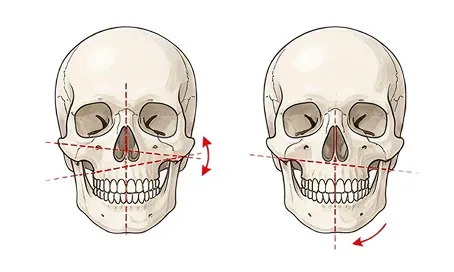
(The nose is deviated to one side, with marked lip tilt when smiling)
Professional Interpretation
Horizontal imbalance of the maxilla is generally accompanied by adaptive changes in the mandible. According to the literature, when the maxillary occlusal plane is tilted (canted) to one side, the brain attempts to align the visual horizon to maintain balance, inducing subtle displacement at C1–C2.
Key Mechanism
Maxillary rotation is often not merely a dental issue but results from asymmetric growth of the palatine bone and sphenoid bone. This maximizes the height difference between the oral commissures when smiling, making restoration of skeletal base symmetry essential rather than simple orthodontic correction.
02. Mandibular Lateral Shift Type
“Asymmetric hypermobility of the temporomandibular joint (TMJ) and displacement of the condyle”
When the mandibular midline is disrupted, the mandibular condyle may have changed position within the glenoid fossa, or the two condyles may have developed asymmetrically.
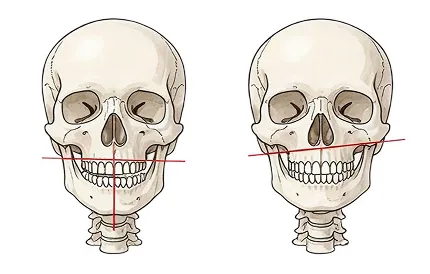
The lower-jaw midline shifts to one side (may be accompanied by a protruding jaw)
Professional Interpretation
Mandibular deviation often becomes fixed from “functional asymmetry” into “skeletal asymmetry.” The condyle on the deviated side is prone to pressure-related disc wear or anterior displacement, while the opposite condyle may overgrow, resulting in mandibular prognathism.
Key Mechanism
Imbalanced muscle activity of the masseter muscle affects bone remodeling. Under Wolff’s law, the mandibular angle on the side subjected to concentrated loading may develop further or become deformed, making it a direct cause of temporomandibular disorders (TMD), beyond a simple aesthetic concern.
03. Whole-Body Compensatory Type
“Ascending/descending chain structures and fascial torsion of the body”
This type involves facial asymmetry accompanied by differences in pelvic and shoulder height, requiring a perspective that views the body as a single organic kinetic chain.
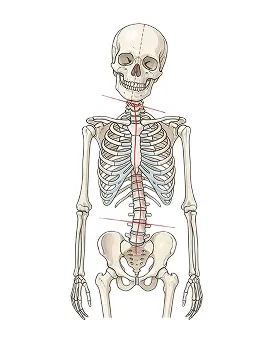
(Facial asymmetry accompanied by pelvic misalignment and uneven shoulder height)
Professional Interpretation
This reflects a breakdown of the “dynamic equilibrium axis” connecting the upper cervical spine, TMJ, and pelvis. According to the Lovett hierarchy principle, rotation of the cervical spine necessarily induces rotation of the lumbar spine in the opposite direction. In other words, facial asymmetry is the result of whole-body compensation through spinal scoliosis or pelvic tilt.
Key Mechanism
The tension network of deep fascia extends from the skull to the soles of the feet. Clinical statistics indicating that more than 80% of patients with facial asymmetry have pelvic misalignment suggest that local facial correction alone cannot prevent recurrence. True symmetry can be achieved only by correcting both the ascending and descending chains.
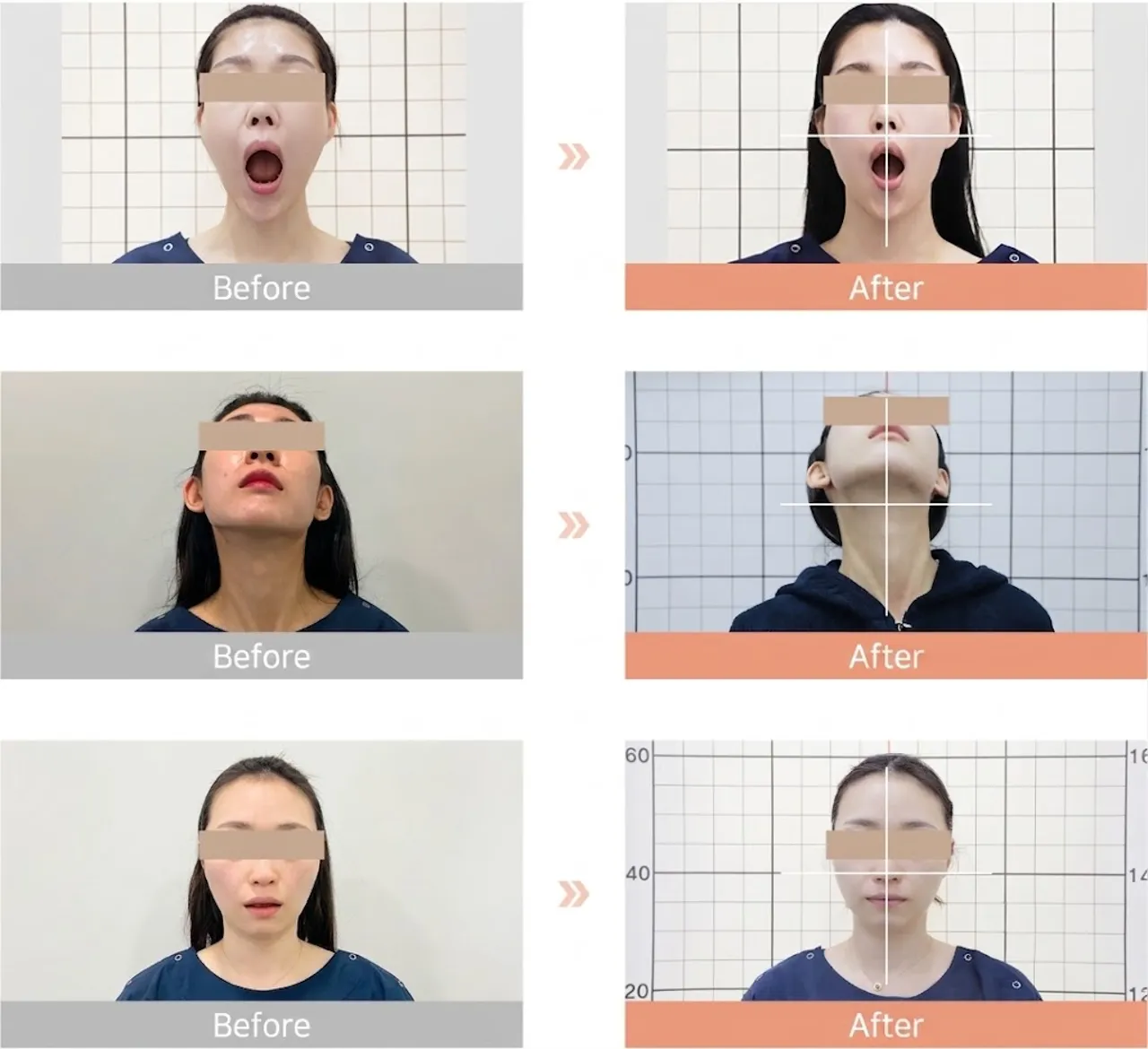
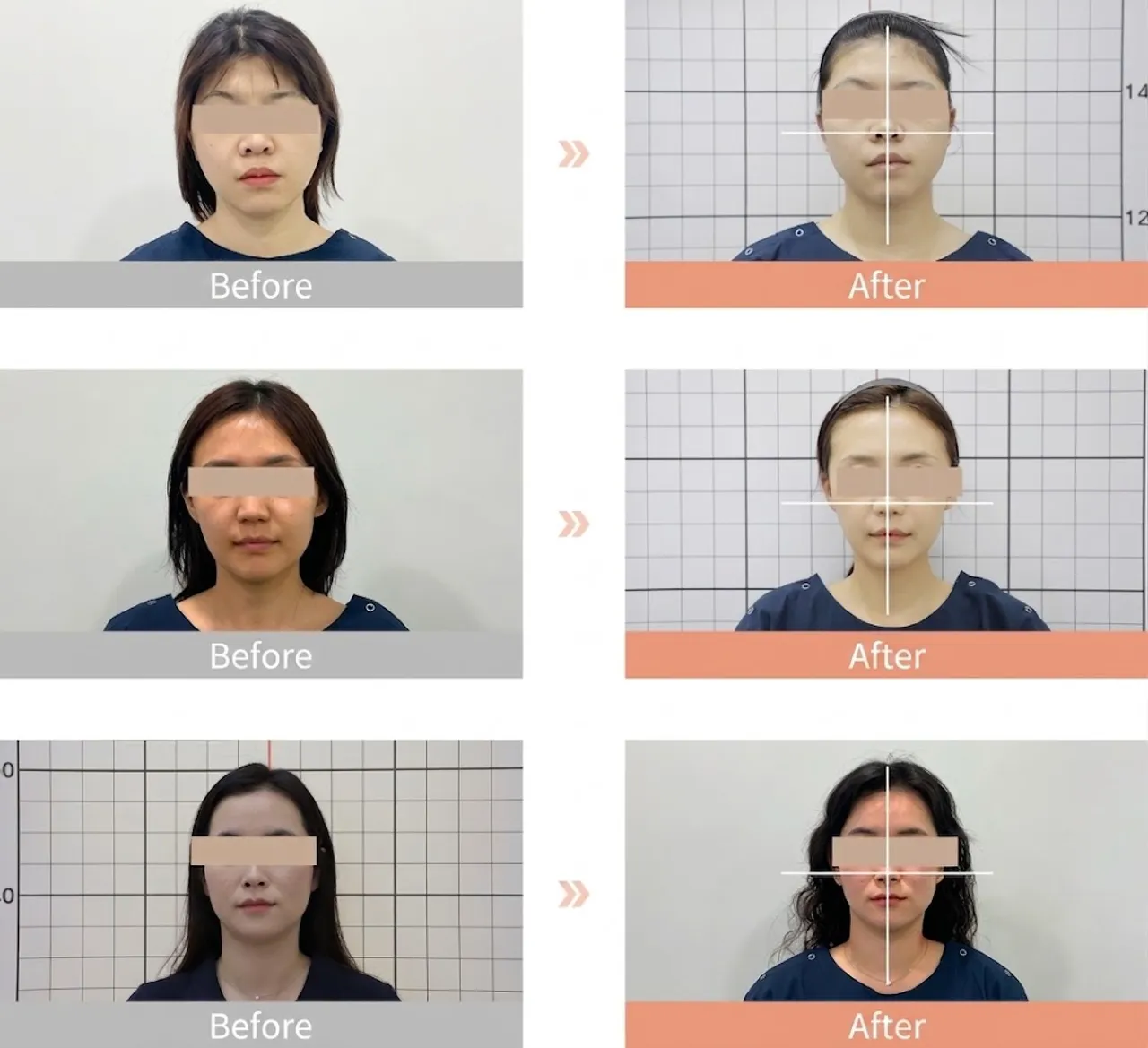
Changes Demonstrated by Treatment Data
“After 10 treatments, an average 2.4 mm reduction in facial midline deviation was confirmed”
Based on its own clinical statistics, ODA Korean Medicine Clinic provides patients with honest guidance.
Short-term effects: Improved complexion and reduced swelling due to relief of muscle tension
Mid-term effects: Relief of TMJ pain and sounds, with 60–70% improvement in visible asymmetry
Long-term effects: Stabilization of facial alignment and resolution of whole-body postural imbalance
The face is a mirror of the whole body.
Facial asymmetry treatment is not simply a matter of pushing the jaw into place.
It is an “architectural reconstruction” that reestablishes the body’s collapsed vertical axis.
ODA Korean Medicine Clinic approaches treatment with a sense of mission to address even the psychological self-consciousness patients feel when looking in the mirror.
Facial Asymmetry Treatment
Synchronization of the skeletal frame and soft tissue
The clinical significance of combining asymmetry correction and lifting from an anatomical perspective
True symmetry cannot be achieved through “bone” alone.
The traditional approach to facial asymmetry treatment has focused on the physical alignment of the craniofacial bones.
However, in clinical practice, we encounter an important fact: even when bone position is corrected, the “perfect and beautiful symmetry” patients expect may not appear immediately.
The face is structured like a “canvas” of muscle, fat, and skin draped over a bony “frame.” If the frame has been distorted for a long time, the canvas over it may also have stretched or contracted abnormally.
ODA Korean Medicine Clinic’s <Facial Asymmetry Treatment> was created to overcome these limitations.
This is not merely a combination of two procedures, but an essential integrated solution designed to improve the completeness of skeletal correction and maximize aesthetic satisfaction.
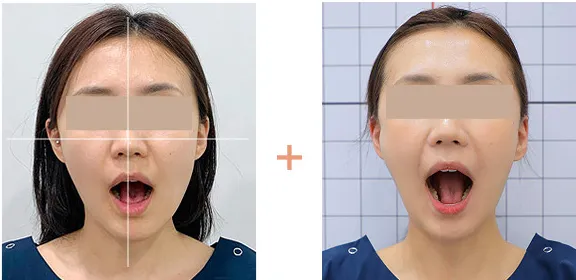
(Asymmetry + lifting)
Facial asymmetry is difficult to explain solely by differences in the left-right length of the skeletal structure.
Studies repeatedly report that the final appearance of the face can vary substantially according to differences in the thickness, elasticity, and tension of soft tissues—muscle, fascia, fat, and skin—overlying the skeletal frame.
In particular, when asymmetry persists for a long time, shortening and hypertonicity may become fixed on one side, while lengthening and hypotonicity develop on the other. As a result, even after the same skeletal correction, the impression of the facial expression, volume, and jawline may not immediately feel “aligned.” Therefore, during the initial assessment, it is important to analyze the condition of the soft tissues as well as the skeletal structure.
Why should asymmetry correction and lifting be performed together?
Anatomical connection: The role of retaining ligaments
Our skin and fat layers are not firmly fixed to bone; rather, they are suspended from bone by tough tissues called “retaining ligaments”.
In an asymmetrical state
When the facial bones are distorted to one side, the retaining ligaments on one side become excessively tight while those on the other side become lax. This causes asymmetry in skin sagging and wrinkles.
Issues after correction
When the bones are returned to their original positions, soft tissues—skin and muscle—on the side that has been stretched for a long time may not contract immediately and may temporarily appear more sagging. This is referred to as “post-correction soft-tissue laxity.”
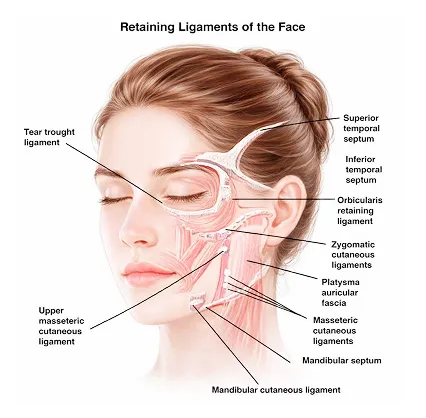
Where correction addresses the structural basis of asymmetry by organizing the skeletal and TMJ axes, lifting is a strategy that complements residual soft-tissue asymmetry that may remain after correction, including sagging, reduced elasticity, and differences in skin tension.
The literature explains that soft tissue does not follow skeletal changes “immediately,” but instead undergoes rearrangement and readaptation (remodeling) over a period of time.
Combining procedures that promote collagen remodeling or tissue support during this period may help the balance created through correction appear more naturally refined.
The key is not to “force symmetry,” but to enable the canvas to adapt stably to changes in the frame.
Imbalance in Muscle Tone
Patients with asymmetry often show marked differences in the development of the left and right masticatory muscles—masseter and temporalis—and facial-expression muscles. One side is enlarged and firm (hypertonic), while the other is weak and lax (hypotonic). Correcting the bones alone does not immediately change these long-standing muscle habits.
ODA's Insight
If skeletal correction is like straightening the pillars of a house, combined lifting treatment is the process of tightening and reorganizing the “sagging wallpaper and interior” to fit those pillars. Only when these two processes are synchronized can natural symmetry be achieved.
Mechanism of ODA’s Integrated Solution
ODA Korean Medicine Clinic simultaneously performs skeletal realignment and soft-tissue remodeling using a “dual-layer targeting strategy”.
STEP 1: Skeletal Correction
Target layer: Deep periosteum and joint sutures
Main treatment methods: Facial Chuna and facial cranial sutural therapy (FCST)
Mechanism of action: Physically realigns misaligned bone positions to restore the facial central axis
STEP 2: Muscle/Lifting
Target layer: SMAS fascial layer and dermal layer
Main treatment methods: Thread embedding (dissolvable thread) lifting, pharmacopuncture, and facial acupuncture
Mechanism of action: Strengthens lax retaining ligaments, balances asymmetric muscles, and promotes collagen regeneration
Recurrence of asymmetry is often caused not only by bones becoming misaligned again, but also by the persistence of daily habits—unilateral chewing, resting the chin on the hand, and sleeping posture—and imbalances in fascial and muscle tension.
Studies also suggest that, for long-term facial stability, functional balance of the soft tissues—muscle tone, fascial tension, and chewing patterns—should be managed alongside skeletal alignment.
An approach that combines lifting may create conditions that make it easier to maintain the contour and tension established after correction, which may positively affect the perceived duration of results.
However, duration may vary according to individual skin elasticity, weight changes, and lifestyle habits, so treatment planning should be individualized.
Four Key Benefits of Combined Asymmetry Correction × Lifting Treatment
The benefits of integrated treatment demonstrated through the literature and clinical experience are as follows.
Effect 01. Maximized correction effects and immediate aesthetic improvement
As skeletal correction softens the facial contour, lifting elevates sagging tissue to immediately improve asymmetry of the jawline and nasolabial folds. Visual satisfaction perceived by patients is significantly greater than with a single procedure.
Effect 02. Proactive prevention of “post-correction sagging”
Lifting proactively addresses the “post-correction soft-tissue laxity” described above. It helps the skin adhere elastically to the bones in their newly repositioned state.
Effect 03. Enhanced Correction Retention (Relapse Prevention)
This is the most important benefit. Due to the tension of surrounding muscles and skin, bones tend to return to their previous misaligned positions.
Lifting procedures, especially thread embedding, form collagen columns beneath the skin and act as a “support structure” that helps prevent corrected bones from becoming misaligned again. This can substantially extend the duration of correction results.
Effect 04. Additional benefits for skin quality and complexion
Stimulation of the dermal layer during lifting promotes collagen and elastin production. Beyond improving asymmetry, this may provide additional benefits including increased skin elasticity, reduced pore appearance, and a clearer complexion.
To maximize the effects of an integrated approach, sequence and criteria are important. Facial asymmetry should first be evaluated across the skeleton (alignment), joints (mobility and deviation), soft tissues (elasticity, volume, and sagging), and function (mastication and posture); the intensity and timing of correction and lifting then vary according to the results.
Literature-based clinical practice proposes a stepwise approach of “organizing the structure first, then refining the soft tissues” to reduce overcorrection or an unnatural appearance and improve consistency of outcomes.
Because responses may differ depending on facial shape, skin thickness, and fat distribution even with the same procedure, it is recommended to objectively document changes before and after treatment through standardized photography, measurements, and palpation assessment.
Optimal Engineering for Your Face
Facial asymmetry treatment is not a simple procedure; it is like precise architectural engineering. Building only the framework is insufficient, while fixing only the interior is unstable.
ODA Korean Medicine Clinic’s <Facial Asymmetry Treatment> is the most advanced form of non-surgical facial reconstruction program, addressing imbalances inside and out simultaneously.
ODA will help you find the most ideal and natural balance you have envisioned through a scientific integrated solution.

❶ 3D Precision Analysis
Simultaneous measurement of skeletal distortion angles and the degree of soft-tissue sagging
❷ Customized Planning
Designing correction and lifting intensity according to the type of asymmetry (skeletal, muscular, or combined)
❸ Integrated Treatment
Stepwise combination of skeletal correction and lifting treatments once or twice per week
❹ Progress Monitoring and Maintenance
Ongoing balance adjustments tailored to changing facial contours
 Oda Korean Medicine Clinic