
Non-incisional double eyelid surgery
Price upon consultation
This procedure creates a double-eyelid line without an incision by inducing natural adhesion between the skin and muscle through small puncture points. It is suitable for monolid eyes with thin eyelid skin and no sagging, and is customized using 6–8 points depending on skin elasticity. There is no incision scar, and recovery is relatively quick.
Surgery Overview
The natural adhesion suture method is a procedure that creates a double eyelid crease by inducing natural adhesion between the skin and muscle through tiny openings without an incision. It is customized with 6–8 points depending on eyelid skin elasticity, leaves no incision scar, and generally offers a quick recovery.

An ideal, beautiful double eyelid that suits your facial image Are you concerned that your eyes may look unnatural when closed? Unnatural double eyelids can become the start of a new complex. Urban Plastic Surgery helps you find the double eyelid crease that is right for your face.
Recommended for
· Monolids with thin eyelid skin and no sagging · Those who want a natural double eyelid crease without an incision scar · Those who want a quick recovery
Urban Natural Adhesion Suture Method: 3 Points
Point 1. Crease design tailored to your face
We create a natural and beautiful double eyelid crease by considering facial proportions, desired conditions, and overall image.
Point 2. Natural whether your eyes are open or closed
Using Urban's expertise, we create a defined double eyelid crease that looks natural both when the eyes are open and closed.
Point 3. Minimized tissue damage and scarring
Precise, meticulous surgery minimizes damage to existing tissue and scarring.
The double eyelid crease that suits you
Double eyelid creases are classified as In-Line Crease, In-Out Crease, Out Line Crease, and Semi-Out Line Crease according to the starting point, endpoint position, and crease height. The factors that determine the desired crease are 40% Double Eyelid Surgery (double eyelid height) and 60% Epicanthoplasty (presence of an epicanthal fold), so Double Eyelid Surgery alone may not produce the desired crease.
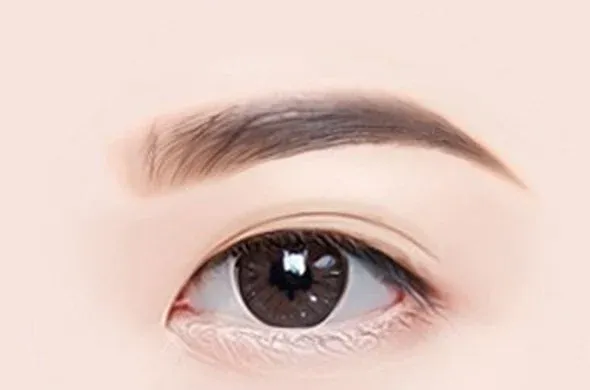
In-Line Crease – A natural, subtle change
This is the most common type seen in Asian eye structures, with a natural crease that begins on the inner side of the eyelid and gradually widens. · Suitable for those who do not want a dramatic image change and for men seeking a natural In-Line Crease

Before surgery → 1 month after surgery · In-Line Crease
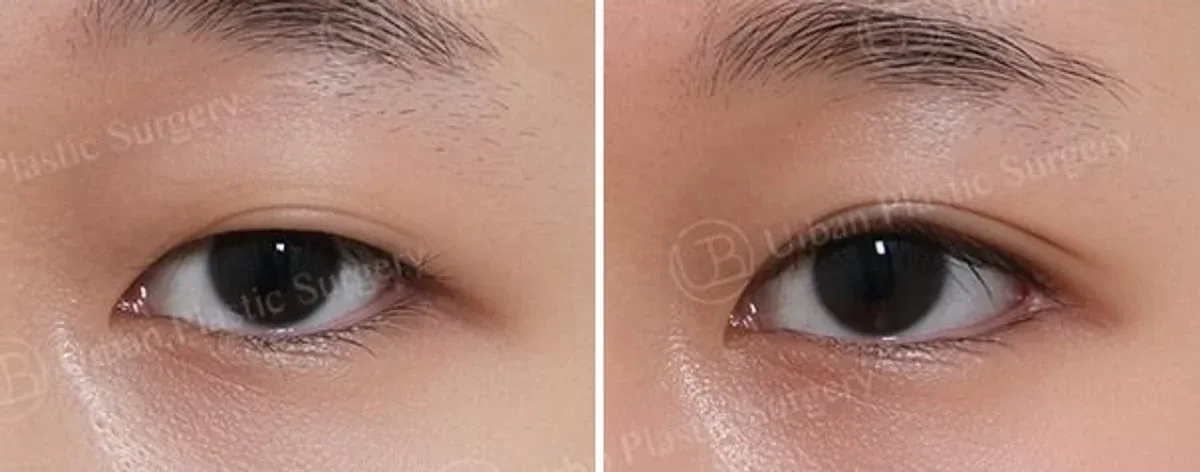
Before surgery → 3 months after surgery · In-Line Crease
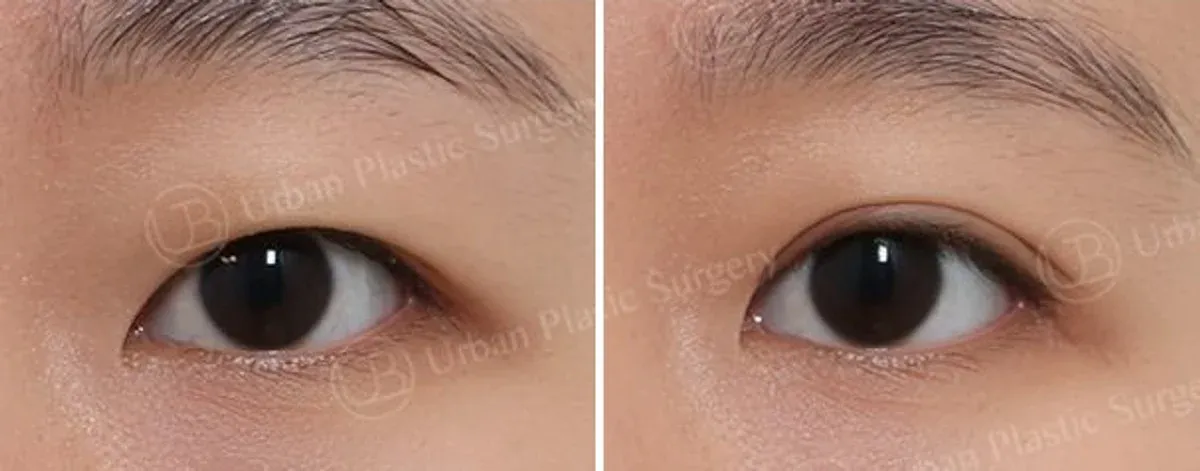
Before surgery → 3 months after surgery · In-Line Crease
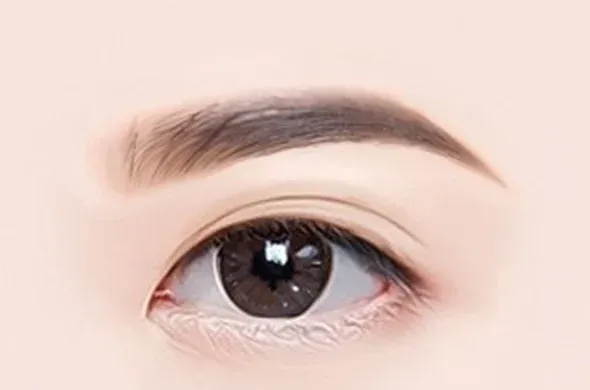
In-Out Crease – Natural yet bright-looking eyes
This crease falls between the natural look of an In-Line Crease and the openness of a Semi-Out Line Crease, making it highly popular. If the eyes are sunken or the epicanthal fold is prominent, creating an In-Out Crease may be difficult, so orbital fat grafting, Epicanthoplasty, and Upper Epicanthoplasty are often performed together. · Suitable for those who want a natural look with a somewhat visible crease

Before surgery → 1 month after surgery · In-Out Crease
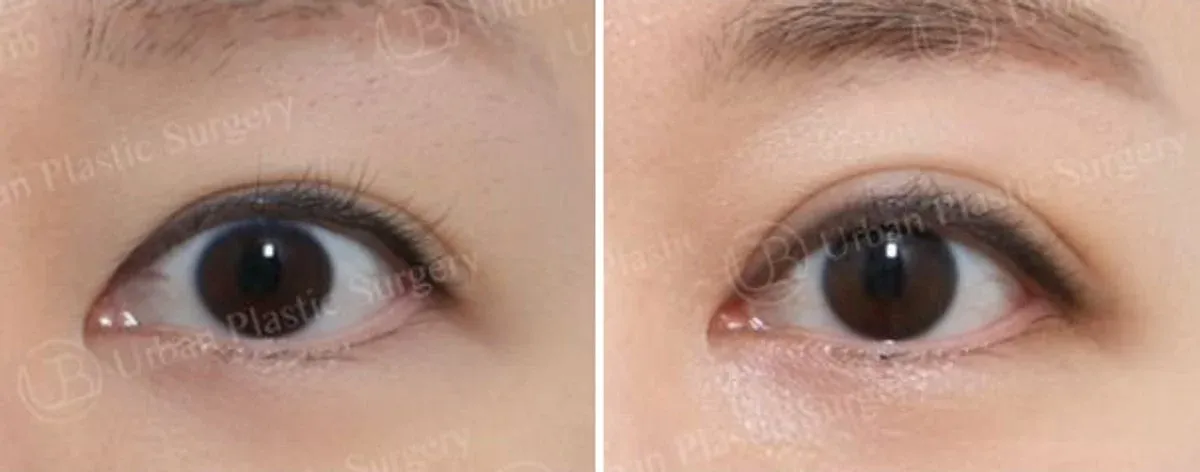
Before surgery → 1 month after surgery · In-Out Crease
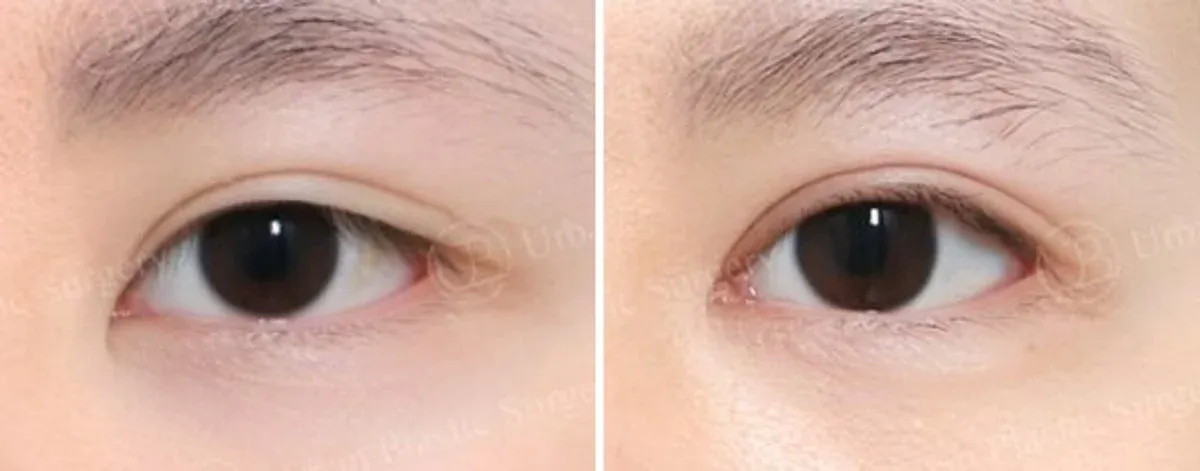
Before surgery → 3 months after surgery · In-Out Crease
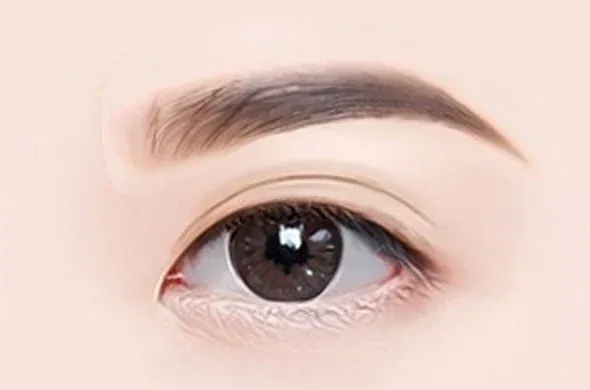
Out Line Crease
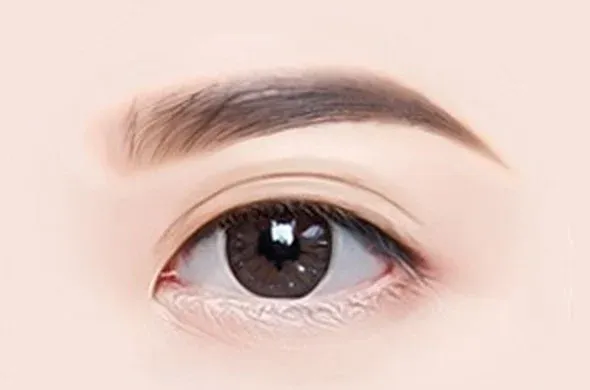
Semi-Out Line Crease – Glamorous, defined eyes
Because the crease must be set higher, it is best suited for those with naturally large eyes and no pronounced epicanthal fold. If the epicanthal fold is prominent, Epicanthoplasty and Upper Epicanthoplasty may be performed together for a more natural result. However, excessive Epicanthoplasty can create scarring or an unnatural crease, so the procedure is planned after assessing the distance between the eyes and the degree of lacrimal lake exposure. · Suitable for those without an epicanthal fold, with minimal lacrimal lake exposure, and with an appropriate glabella distance

Before surgery → 1 month after surgery · Semi-Out Line Crease
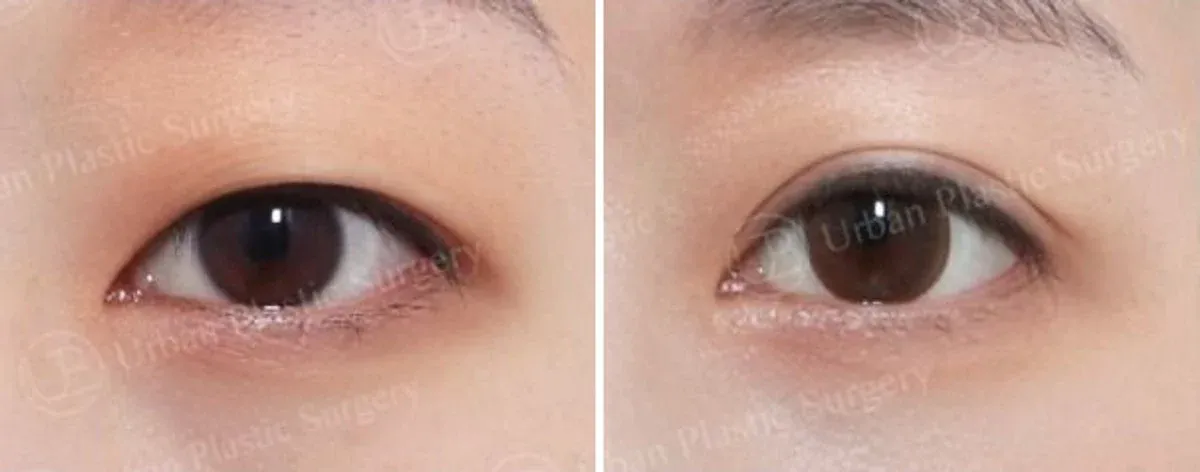
Before surgery → 2 months after surgery · Semi-Out Line Crease
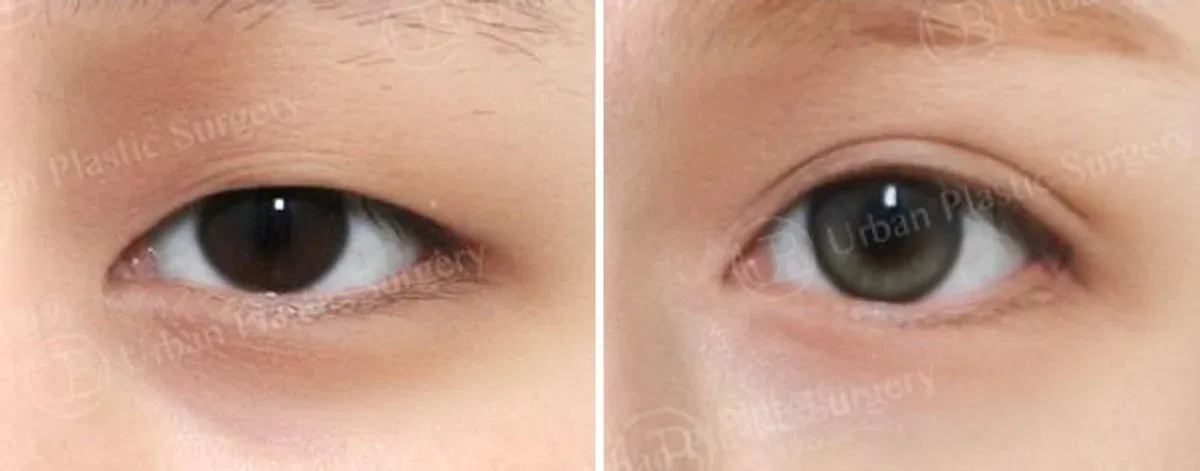
Before surgery → 1 month after surgery · Semi-Out Line Crease
Surgical Method
A personalized natural adhesion method using 6–8 points is performed according to eyelid skin elasticity.
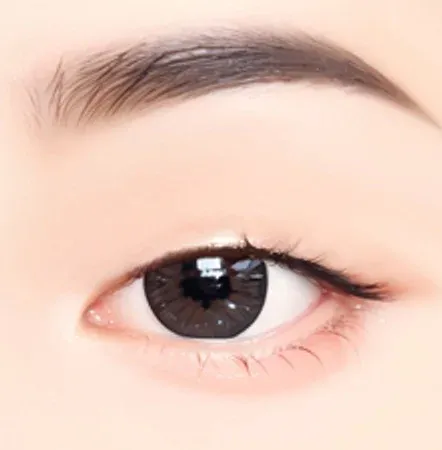
Before surgery
Monolid eyes with thin eyelid skin and no sagging
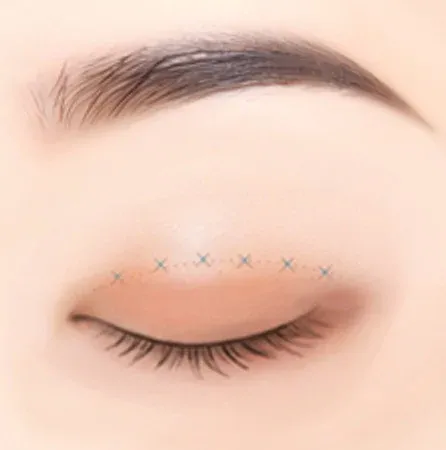
STEP 1. Crease design
The height and shape of the double eyelid crease are designed through consultation.
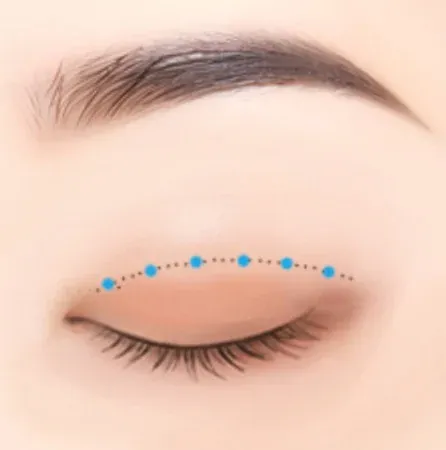
STEP 2. Creating tiny openings
Tiny openings are made along the designed crease.
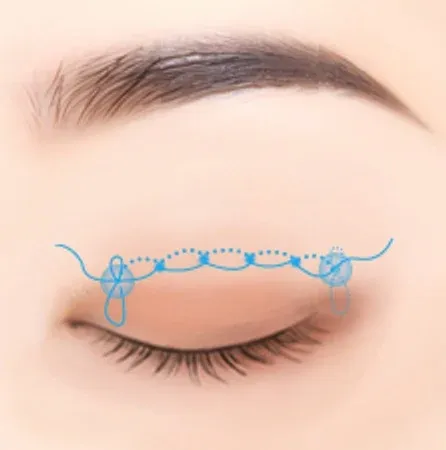
STEP 3. Natural adhesion with continuous knots
Both ends are secured with 5–7 continuous knots to induce natural adhesion between the skin and muscle.
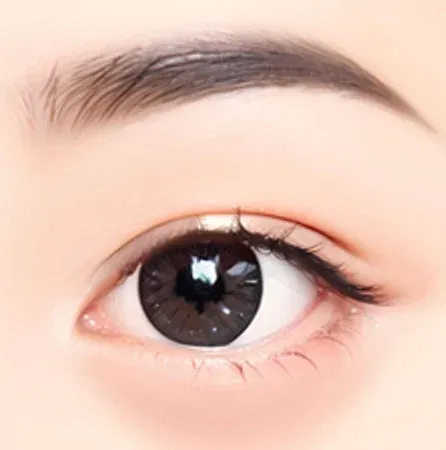
After surgery
A natural, unified double eyelid crease is created.
Surgical Information
| Surgery time: 30 minutes–1 hour | Anesthesia: Sedation and local anesthesia | Hospitalization: Same-day discharge | Suture removal: Not required | Follow-up visits: Not required | Recovery period: 5–7 days
Pre- and Postoperative Precautions
Before surgery
· Please inform us in advance if you are taking any medications. Depending on the medication, it may need to be discontinued before surgery. · Please notify us in advance if you have a history of surgery, high blood pressure, asthma, allergies, or adverse drug reactions. · To prevent burns from electrical equipment used during surgery, remove all metal accessories and piercings, and remove nail polish or nail art from your hands and feet. · To help prevent infection at the surgical site, wash thoroughly before surgery and wear comfortable clothing that is easy to put on and take off. · Fasting for at least 6 hours before surgery is required, including water, gum, candy, and coffee. For general anesthesia, fasting begins at midnight on the day before surgery.
After surgery
· You may shower beginning the day after suture removal. Avoid irritating the surgical area and refrain from heavy makeup on the area for approximately 3 weeks. · Swelling management varies according to the type of surgery, so please follow the hospital's instructions. · Alcohol and smoking can delay recovery and cause infection, so avoid them for at least 1 month after surgery. · For approximately 1 week after surgery, keep your head elevated above your heart, and avoid strenuous exercise for approximately 3 weeks.
Please be sure to note
Surgery time and recovery period may vary depending on the patient's condition and the treatment method, and surgical results may vary depending on individual circumstances. The surgical method is determined through consultation with a specialist.
 URBAN PLASTIC SURGERY