
Low Bridge Nose
from 1,200,000 KRW* VAT Not Included
This procedure enhances the entire nose, from the nasal bridge to the tip, to create greater facial definition. Generally, an implant is used for the nasal bridge and autologous cartilage for the nasal tip; depending on the individual’s condition, materials such as auricular cartilage, septal cartilage, or costal cartilage may be selected. The angle and height are designed to suit the patient’s facial shape and proportions.
Surgery Overview
This procedure enhances the entire nose, from the Nasal Bridge to the Nasal Tip, to add dimension to the Face. Generally, an Implant is used for the Nasal Bridge and Autologous Cartilage for the Nasal Tip; materials such as Ear Cartilage, Septal Cartilage, and Rib Cartilage are selected according to the individual’s condition. The angle and height are designed to suit the facial shape and proportions.

A confident Nasal Bridge from every angle Enhance your beauty with an angle and height tailored to your Face
Recommended for
· Those with an overall low nose · Those whose glabella appears wide due to a low Nasal Bridge · Those with a Nasal Bridge that is low compared with the Nasal Tip · Those whose nose appears small relative to the Face

Before surgery → 3 months after surgery

Before surgery → 3 months after surgery
Complete a refined Face with a defined, slim nose
Features of Banobagi Low Bridge Nose Surgery
The nose is located at the center of the Face and plays a major role in determining one’s overall impression. Because a small, low nose can create a plain and flat appearance, the key is to enhance the entire nose—from the nasal dorsum to the Nasal Tip—in harmony with the individual’s facial shape for a refined look.
Point 1. A customized nose line that considers facial shape and balance
Creates a dimensional side profile with an angle tailored to facial proportions.
Point 2. Use of materials suited to each individual’s characteristics
Materials suited to individual characteristics are selected from Autologous Tissue and artificial Implants to pursue more harmonious and safe results.
Point 3. Selective combination procedures when needed
Combined procedures, such as Bulbous Nose surgery and functional rhinoplasty, may also be selectively performed as needed.

“A natural and attractive nose at an angle that suits your Face” Low Bridge Nose Surgery enhances the entire nose, from the Nasal Bridge to the Nasal Tip, to create a more dimensional Face. Banobagi does not simply raise the nose, but finds the balance suited to each individual’s facial shape and proportions to create a natural transformation.
Rhinoplasty: A variety of Implant options
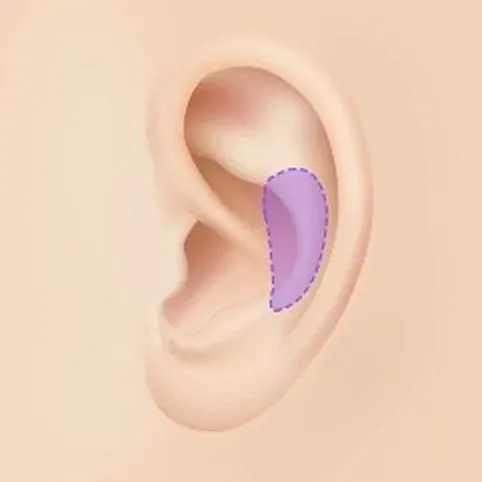
Ear Cartilage (Autologous Tissue)
Its shape resembles that of the nose and it has elasticity, making it suitable for creating a natural Nasal Tip shape.
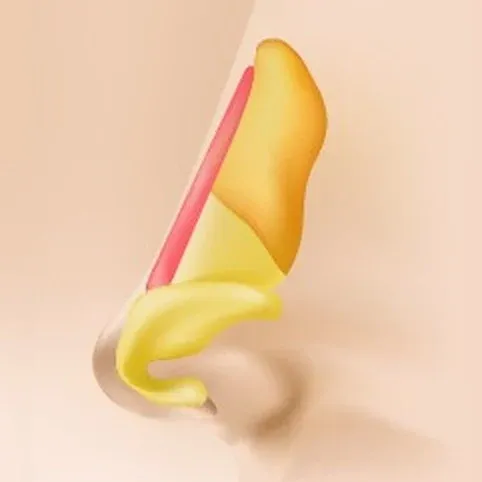
Septal Cartilage (Autologous Tissue)
This Cartilage is located inside the nose and allows angle adjustment, so it is mainly used for the Columella that supports the Nasal Tip.
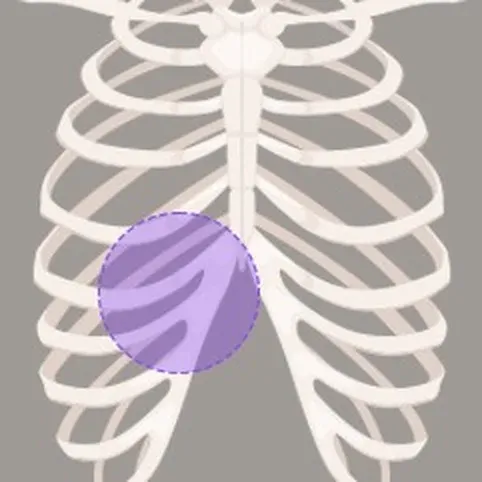
Rib Cartilage (Autologous Tissue)
It provides strong support and durability, and a sufficient amount can be obtained.

Silicone implant (artificial Implant)
This is the most commonly used Implant for augmenting the Nasal Bridge.
Rhinoplasty incision methods
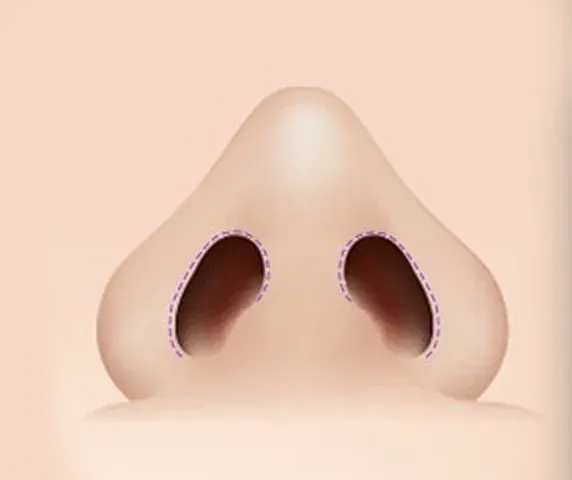
Closed incision
Incisions are made inside the nostrils. Because the surgical field is more difficult to secure, the procedure requires an experienced medical team and is suitable when there are few areas to correct.
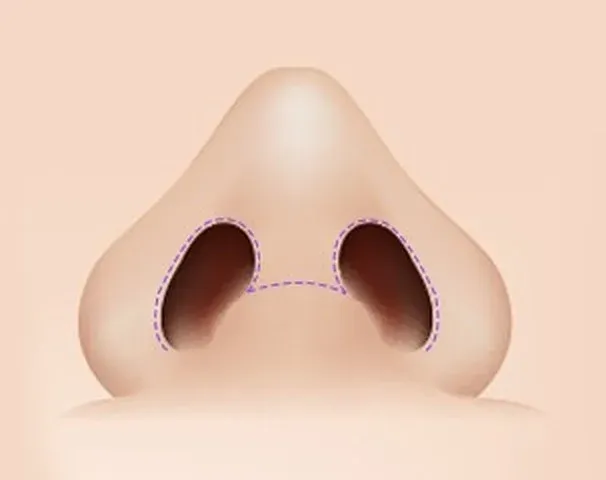
Open incision
Incisions are made in the nostrils and Columella. This provides a better surgical field for accurately examining the internal nasal structure and allows procedures that change the length of the nose.
Procedure
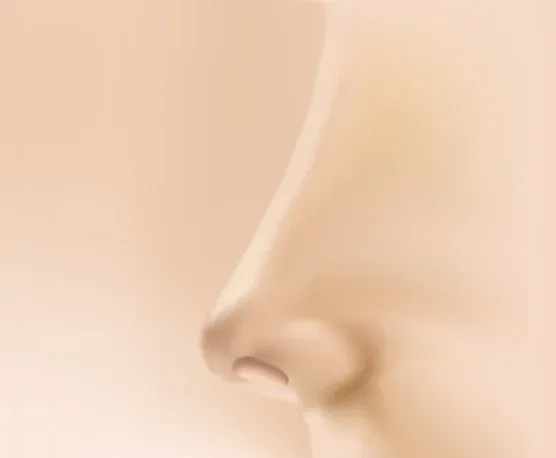
STEP 1. Design
The low nose is designed to suit each individual’s Face.
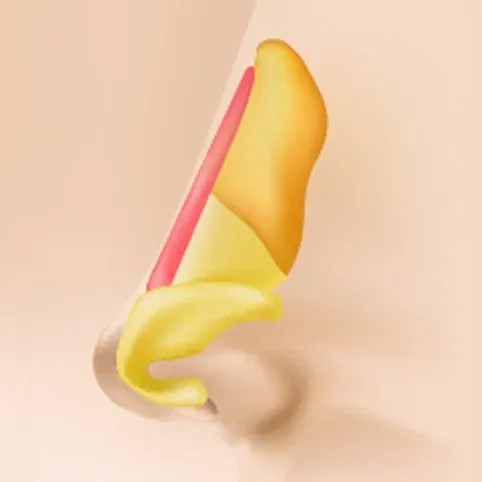
STEP 2. Implant and Autologous Cartilage insertion
An Implant is inserted in the Nasal Bridge and Autologous Cartilage in the Nasal Tip to create a defined nose shape.
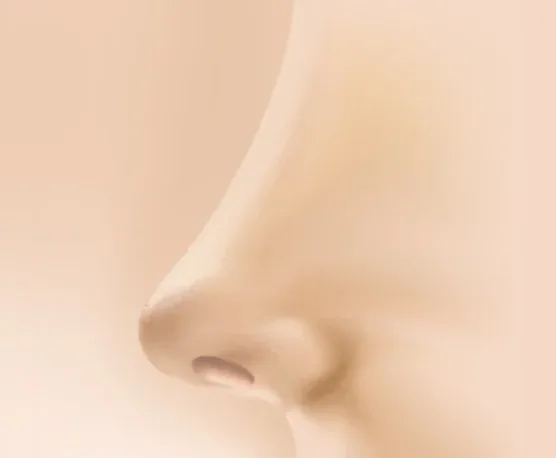
STEP 3. Completion
After surgery, a high and refined Nasal Bridge is achieved.
Surgery Information
| Surgery time: 1 hour to 1 hour 30 minutes | Anesthesia: Sedation anesthesia | Return to daily activities: Possible after 5–7 days | Follow-up visits: 2
Pre- and Post-Operative Precautions
Before surgery
· Fasting for 8 hours before surgery is required. · Please inform us in advance if you have any health concerns, such as a cold or respiratory illness. · Be sure to inform us of your past and current medical history, allergic reactions, and any medications you are taking.
After surgery
· Swelling and bruising take approximately 2 weeks to subside. As the elevated Nasal Tip settles naturally, it takes about 3 months for the final result to appear. · Apply cold compresses immediately after surgery, but do not press on the nose; hold them lightly against the area. After 3 days, switching to warm compresses can help reduce swelling more quickly. · Keeping your head elevated above heart level can help reduce swelling. · Avoid wearing glasses or sunglasses for about one month, until the nose has settled into place. · Even if you have a cold or allergic rhinitis, do not blow your nose forcefully or put strain on it. If osteotomy was performed, avoid impact to the nose until the bone has healed. · The nose may come into contact with water after stitch removal. · Strenuous exercise, such as aerobics, swimming, or gym workouts, may be resumed after one month. Avoid alcohol and smoking for one month. · If pain suddenly worsens with a sensation of heat after surgery, please contact the hospital immediately, even if it is not your scheduled visit date.
Please be sure to check
Complications such as bleeding, infection, and inflammation may occur after surgery, and subjective satisfaction may vary from person to person; please consult with your doctor. Surgical methods and results may vary depending on the individual’s condition and are determined through consultation with a specialist.
 BANOBAGI PLASTIC SURGERY