Lens Implantation Surgery
From 6,000,000 KRW/ surgery
EVO+ ICL Implantable Collamer Lens Procedure EVO+ ICL is a vision correction procedure that corrects myopia and astigmatism by implanting a specialized lens inside the eye without reshaping the cornea. A thin, flexible lens made of highly biocompatible Collamer® material is placed behind the iris and in front of the natural crystalline lens. Because corneal tissue is preserved, it may be considered for patients for whom laser vision correction is difficult or unsuitable due to high myopia, thin corneas, dry eye syndrome, or other factors. Features of EVO+ ICL • A vision correction procedure that does not remove corneal tissue • Preserves the natural crystalline lens without removing it • Can correct high myopia and very high myopia • Astigmatism can be corrected with EVO+ Toric ICL when present • Uses a biocompatible lens made of Collamer® material • The lens may be removed or exchanged when necessary, at the clinician’s discretion • Relatively less burden of dry eye symptoms due to the absence of corneal nerve damage • UV-blocking function • Rapid visual recovery and return to daily activities 0.36 mm Central Port EVO+ ICL has a central port approximately 0.36 mm in size at the center of the lens. This opening allows the aqueous humor inside the eye to circulate naturally, enabling the procedure to be performed without a separate peripheral iridotomy. Standard ICL and Toric ICL EVO+ ICL is used for patients with myopia only, while EVO+ Toric ICL is used for patients with astigmatism requiring correction. For toric lenses, the patient’s astigmatic power and axis are measured precisely, and the lens is implanted in the appropriate orientation to correct both myopia and astigmatism. Comprehensive Preoperative Examination For ICL surgery, it is important to accurately measure not only the lens prescription but also the intraocular space and lens size. The following factors are comprehensively evaluated before surgery: • Myopic and astigmatic refractive error • Anterior chamber depth • Anterior chamber angle • Corneal endothelial cell count • Corneal size and shape • Intraocular pressure • Pupil size • Retinal condition • Dry eye syndrome • Lens size and predicted vault If the intraocular space is insufficient or the corneal endothelial cell count does not meet the required criteria, surgery may not be possible. Surgical Procedure 1. Eligibility for surgery is confirmed through a comprehensive examination. 2. The appropriate lens type, power, and size are determined for the patient’s eye. 3. After topical anesthesia, the folded lens is inserted into the eye through a small incision. 4. The lens is positioned securely behind the iris and in front of the natural crystalline lens. 5. Intraocular pressure and lens position are checked after the procedure. ※ Surgical eligibility and the type and power of lens to be used are determined after a comprehensive examination. All ophthalmic surgeries may involve potential side effects, including increased intraocular pressure, inflammation, cataracts, reduction in corneal endothelial cells, lens malposition, and glare or halos; therefore, thorough consultation with the medical team is necessary.
Surgery Overview
Miracle Implantable Collamer Lens
ICL Reference Surgeon Responsible Care
Experience excellent Vision Correction results without reshaping the Cornea.

Miracle Implantable Collamer Lens (EVO + AQUA ICL) for safe correction of even extremely high Myopia and Astigmatism
Premium Vision Correction procedure that preserves the Cornea, achieving 13,000 eyes treated
Implantable Collamer Lens is a method of correcting vision by placing a special lens inside the eye. The implanted lens directly compensates for refractive errors within the eye, providing clearer vision.
This is a highly safe Vision Correction procedure that corrects vision by inserting a special lens into the eye without reshaping the Cornea, and can be applied even to eyes with thin Corneas or those unsuitable for laser procedures. It can also be performed when laser Vision Correction is difficult due to dry or thin Corneas, offering a wider range of options.

Types of EVO+ICL Implantable Collamer Lens
Posterior Chamber Lens Implantation
This method inserts the lens behind the Iris, allowing correction without an Iris incision. Surgery can be performed on the day of examination, with fast recovery.
✓ No Corneal damage, as no Iris incision is made
✓ No visible signs of surgery
✓ Small surgical area enables fast recovery and provides stability against external impact
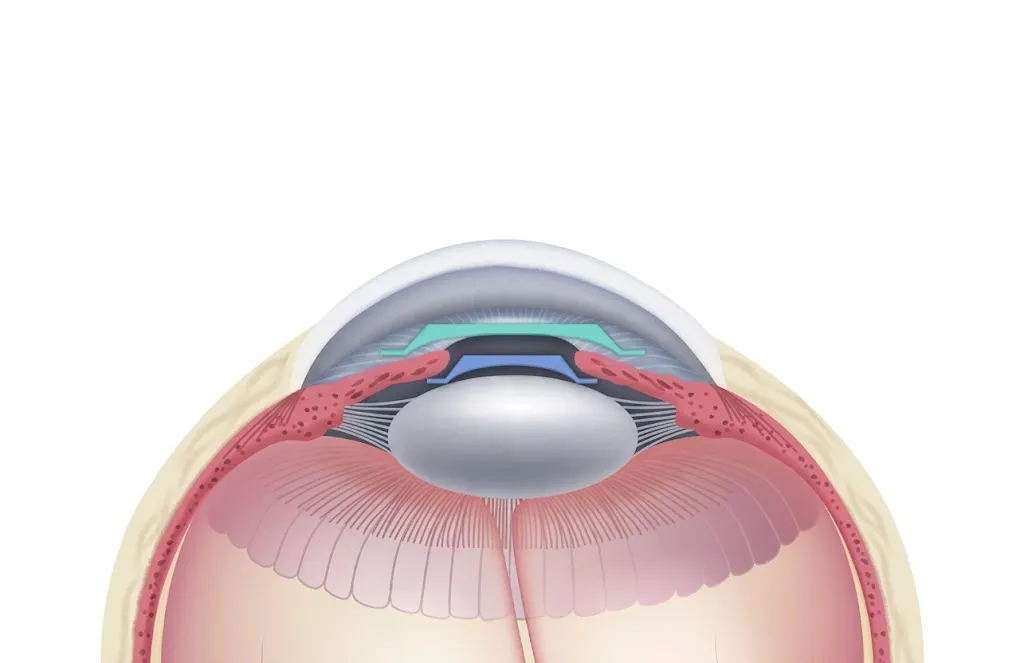
Anterior chamber lens (inserted in front of the Iris) / posterior chamber lens (inserted between the Iris and Lens)
Advantages of Miracle Implantable Collamer Lens, known for high satisfaction

Miracle Merit
❶ Preserves the Cornea in its original shape without reshaping it, with a lower likelihood of causing Dry Eye Disease
❷ Fast recovery, allowing return to work as early as the next day and easy return to daily life
❸ Excellent quality of vision is maintained for a long time without vision regression
❹ The lens can be removed, allowing flexible options for future surgeries
This is how Miracle Implantable Collamer Lens surgery is performed.
For Implantable Collamer Lens surgery, accurate measurement of the intraocular space and selection of a lens suited to the individual are most important. Because even a slight axis misalignment can cause Dizziness and Astigmatism, the expertise of the surgeon is extremely important.
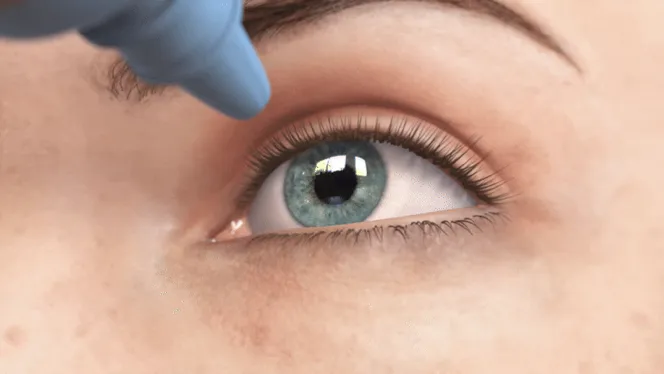
❶ Dilating eye drops
Dilating eye drops are administered to enlarge the Pupil.
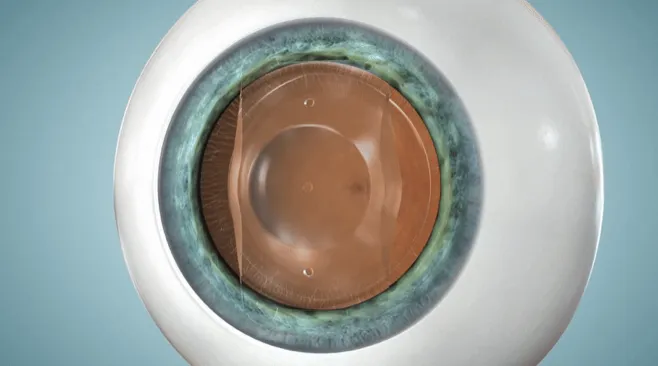
❷ Lens insertion
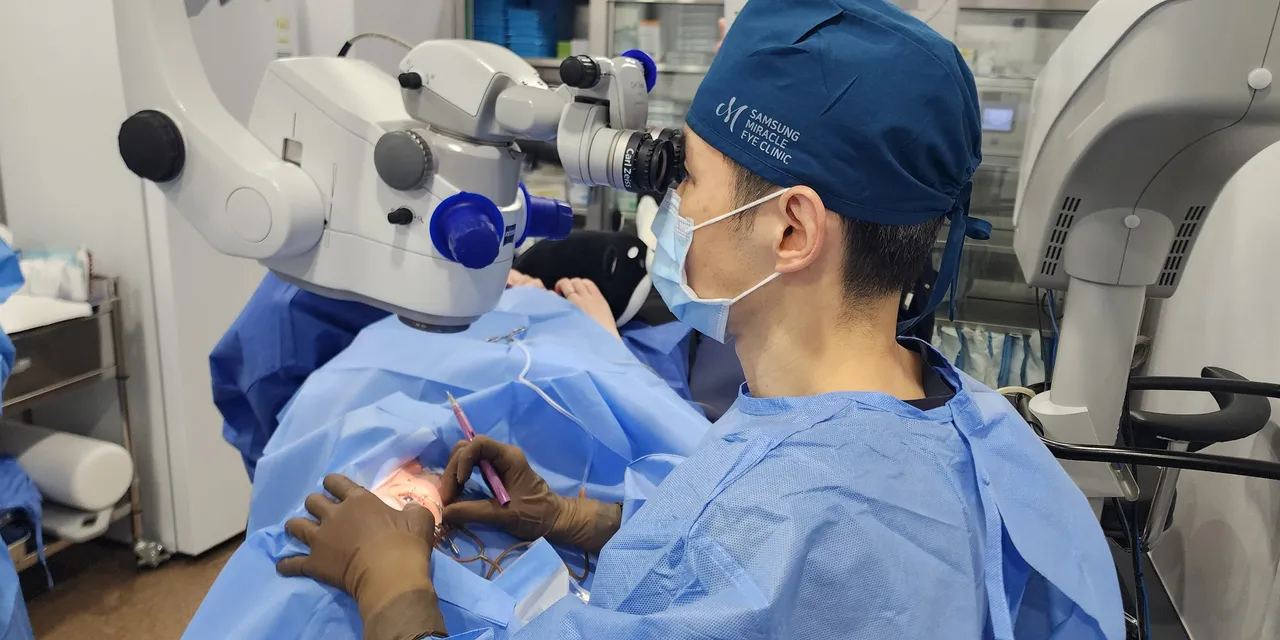
The lens is inserted through a small approximately 3 mm incision in the Cornea.
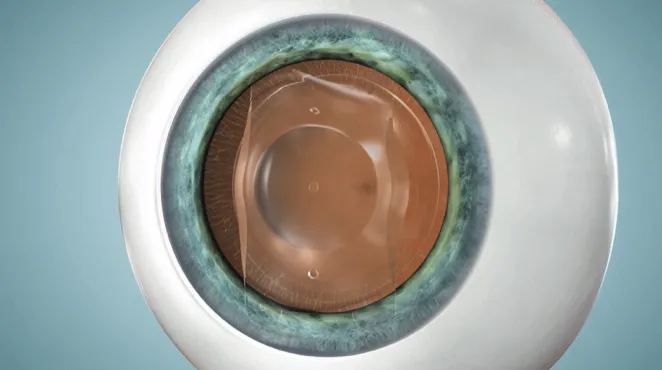
❸ Lens fixation
The procedure is completed after accurately securing the lens between the Iris and Lens.
Implantable Collamer Lens may be needed for the following individuals.
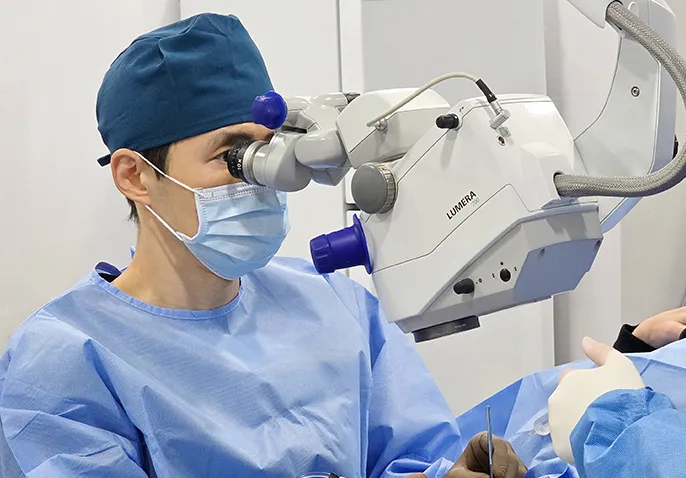
✓ When undergoing Revision surgery due to Myopia regression after LASIK or LASEK
✓ In cases of very severe Myopia/Astigmatism
✓ In cases of thin Corneal thickness
✓ In cases of severe Dry Eye Disease
✓ In cases of Scars or disease in the Cornea
✓ In cases of low endothelial cell count
Before choosing a hospital, make sure it is an ophthalmology clinic that uses genuine ICL lenses.

Check the EVO+ICL certification card
Samsung Miracle Eye Clinic issues an EVO+ICL certification card verifying genuine ICL lenses to everyone who undergoes Implantable Collamer Lens surgery. This card certifies that the Implantable Collamer Lens procedure was performed using genuine EVO ICL developed by STAAR SURGICAL in the United States.
What makes Miracle Implantable Collamer Lens special
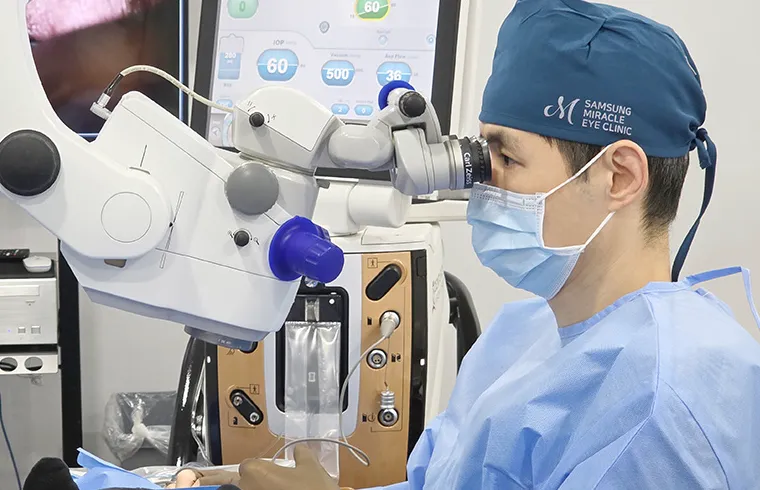
Miracle, an ophthalmology clinic certified with an ICL Reference Doctor
An ICL Reference Doctor is an officially certified doctor directly selected and recognized by STAAR, the developer of ICL. At Samsung Miracle, an ICL Reference Doctor personally performs Implantable Collamer Lens surgery, taking responsibility for highly safe surgical outcomes.
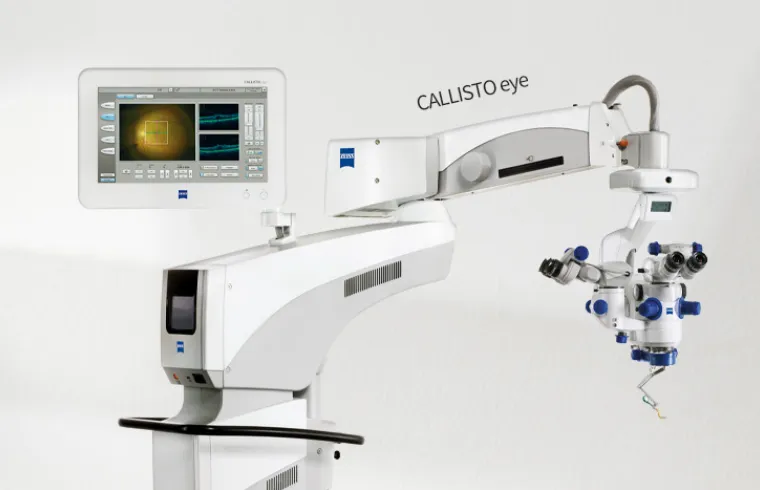
Personalized lens size measurement
Customized surgical planning is provided for precise lens insertion tailored to each individual. Based on genuine medical equipment suitable for Implantable Collamer Lens procedures, the skills and know-how of experienced medical staff, and diverse clinical data, Samsung Miracle performs surgery designed to minimize error.

First Implantable Collamer Lens ICL procedure in the central region in 2005
Samsung Miracle's Implantable Collamer Lens technology, developed through ongoing research and advancement since performing surgery in 2005
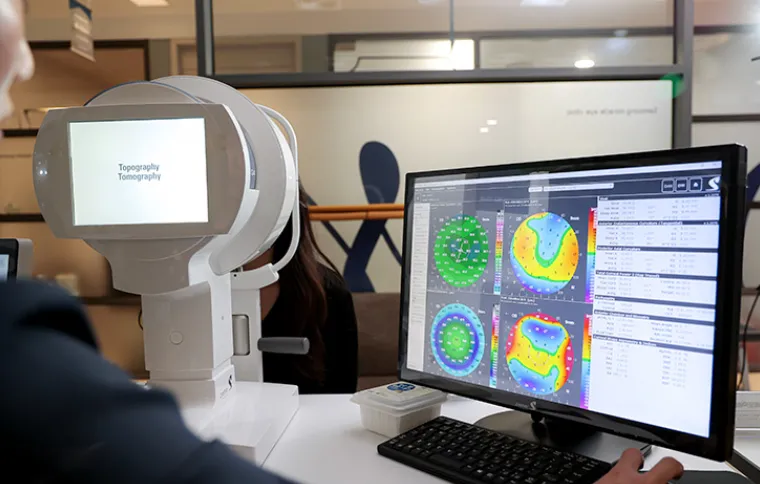
Careful and systematic examination before Implantable Collamer Lens surgery
Dozens of examinations for accurate surgery, plus additional examinations by medical staff: approximately 60 detailed tests in 15 stages (approximately 2 hours required)
For your precious eyes, choosing Samsung Miracle is essential.
MIRACLE POINT 01 Responsible care and direct surgery by the chief director, a Seoul National University graduate
The chief director, an ophthalmology specialist and graduate of Seoul National University College of Medicine, personally takes responsibility from consultation and surgery through follow-up care.
MIRACLE POINT 02 Miracle's dedicated personal care system with customized staff assigned before and after surgery
Systematic care from before surgery through after surgery through a one-on-one dedicated medical care system

Before surgery: Fast consultations and prompt appointment scheduling through a specialized medical team
After surgery: Monitoring of progress and visit schedules through a dedicated care team
MIRACLE POINT 03 Personalized solutions provided by medical staff from university hospitals
Vision Correction specialists in each field from university hospitals collaborate to personally check each patient repeatedly, from surgery through follow-up progress.

MIRACLE POINT 04 Miracle medical services that continue to advance through ongoing research and effort
Regular seminars and training are conducted for the Gangnam and Cheonan branches to provide high-quality medical services at every branch.
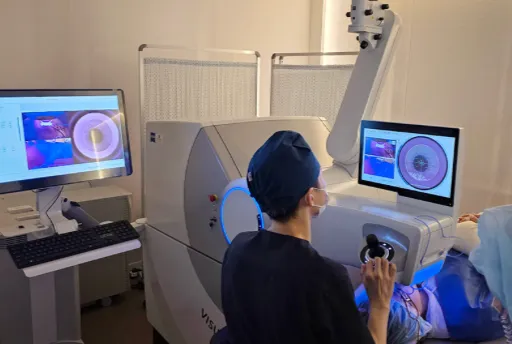
MIRACLE POINT 05 Safety first: precise examinations with genuine equipment
To provide treatment services suited to each client based on the principle of safety, precise examinations are conducted using only genuine equipment.
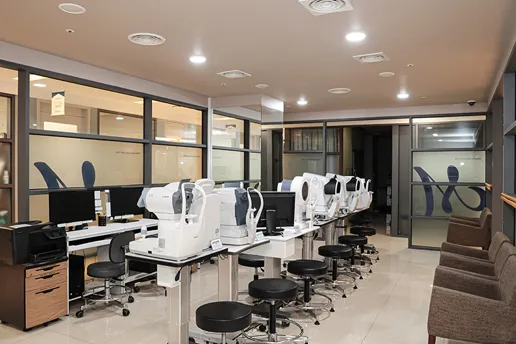
Miracle, your lifelong eye health partner: lifelong vision care program
❶ Recovery status monitoring (1 week after surgery)
✓ Inflammation test ✓ Specialist examination
❷ Intensive Vision Correction care (1–3 months)
✓ Vision test ✓ Refraction test ✓ Intraocular pressure test ✓ Retina examination ✓ Eye drop prescription
❸ Regular lifelong vision care (1 year / once annually)
✓ Vision test ✓ Refraction test ✓ Retina examination ✓ Intraocular pressure test
❹ Regular lifelong vision care (after 15 years / once annually)
✓ Presbyopia test ✓ Retina examination ✓ Tear test ✓ Cataract test ✓ Glaucoma test
Samsung Miracle's unmatched accumulated expertise and technical capability



 Samsung Miracle Eye Clinic Gangnam