
Inverted Nipple
from 700,000 KRW* VAT Not Included
This procedure corrects inverted nipples, in which the nipple is buried within the breast and protrudes only with external stimulation, according to the severity grade. Methods include releasing and suturing the tissues pulling the nipple inward through a minimal incision, as well as techniques that preserve the mammary ducts to allow breastfeeding after correction. The procedure is performed under sedation anesthesia and takes approximately one hour.
Surgery Overview
Inverted Nipple correction is a procedure that restores nipples buried within the breast or protruding only with external stimulation to their normal position. After a minimal incision, the tissues pulling the nipple inward are released and secured. When a method that preserves the mammary ducts is selected, breastfeeding remains possible after correction.

This procedure corrects the nipple position to its normal location. Inverted Nipple refers to a condition in which the nipple is buried within the breast or protrudes only with external stimulation. In addition to affecting appearance, discharge may accumulate around the nipple and cause odor, inflammation, or mastitis. Above all, it can make breastfeeding difficult, so correction at an appropriate time is necessary.
Causes of Inverted Nipples
· When there is insufficient tissue supporting the underside of the nipple, causing it to become buried inward · When the ducts beneath the nipple are short and pull the nipple inward · When the nipple is congenitally inverted due to genetic factors
Recommended For
Step-by-step Inverted Nipple self-assessment — Surgical correction is generally required from Stage 2 onward. · Stage 1: The nipple protrudes and retracts on its own without external stimulation · Stage 2: The nipple protrudes with external stimulation, such as cold temperatures or showering · Stage 3: The nipple protrudes only with compression or physical force · Stage 4: The nipple does not protrude even with physical force
Inverted Nipple Surgery Methods
CASE 1. Method Using a Correction Device
For mild inversion, a physical correction device that provides suction based on the same principle as a breast pump may be used, or natural correction may occur during breastfeeding. Surgical correction proceeds as follows.
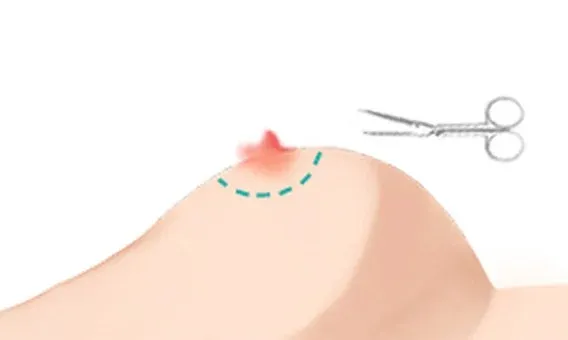
STEP 1. Minimal Incision
A minimal incision is made around the nipple.
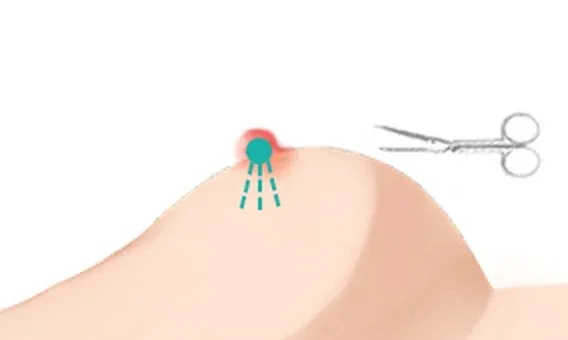
STEP 2. Tissue Release and Fixation
The tissues pulling the nipple inward are released and secured with sutures.
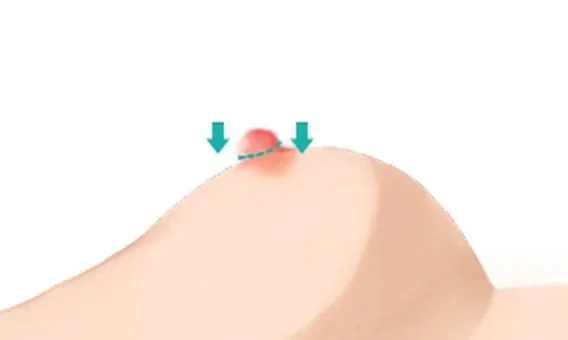
STEP 3. Meticulous Suturing
The procedure is completed with meticulous suturing.
CASE 2. Method That Preserves the Mammary Ducts
This method preserves the mammary ducts, allowing breastfeeding even after correction. The procedure takes approximately 20 minutes, and same-day discharge is possible. Before surgery, a device that pulls and secures the nipple forward is worn for about one week. For one month after surgery, it is advisable to avoid pressure on the nipple.
Surgery Information
| Surgery time: Approximately 1 hour | Anesthesia: Sedation anesthesia | Suture removal: 7–10 days | Follow-up visits: 2–3 visits | Recovery period: Daily activities possible after 3–4 days
Pre- and Postoperative Precautions
Before Surgery
· Wear a device that pulls and secures the nipple forward for about one week before surgery (mammary duct preservation method).
After Surgery
· For one month after surgery, take care not to apply pressure to the nipple. · Take only painkillers and antibiotics prescribed by the hospital, and avoid aspirin-based medications. · Avoid alcohol and smoking for a certain period after surgery, as they may cause inflammation and skin discoloration.
Please Be Sure to Check
Surgical methods and outcomes may vary depending on individual conditions and should be determined through consultation with a specialist.
 OPERA PLASTIC SURGERY