
Incisional Method (Eye Correction)
from 450,000 KRW* VAT Not Included
For severe eyelid ptosis with thick skin or excessive fat, this procedure involves an incision to reduce unnecessary fat and soft tissue and tighten the stretched levator muscle to enhance eyelid-opening strength. It can be applied to all eyelid types, allows for double-eyelid crease formation and fat removal, and has a recovery period of approximately 3–4 days.
Surgery Overview
Incisional Ptosis Correction is a procedure that involves making an incision in the eyelid skin according to the design, removing unnecessary fat and Soft Tissue, and tightening the stretched eyelid elevating muscle to strengthen the ability to open the eyes. It is suitable for cases of severe eyelid drooping or thick eyelid skin with abundant fat, and can create a double eyelid while removing fat at the same time.

Make sleepy-looking eyes more defined and correct asymmetrical eyes like a mirror image. When the muscle that lifts the eyelids (levator palpebrae superioris) weakens due to congenital factors or acquired aging, less of the iris is exposed, creating a sleepy or tired-looking impression. In such cases, Double Eyelid Surgery alone has a higher likelihood of loosening, and limited iris exposure may still make the eyes appear sleepy. Opera therefore performs mirror-image Ptosis Correction, which adjusts the strength of the eye-opening muscles to increase iris exposure and improve asymmetry between the eyes.
Recommended for
· Those with severe eyelid drooping, thick skin, or abundant fat · Those who want double eyelid formation and fat removal at the same time · Suitable for all eyelid types
Features of Opera Ptosis Correction
Point 1. Precise incision location and size
Even for eyes with severe eyelid drooping or thick, fatty eyelids, the incision location and size are meticulously planned to reduce surgical traces and swelling.
Point 2. Correction of asymmetrical eyes
By adjusting the tension of the eye-opening muscles, symmetry between both eyes is balanced and corrected for a more natural appearance.
Point 3. Comfortable eye opening
For eyes that feel heavy and appear sleepy, Ptosis Correction creates lighter, brighter-looking eyes.
Point 4. Forehead wrinkle prevention
Correcting the habit of using the Forehead muscles to open the eyes helps prevent additional Forehead wrinkles.
Ideal eye proportions
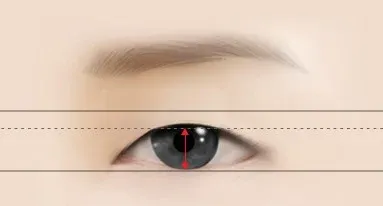
Ptosis eyes
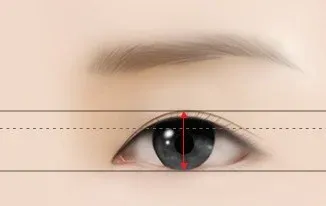
Normal eyes
Clear, defined eyes are considered ideal when approximately 80–90% of the iris is visible.
Ideal proportions for harmonious, symmetrical eyes
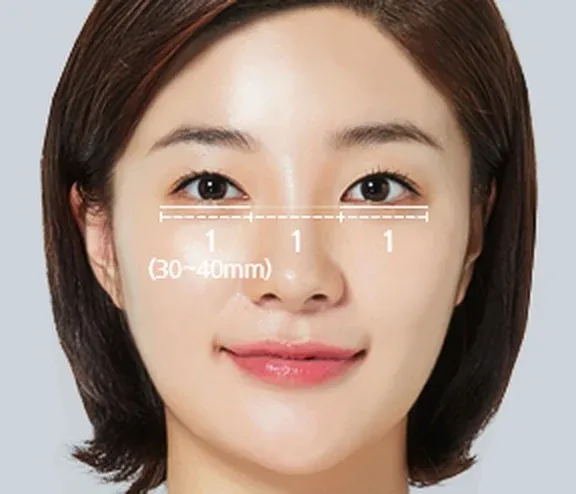
Horizontal eye length 1:1:1
The horizontal length of the eye is approximately 30–40 mm, forming a 1:1:1 ratio with the width between the eyes.
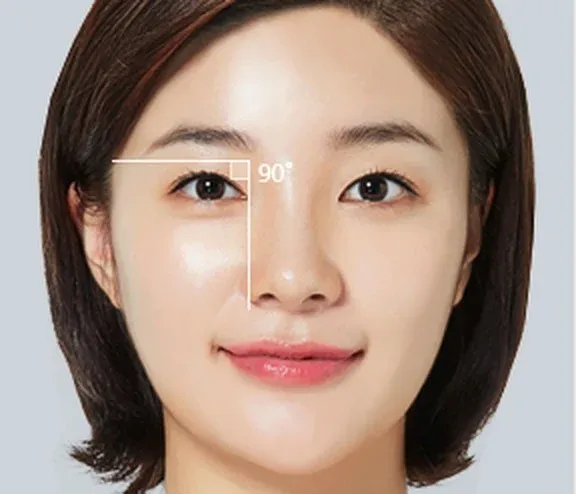
Eye position
Ideally, the eye is vertically aligned from the inner eyebrow to the nostril wing.
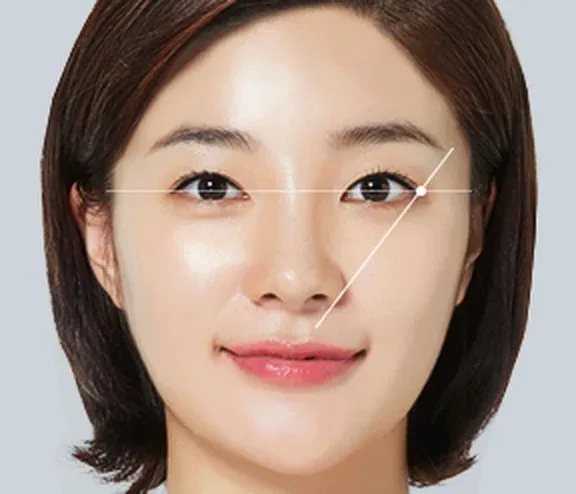
Outer eye corner and nostril wing
Ideally, the outer corner of the eye and the nostril wing are connected in a straight line.
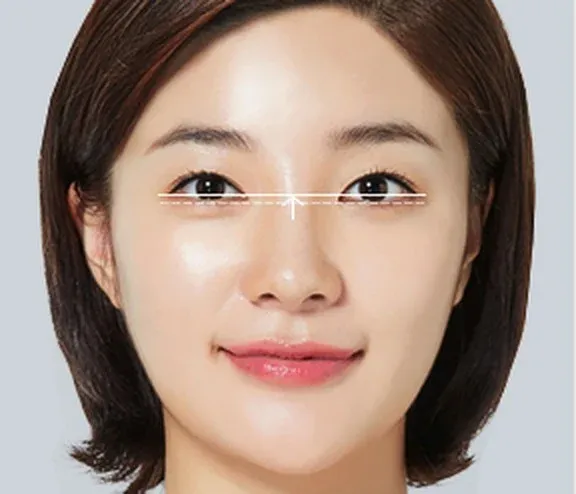
Outer eye corner height
Ideally, the outer corner of the eye is positioned slightly above a horizontal line extending from the inner corner of the eye.
Incisional Ptosis Correction procedure
Through an incision, unnecessary fat and Soft Tissue are reduced and muscle tension is corrected. A fine scar may remain, and the recovery period is approximately 3–4 days.
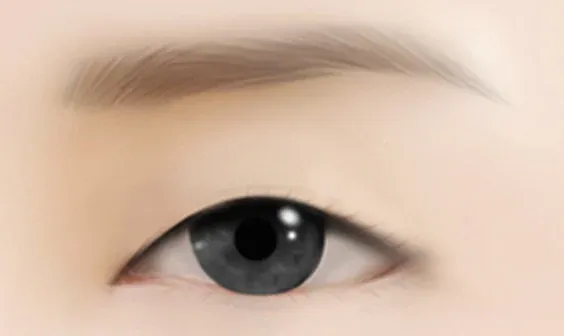
STEP 1. Before surgery
The degree of eyelid drooping, amount of fat, and eye-opening strength are assessed to plan the incision location and size.
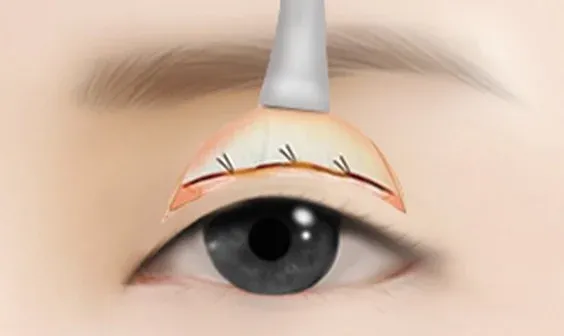
STEP 2. Removal of fat and Soft Tissue after incision
After making an incision in the eyelid skin according to the design, unnecessary fat and Soft Tissue are removed.
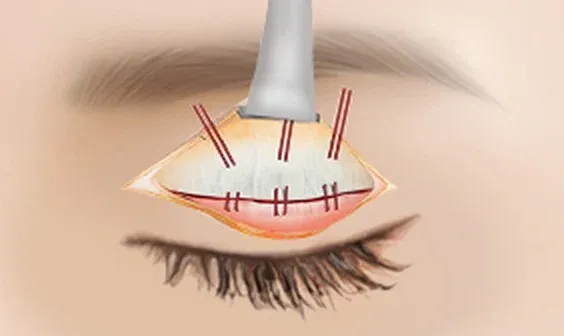
STEP 3. Strengthening the eye-opening muscles
The stretched eyelid elevating muscle is tightened to strengthen the eye-opening muscles.
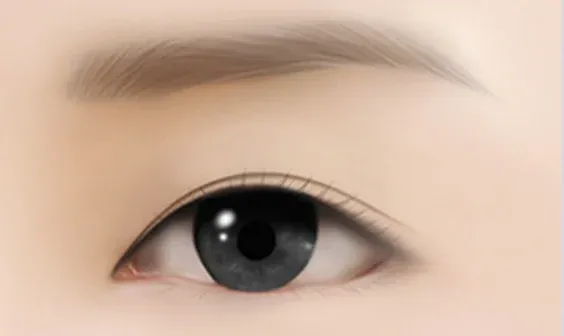
STEP 4. After surgery
The eyelids become lighter, iris exposure increases, and the eyes appear clearer and more defined.
For thin eyelids without severe drooping, Non-incisional method Ptosis Correction without a skin incision may also be possible.
Surgery Information
| Surgery time: Approximately 1 hour | Anesthesia: Short-duration sedation followed by local anesthesia | Stitch removal: After 5–7 days | Follow-up visits: 1 visit | Recovery period: Daily activities are possible after stitch removal
Pre- and Post-operative Precautions
After surgery
· Swelling or bruising around the eyes may occur for 1–2 days after surgery and will gradually subside afterward. · Apply cold compresses for approximately 6 days after surgery, then warm compresses to promote blood circulation. Place a thin towel over the eyes when applying compresses. · Face washing and makeup are permitted from the day after stitch removal. · It is recommended not to wear contact lenses for approximately 3 weeks; wear glasses or sunglasses during this period. · Exercise other than light walking, as well as public baths, jjimjilbangs, and saunas, is permitted after 3 weeks. A simple shower is possible from the following day. · Avoid ultraviolet exposure for 3 weeks after surgery, and wear sunglasses outdoors. · Keep your head elevated with 2–3 pillows while sleeping, and avoid sleeping on your side or face down for approximately 4 weeks. · Take only the pain relievers and antibiotics prescribed by the hospital. Avoid aspirin-based medications, as they may cause bleeding. · Alcohol and smoking are permitted after 3 weeks following surgery.
Please be sure to check
The surgical method and results may vary depending on the individual’s condition and will be determined through consultation with a specialist.
 OPERA PLASTIC SURGERY