Implant Complications (Show-through / Contracture / Migration)
from 5,764,000 KRW* VAT Not Included
This is a revision procedure performed to diagnose and correct issues such as inflammation, contracture, implant visibility or malposition, and design problems following previous rhinoplasty. Depending on the condition, options may include implant replacement or adjustment, correction of a contracted nose, or reconstruction using only autologous tissue.
JK Rhinoplasty Revision is a procedure that identifies the exact cause of complications after previous nasal surgery—such as inflammation, capsular contracture, Implant visibility or malposition, or design issues—and corrects them. Depending on the condition, options may include Implant Replacement or adjustment, correction of a contracted nose, or reconstruction using only Autologous Tissue.

Features of JK Rhinoplasty Revision
Whether Rhinoplasty Revision is needed is best evaluated after at least 6 months to 1 year following the previous surgery, once the condition of the nose has stabilized to some extent. This is because even if you are dissatisfied with the shape immediately after the initial surgery, it may improve as swelling subsides and the nose settles.
Point 1. Accurate assessment of the condition
We accurately assess the current condition of the nose, including the presence of inflammation or capsular contracture and whether Implant removal is necessary.
Point 2. Meticulous design
The design is planned once during consultation, once while seated in the operating room, and once more while lying on the operating bed.
Point 3. Surgery by experienced specialists
A board-certified specialist with over 10 years of experience performs the procedure, while an anesthesiology and pain medicine specialist provides dedicated one-on-one care.
Point 4. Satisfying aftercare
A common comment from JK patients is that they experience natural-looking changes and that swelling and bruising disappear sooner than expected.
Rhinoplasty Revision by Type

Nose with inflammation
For a nose in the acute inflammatory stage, the inflamed tissue and Implant must be removed. In most cases, cleansing and antibiotics alone are insufficient to resolve the inflammation. If swelling, redness, or an abscess is present, surgery is performed after the inflammation has sufficiently subsided.
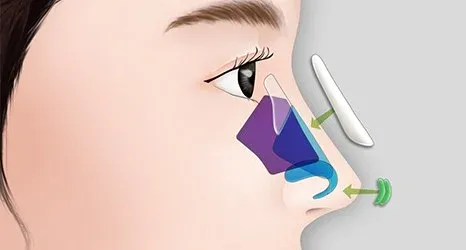
Implant Replacement and adjustment
If the middle of the Nasal Bridge protrudes, making the Nasal Tip appear relatively low, or if the Implant is not in the correct position, protruding nasal bone or Cartilage is removed and the Nasal Tip is elevated as needed.
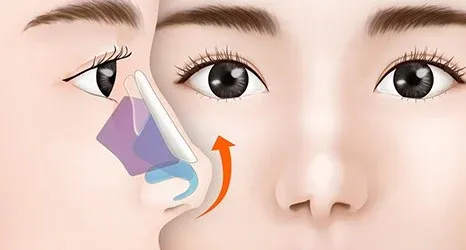
Contracted nose surgery
For noses affected by capsular contracture due to a Silicone Implant or inflammation, the contracted Soft Tissue is released and a new support structure is created using Autologous Tissue. Because this procedure is challenging even for skilled physicians, it is advisable to undergo it with an experienced surgeon.
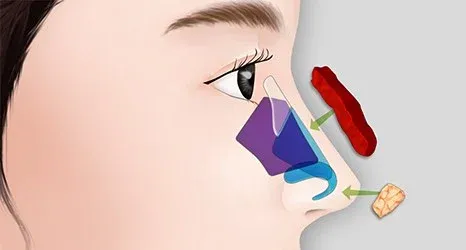
Autologous Tissue nose surgery
For noses with severely thinned skin or severe capsular contracture, where inserting a new Implant is difficult, surgery is performed using only Autologous Tissue, such as autologous fascia, autologous dermis, and Autologous Cartilage.
Pre- and Postoperative Precautions
Before Surgery
· Please inform your coordinator if you have high blood pressure, heart disease, diabetes, are receiving thyroid treatment, or are taking any medications. · Please follow the required fasting period before surgery. · On the day of surgery, please remove contact lenses, jewelry, nail polish, etc. in advance, as they may interfere with the procedure. · Please visit the clinic wearing comfortable clothing that will not irritate the surgical area. · Please refrain from smoking before surgery, as cigarettes contain substances that can cause phlegm or sneezing and may lead to postoperative bleeding.
After Surgery
· You may have difficulty driving on the day of surgery.
Please Be Sure to Check
Complications such as postoperative bleeding, infection, and inflammation may occur, and subjective satisfaction may vary from person to person. Please consult thoroughly with a specialist. Surgical methods and results may vary depending on the individual’s condition and are determined through consultation with a specialist.
 JK PLASTIC SURGERY CENTER