Implant Complications (Show-through / Contracture / Migration)
from 6,090,000 KRW* VAT Not Included
This procedure corrects dissatisfaction with the nasal contour after previous rhinoplasty, implant visibility or displacement, and a shortened nose due to contracture, according to the underlying cause. After diagnosing the cause using 3D CT and other assessments, implant replacement, cartilage grafting, septal extension, and other appropriate techniques are performed. It is generally recommended to proceed after approximately 6 months, once the tissues have softened.
Surgery Overview
This surgery corrects issues such as dissatisfaction with the nasal line after previous rhinoplasty, visible or shifting implants, and a nose shortened by capsular contracture, according to the underlying cause. After diagnosing the cause using 3D-CT and other methods, Implant Replacement, cartilage re-grafting, Septal Cartilage extension, and other procedures may be performed. In general, revision surgery is recommended after 6 months, when the tissues have softened.

Your last revision surgery can be possible with Banobagi. Correcting complications by accurately identifying the cause
Recommended for These Patients
The causes of Rhinoplasty Revision vary, from dissatisfaction with the nasal line to inflammation and capsular contracture. · Dissatisfaction with the nasal line · A drooping Nasal Tip · Inflammation or capsular contracture · Recurrence of a hump nose or Crooked Nose · A crooked nose
Features of Banobagi Rhinoplasty Revision
With extensive experience and expertise, we aim for natural-looking results as if it were the first surgery, addressing multiple variables with diverse know-how and techniques without requiring additional surgery.
Point 1. A Dedicated Rhinoplasty Team with Extensive Expertise
Since opening, we have operated a dedicated rhinoplasty team, and specialists with experience in diverse cases provide one-on-one consultations.
Point 2. Precise Analysis Using Specialized Equipment Such as 3D-CT
We accurately diagnose the cause of revision surgery using specialized equipment.
Point 3. Meticulous Correction of the Nasal Bones, Cartilage, and Soft Tissue
We provide precise and meticulous correction of the nasal bones, Cartilage, and Soft Tissue.
Point 4. An Optimal Line That Achieves the Golden Ratio
We identify the optimal line and shape that suit the golden ratio of the Face.
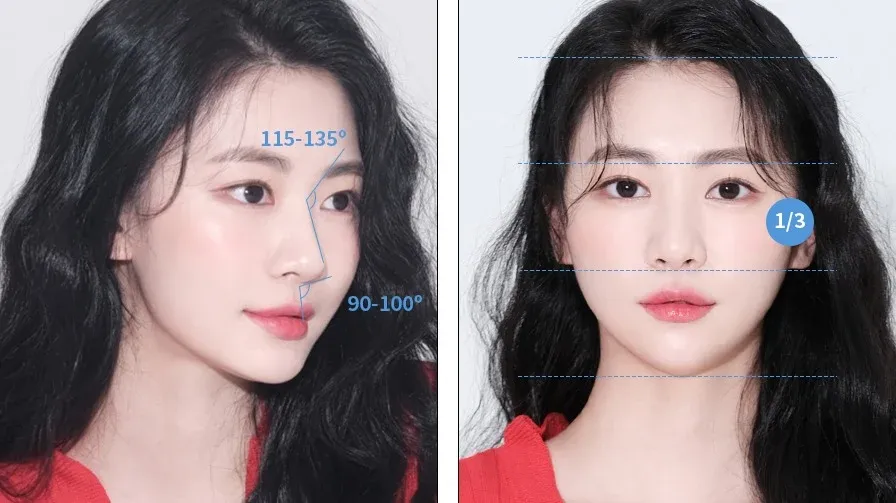
Ideal and natural with a 1:1:1 golden ratio

“Even complex Rhinoplasty Revision can be performed safely with extensive experience and expertise.” Rhinoplasty Revision is more difficult than primary surgery. Therefore, to prevent another revision surgery, it is important to receive an appropriate procedure from an experienced specialist with extensive surgical experience and expertise. Banobagi enhances postoperative satisfaction through one-on-one customized consultations with specialists experienced in diverse cases and accurate diagnosis of the underlying cause using specialized equipment.
When Is the Best Time for Revision Surgery?
· Within 3 months — If a simple augmentation rhinoplasty was performed, revision surgery may be possible depending on the patient’s condition. · After 6 months — In general, revision surgery is recommended after 6 months following the initial procedure, once the tissues have softened. · If inflammation occurs, revision surgery should be performed after the cause of inflammation has been addressed and recovery has been assessed. The timing of revision surgery may vary depending on each individual’s condition and cause, so it should be determined after thorough consultation with a specialist.
Surgical Methods Tailored to Improve Each Nasal Condition
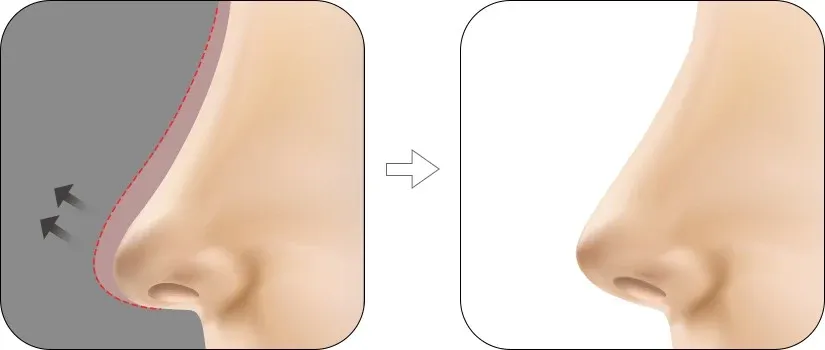
CASE 1. A Low or Blunt Nasal Tip
The Septal Cartilage is extended or the Columella is supported to elevate and support the Nasal Tip, while Cartilage is reshaped or re-grafted for correction.
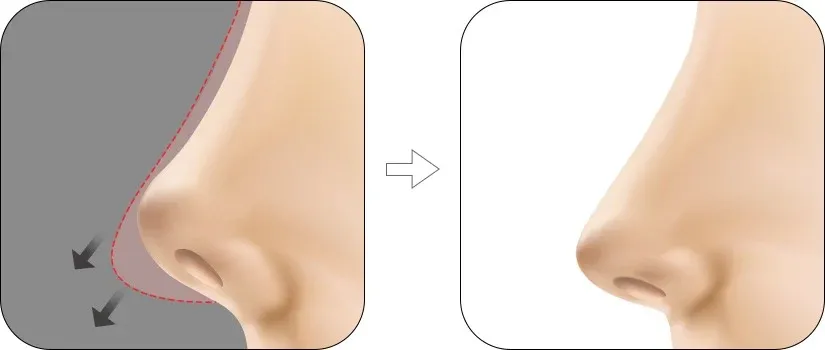
CASE 2. Shortened by Capsular Contracture
Once the inflammation has sufficiently subsided, the existing Implant is removed, and the skin and Cartilage are extended before inserting a new Implant.
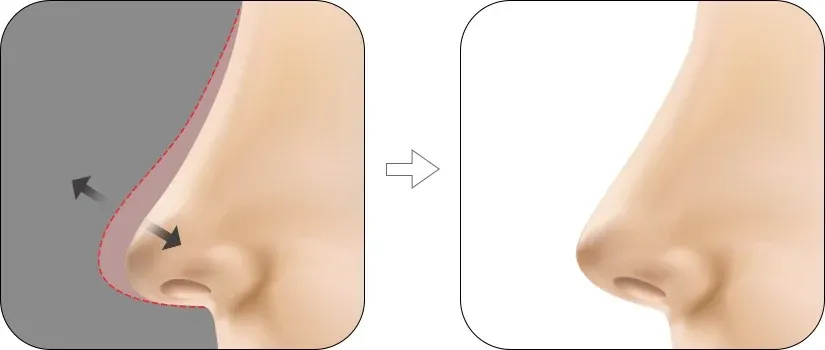
CASE 3. An Excessively High or Low Nasal Bridge
The proportions appropriate for the Face are reassessed, and the Implant is replaced with one of an appropriate size for correction.
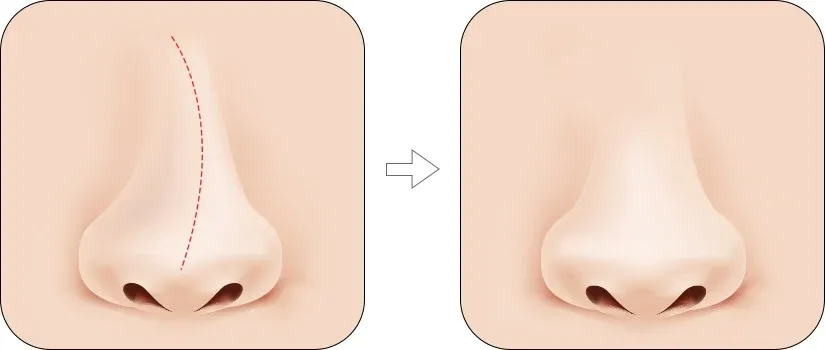
CASE 4. A Nasal Bridge That Appears Crooked
The position of the Silicone implant where it meets the nasal bone is adjusted to prevent deviation to one side.
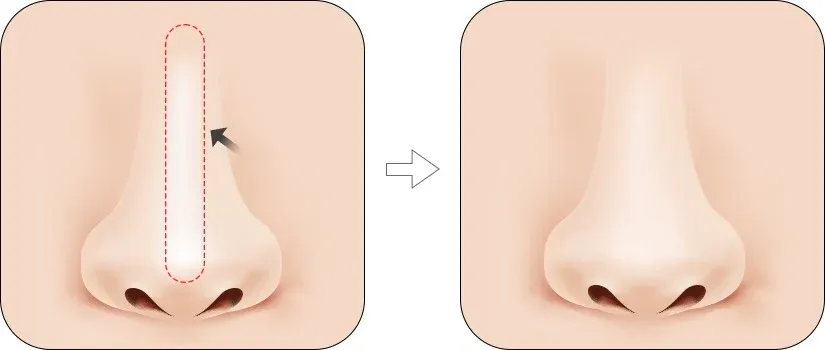
CASE 5. A Visible Implant
The Implant is replaced with a new one or wrapped in a Dermal Graft and reinserted for correction.
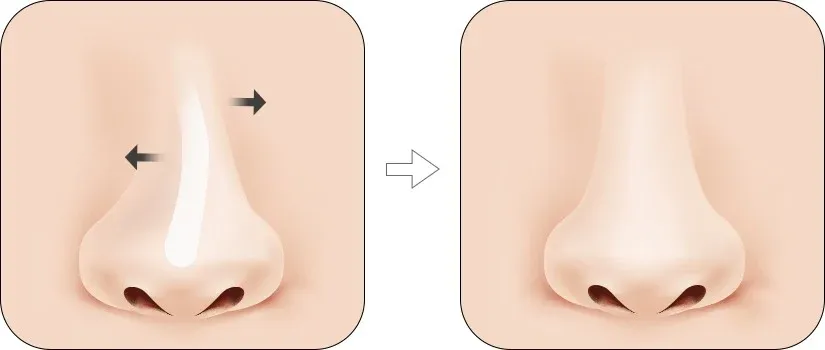
CASE 6. A Shifting Implant
The Implant is reinserted beneath the periosteum, where it can be firmly secured according to the contour and shape of the nasal dorsum, or replaced with Gore-Tex for correction.
Surgical Information
| Surgery duration: 2 hours 30 minutes | Anesthesia: Sedation anesthesia | Return to daily activities: Possible after 5 days | Follow-up visits: Approximately 2
Pre- and Postoperative Precautions
Before Surgery
· Fasting is required for 8 hours before surgery. · Please inform us in advance if you have any health concerns, such as a cold or respiratory illness. · Please be sure to inform us of your past and current medical history, allergic reactions, and medications you are taking.
After Surgery
· Swelling and bruising take about 2 weeks to subside, and approximately 3 months are needed for the elevated Nasal Tip to become natural and for final results to appear. · Apply cold compresses immediately after surgery, but do not press on the nose; place them lightly against the area. After 3 days, switching to warm compresses can help reduce swelling more quickly. · Keeping your head elevated above your heart can help reduce swelling. · Avoid wearing glasses or sunglasses for about one month, until the nose has settled. · Even if you have a cold or allergic rhinitis, do not blow your nose forcefully or strain it. If osteotomy was performed, avoid impact to the nose until the bones have healed. · Water may contact the nose after stitch removal. · Strenuous exercise such as aerobics, swimming, and gym workouts may be resumed after one month. Avoid alcohol and smoking for one month. · If pain suddenly worsens after surgery and is accompanied by a sensation of heat or fever, contact the hospital immediately, even if it is not your scheduled visit date.
Please Be Sure to Review
Complications such as bleeding, infection, and inflammation may occur after surgery, and subjective satisfaction may vary from person to person. Please consult with your doctor. Surgical methods and results may vary depending on the individual’s condition and are determined through consultation with a specialist.
 BANOBAGI PLASTIC SURGERY