
Hump Nose
Price upon consultation
This rhinoplasty procedure removes a protruding dorsal hump and, if necessary, uses osteotomy or implants to create a smooth, refined nasal bridge. The technique is determined by analyzing the degree of the hump, nasal bone width, and nasal tip height, and is performed under sedation anesthesia for approximately 1–1.5 hours.
Surgery Overview
Hump nose surgery removes the protruding hump in the middle of the nasal dorsum to create a smooth Nasal Bridge. By analyzing the degree of dorsal protrusion, the width of the nasal bones, and the height and shape of the Nasal Tip, the most harmonious Nasal Bridge and Nasal Tip angle are designed for the Face. Cartilage and bone are corrected while anticipating humps that may regrow, reducing the risk of recurrence.

Recommended for the following individuals
· Those whose protruding nasal dorsum makes their appearance seem strong · Those with a high Nasal Bridge but an uneven dorsal line · Those who developed a hump again after Hump nose surgery · Those seeking Hump nose surgery without recurrence
Why Grand Hump Nose Surgery Is Special
Point 1. Natural connection of the Nasal Bridge
Naturally and smoothly connects the starting point of the nose with the highest point of the Nasal Tip.
Point 2. A refined nasal line from the front as well
Corrects not only the protruding side profile but also the frontal view for an ideal nose shape.
Point 3. A nose shape that remains unchanged over time
The nasal column is securely fixed to match the Nasal Tip, making the likelihood of the Nasal Tip drooping or the shape becoming distorted over time extremely low.
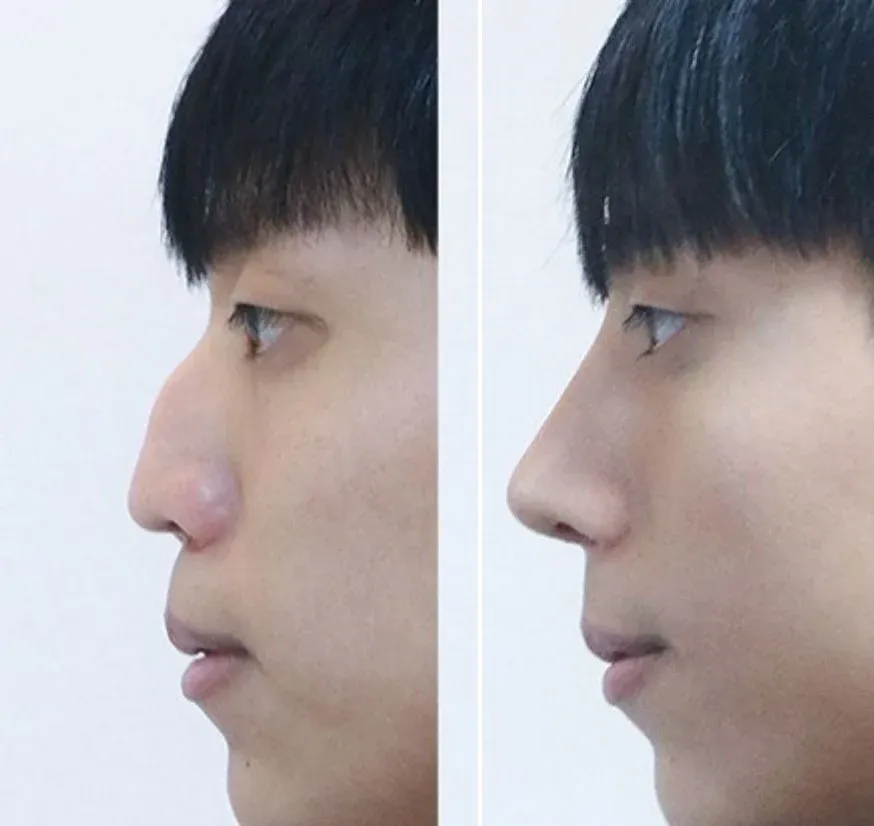
Before-and-after photos of Hump nose surgery (left: before surgery · right: after surgery)
Surgical Methods
Rather than simply shaving the nasal bones, the most suitable method is selected according to the condition of the nose.
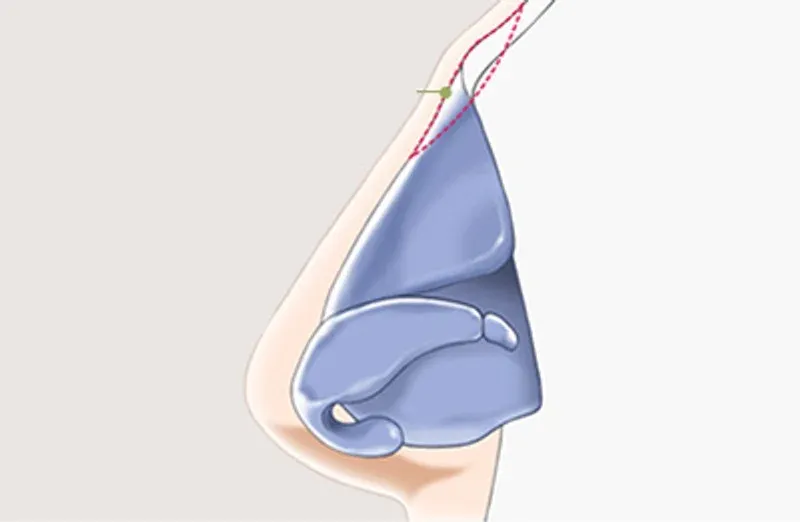
CASE 1. Mild Hump nose
When the hump is not severe, it can be easily corrected with surgery that removes only the hump.
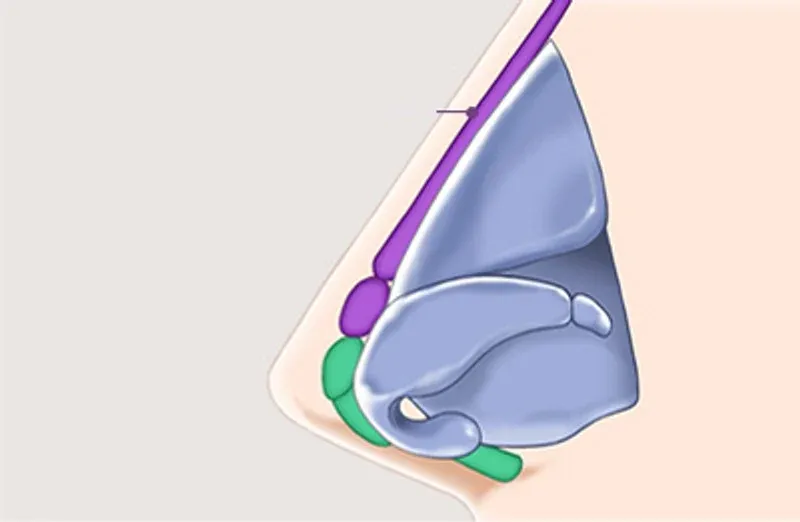
CASE 2. Low Hump nose
While correcting the hump, materials such as Autologous Cartilage and Dermal Graft are used together to augment the low nose.
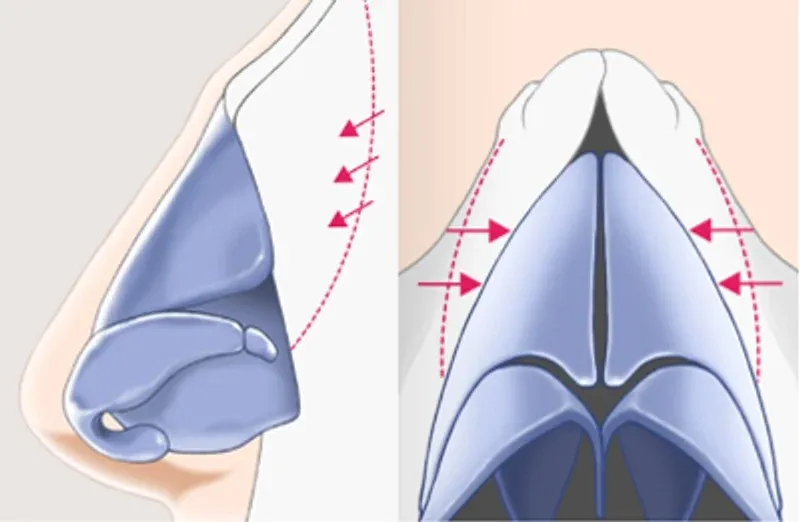
CASE 3. Overall large Hump nose
For a large nose, the hump is removed and the bones are brought together through lateral osteotomy to correct the line.
Customized design that does not compromise harmony
By adjusting the nasolabial angle between the nose and philtrum (ideal: 95°–110°) and the length of the Columella, a nasal line that balances with the Face from every angle is achieved.
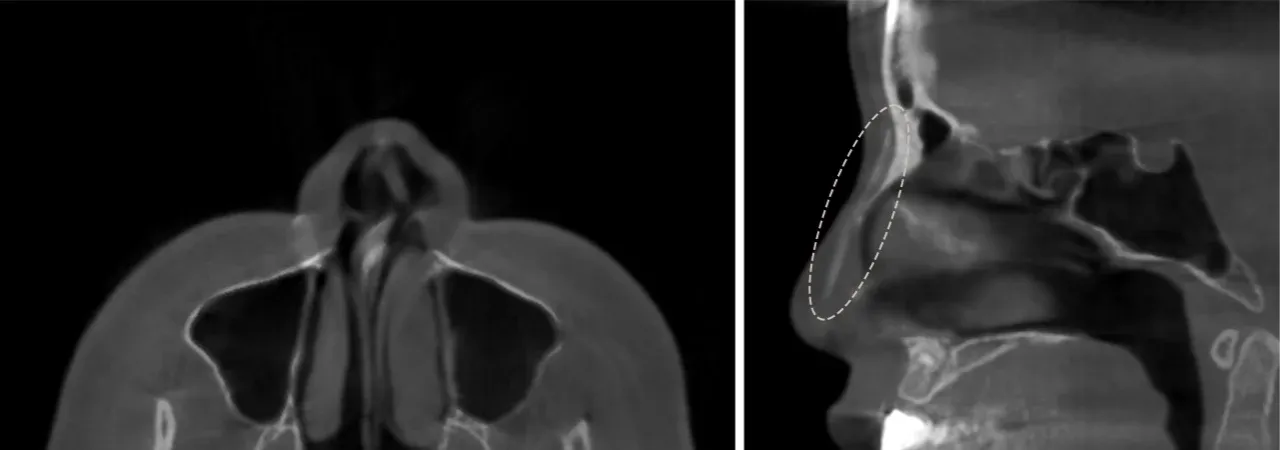
Preoperative 3D-CT analysis
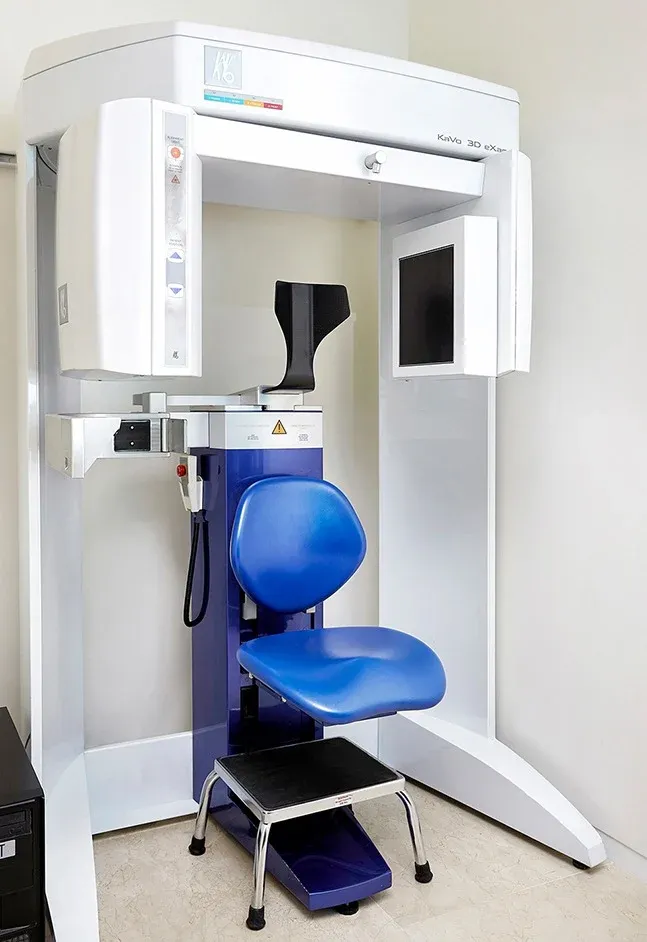
Regardless of whether it is a primary or Revision surgery, preoperative 3D-CT is used to analyze the amount and strength of each individual's Cartilage, select the most suitable materials, and establish a one-on-one surgical plan. · Assessment of nasal Cartilage condition, subcutaneous tissue, and bone thickness and position · Detailed analysis of issues with nasal function and internal structure · Reduced risk of nerve damage and side effects
Various rhinoplasty materials
Materials suited to each individual's nasal type are used, such as artificial implants for the Nasal Bridge and Autologous Tissue for the Nasal Tip. · Autologous Tissue: Septal Cartilage, autologous dermis, Autologous Fat, autologous Ear Cartilage, Autologous Rib Cartilage, autologous fascia · Artificial implants: Silicone implant, Gore-Tex, Silitex, artificial dermis, artificial rib cartilage, Medpor
Surgery Information
| Surgery duration: approximately 1 hour to 1 hour 30 minutes | Anesthesia: sedation anesthesia | Hospitalization: none | Suture removal: sutures and splint removed after 1–2 weeks
Before-and-After Photos
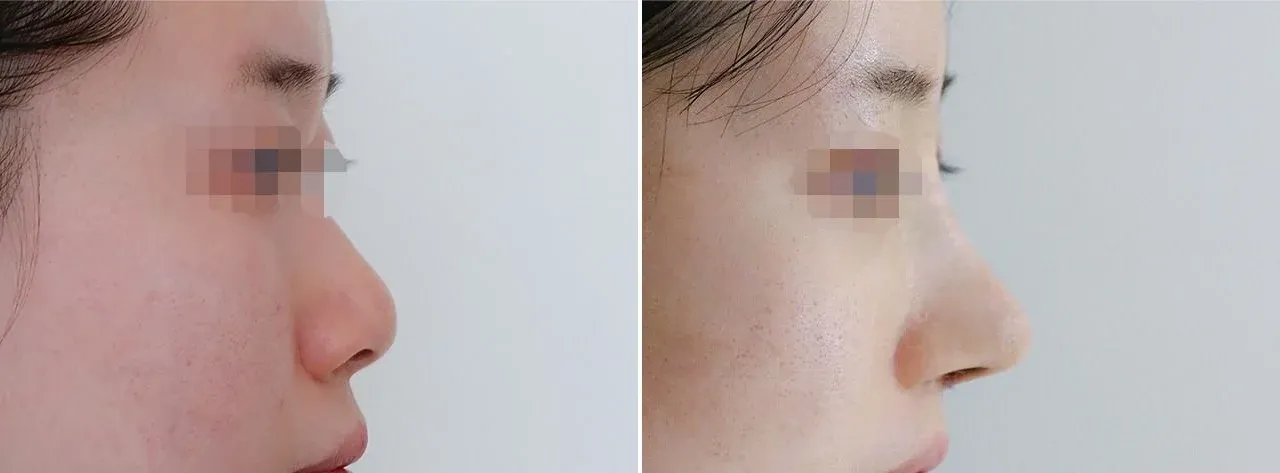
Grand rhinoplasty before-and-after photos (left: before surgery · right: after surgery) · Before surgery → 1 month after surgery
Please Be Sure to Check
Surgical methods and results may vary depending on the individual's condition and are determined through consultation with a specialist.
 GRAND PLASTIC SURGERY