
Hump Nose
from 4,400,000 KRW* VAT Not Included
This is a Hump nose correction procedure that smooths the nasal contour by removing or osteotomizing protruding nasal bone and cartilage. The surgical technique is tailored according to the type of hump, including glabellar height, drooping nasal tip, and nasal width. If necessary, nasal obstruction surgery may be performed concurrently to improve both function and appearance.
Surgery Overview
Dorsal Hump Correction is a procedure that removes protruding bone and Cartilage from the nasal dorsum through osteotomy and refines the Nasal Tip line for a smooth, refined nasal contour. Wonjin Plastic Surgery uses different surgical methods depending on the degree and cause of the protrusion, including Glabella height, Nasal Tip drooping, and nose size, and performs Nasal Obstruction Correction when necessary.

Nasal bone osteotomy, Dorsal Hump Correction A Hump nose refers to a nose with a protruding nasal dorsum and a drooping Nasal Tip, making the Glabella appear low. It may make the nose appear large and Long Nose-like, creating a stubborn and aged impression. Surgery tailored to the degree and cause of the protrusion improves a harsh-looking impression into a refined one.
Recommended for the Following
· Those with a protruding nasal dorsum and drooping Nasal Tip · Those with wide and large nasal bones or Nasal Bridge · Those with a high Glabella and a pronounced hump · Those with damaged support structures due to unsuccessful rhinoplasty
Before-and-After Photos
Confidence from the side, a softer impression, a refined nose, improved function
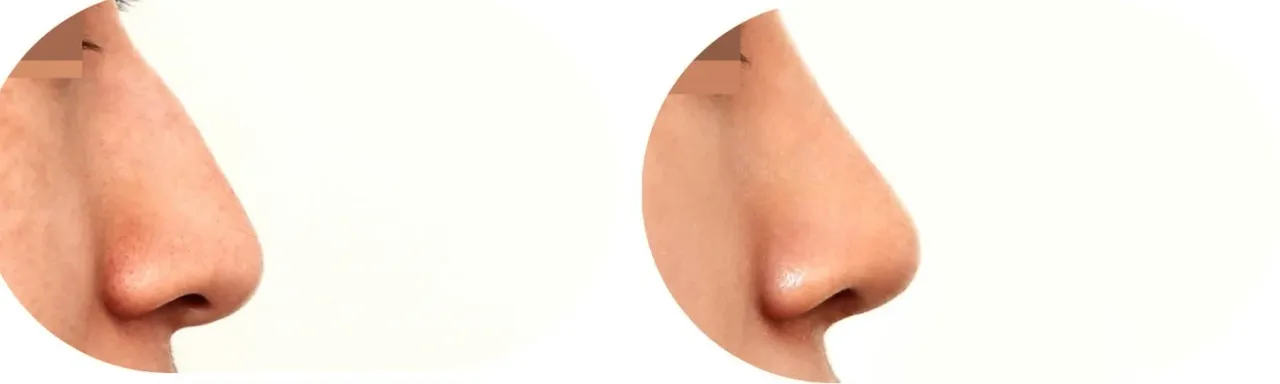
Before surgery → After surgery (side view)
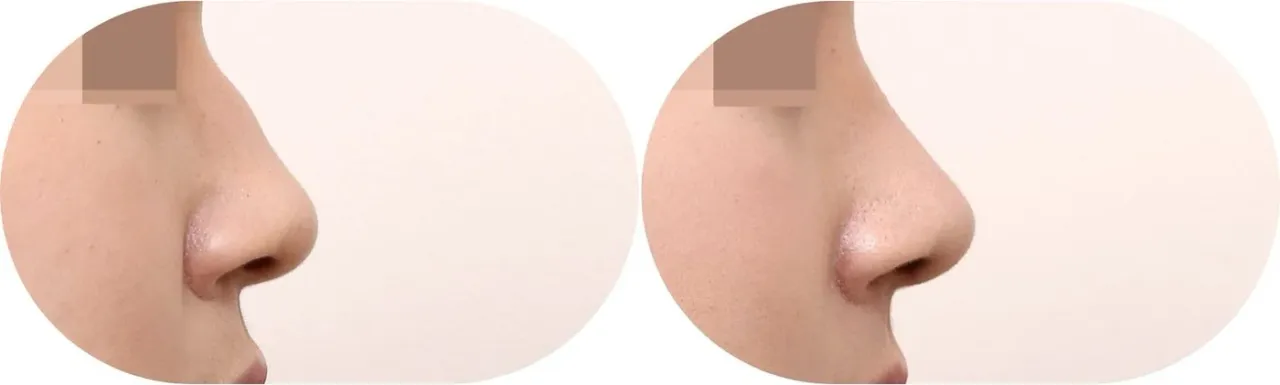
Before surgery → After surgery (side view)
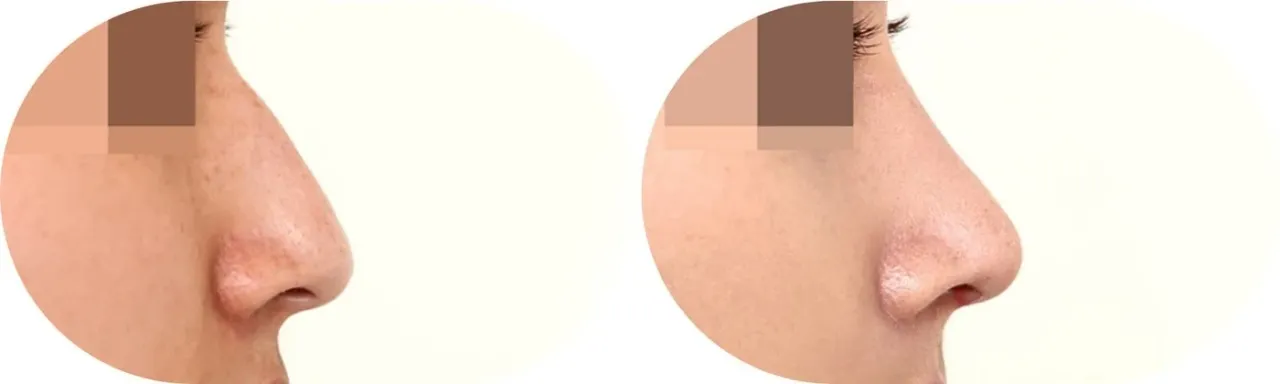
Before surgery → After surgery (side view)
Features of Wonjin Dorsal Hump Correction
Point 1. Greater confidence from both the front and side
Creates a smooth nasal line from both the front and side.
Point 2. A softer, more refined impression
Improves a harsh-looking impression into a softer, more refined one.
Point 3. Minimized hump recurrence
Corrects the underlying cause to minimize recurrence of the hump.
Point 4. Function and aesthetics at once
Can be performed simultaneously with Nasal Obstruction Correction to improve both nasal function and appearance.
Surgical Methods by Hump Nose Type
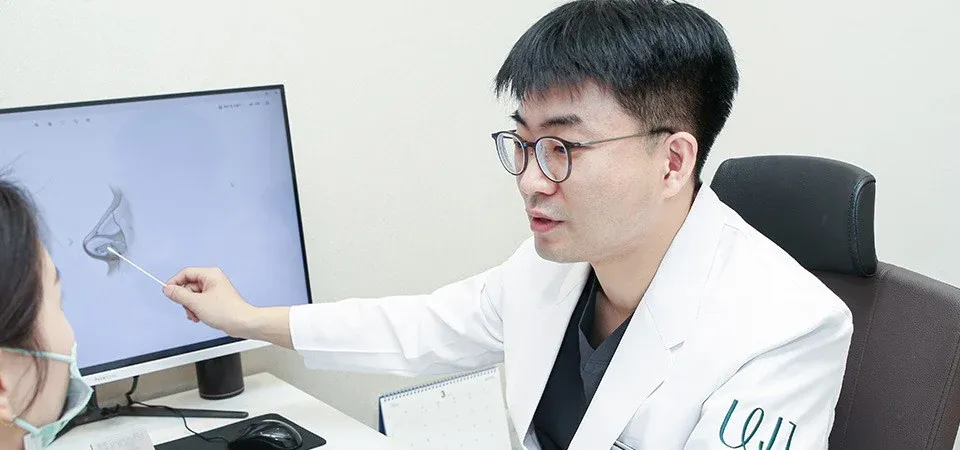
Because Hump nose symptoms vary among individuals, the appropriate surgical method is selected according to the degree and cause of the protrusion.
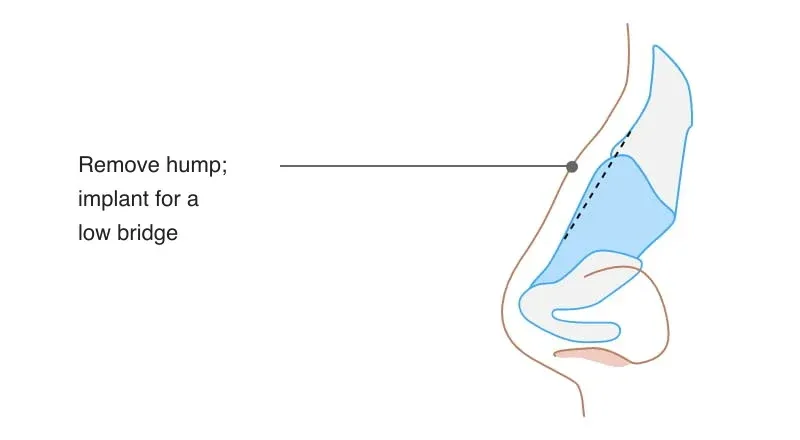
CASE 1. Hump nose with a low Glabella
The protruding portion of the Nasal Bridge is removed, and the Glabella and Nasal Tip lines are comprehensively corrected. If the Nasal Bridge is low, an Implant is inserted.
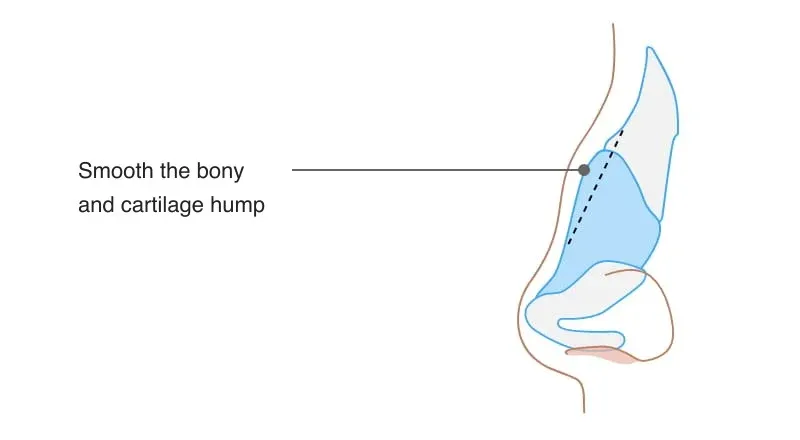
CASE 2. Hump nose with a high Glabella
The bone and Cartilage in the protruding nasal dorsum are osteotomized to create a smooth, even surface.
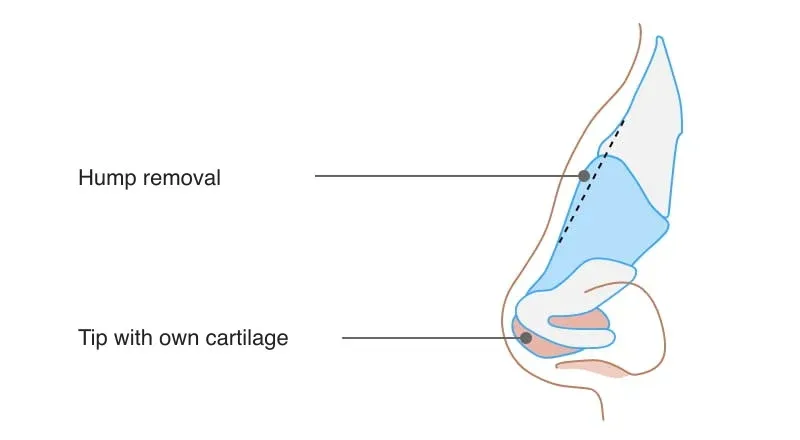
CASE 3. Hump nose with an excessively high Glabella and a drooping Nasal Tip
The hump is removed, and the Nasal Tip is designed with Autologous Cartilage to harmonize with the nasal dorsum line.
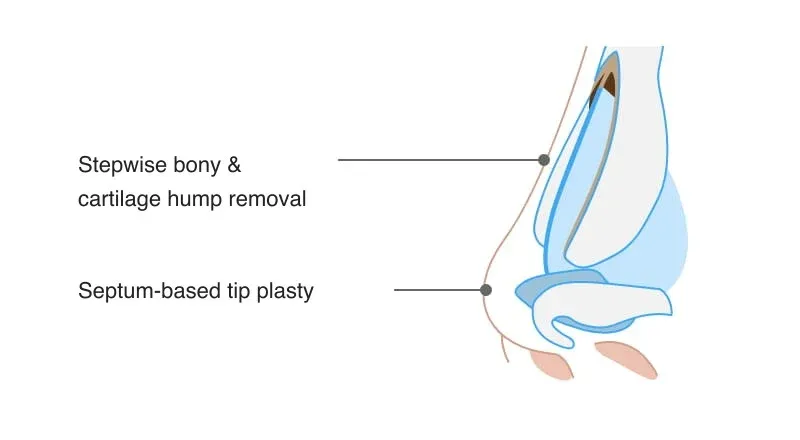
CASE 4. A wide, large nose with a pronounced hump
The Septal Cartilage, Cartilage, and nasal bones are completely separated in stages and then resected, followed by Nasal Tip surgery using Septal Cartilage.
Surgery Information
| Surgery time: 2 hours | Anesthesia: Sedation anesthesia | Hospitalization: Same-day discharge | Suture removal: After 7 days | Return to daily activities: Possible after 7–14 days | Follow-up visit: After 7 days
Please Note
Complications that may generally occur after surgery or treatment, including bleeding, infection, inflammation, and nerve damage, may vary in severity depending on the individual, so caution is required. Surgical methods and results may vary depending on individual conditions and are determined through consultation with a specialist.
 WJ WONJIN PLASTIC SURGERY