Hump Nose
from 2,900,000 KRW* VAT Not Included
This procedure corrects a prominent dorsal hump by shaving or osteotomizing the protruding bone to create a smooth nasal bridge line. If the nasal bridge is low or the nasal tip is drooping, an implant or autologous tissue may be used in combination. Wide nasal bones can be narrowed through lateral osteotomy. A deviated septum may also be corrected concurrently.
Surgery Overview
This procedure smooths the Nasal Bridge line by shaving or performing osteotomy on the protruding hump bone on the nasal dorsum. If the Nasal Bridge is low or the Nasal Tip is drooping, an Implant or Autologous Tissue may be used together, and wide nasal bones are narrowed with lateral osteotomy. A deviated Septal Cartilage can also be corrected at the same time.

A smooth line without irregularities for a soft, refined impression
Recommended for:
· Those with a protrusion in the middle of the nasal dorsum · Those whose Nasal Tip is low compared with the nasal dorsum · Those who want to improve their side profile with a smooth, straight line · Those whose Hump nose gives them a strong or fierce impression · Those whose Hump nose makes the overall Face appear longer
Features of Banobagi Hump nose surgery
Point 1. Smooth Nasal Bridge
Removes the protruding hump to create a smooth Nasal Bridge.
Point 2. Softer impression
Transforms a strong, fierce impression into a softer one.
Point 3. Improvement of a drooping Nasal Tip
Improves a drooping Nasal Tip as well, for a more youthful-looking effect.
Point 4. A natural nasal line suited to your image
Considering golden proportions, we create a natural nasal line that suits each individual's Face.

“A beautiful side profile as confident as your front view” A Hump nose refers to a nose that appears like a bird's beak due to prominent protrusion caused by excessive growth of the nasal bones and Septal Cartilage. The protruding bone in the middle of the nasal dorsum can make the Nasal Tip appear droopy and may create a strong, fierce, or aged appearance. Banobagi Hump nose surgery removes the protruding bone on the nasal dorsum by shaving it down. When the Nasal Bridge is low or the Nasal Tip is drooping, an Implant or Autologous Tissue is inserted to create a smooth, slender line.
Surgical Method
Improvement is tailored to the condition of your nose.
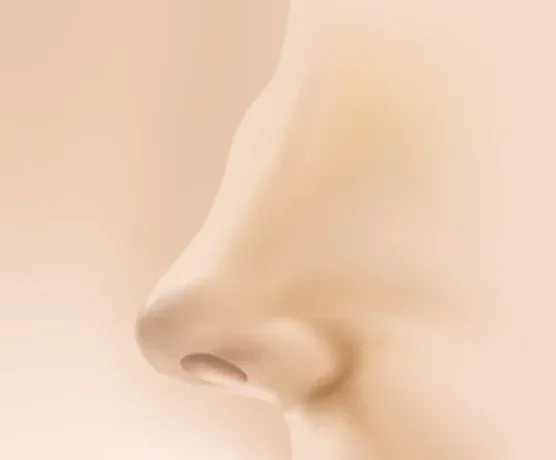
STEP 1. Assessment and design
The condition of the hump is assessed and a design is created before surgery.
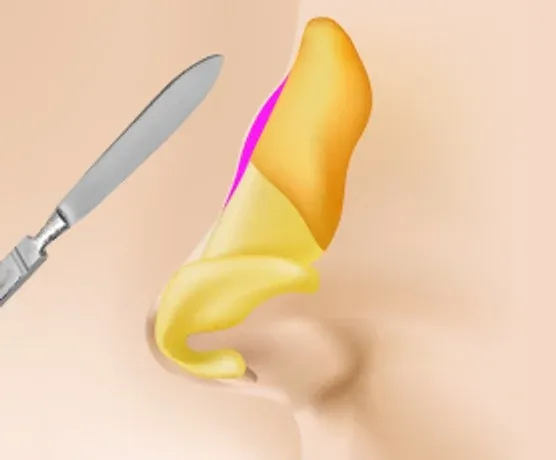
STEP 2. Hump removal
The protruding hump is shaved down or removed through osteotomy.
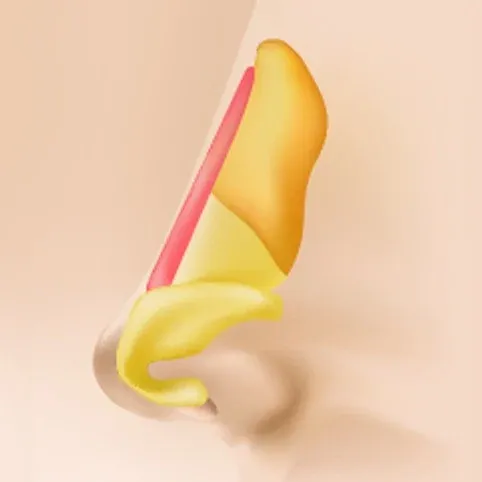
STEP 3. Implant or Autologous Tissue insertion
If the Nasal Bridge is low, an Implant or Autologous Tissue is inserted into the Nasal Bridge or Nasal Tip.
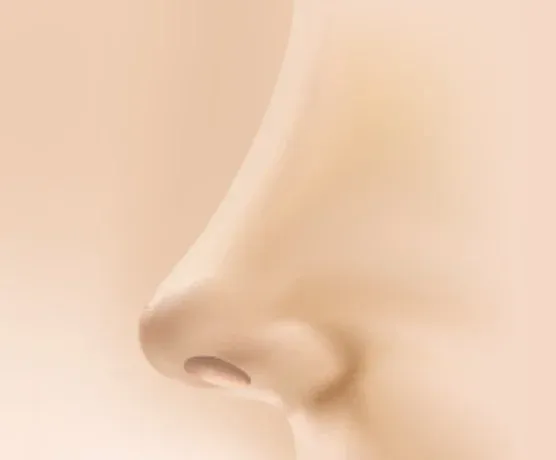
STEP 4. Completion
A smooth nasal line is completed.
Improve wide nasal bones and the Septal Cartilage together
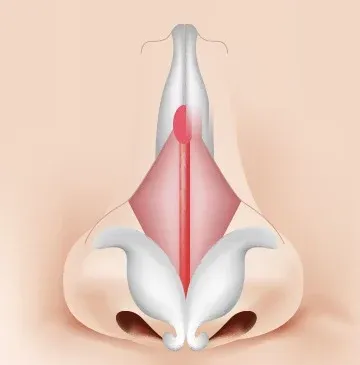
Wide Nasal Bridge corrected with osteotomy
The protruding hump is shaved down, and the width of the Nasal Bridge is reduced through lateral osteotomy.
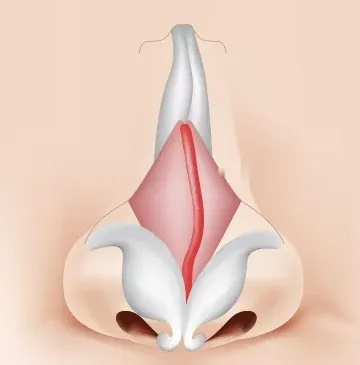
Straighten the Septal Cartilage and refine further with osteotomy
The deviated Septal Cartilage is first straightened, then the width of the Nasal Bridge is reduced through lateral osteotomy. Both cosmetic appearance and function can be improved at once.
Surgery Information
| Surgery duration: 1 hour 30 minutes | Anesthesia: Sedation anesthesia | Return to daily activities: After 5–7 days | Follow-up visits: Approximately 2
Pre- and Postoperative Precautions
Before Surgery
· Fasting for 8 hours before surgery is required. · Please inform us in advance if you have any health concerns, such as a cold or respiratory illness. · Please be sure to inform us of any past or current medical conditions, allergic reactions, and medications you are taking.
After Surgery
· Swelling and bruising typically take about 2 weeks to subside, and it takes about 3 months for the elevated Nasal Tip to settle naturally and for the final result to appear. · Apply cold compresses immediately after surgery, but do not press on the nose; place them lightly against it. After 3 days, switching to warm compresses can help reduce swelling more quickly. · Keeping your head elevated above your heart can help reduce swelling. · Avoid wearing glasses or sunglasses for about one month, until the nose has settled. · Even if you have a cold or allergic rhinitis, do not blow your nose forcefully or put strain on it. If osteotomy was performed, avoid impact to the nose until the bones have healed. · Water may come into contact with the nose after stitch removal. · Strenuous exercise, such as aerobics, swimming, or gym workouts, may be resumed after one month. Avoid alcohol and smoking for one month. · If pain accompanied by a sudden sensation of heat worsens after surgery, please contact the hospital immediately, even if it is not your scheduled visit date.
Please Note
Complications such as bleeding, infection, and inflammation may occur after surgery, and subjective satisfaction may vary among individuals. Please consult with your doctor. Surgical methods and results may vary depending on the individual's condition and are determined through consultation with a specialist.
 BANOBAGI PLASTIC SURGERY