
Hump Nose
from 100,000 KRW* VAT Not Included
This procedure corrects a prominent dorsal hump to create a smooth nasal contour from the nasal root to the tip. The approach varies depending on the type of hump deformity (a large, high nose; an overall low nose; or a low nasal bridge and tip), and associated septal deviation and nasal valve stenosis can also be improved simultaneously.
Surgery Overview
AI-generated information for reference only. Please consult a doctor for accurate, personalized advice.
Hump nose surgery is a procedure that smooths the protruding hump to create a seamless line from the beginning of the nose to the Nasal Tip. Newline provides customized surgery according to the shape of the Hump nose (a large, high nose; an overall low nose; or a nose with a low Glabella and Nasal Tip) and the degree of deviation, reducing the likelihood of recurrence and also improving accompanying Septoplasty and nasal valve stenosis.

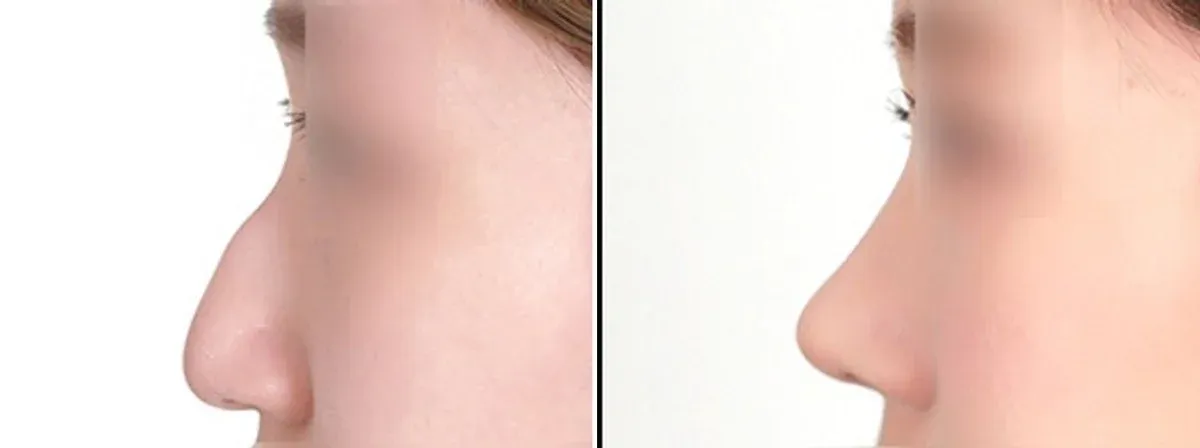
Before-and-after photos of Hump nose surgery (left: before surgery · right: after surgery) · Before surgery → 3 months after surgery
Surgical methods by hump type
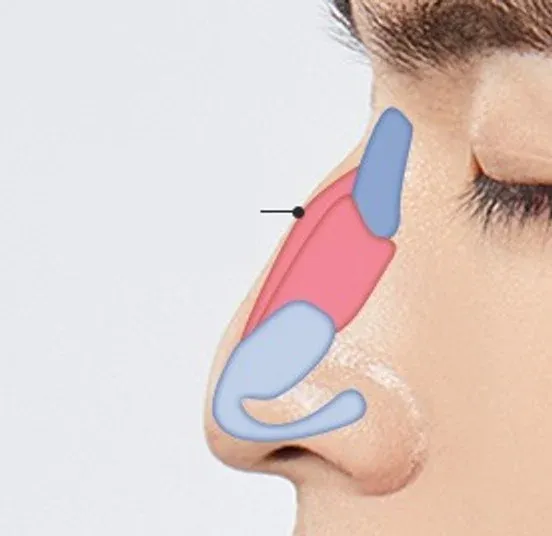
CASE 1. Large, high Hump nose
When the nose is overall large and high, only the hump is selectively removed to create a smooth line.
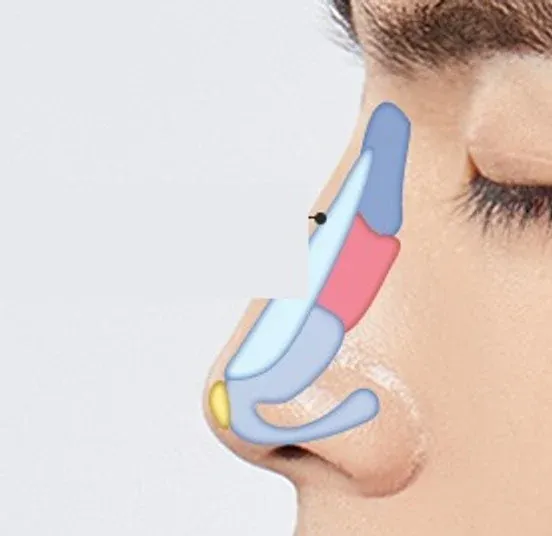
CASE 2. Overall low Hump nose
When the Nasal Tip, Nasal Bridge, and Glabella are generally low but the hump protrudes, the hump is lightly refined and a customized Implant suited to the desired line and height is inserted.
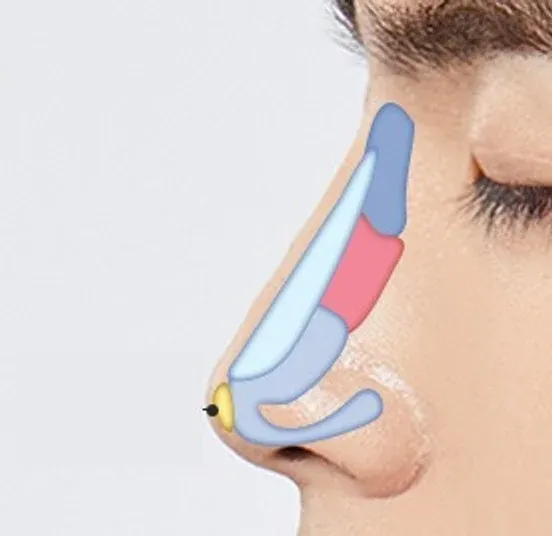
CASE 3. Hump nose with a low Glabella and Nasal Tip
After shaving down the protruding hump, Autologous Cartilage is used to augment the Glabella and Nasal Bridge, and Autologous Cartilage is also used for the Nasal Tip.
Features of Newline Hump nose surgery

Point 1. Natural, smooth transition
Naturally and smoothly connects the beginning of the nose with the highest point of the Nasal Tip.
Point 2. A slim line from the front as well
Corrects not only the protruding side profile but also the front view for a slim line.
Point 3. A refined, soft impression
Refines the Nasal Bridge line to create a more refined and softer impression.
If Septoplasty is present, simultaneous correction is necessary
If Septoplasty is present when correcting a Hump nose, it should be addressed at the same time. Because a deviated septum prevents the nasal bones from being narrowed properly, the hump cannot be adequately corrected without improving Septoplasty. After straightening the deviated septum, the nasal bones are osteotomized to narrow the Nasal Bridge.
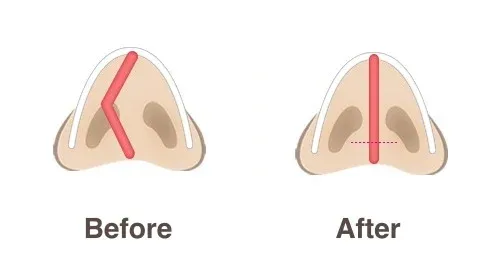
Most Hump nose cases are often accompanied by nasal valve stenosis and Septoplasty, resulting in symptoms of Nasal Obstruction Correction. Hump nose correction and Nasal Obstruction Correction can be performed simultaneously to improve both function and aesthetics.
Improving nasal conditions and rhinoplasty at the same time
Newline Plastic Surgery performs aesthetic rhinoplasty as well as treatment for nasal conditions at the same time. Because performing nasal condition surgery and rhinoplasty simultaneously is a highly complex procedure, it should be performed by an experienced specialist to achieve satisfactory results. · Aesthetic rhinoplasty: Customized surgery by a board-certified plastic surgeon, tailored to the proportions of the facial features. · Functional nasal surgery (Nasal Obstruction Correction): Straightens the deviated Septal Cartilage and reinforces weakened Septal Cartilage to improve Nasal Obstruction Correction.
Functional rhinoplasty private insurance procedure
1. Detailed diagnosis through 3D CT and precise nasal Endoscope examination 2. Contact your insurance provider with the diagnosis and procedure codes to confirm coverage eligibility and reimbursement rate 3. Undergo functional rhinoplasty 4. Obtain and submit the required documents when filing a private insurance claim 5. Receive insurance benefits after review · Private health insurance coverage is available only for procedures intended to improve nasal conditions. · This is not applicable only at this hospital. · Eligibility and coverage may vary depending on the terms of your private health insurance policy.
Please be sure to check
Depending on the individual, side effects such as swelling, bleeding, inflammation, bruising, and nerve damage may occur, and surgical results may vary. The surgical method is determined through consultation with a specialist.
 NEWLINE PLASTIC SURGERY