Facelift
Price upon consultation
Procedure category to lift sagging skin on entire face for youthful effect
Facelift
Powerful and reliable lifting by lifting surgery specialists

A facelift is a surgical procedure designed to fundamentally improve wrinkles and skin sagging across the entire face. An adequate incision is made from the front of the hairline to behind the ears. The tissues are then dissected carefully to avoid damage to nerves and blood vessels, and the deep SMAS layer (SMAS, fascial layer) beneath the skin is lifted so that the surrounding tissues are lifted together. In general, the surgical area extends to the neck, which is connected to the face.
✓ Surgery time: Approximately 3–4 hours
✓ Pain level: Mild pain
✓ Recovery period: 7–10 days after surgery
✓ Anesthesia: Sedation anesthesia
✓ Duration: Nearly permanent (may vary by individual)
*The procedure and results may vary by individual, and bleeding, inflammation, and side effects may occur after surgery.
Who needs a facelift?
Facial aging presents in diverse and widespread ways. Through adequate dissection, a facelift is a lifting procedure that improves aging changes across the entire face and neck. Typical treatment areas include deep forehead wrinkles, crow's feet, sagging around the eyes, sagging of the cheekbones and cheeks, deep nasolabial folds and sagging wrinkles around the mouth, sagging jowls, and horizontal or vertical neck wrinkles and sagging. A facelift is recommended for those who wish to improve these aging changes simultaneously and achieve nearly permanent surgical results.
Thread lifting: Age 20 and older
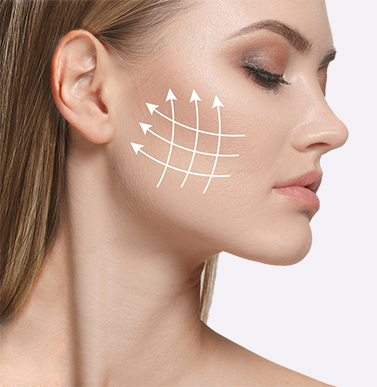
A procedure in which special threads are inserted into sagging or wrinkled skin layers, pulled in the required direction, and secured
Max Lifting: Age 40–60 and older
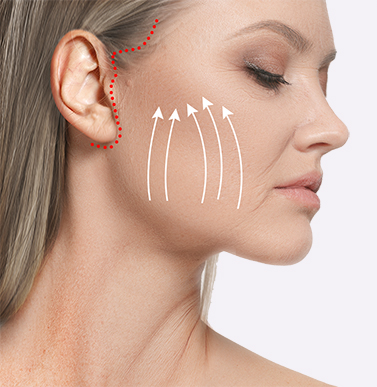
An incision is made only as much as needed for dissection, from the sideburn area to below the ear; the SMAS layer is lifted vertically and secured, and excess sagging skin is excised
Facelift: Age 60 and older
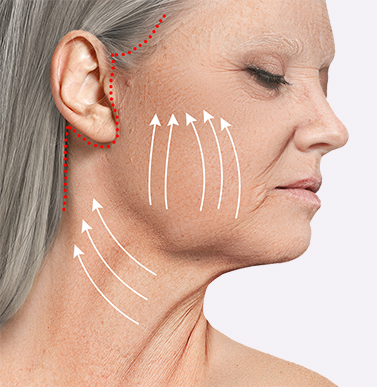
For extensive sagging and wrinkles extending to the neck, sufficient incision and dissection are performed from the sideburn area to the back of the neck for broad lifting. Excess sagging skin is excised
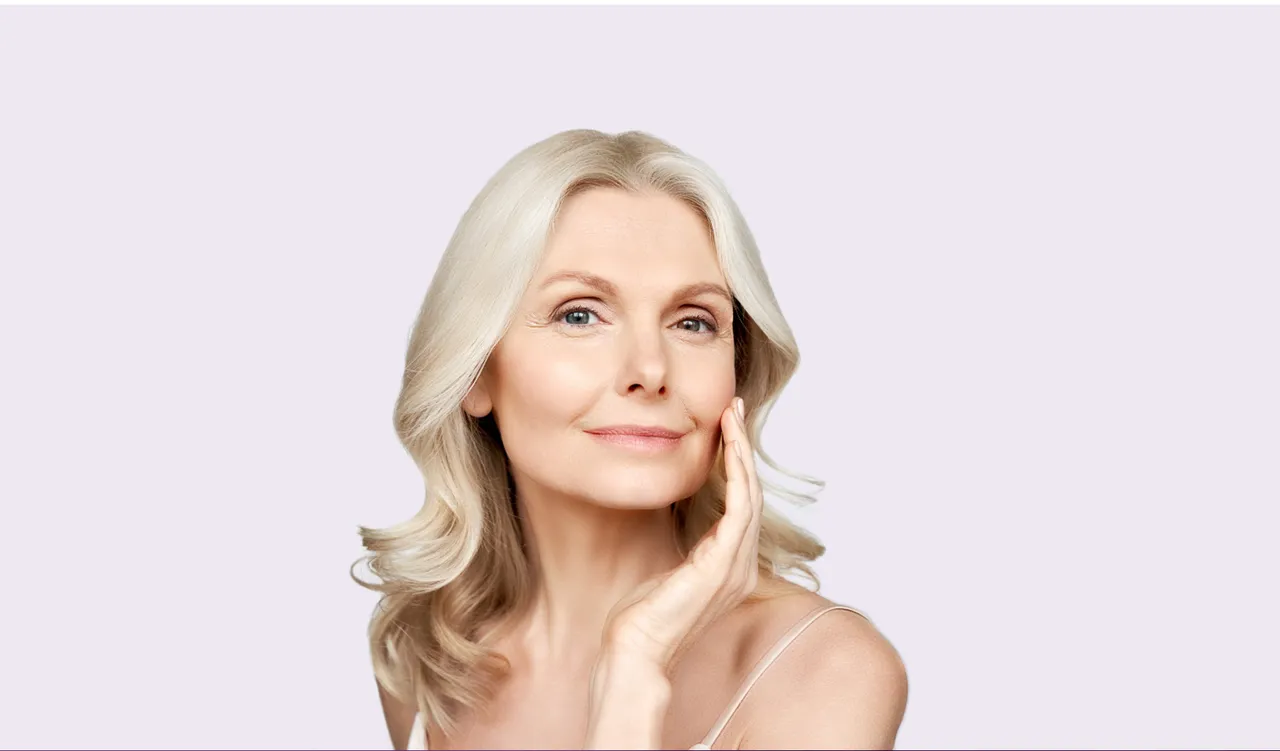
Deep forehead wrinkles / Crow's feet / Sagging cheekbones and cheeks / Sagging jowls / Sagging around the eyes / Deep nasolabial folds / Sagging wrinkles around the mouth / Neck wrinkles and sagging
WHY HERSHE
Full-face lifting Direct SMAS lifting One more lift
01 Full-Face Lifting Expertise
Facelift surgery is an effective lifting procedure for improving a broad area; however, its improvement effect on the under-eye area and midface tends to be less than that of a midface lift. Based on anatomical knowledge of surgical areas and surgical experience, Hershe Plastic Surgery diagnoses each individual's aging changes and, when necessary, plans surgery involving an under-eye incision to improve the midface as well.

This is how Hershe performs surgery.
Facelift
After making an incision along the hairline, the sagging SMAS layer (fascia) is lifted
A procedure that lifts various wrinkles and sagging across the face and neck, repositions volume to where it is needed, and excises excess skin to improve skin elasticity
Under-Eye Midface Lift
After making an incision along the lower eyelid, the sagging cheekbone area is lifted
Also improves under-eye wrinkles and sagging that are difficult to address with lifting surgery alone
02 SMAS Layer Dissection Technique
Facial wrinkles do not occur only in the skin tissue; rather, wrinkles also develop in the muscle layer, causing hollowness and sagging. Therefore, lifting wrinkles and sagging in the muscle layer is necessary for fundamental improvement of aging changes. The most important step is the dissection process that separates the skin tissue from the SMAS layer (SMAS, fascial layer). Improper dissection increases the risk of damaging the facial nerve during surgery. In addition, preserving age-related sagging fat pads and relocating them to appropriate positions to redistribute volume can provide a more three-dimensional lifting effect. These fat pads must also be protected from damage during dissection. For these reasons, facelift surgery requires the technique and expertise of medical professionals capable of accurate and even dissection along the SMAS layer.
This is how Hershe performs surgery.
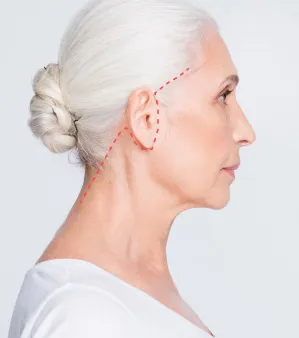
❶ Incision line design to prevent skin puckering after suturing
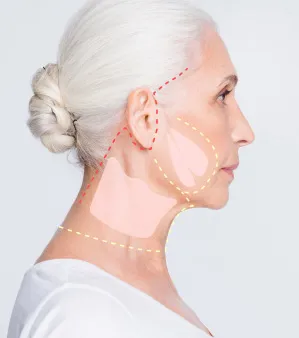
❷ Precise dissection of the skin layer and sagging SMAS layer
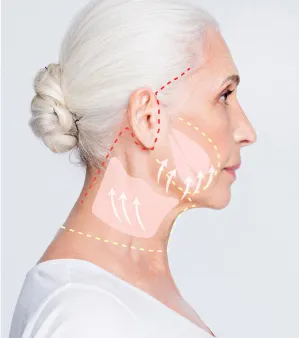
❸ The SMAS layer is gathered and lifted using purse-string sutures, then secured while the surrounding tissues are lifted along with it
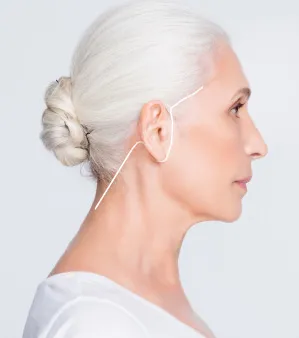
❹ After excising sagging skin, double-layer suturing is performed to the inner side of the incision line
02 One More Lift
Additional fixation with special threads to help the lifting results settle well
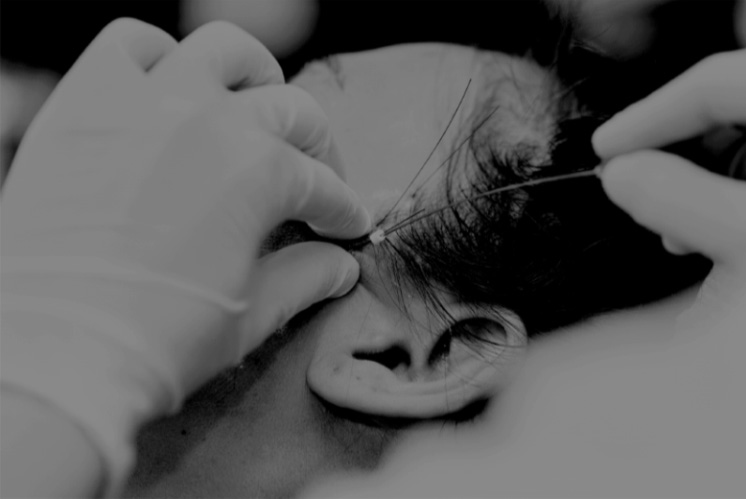
By lifting and securing the SMAS layer upward, the facial tissues throughout the lower face are lifted. At the same time, to help the facial tissues settle well in an upward direction, the soft tissues are secured once more using the special Epiticon thread. Epiticon is a next-generation suture thread developed to pull and secure tissue. It was personally designed and manufactured by Dr. Jeong Young-chun, Director of Hershe Plastic Surgery, and is used for lifting procedures of the face, breasts, and hips.
Epiticon thread used together during under-eye midface lifting
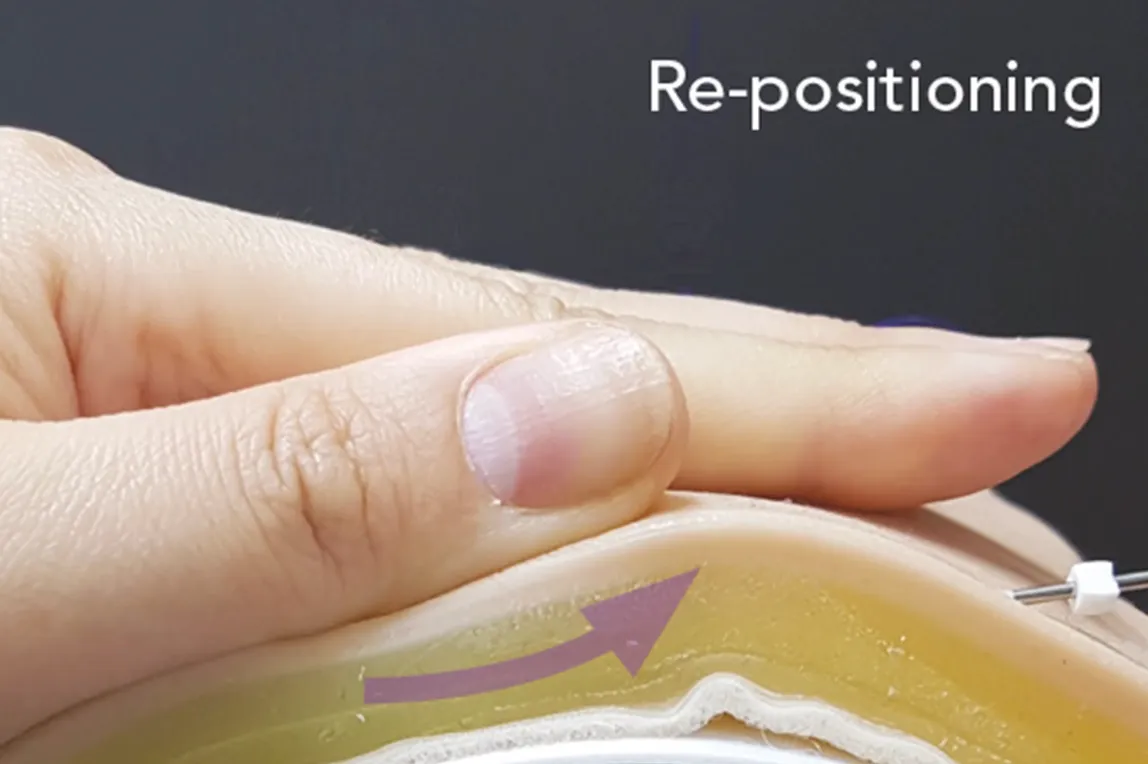
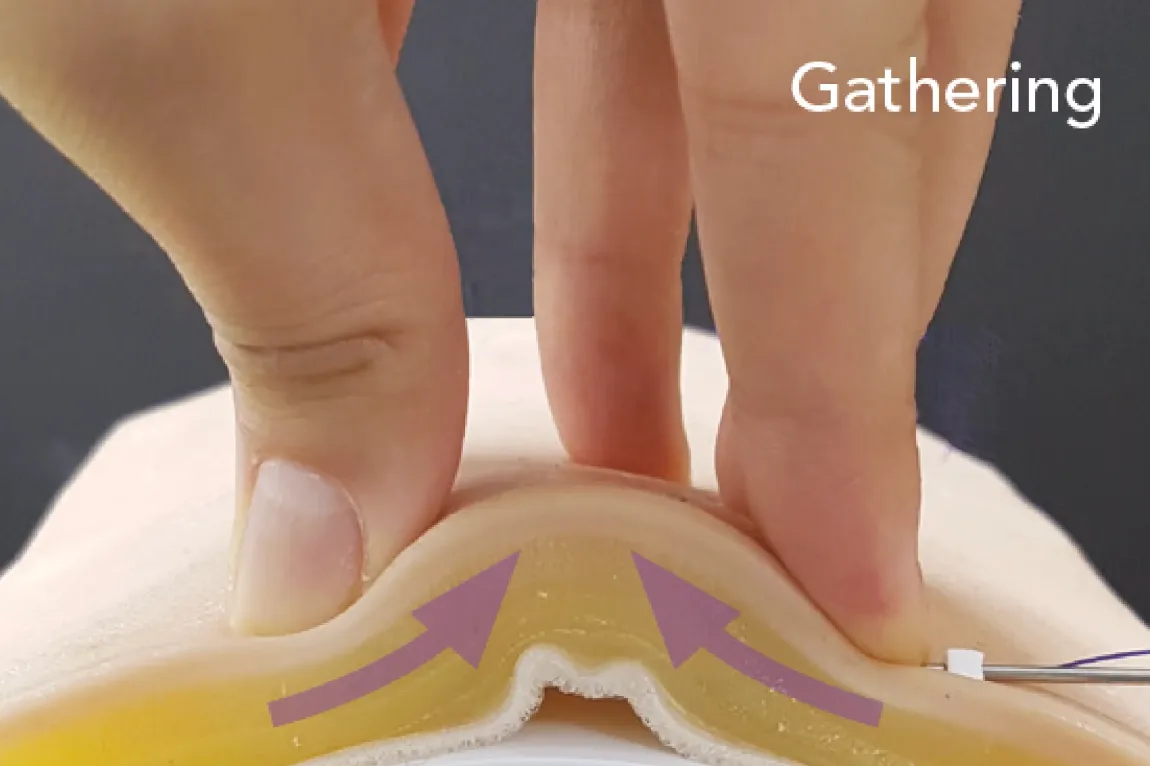
The Epiticon thread used during facelift surgery has bidirectional cogs on each projection, making it suitable for lifting sagging tissue upward or gathering and securing it in an appropriate position.
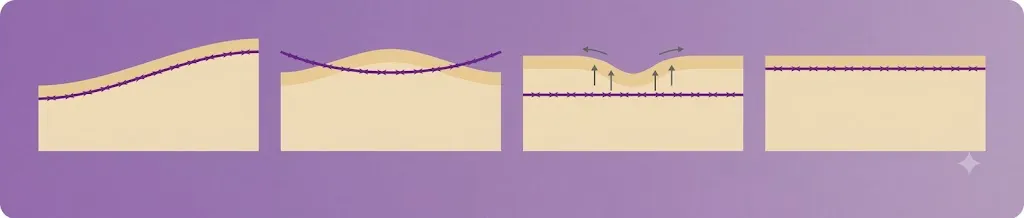
❶ Lifting
Move the tissue upward and secure it
❷ Gathering
Gather the tissue into a rounded contour and secure it
❸ Smoothing
Stretch and smooth, then secure
❹ Tightening
Secure at the insertion site
2021 Publication of a Lifting-Related Paper in an International Academic Journal
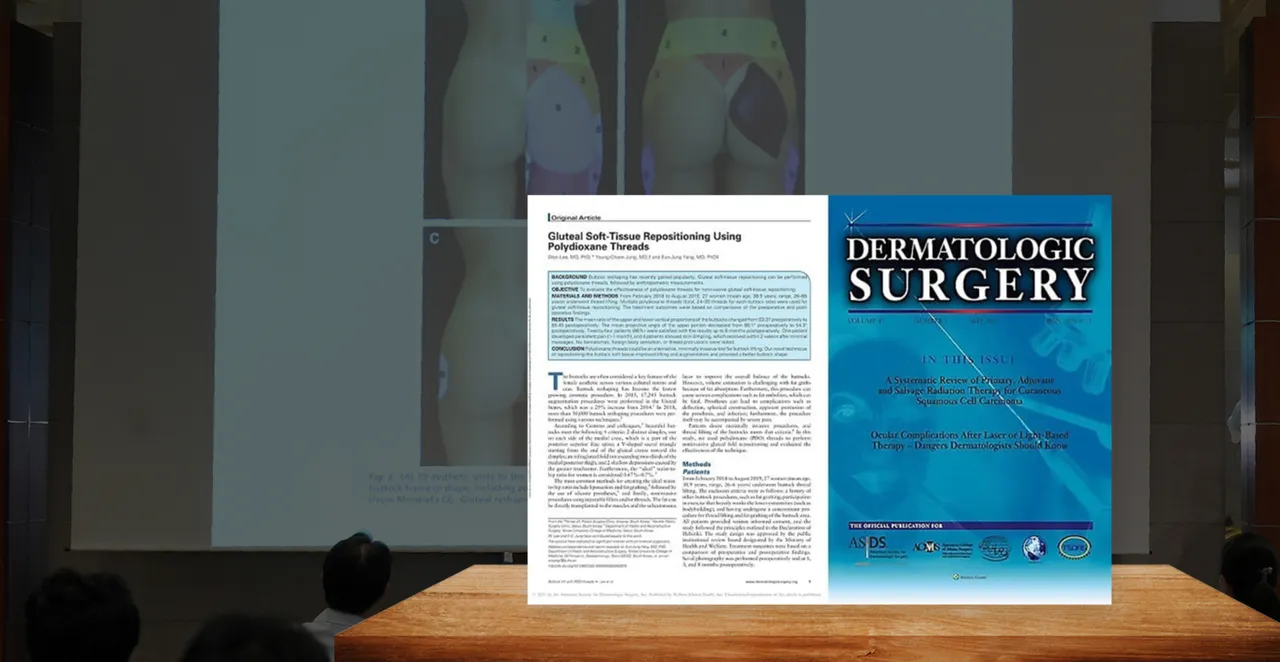
A paper by Dr. Jeong Young-chun, Director of Hershe Plastic Surgery, was published in a prestigious international academic journal.
AFTER CARE
Because Hershe facelifts involve incisions, we place particular importance on postoperative scars and returning to daily life. We use a double-layer suturing technique to suture the skin and underlying tissue separately, helping incision scars heal quickly. Incision scars gradually fade over time and can be covered so that they are nearly unnoticeable with basic makeup or BB cream. The degree of scarring may vary depending on skin type. Personalized aftercare programs are provided to support faster recovery.
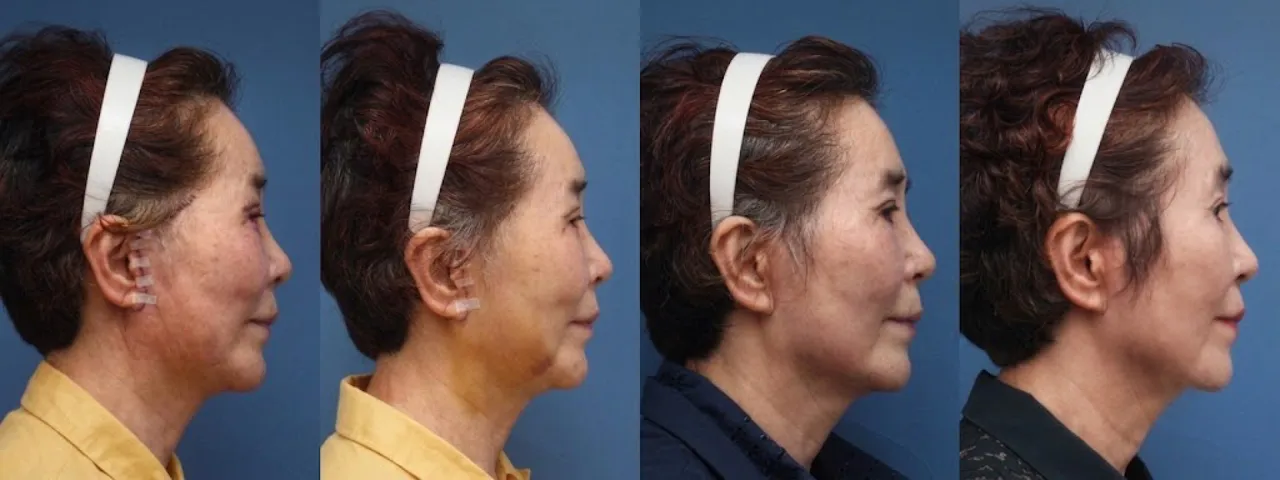
Treatment plan: Personalized treatment planning based on an evaluation by the attending physician
Day 2–3: Healite laser (swelling/tissue regeneration)
Day 5: Healite laser
Day 7: Suture removal + Healite laser
Week 2: Radiofrequency laser
Month 1: Radiofrequency laser
Treatment plan: Complimentary follow-up evaluations by the attending physician for one year
*These are example images intended to aid understanding of the procedure. Results may vary by individual.
Healite laser treatment after surgery is standard
❶ Low-output 590 nm micro light is first applied to the epidermal layer so that the healing wavelength can be effectively delivered to the skin. This is followed by 830 nm infrared light, which penetrates deeply and has strong healing properties.
❷ The 830 nm healing photons are emitted from 1,800 light sources and have a special light emission angle that creates zones where photons overlap with one another.
❸ These zones provide healing effects, allowing sufficient photon delivery to deep areas of the skin to promote rapid regeneration of damaged skin and pain relief.
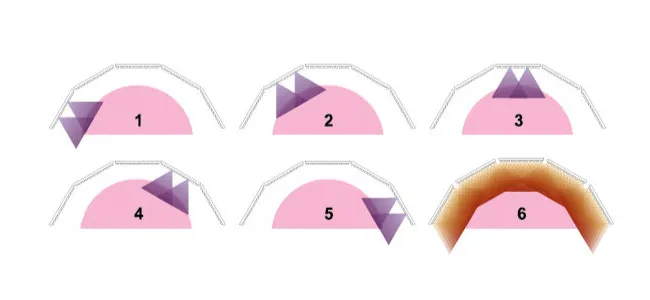
This light therapy involves pre-treatment of the epidermal layer with low-output 590 nm micro light, followed by powerful 830 nm infrared Near-Infrared (near-IR) light that penetrates deeply into the skin.
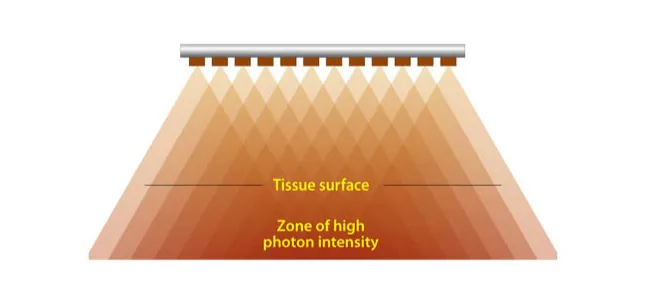
The LEDs precisely arranged in the LED panel are designed so that light emitted from each LED overlaps, enabling interactions through a large volume of photons.
Intensive Scar Management Program
Depending on the degree of postoperative scarring, a personalized intensive scar management program may be provided based on the attending physician's evaluation and thorough consultation.
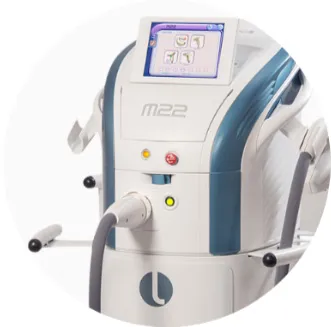
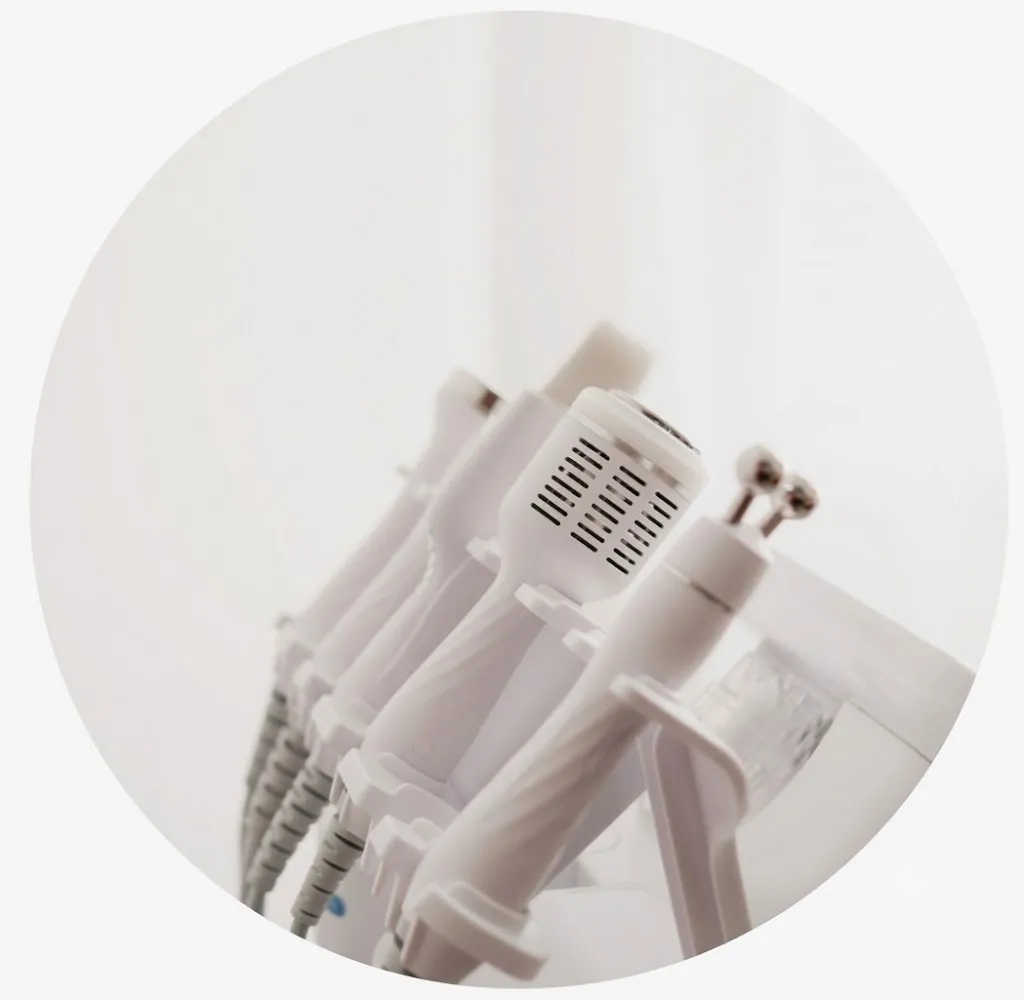
Fraxel M22 Healite
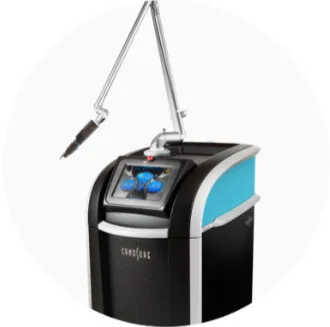
PicoSure
Professional Why We Are Confident in Anti-Aging
Since 1992
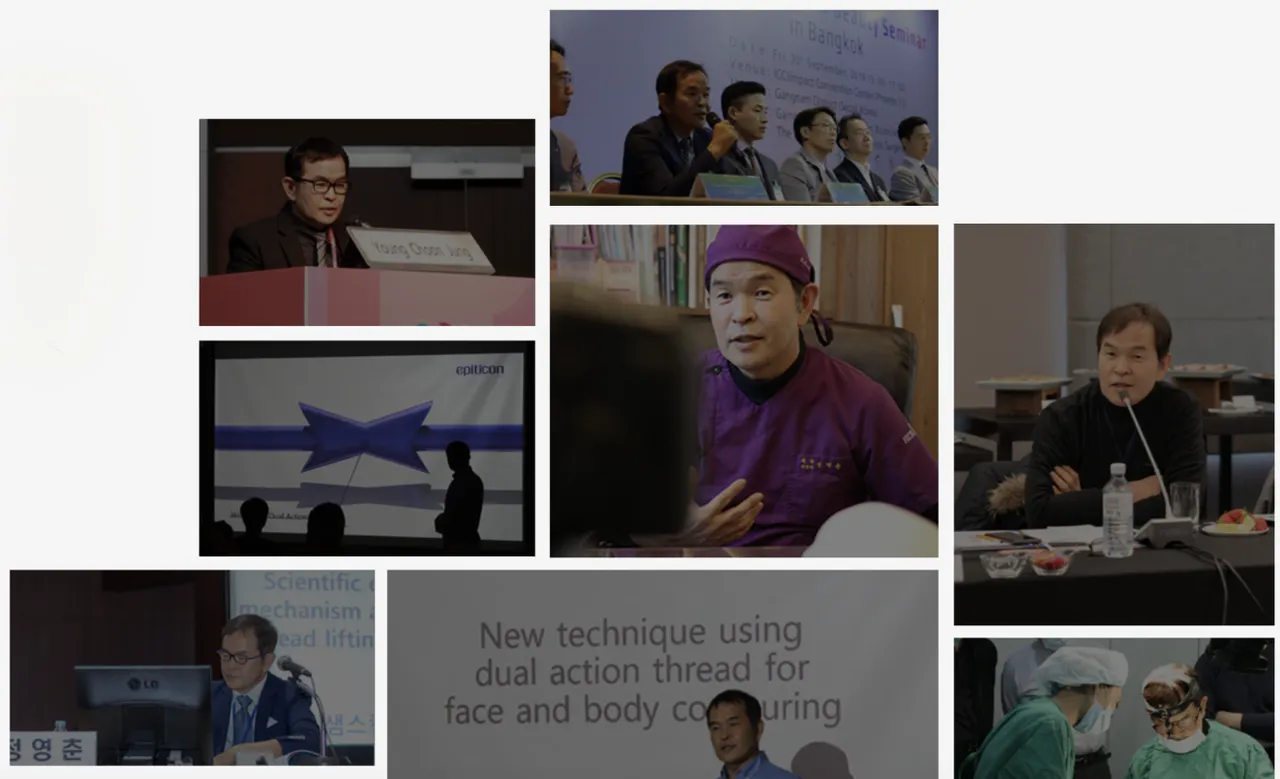
Hershe Plastic Surgery continuously reflects on and researches anti-aging to provide satisfying surgical results. We carefully analyze your lifestyle and aging condition to provide optimal anti-aging solutions.
Personalized Why We Are Confident in Anti-Aging
Because aging changes appear differently in each person, careful planning tailored to each aging condition is necessary. Based on extensive clinical experience and ongoing research, Hershe Plastic Surgery's anti-aging specialists provide a broad spectrum of anti-aging procedures, from facelifts to non-surgical lifting, offering personalized anti-aging solutions for every stage of aging.
✓ Dedicated care by board-certified plastic surgeons
✓ Expertise in the development of medical suture materials
✓ Personalized lifting solutions based on individual symptoms
Lifting Surgery Explained by Dr. Jeong Young-chun
FAQ Questions Frequently Asked by Many Patients
Q. How long do the results last?
A. A facelift is basically a permanent procedure. However, if aging progresses further, tissues such as the skin, muscles, and fat may sag. Therefore, it is advisable to continue skin care for aging prevention and improve lifestyle habits even after surgery.
Q. Will the incision scars be very noticeable?
A. Among the various types of lifting procedures, a facelift provides lifting correction over the broadest area. Because the procedure involves lifting and securing the deeply located fascial layer (SMAS) in the lower face, wide dissection is necessary, so the incision line tends to be long. Therefore, the surgical marks may be noticeable for some time due to the long incision, but they will fade over time. Depending on the individual, scars may remain noticeable even over time. In such cases, follow-up care such as laser treatment to reduce scarring may be helpful.
Q. Are there any side effects?
A. All surgeries may cause unexpected discomfort or side effects. The best way to minimize side effects is to decide on surgery after consulting an experienced specialist and to follow postoperative care instructions carefully. Nevertheless, if you experience significant discomfort or severe bleeding, warmth, or signs of inflammation, please contact the clinic without delay for appropriate measures. During facelift surgery, damage to ligaments or surrounding tissues may result in unnatural facial expressions or other complications. Therefore, be sure to decide on surgery under the evaluation of an experienced specialist with extensive anatomical knowledge.
Q. Will it be very painful?
A. As the anesthesia wears off after surgery, some pain may occur depending on the individual; however, because this is not a procedure involving extensive tissue damage, pain begins to decrease after about 3 days. Pain is a normal postoperative symptom, but if you feel that pain accompanied by sudden warmth is getting worse every day within 3 days, you should visit the clinic immediately for appropriate treatment.
Q. When can I return to daily activities?
A. The day after surgery, you may cleanse lightly with a wet towel while avoiding the taped areas. You may wash your hair from the third day, but you should receive assistance because you must not bend forward or allow water to enter the surgical area. Sutures are removed after 7–10 days, and discomfort when opening the mouth improves within several weeks.
Q. Are there any procedures that are good to have together with a facelift?
A. A facelift is a procedure that restores the position of tissues and skin that have sagged due to aging. To maximize the lifting effect, combining fat grafting or liposuction in facial areas to create a three-dimensional contour can result in a more youthful and attractive facial shape. In addition, correcting wrinkles and sagging in areas where aging has progressed significantly—such as the eyes, under-eye area, eye area, lips, and around the mouth—can help enhance the overall anti-aging effect.
Q. What precautions should I take after surgery?
A. Between 1 and 3 days after surgery, even minor impact may cause bleeding and result in a hematoma. Do not panic; gently press the area with clean gauze or tissue for 3 minutes to stop the bleeding. Take care not to let water enter the surgical area, and avoid chewing hard or tough foods or opening your mouth widely until you have fully recovered. Avoid keeping your head bent forward for long periods. For at least 3–5 days, sleep in a proper position with your head elevated above your heart. It is recommended to refrain from drinking alcohol and smoking for about one month after surgery.
The specialist medical team at Hershe Plastic Surgery explains it clearly.
What We Can Promise
❶ Hershe does not allow ghost surgeries. It is only natural that the physician responsible for your care performs the surgery personally.
❷ We do not recommend excessive surgery. We provide care within an appropriate scope through detailed consultation and clear diagnosis.
❸ We continue our ongoing research and efforts. We will uphold the fundamentals and contribute to the advancement of plastic surgery.
❹ A hospital that empathizes and communicates with patients. We do not overlook even the smallest concerns, treating them as we would those of family or friends.
 HERSHE Plastic Surgery