
Epicanthoplasty Revision (Reconstruction)
from 2,000,000 KRW* VAT Not Included
This procedure improves the inner eye corner when scarring has occurred due to overcorrected epicanthoplasty or when the lacrimal caruncle is excessively exposed. It is restored according to the individual’s eye proportions through a double-flap technique and triple reconstruction of the skin, muscle, and ligaments.
Surgery Overview
AI-generated information for reference only. Please consult a doctor for accurate, personalized advice.
Medial canthal reconstruction is a procedure that improves an unnatural inner eye corner caused by scarring from overcorrected Epicanthoplasty or excessive exposure of the lacrimal caruncle (red tissue). Newline restores the area according to the individual’s eye proportions through double-flap and triple reconstruction of the skin, muscle, and ligaments, rather than simply reversing the procedure.

If you want to reverse an Epicanthoplasty you are unhappy with, there is a way to restore overdone Epicanthoplasty and an unnatural eye shape to your original eyes.
Newline Medial canthal reconstruction
This procedure improves an unnatural inner eye corner caused by scarring from overcorrected Epicanthoplasty or excessive exposure of the lacrimal caruncle (red tissue).
Epicanthoplasty restoration that considers proportions
“What if my eyes look constricted again after Medial canthal reconstruction?” There is no need to worry.

Rather than simply restoring overcorrected Epicanthoplasty, a satisfying Medial canthal reconstruction can be expected through a design that considers each individual’s eye proportions and needs.
Recommended for the following
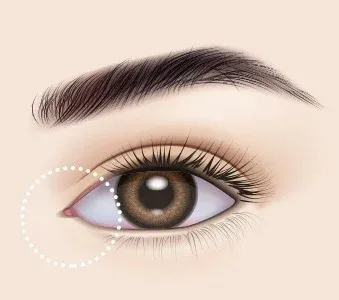
Case 1. Excessive exposure of the lacrimal caruncle (red tissue)
When the lacrimal caruncle is excessively exposed due to overcorrection
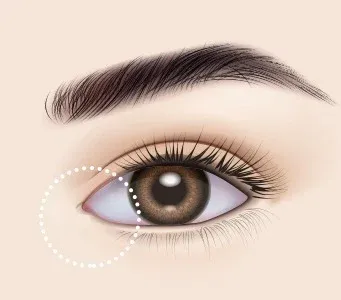
Case 2. Dissatisfaction with Epicanthoplasty shape
When the inner eye corners are pointed or rounded, or when an epicanthal fold remains
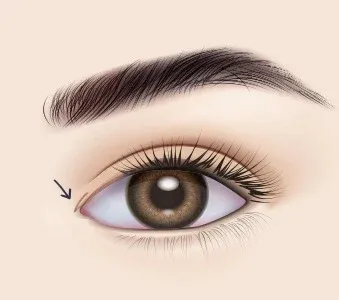
Case 3. Concerns about scars after Epicanthoplasty
When there are noticeable scars, such as double scars or depressed scars
Surgical procedure
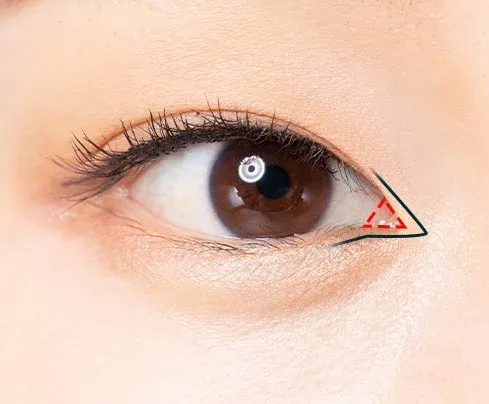
STEP 1. Restoration design
A Medial canthal reconstruction design is created before surgery.
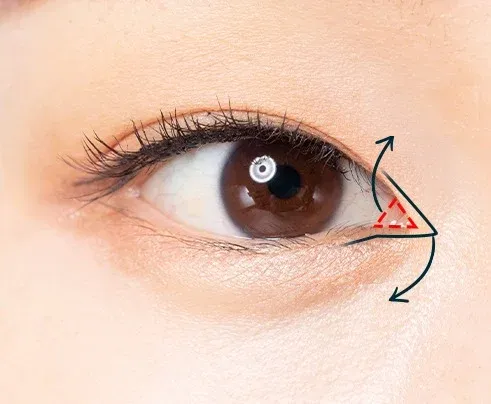
STEP 2. Creating a double flap
The skin at the inner corner of the eye is dissected in a V shape to create a double flap (triangular flap, V-flap).
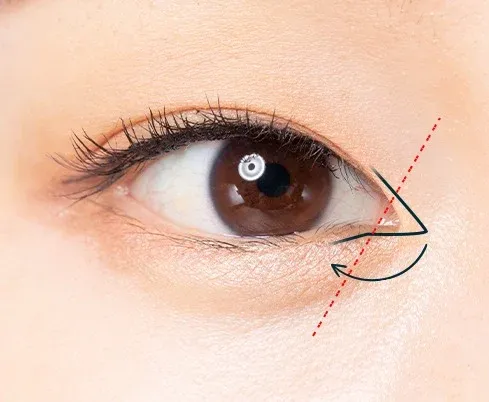
STEP 3. Triangular flap rotation · Posterior wall reconstruction
The double flap is separated and the triangular flap is rotated, after which the posterior wall of the restoration area is reconstructed and the ligaments and muscles are repositioned.
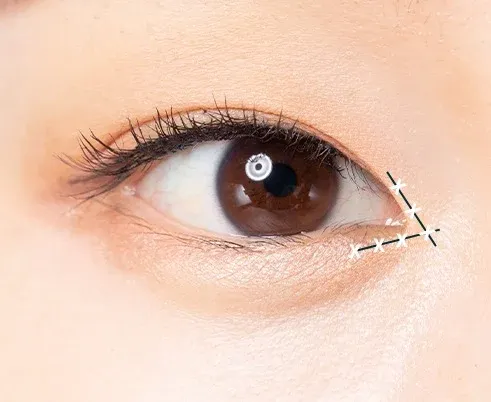
STEP 4. Anterior wall completion · Suturing
After completing the anterior wall of the restoration area, the flaps are gathered and adjusted before suturing. ※ This is a staged image intended to aid understanding.
Newline Medial canthal reconstruction Points
Point 1. Analysis of the causes of previous surgical failure
The causes of failure in the previous surgery are analyzed to establish a restoration plan.
Point 2. Customized restoration for lacrimal caruncle exposure, shape, and more
Restoration is tailored to the degree of lacrimal caruncle exposure, the shape of the inner eye corner, and other factors.
Point 3. Delicate triple reconstruction of the skin, muscle, and ligaments
Through conjunctival incision, the skin, muscles, and ligaments are comprehensively repositioned in three layers. As scars and adhesions damaged during the previous Epicanthoplasty are released, natural restoration is possible.
Point 4. Minimal incision and delicate suturing
Conjunctival incision and secure fixation minimize tissue damage and enable precise correction, reducing the likelihood of scar widening at the incision site. Secure fixation can help prevent re-adhesion after surgery.
Please be sure to check
Depending on the individual, side effects such as swelling, bleeding, inflammation, bruising, and nerve damage may occur, and surgical results may vary. The surgical method is determined through consultation with a specialist.
 NEWLINE PLASTIC SURGERY