Endoscopic brow lift
from 750,000 KRW* VAT Not Included
This is a forehead lift that uses small incisions above the hairline and an endoscope to elevate a sagging forehead and brows, while addressing forehead and glabellar wrinkles and upper eyelid hooding caused by brow ptosis. Using the Dual Fix bone-tunneling technique, absorbable sutures are anchored to the bone. The approach is determined after evaluating brow position, hairline, and scalp condition.
Procedure Overview
The 2-in-1 brow lift is a procedure that uses small incisions above the hairline and an endoscope to lift a sagging Forehead and eyebrows, while also improving Forehead and Glabella wrinkles and the eyelid crease obscured by drooping eyebrows. Absorbable sutures are anchored to the bone using the Dual Fix Bone Tunneling method.
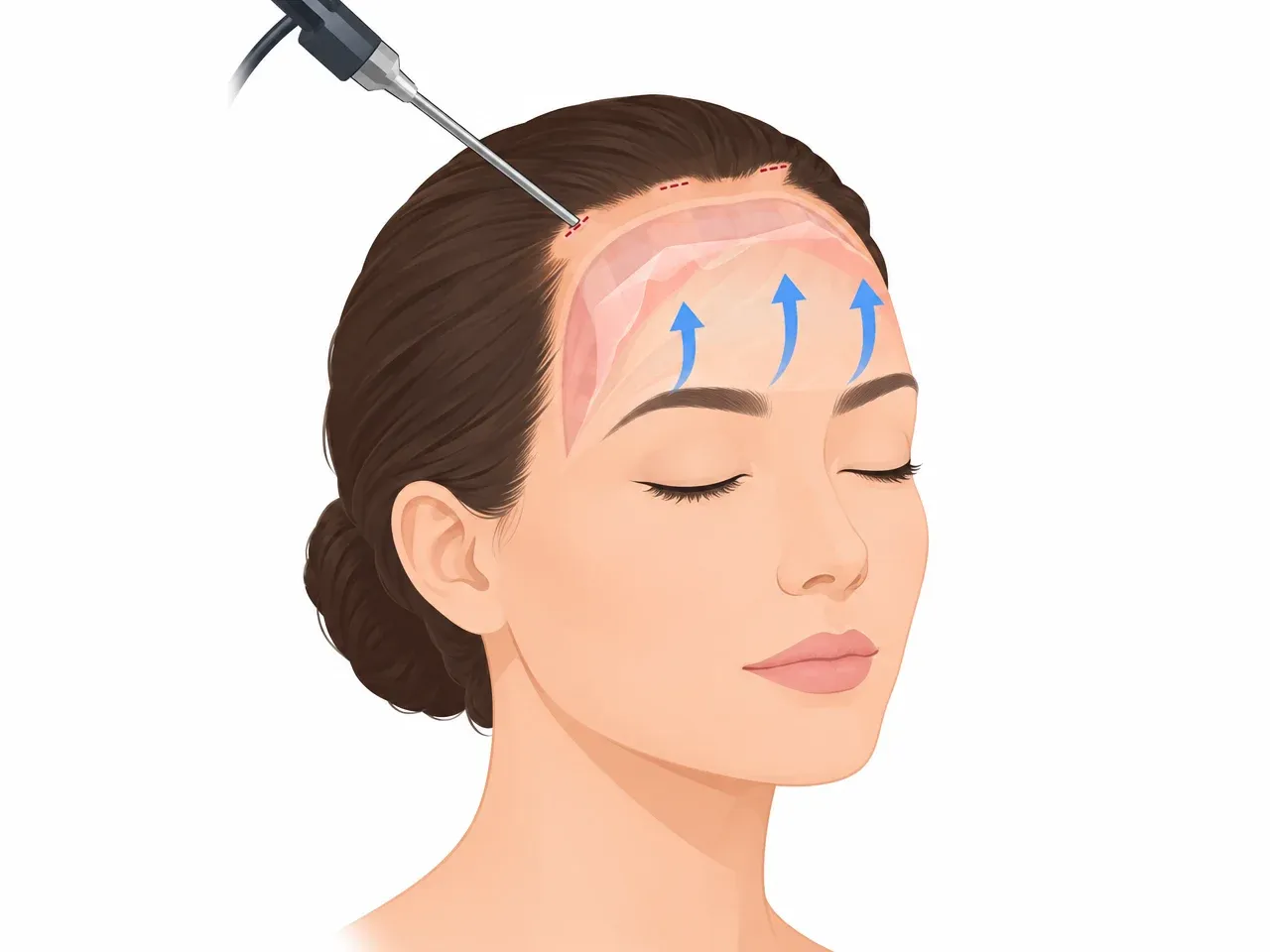
RNWOOD Plastic Surgery's 2-in-1 brow lift It lifts the upper Face, where the Forehead and eyebrows have descended, correcting it so that the double-eyelid crease previously obscured by the eyebrows becomes visible. Using an endoscope, tissue is directly visualized for precise, delicate Dissection and fixation using the Dual Fix Bone Tunneling method. The extent of change may vary depending on the degree of sagging and skin condition. · Correction of a stern-looking appearance · Correction of drooping eyes · Correction of Forehead and Glabella wrinkles · Correction of asymmetric eyebrows
Recommended for the following individuals
· Those who wish to improve Forehead or Glabella wrinkles · Those with drooping eyelids along with Forehead wrinkles · Those whose eyes and eyebrows are close together, creating a tired or constricted appearance · Those who want a softer, gentler change in appearance · Those who are not satisfied with the results of other Lifting Procedures
Why RNWOOD's 2-in-1 brow lift is special
Point 1. Delicate Dissection using an Endoscope
By directly visualizing deep tissues, including blood vessels, nerves, and muscles, with an endoscope during Dissection, damage to existing tissue and nerves is reduced, as is concern about scarring.
Point 2. Dual Fix Bone Tunneling method
A small tunnel is created within the bone, through which fixation sutures are passed and securely anchored to the bone over the periosteal tissue. The sutures are naturally absorbed by the body, while the periosteum adheres to the bone and becomes fixed during that time.
Point 3. UP from the sagging Forehead to the eyelids
In addition to correcting Forehead sagging and wrinkles, this procedure improves the upper Face by delicately adjusting eyebrow sagging as well as eyebrow position and angle.
Point 4. A brighter, softer change in appearance
By simultaneously lifting Glabella wrinkles, Forehead wrinkles, and drooping eyebrows, it can create a brighter and softer appearance.
Before-and-after cases
These photos were taken of the same patient at RNWOOD Plastic Surgery. This is a case in which multiple procedures were performed together, and results may vary depending on the individual’s condition.
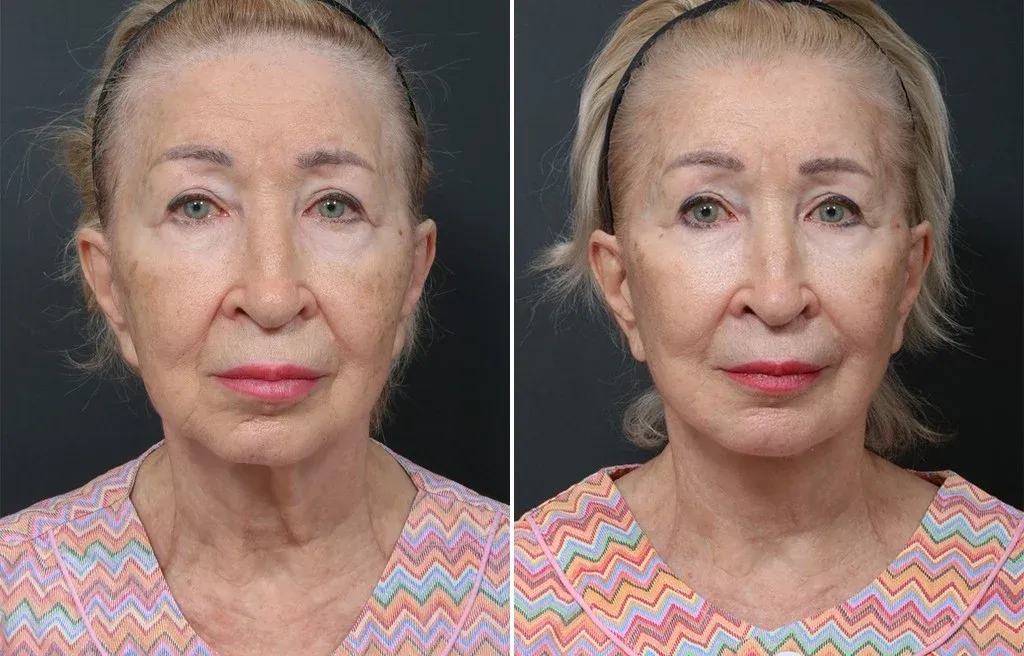
Case 04 · Front view Before surgery → 1 year after surgery Combined procedures: Revision surgery deep-plane facelift · neck lift · Endoscopic brow lift · Fat Grafting
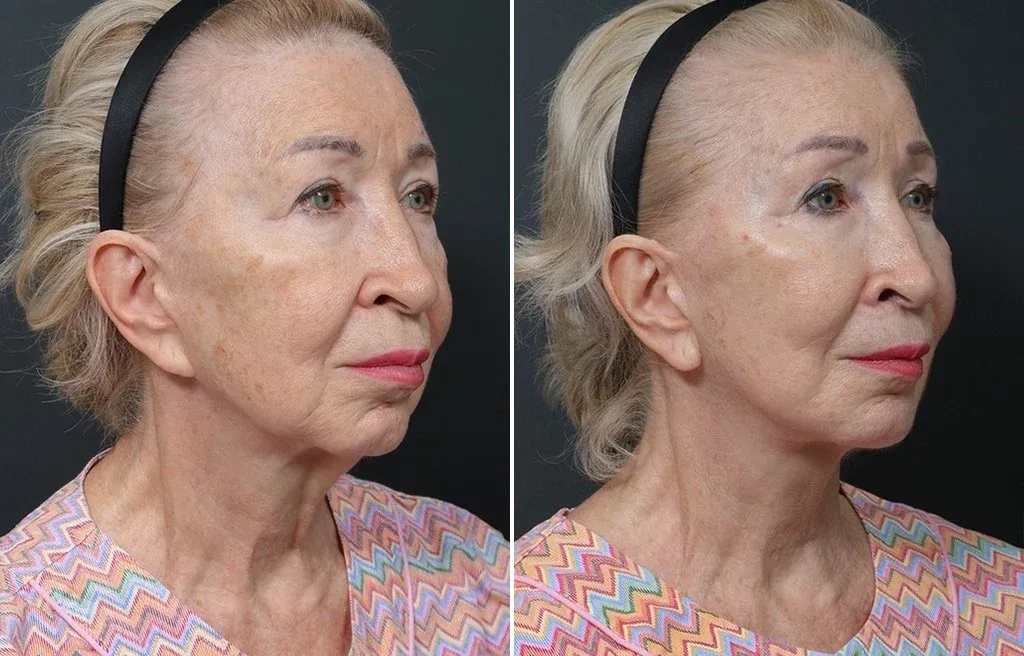
Case 04 · 45-degree view Before surgery → 1 year after surgery Combined procedures: Revision surgery deep-plane facelift · neck lift · Endoscopic brow lift · Fat Grafting
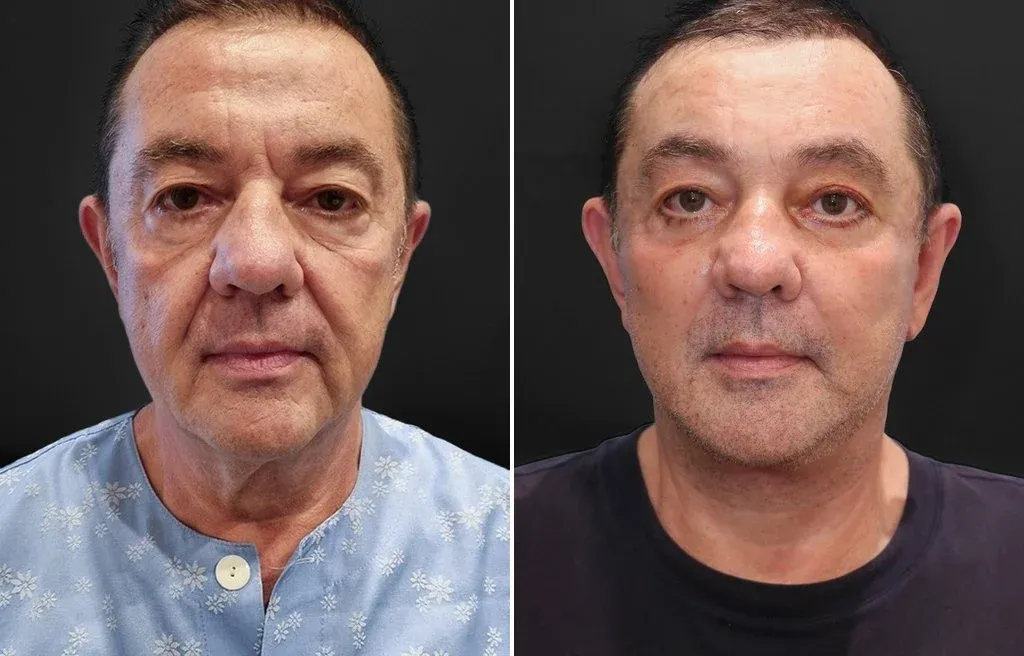
Case 08 · Front view Before surgery → 1 month after surgery Combined procedures: Deep-plane facelift · neck lift · double-chin surgery · Endoscopic brow lift · lower blepharoplasty · Fat Grafting
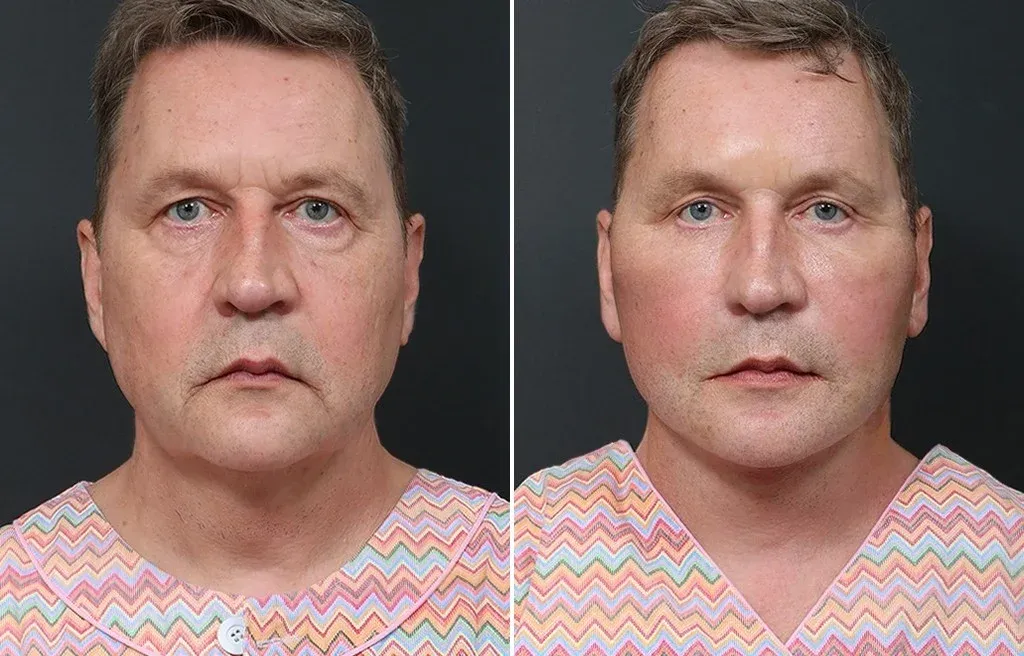
Case 11 · Front view Before surgery → 7–9 days after surgery Combined procedures: Deep-plane facelift · neck lift · Endoscopic brow lift · Fat Grafting
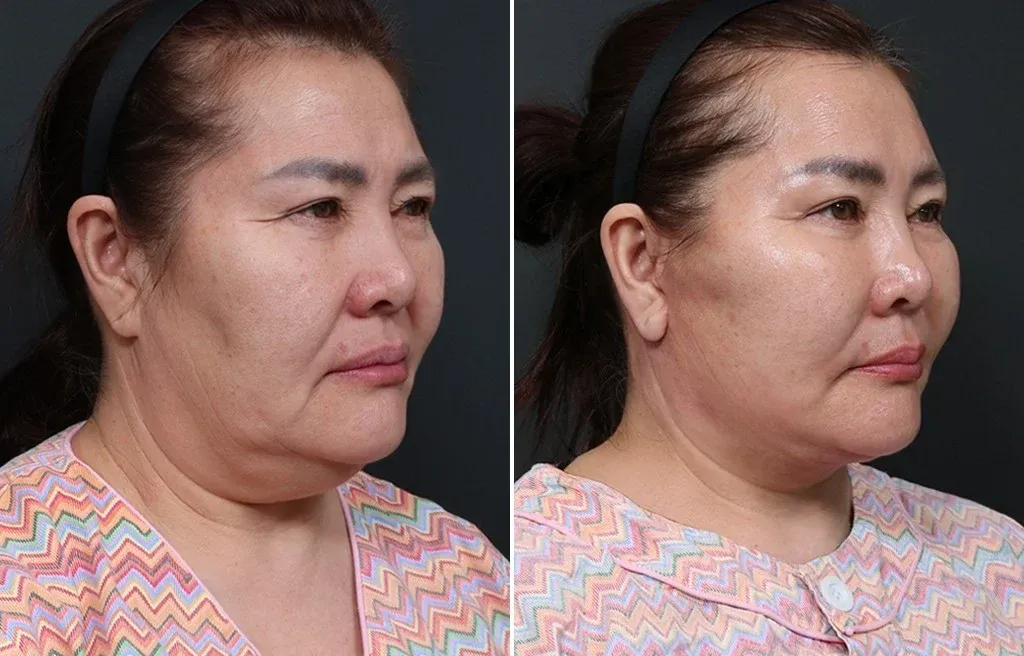
Case 14 · 45-degree view Before surgery → 20 days after surgery Combined procedures: Deep-plane facelift · neck lift · double-chin surgery · Endoscopic brow lift · Stem Cell-enriched Fat Grafting
Surgical procedure
STEP 1. Three incisions above the hairline
Minimal incisions are made above the hairline.
STEP 2. Dissection and correction
Precise and delicate Dissection is performed using an Endoscope.
STEP 3. Muscle incision and excision
The muscles that cause wrinkles are incised and excised.
STEP 4. Ligament tissue fixation
Sagging ligament tissue is secured to lift the upper Face.
STEP 5. Fixation with absorbable sutures
The tissue is securely fixed using absorbable sutures with the Dual Fix Bone Tunneling method.
Surgical information
| Surgery time About 1 hour | Anesthesia Sedation anesthesia | Recovery period 7–10 days | Suture removal 7 days after surgery | Follow-up visits 2–3 visits
Pre- and post-operative precautions
Before surgery
· During the consultation, eyebrow and eyelid position, hairline height, hair density, Forehead length, scalp condition, left-right asymmetry, overall health, and previous procedure history are assessed to determine the appropriate method. · Drooping eyelids (Ptosis Correction) or excess eyelid skin are not directly corrected by a brow lift. Depending on the cause, upper blepharoplasty or Ptosis Correction may be planned separately.
After surgery
· Sutures are removed 7 days after surgery. · Swelling may obscure results for several weeks to several months, while scars, changes in scalp sensation, hair changes, firmness, and a pulling sensation may persist for more than 1 year. · For patients traveling from overseas, a stay of 7–10 days after surgery is recommended. Returning home is recommended after the medical staff confirms that travel is possible.
Please be sure to review
After a 2-in-1 brow lift, swelling, bruising, infection, eyebrow asymmetry, Overcorrection or Undercorrection, and scalp contour irregularities may occur. Injury to the facial or temporal nerves may cause temporary or permanent decreased Forehead and eyebrow muscle strength, paralysis, or facial asymmetry. Temporary or permanent hair loss and decreased scalp sensation may occur around the incision sites, and fixation materials may be palpable or shift, requiring removal. As aging progresses, eyebrow drooping may recur. The surgical method and results may vary depending on the individual’s condition and should be determined through consultation with a specialist.
 RNWOOD PLASTIC SURGERY