
Double Chin Lift
from 700,000 KRW* VAT Not Included
This procedure improves lax neck skin, neck wrinkles (bands), and jawline sagging by making incisions behind the ears and along the hairline to reposition the neck tissues. Localized submental volume and contour concerns may be addressed separately or in combination with double-chin surgery, while deep-plane facelift surgery is planned separately when facial sagging is also present.
Procedure Overview
A neck lift is a procedure that improves sagging neck skin, neck wrinkles (bands), and jawline laxity through incisions along the hairline and around the ears. Localized volume and contour concerns under the chin are planned separately as double chin surgery, while a Deep Plane facelift is planned separately if facial sagging is also present.
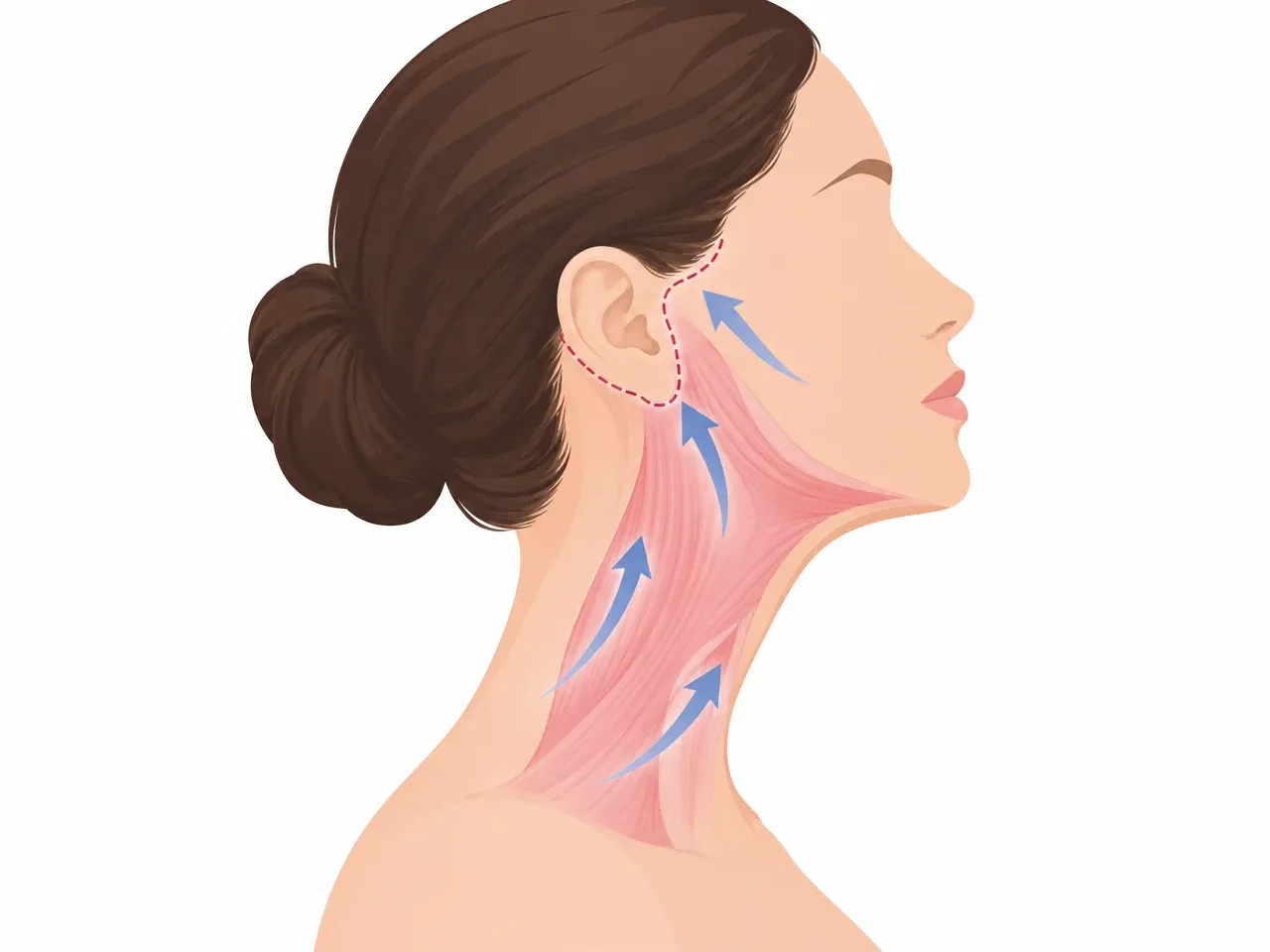
RNWOOD Plastic Surgery Neck Lift This procedure can improve sagging neck skin, certain neck wrinkles (bands), and jawline laxity. A neck lift and double chin surgery are different procedures; either one may be performed alone, or both may be planned together following consultation. · Improvement of sagging neck skin and neck wrinkles · Improvement of reduced jawline definition · Can be planned in combination with a Deep Plane facelift when necessary
Recommended for
· Those concerned about sagging neck skin · Those with prominent neck wrinkles (bands) · Those with a poorly defined jawline contour · Those in good overall health with realistic goals
What Makes RNWOOD Neck Lift Special
Point 1. Neck lift and double chin surgery are planned separately
Sagging skin and laxity throughout the neck are addressed with a neck lift, while localized volume and contour concerns under the chin are addressed with double chin surgery. During consultation, we determine which of the two procedures is needed.
Point 2. Evaluation of both facial and neck anatomy
When facial sagging is also present, a neck lift alone may not be sufficient. In such cases, a Deep Plane facelift is planned as a separate procedure.
Point 3. Incisions, risks, and costs reviewed in advance during consultation
During consultation, we review facial and neck anatomy, health status, medications, nicotine exposure, and previous procedures and surgical history, then explain the planned incision sites, risks, and costs.
Before & After Cases
These photographs were taken of the same patient at RNWOOD Plastic Surgery. This case involved multiple procedures, and results may vary depending on the individual.
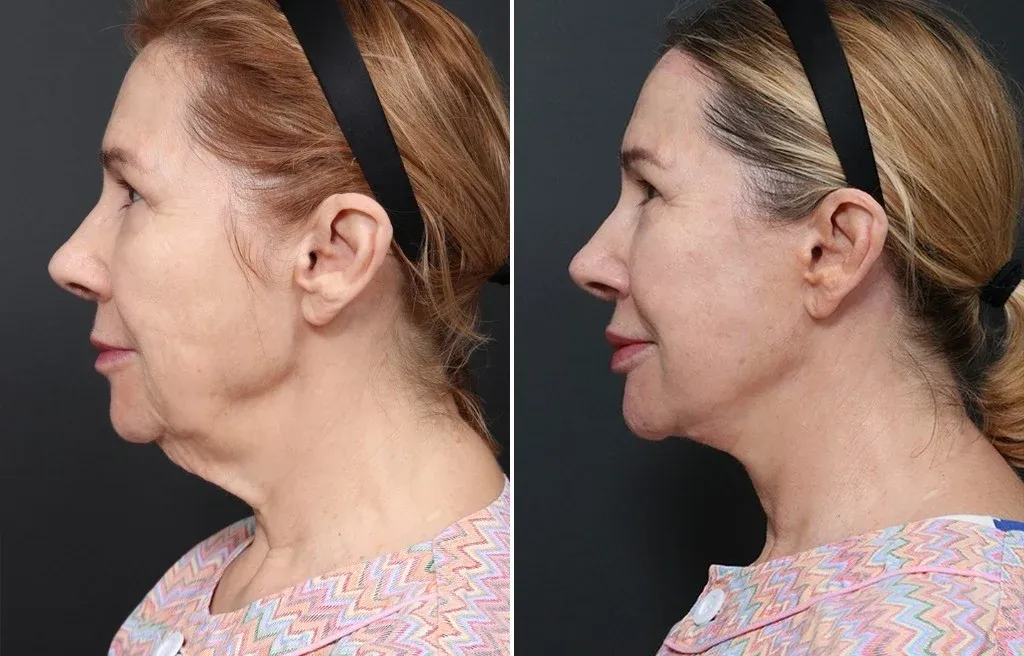
Case 01 · Side View Before → 1 year after surgery Combined procedures: Deep Plane facelift · neck lift · double chin surgery · Fat Grafting
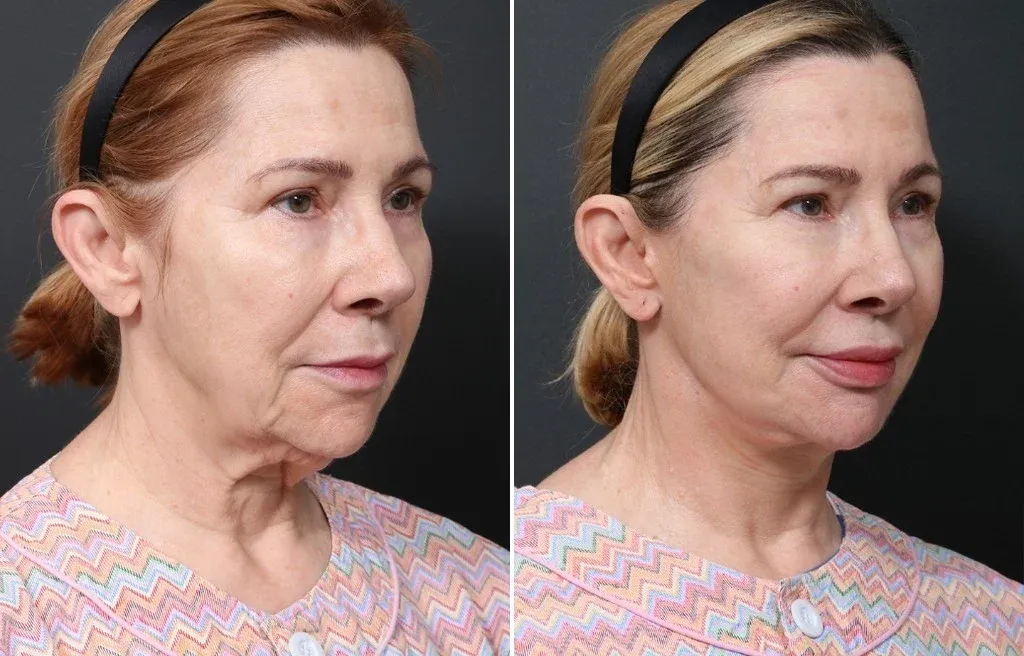
Case 01 · 45-Degree View Before → 1 year after surgery Combined procedures: Deep Plane facelift · neck lift · double chin surgery · Fat Grafting
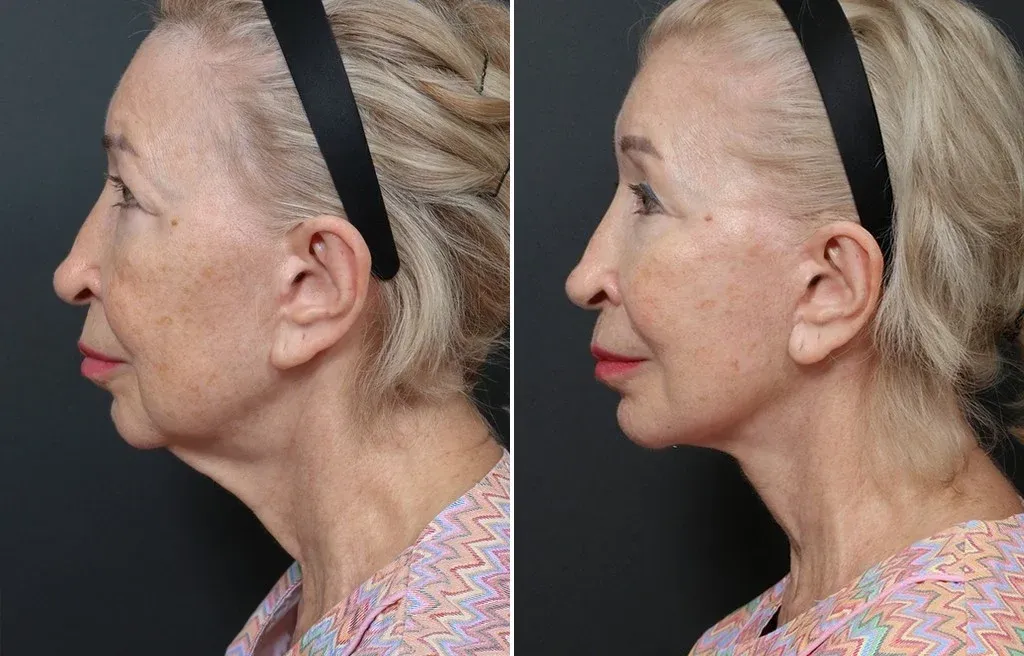
Case 04 · Side View Before → 1 year after surgery Combined procedures: Revision surgery Deep Plane facelift · neck lift · Endoscopic brow lift · Fat Grafting
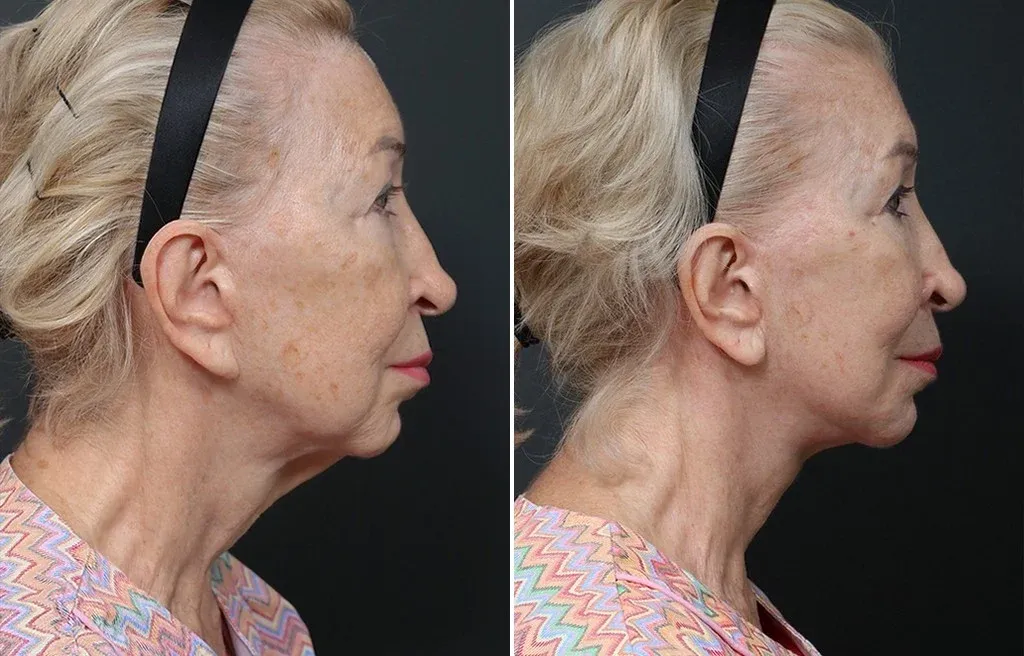
Case 04 · Side View Before → 1 year after surgery Combined procedures: Revision surgery Deep Plane facelift · neck lift · Endoscopic brow lift · Fat Grafting
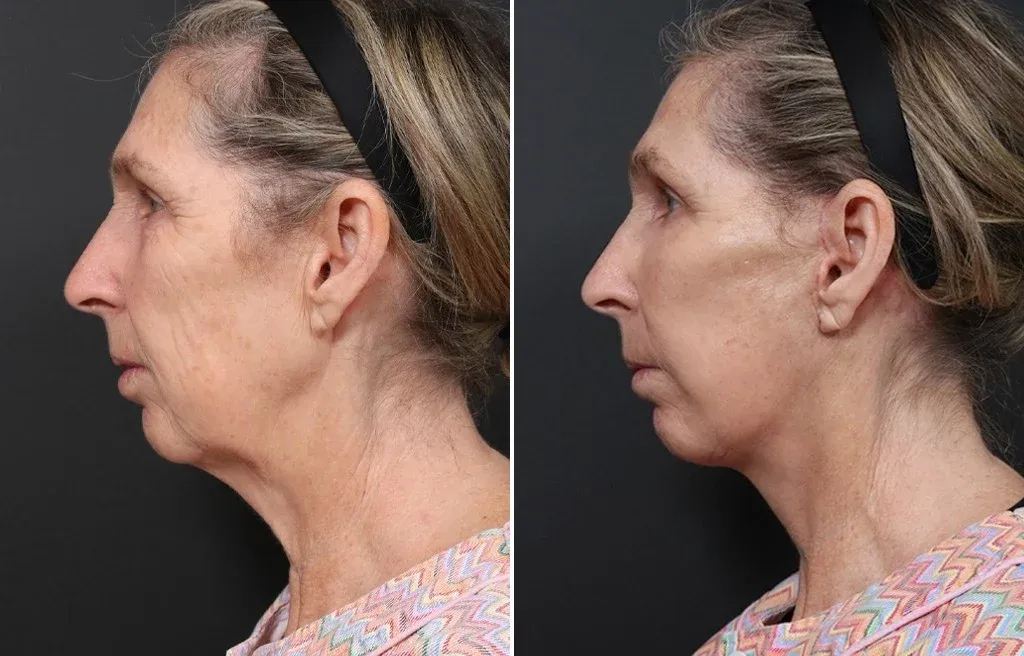
Case 03 · Side View Before → 14 days after surgery Combined procedures: Deep Plane facelift · neck lift · double chin surgery · Fat Grafting
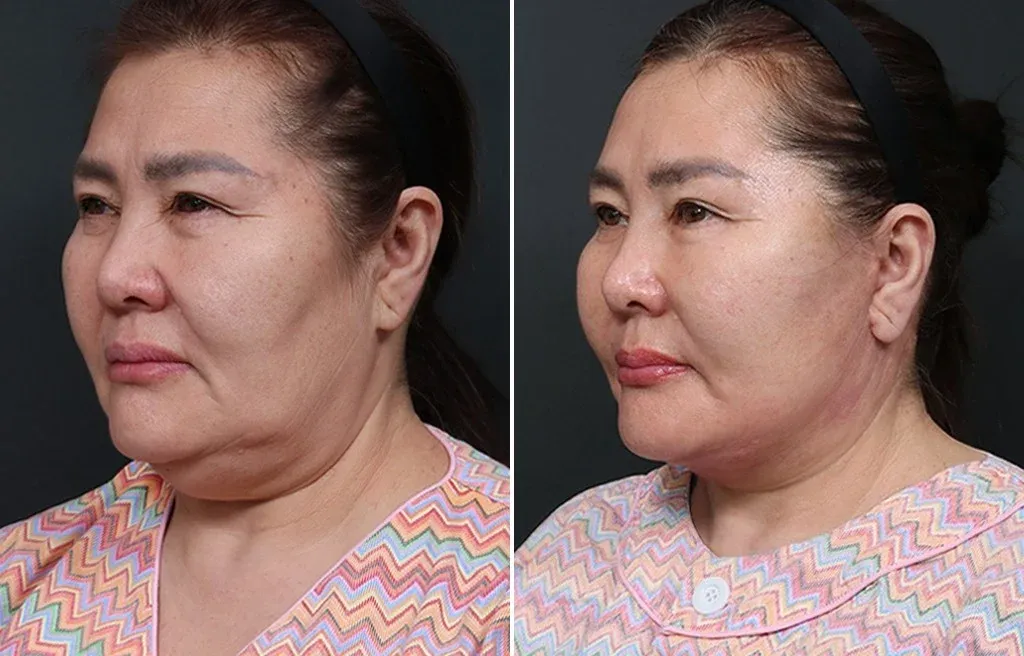
Case 14 · 45-Degree View Before → 20 days after surgery Combined procedures: Deep Plane facelift · neck lift · double chin surgery · Endoscopic brow lift · Stem Cell-enhanced Fat Grafting
Surgical Procedure
STEP 1. Consultation and facial and neck anatomical evaluation
Facial and neck anatomy, skin condition, health status, medications, nicotine exposure, and previous procedures and surgical history are reviewed to establish an individualized treatment plan.
STEP 2. Determine whether a neck lift or double chin surgery is appropriate
Depending on whether the concern is laxity throughout the neck or a localized concern under the chin, the most appropriate plan is selected: neck lift, double chin surgery, or a combination of both.
STEP 3. Incisions
Incisions are made along the natural contours of the hairline and around the ears and may extend to the lower scalp.
STEP 4. Tissue repositioning
Neck tissues are repositioned according to the treatment plan.
STEP 5. Suturing and compression
The incision sites are sutured, and compression garments are generally recommended for approximately 3 days. Sutures are removed 7 days after surgery.
Surgical Information
| Anesthesia Sedation anesthesia (in collaboration with a board-certified anesthesiologist) | Recovery period 7–10 days | Suture removal 7 days after surgery
Pre- and Postoperative Precautions
Before Surgery
· Current medications, nicotine exposure (smoking), and previous procedures and surgical history are reviewed during consultation. · Surgery may be postponed or not recommended depending on health status, medications, nicotine exposure, and other factors.
After Surgery
· Compression garments are generally recommended for approximately 3 days, although instructions may vary depending on recovery status. · Sutures are removed 7 days after surgery, and care may continue through day 10 depending on recovery progress. · Swelling and bruising may obscure the results for several months, while firmness, tightness, reduced sensation, scars, and hair changes may persist for more than 1 year. · Patients visiting from a distance are advised to return home only after the medical team confirms that travel is appropriate.
Please Be Sure to Review
After neck lift surgery, swelling, bruising, skin discoloration, contour irregularities, asymmetry, tightness, reduced sensation, and itching may occur. If facial motor nerves, sensory nerves, blood vessels, muscles, or salivary gland structures are damaged during Dissection, temporary or permanent muscle weakness, paralysis, asymmetric smiling, lip drooping, reduced sensation, or pain may occur. A large hematoma in the neck after surgery may compress the airway and require emergency treatment. Temporary or permanent hair loss may occur around incision sites, and the position of the hairline, sideburns, ears, or earlobes may change. Improvement may be limited when jawline laxity is caused by skeletal structure. The surgical method and results may vary depending on the individual and should be determined through consultation with a specialist.
 RNWOOD PLASTIC SURGERY