
Cheekbone Reduction
from 6,000,000 KRW* VAT Not Included
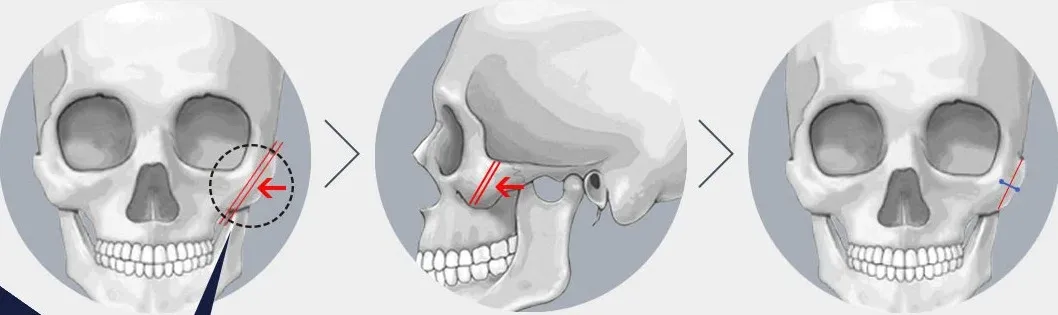
This procedure reduces the cheekbones without shaving them down by repositioning and fixing the osteotomized bone inward and backward (posterosuperiorly). It is intended for individuals with prominent cheekbones that create a strong-looking impression or with well-developed anterior and lateral cheekbones that make the face appear wide. The degree of reduction is determined by individually adjusting the osteotomy angle of the 45-degree cheekbone and the amount of posterosuperior and medial movement, with a focus on minimizing postoperative cheek sagging.
Surgery Overview
AI-generated information for reference only. Please consult a doctor for accurate, personalized advice.
Non-Resection Lifting Cheekbone Reduction is a procedure that reduces the cheekbones without shaving away bone, by moving and fixing the osteotomized bone inward and backward/upward (posterosuperiorly). It is intended for individuals whose prominent cheekbones create a strong impression or whose front and side cheekbones are developed, making the face appear wide. The amount of reduction is determined by individually adjusting the osteotomy angle of the 45-degree cheekbone and the amount of posterosuperior and medial movement, with a focus on reducing postoperative cheek sagging.

Reduce cheekbones without removing bone! · Minimal cheekbone dissection for NO cheek sagging · Enhanced rejuvenating effect with upper buccal muscle fixation · Improved dimensionality and natural appearance by repositioning, not shaving, the cheekbones · NO distortion with secure fixation
What is Non-Resection Lifting Cheekbone Reduction?
This surgical method reduces the cheekbones by moving the osteotomized bone segment medially and posterosuperiorly while minimizing sagging. In other words, it uses posterosuperior repositioning of the cheekbone to effectively reduce the side cheekbones without causing sagging, providing an excellent actual facial reduction effect.
Recommended for These Individuals

· When prominent cheekbones create a strong-looking impression · When protruding front cheekbones make the midface appear uneven · When excessively developed front and side cheekbones make the face wide · When seeking a slimmer, more refined Face by reducing both the cheekbones and facial width
Core Techniques of Non-Resection Lifting Cheekbone Reduction
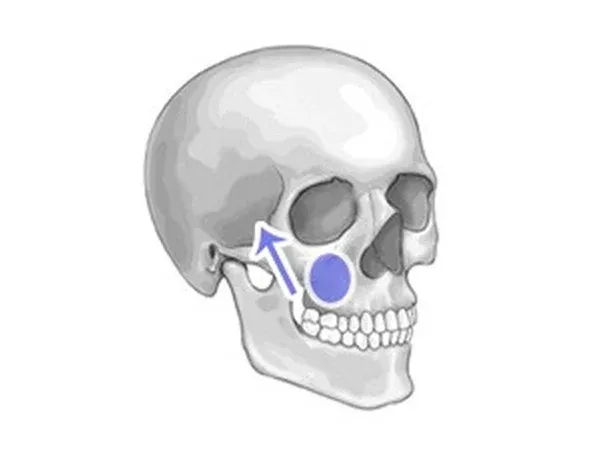
Point 1. Minimal Cheekbone Dissection
Cheek sagging increases with the amount of dissection performed at the body of the cheekbone. To minimize dissection in the cheekbone body, Faceline does not dissect the front cheekbone at all. Instead, an intraoral incision is made in front of the molars to directly dissect the 45-degree cheekbone. Therefore, when there is no preoperative skin laxity, cheek sagging does not occur.
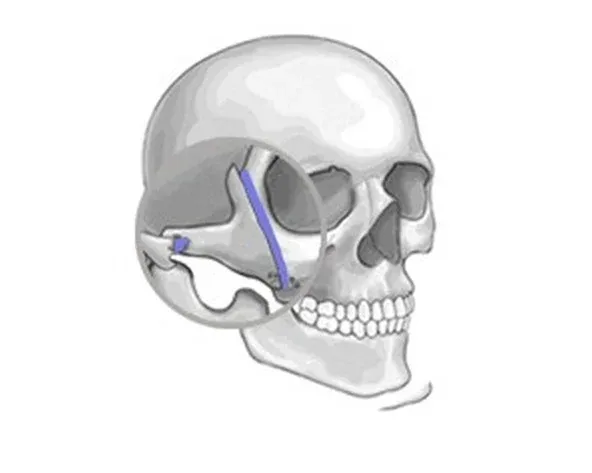
Point 2. Upper Buccal Muscle Fixation
In Lifting Cheekbone Reduction, the cheekbones are elevated during fixation. As a result, the skin over the cheekbones is lifted as well, which can provide a more youthful appearance after surgery.
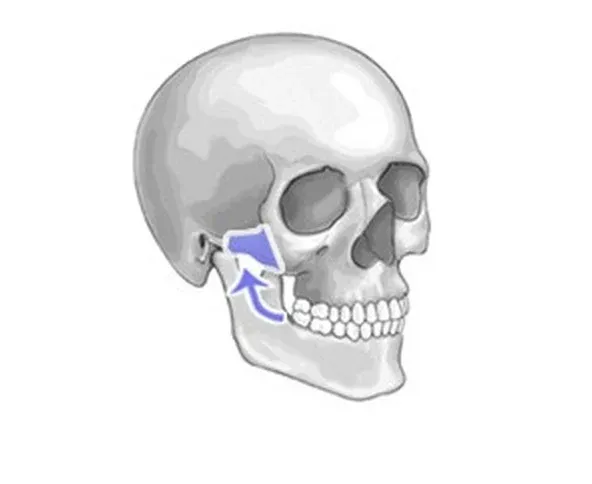
Point 3. Cheekbone Repositioning
When the midface is large despite non-prominent cheekbones, Faceline can provide an actual facial reduction effect. This is the expertise behind cheekbone repositioning. After making osteotomy lines at the front and back of the cheekbone, the 45-degree cheekbone and side cheekbone are repositioned, allowing the Face to appear actually smaller even from the front.
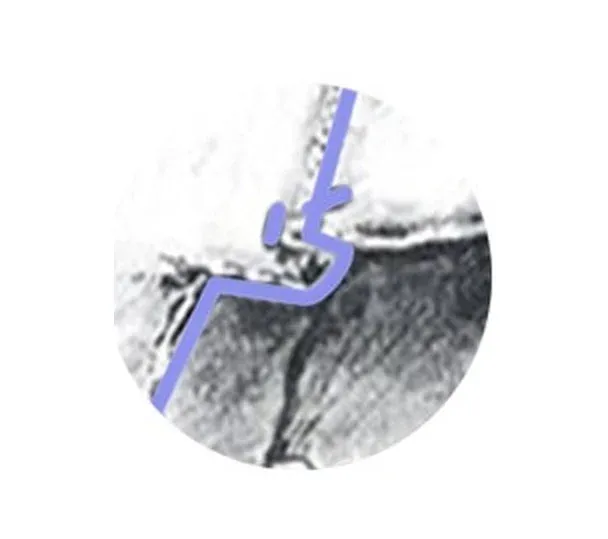
Point 4. Secure Combined Fixation
Because the cheekbone is a non-mobile area, problems such as separation at the osteotomy site must not occur. Based on extensive surgical expertise, Faceline performs secure fixation.
Conventional Cheekbone Reduction vs. Non-Resection Lifting Cheekbone Reduction
· Osteotomy method: Conventional — Bone is removed along the osteotomy line, then the cheekbone is moved inward / Non-resection lifting — The angle of the 45-degree cheekbone osteotomy line, the amount of posterosuperior movement, and the amount of medial movement from the posterior side are adjusted according to the shape and size of the cheekbones · Frontal reduction effect: Conventional — Limited frontal reduction effect / Non-resection lifting — Preserves the fullness of the front cheekbones while clearly reducing the side cheekbones · Cheek sagging: Conventional — The further the cheekbone is moved inward, the more soft tissue attached to the removed area may remain and sag / Non-resection lifting — No concern about cheek sagging
Stages in the Development of Cheekbone Surgery
Grinding or shaving only → Partial osteotomy without fixation → Genioplasty Advantages of “Genioplasty” alone: After osteotomizing the front and back of the protruding cheekbone, the cheekbone can be reduced substantially because the bone is moved without separating it from the overlying soft tissue.
How to Increase the Amount of Cheekbone Reduction
Conventional Genioplasty
Bone is removed along the osteotomy line to move the cheekbone further inward. The issue is that the further the cheekbone is moved inward, the more soft tissue attached to the removed area remains and sags (soft tissue around the 45-degree cheekbone remains and sags).
Non-Resection Lifting Cheekbone Reduction
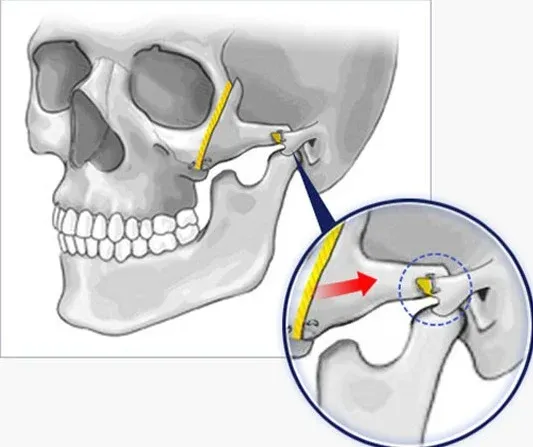
· Without removing bone at the 45-degree cheekbone area, the entire cheekbone is moved inward and simultaneously posterosuperiorly. Because no excess soft tissue remains in the 45-degree cheekbone area, sagging can be minimized. · The further the cheekbone is moved posterosuperiorly, the greater the reduction of the 45-degree cheekbone. Although the amount of cheekbone reduction increases, soft-tissue sagging can be minimized because no excess tissue remains in the 45-degree cheekbone area. · Rather than performing the same procedure for everyone, the angle of the 45-degree cheekbone osteotomy line, the amount of posterosuperior movement, and the amount of medial movement from the posterior side are adjusted according to the shape and size of each person’s cheekbones to create optimized results. Solution to the problem — Because the bone and skin move posterosuperiorly, there is no excess skin to sag.
Key Points for Adjusting the Amount of Cheekbone Reduction
1. Position and angle of the incision line · Adjust the incision position and angle according to the desired amount of reduction · Greater medial movement results in greater reduction
※ The steeper the osteotomy angle, the greater the reduction of the 45-degree cheekbone.
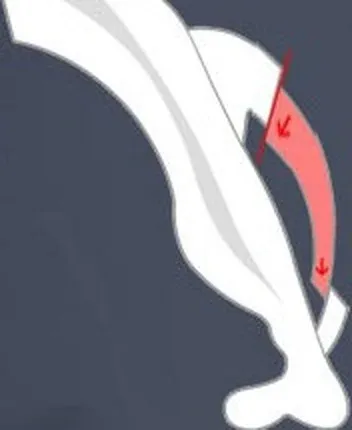
Gentle osteotomy angle – small reduction
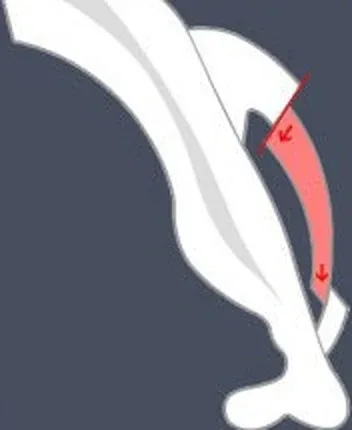
Moderate osteotomy angle – moderate reduction
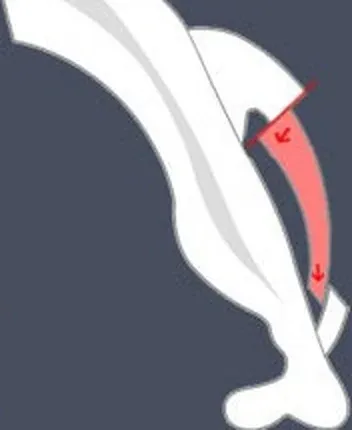
Steep osteotomy angle – large reduction
Ideal cheekbone surgery depends on where and how much the cheekbones are moved. The appropriate amount and direction of movement are determined individually based on 1. incision location, 2. incision angle, 3. amount of posterosuperior movement, and 4. amount of medial movement. The amount of cheekbone reduction is determined by the degree of posterosuperior movement, making it possible to reduce the cheekbones as needed according to the degree of prominence.
Why Faceline’s Non-Resection Lifting Cheekbone Reduction Is Special
Rather than performing the same procedure for everyone, the angle of the osteotomy line in the 45-degree cheekbone area, the amount of posterosuperior movement, and the amount of medial movement from the posterior side are adjusted according to the shape and size of the cheekbones to create optimized results for each individual. The cheekbones are moved inward and simultaneously posterosuperiorly; the greater the movement, the greater the amount of cheekbone reduction. However, because no excess soft tissue remains in the 45-degree cheekbone area, sagging can be minimized.
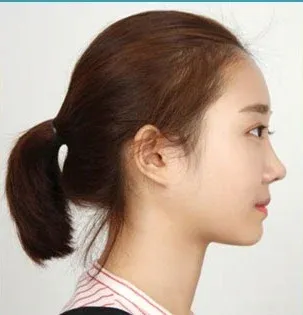
01. A slim, soft V-line facial contour from every angle
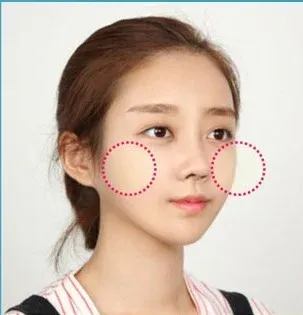
02. Reduces the midface and completely prevents cheek sagging through repositioning without shaving

03. A smaller Face for a younger, cuter image
Faceline Frontal-Effect Cheekbone Reduction
By reducing the width of the midface visible from the front, this procedure can provide maximum results for those who want facial reduction because their Face appears broad, even when cheekbone prominence is not severe.
Side Cheekbone in Front of the Ear
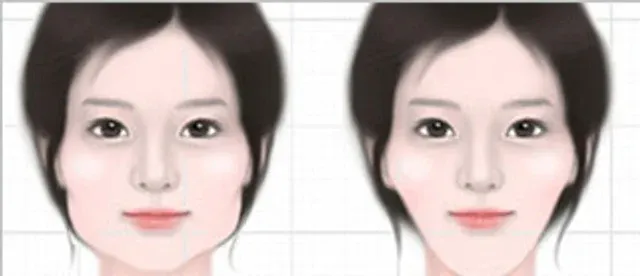
The side cheekbone in front of the ear must be reduced as much as possible for the front cheekbone to appear relatively fuller and for the Face to appear smaller from the front. The facial width at nostril level is actually narrowed, creating a smoother facial contour. It can also make the eyes appear relatively larger. ※ When undergoing Cheekbone Reduction — For a wide or square jaw: concurrent jaw reduction / For a long Face or a protruding-chin appearance: concurrent Orthognathic Surgery or Chin Reduction
Front Cheekbone Area Under the Eyes
Reducing the front cheekbone under the eyes can make the Face appear flat and wide, so the front cheekbones should be reduced cautiously.
45-Degree Cheekbone
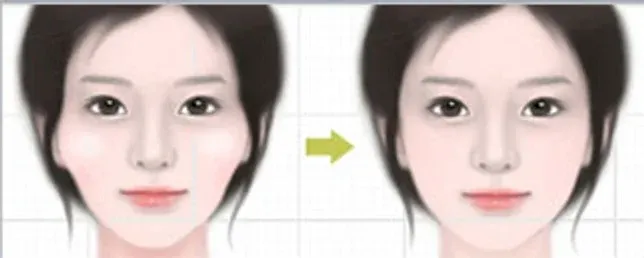
The degree of reduction varies according to each individual’s degree of prominence, smoothly connecting and reducing the front and side cheekbone lines. Excessive reduction can make the Face appear flat. ※ At Faceline, reduction can be performed as needed according to the degree of prominence.
Precise Assessment for Your Personalized Plastic Surgery

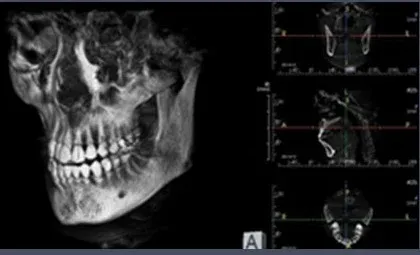
STEP 1. 3D X-ray Imaging
Using advanced equipment, facial bone X-rays are taken, followed by systematic computer-based facial bone analysis.
STEP 2. Simulation
Based on facial bone image analysis and occlusion assessment, an optimal surgical plan is established and simulated using a virtual surgery system.
Please Be Sure to Check
Bleeding, infection, inflammation, and other complications may occur after surgery, so caution is required. Subjective satisfaction may vary among individuals. The surgical method and results may differ depending on the individual’s condition and are determined through consultation with a specialist.
 FACELINE PLASTIC SURGERY