
Cheekbone Reduction
from 3,350,000 KRW* VAT Not Included
This facial contouring procedure reduces cheekbone width and prominence by tailoring the surgical technique to the pattern of protrusion, such as lateral cheekbone prominence, 45-degree cheekbone prominence, or overall wide cheekbones. It aims to reduce the risk of cheek sagging and nonunion through minimal dissection, superior repositioning, and dual fixation.
Surgery Overview
This is a Facial Contouring Surgery procedure that reduces cheekbone width and prominence by tailoring the surgical approach to the pattern of protrusion, such as prominent lateral cheekbones, prominent 45-degree cheekbones, or overall wide cheekbones. It improves the points of greatest prominence from the front, side, and 45-degree angles, while minimizing the risk of cheek sagging and nonunion through minimal dissection, upward repositioning, and double fixation.

Recommended for the following individuals
· Those with a slim face and laterally protruding cheekbones · Those whose cheekbones appear prominent from an oblique (45-degree) angle, creating a strong impression · Those with overall wide cheekbones that make the face appear larger and give a harsh impression
Customized surgery based on the angle of protrusion creates a naturally smooth facial contour line. Designed according to the degree of prominence from the front, side, and 45-degree angles, it creates a smaller, slimmer cheekbone line without nonunion.
View Facial Contouring Surgery Cases

CASE 1. Three facial contouring procedures + Fat Grafting + Rhinoplasty Revision
Before surgery → 4 months after surgery

CASE 2. Three facial contouring procedures + Rhinoplasty
Before surgery → 5 months after surgery

CASE 3. Three facial contouring procedures + Paranasal Augmentation + Rhinoplasty
Before surgery → 1 year after surgery

CASE 4. Three facial contouring procedures + Fat Grafting + Alar Base Reduction Revision surgery
Before surgery → 3 months after surgery
Surgical Methods by Cheekbone Type
Prominent cheekbone types include lateral cheekbone protrusion, 45-degree cheekbone protrusion, and overall wide cheekbones. A different surgical approach is required for each type to achieve a smaller, more refined facial shape.
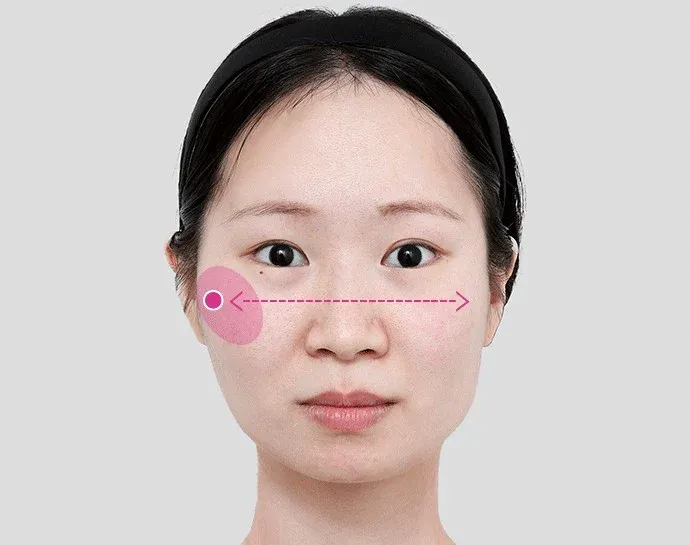
Lateral cheekbone protrusion type
Problem: A slim face with little fat and volume, causing the lateral cheekbone to appear outwardly prominent. Solution: Because the face lacks volume, the front cheekbone volume is preserved while the lateral cheekbone is rotated inward.
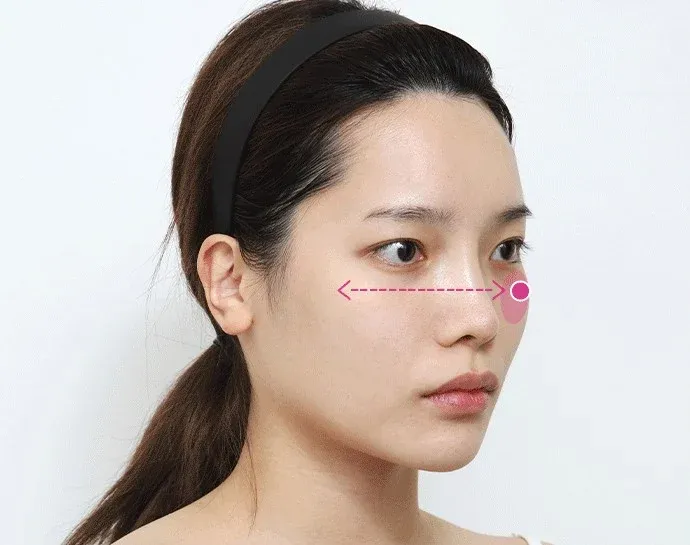
45-degree cheekbone protrusion type
Problem: Cheekbones appear prominent from an oblique angle, creating a strong impression. Solution: The prominent area is reduced and set back through cheekbone repositioning to decrease facial width and create a softer impression.
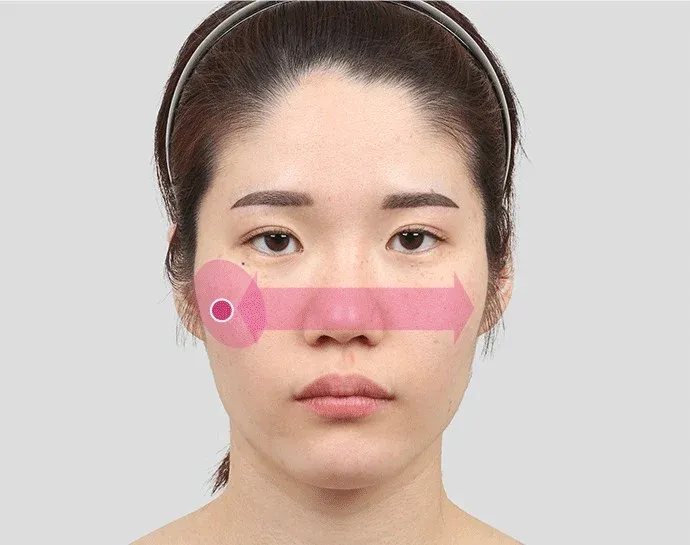
Overall wide cheekbone type
Problem: Overall wide cheekbones make the face appear larger and create a harsh impression. Solution: To reduce the cheekbone body, diamond-shaped bone resection is performed and the cheekbone is repositioned to reduce facial width while preserving facial definition.
(The image above shows the preoperative appearance of each type.)
Key Points of View Cheekbone Reduction

Point 1. Enhanced reduction effect by repositioning the point of greatest prominence
Creates a smooth line from the front to the side and 45-degree angles.
Point 2. A smaller, slimmer cheekbone line through rotation and posterior repositioning
Creates a slimmer line with techniques that effectively reduce cheekbone width and size.
Point 3. Three techniques to prevent sagging
· Minimal dissection: Dissection is minimized to prevent cheek fat from separating from the cheekbone and sagging. · Upward repositioning: The cheekbone is lifted and fixed in place, which can help lift the skin over the cheekbone as well. · Secure double fixation: Double close-contact fixation prevents separation between bone segments, helping prevent nonunion and sagging.
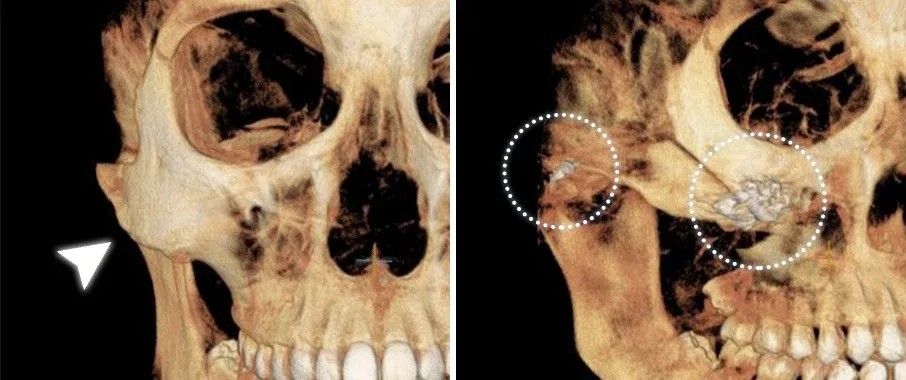
View Facial Contouring Surgery System
Precise 3D-CT and X-ray Analysis
High-resolution 3D-CT and X-rays are used to precisely analyze facial characteristics, bone shape and size, nerve pathways, and the characteristics of muscle and fat tissue to carefully establish a surgical plan. Without unnecessary resection, reduction is performed only as needed within safe limits, taking the original facial proportions into consideration.
Safety-First System
· Board-certified anesthesiologists are on site, with one-to-one dedicated anesthesia care · Special treatment medication for malignant hyperthermia (dantrolene) available for initial emergency response · Named-surgeon accountability system from consultation through surgery and follow-up · In-house inpatient ward operation · One-to-one rounds by the operating surgeon and specialized nursing staff on site 365 days a year
Before-and-After Photos

Before surgery → 1 month after surgery

Before surgery → 6 months after surgery
Recovery Progress 1
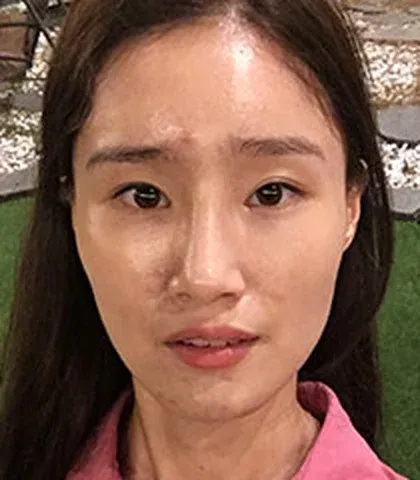
Before surgery

3 months after surgery

5 months after surgery

8 months after surgery
Recovery Progress 2

Before surgery

1 month after surgery

3 months after surgery

5 months after surgery
Surgery Information
| Surgery time: 1 to 1.5 hours | Anesthesia: General anesthesia | Hospitalization: Same-day discharge | Follow-up visits: Approximately 2 visits | Return to daily activities: After 5–7 days
Postoperative Care
· 3 days after surgery: Disinfection and progress check, shampoo care · 1 week after surgery: Cleansing and exfoliation; care to support Skin Regeneration and reduce swelling; follow-up CT scan · 2 weeks after surgery: Cleansing; radiofrequency or ultrasound care to support recovery and reduce swelling · 1–6 months after surgery: Regular progress checks Hyperbaric oxygen chamber therapy, medication prescriptions and gargling, anti-swelling injections, and Omega Light care are also provided. After 3D-CT and X-ray imaging, the dedicated physician checks progress one-to-one. * The care program and CT scan schedule may be changed depending on the individual's condition.
Please Check
Before-and-after photos are published with the patient's consent. Surgical results and recovery periods may vary depending on individual circumstances, and the surgical method is determined through consultation with a specialist.
 VIEW PLASTIC SURGERY