
Bulbous Nose
from 4,250,000 KRW* VAT Not Included
This procedure corrects a blunt, wide nasal tip according to its underlying cause to create a slimmer nasal tip. If the lower lateral cartilages are large or widely splayed, a portion of the cartilage is resected, repositioned, and sutured together. If the skin and subcutaneous tissue are thick, subcutaneous tissue of the nasal tip is removed.
Surgery Overview
Bulbous Nose correction is a procedure that refines a blunt, wide Nasal Tip according to its cause to create a slimmer, more defined Nasal Tip. If the alar cartilages are large or spread apart, part of the Cartilage is removed or brought together and sutured. If the skin and subcutaneous tissue are thick, subcutaneous tissue at the Nasal Tip is removed.

Before-and-after photos (left: before surgery · right: after surgery) Before surgery → After surgery
Recommended for the following people
· Those with an overall low nose · Those whose Forehead appears wide due to a low Nasal Bridge · Those whose Nasal Bridge is lower than the Nasal Tip · Those whose nose appears small in proportion to their Face
Types of Bulbous Nose
A Bulbous Nose refers to a condition in which the skin and subcutaneous tissue at the Nasal Tip are thick or the Nasal Tip cartilage is excessively developed and protruding. A blunt, drooping Nasal Tip can make the nose appear dull and large. Depending on the cause, the most precise method is used to improve the Bulbous Nose and create a slimmer, more refined Nasal Tip.
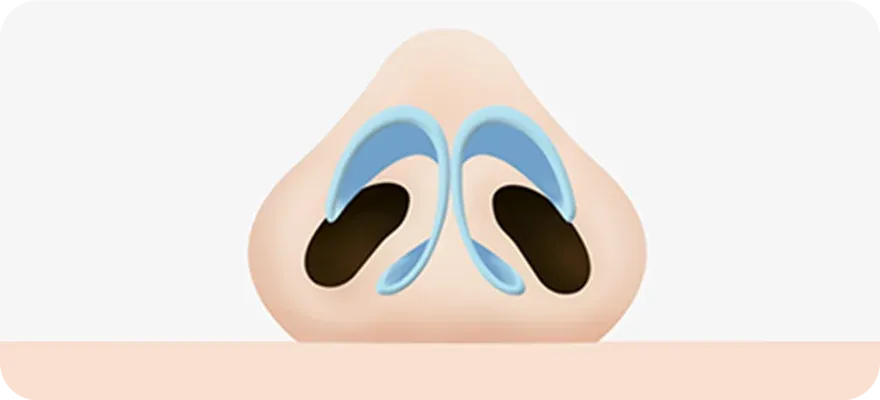
Normal nose
A typical nose with appropriately sized alar cartilages and without excessive subcutaneous fat.
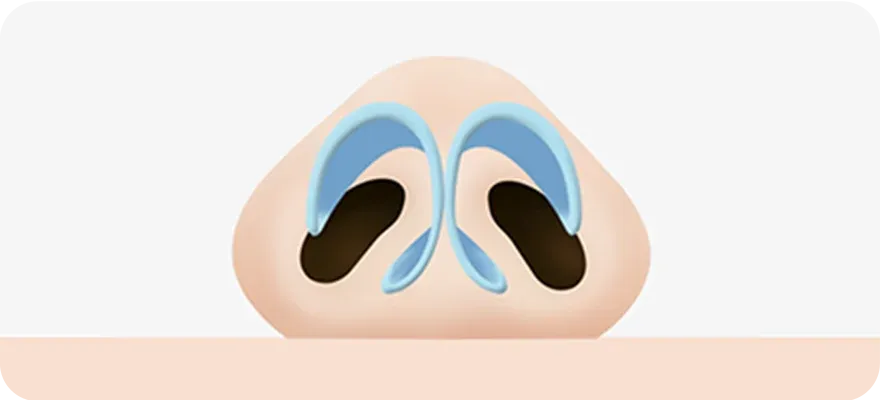
A nose with large alar cartilages and wide spacing between the nostrils
Part of the alar cartilage is removed, then repositioned upward to elevate the Nasal Tip.
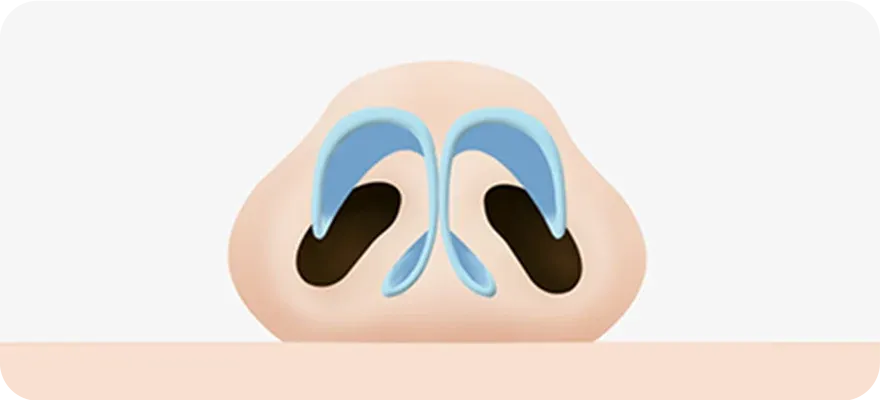
A Bulbous Nose with a blunt Nasal Tip and thick skin tissue
Subcutaneous fat is removed to reduce the thickness of the Nasal Tip skin and elevate the Nasal Tip.
Surgical Method
STEP 1. When the alar cartilages are wide
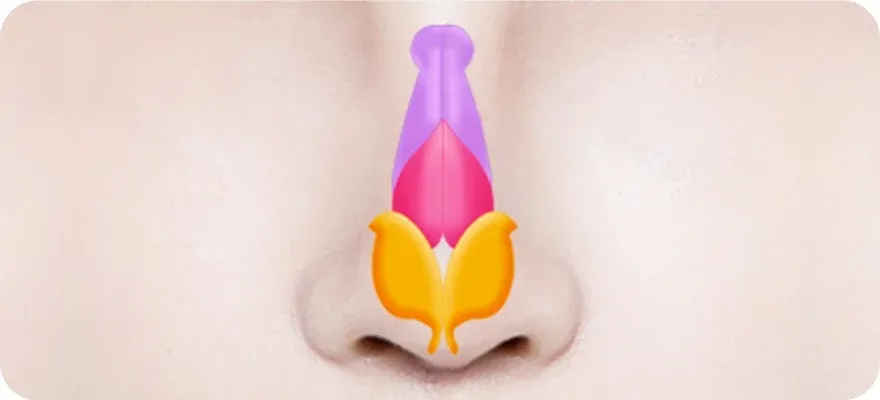
Before surgery
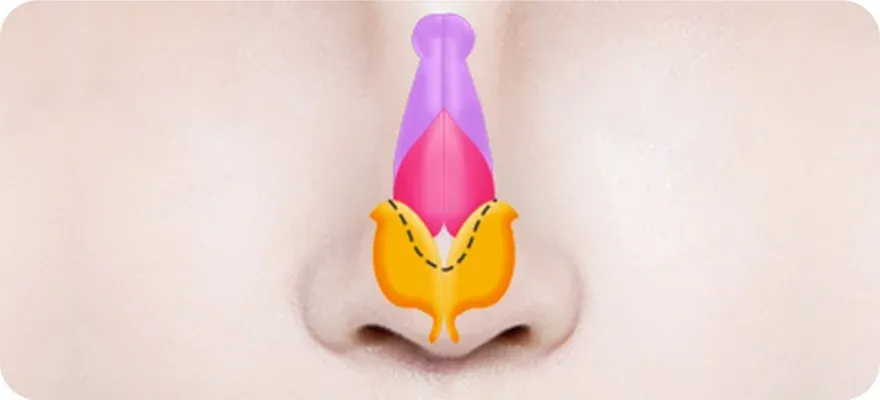
Partial cartilage removal
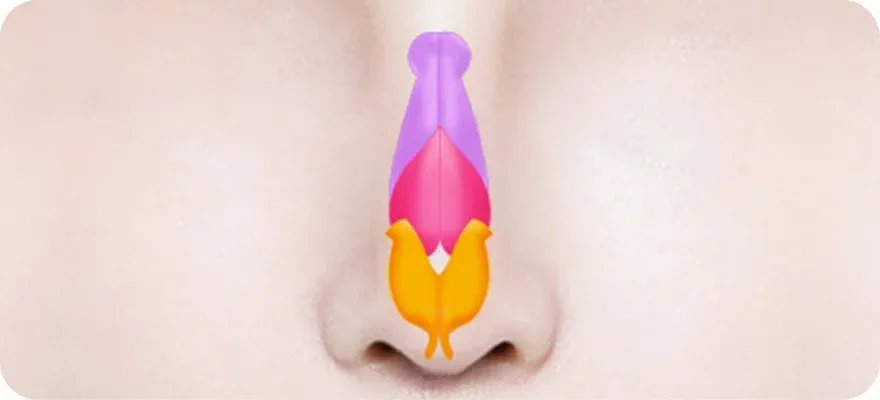
The protruding alar cartilages on both sides are brought together to reduce cartilage width
STEP 2. When the Nasal Tip cartilage is wide
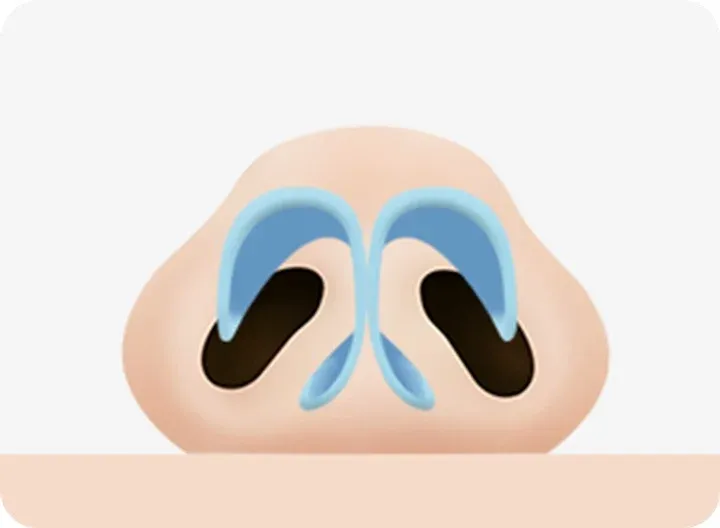
Before surgery
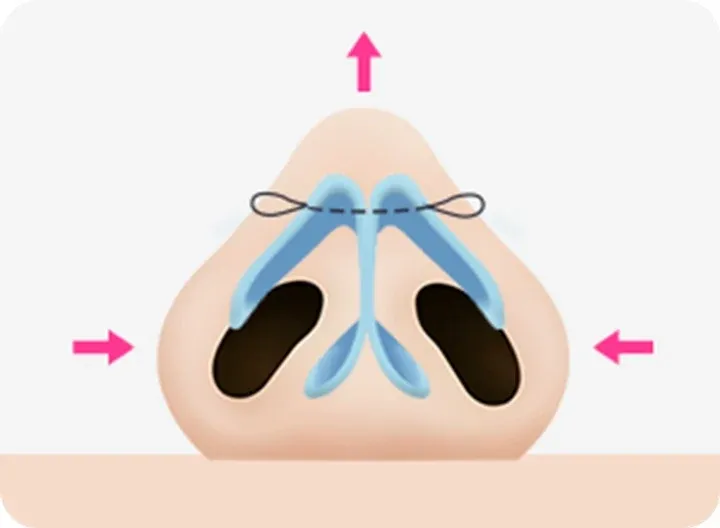
The alar cartilages on both sides are brought together and sutured
STEP 3. When the subcutaneous tissue at the Nasal Tip is thick
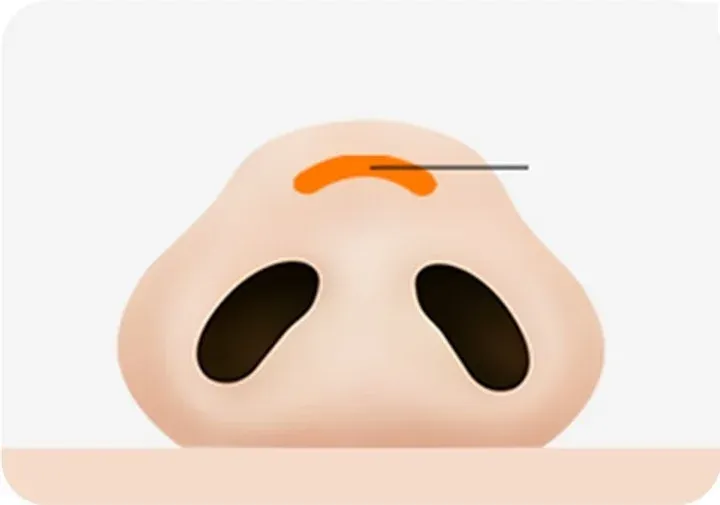
Subcutaneous tissue of the Nasal Tip before surgery
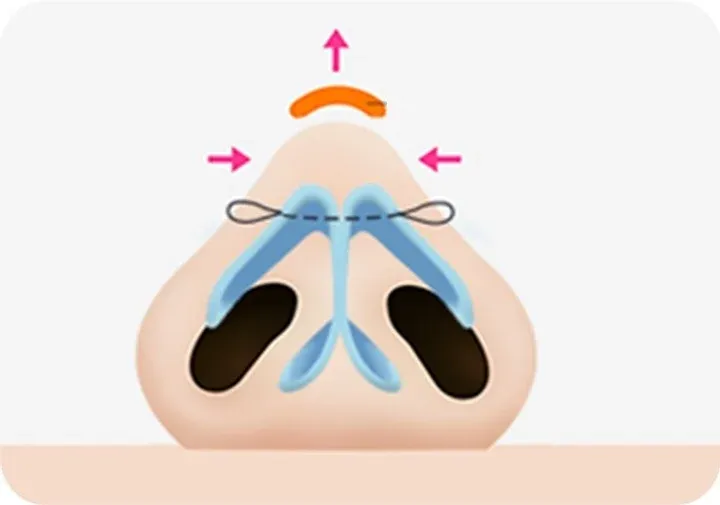
Removal of subcutaneous tissue at the Nasal Tip
Advantages of AB Bulbous Nose Correction
Point 1. A customized nose line harmonious with the overall Face
· Angle and line design tailored to facial proportions · More harmonious results with Implants suited to individual characteristics · Dedicated rhinoplasty medical staff with extensive experience · One-on-one customized consultations and assessments using specialized equipment
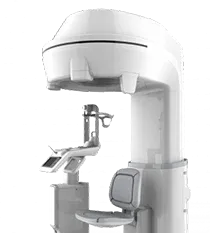
Point 2. Precise diagnosis with 3D-CT
3D-CT imaging is used to precisely assess the condition of Autologous Tissue and donor tissue, as well as nasal function.
Point 3. Thorough postoperative Scar Revision care
· Medical Scar cream provided · AB's exclusive Red Cell scar injections – cell regeneration and swelling reduction · LED Smart Lux – a Scar Treatment system in collaboration with dermatology
Recovery care that does not miss the golden window for recovery
· LED Smart Lux – Medical LED equipment helps Scar Revision recovery and reduces swelling and bruising. · LDM – Uses ultrasound to stimulate skin cell activity, helping soothe and regenerate the skin. · Radiofrequency care – Delivers energy deep into the skin to promote blood and lymphatic circulation and aid recovery. Recovery schedule · Days 1–2: Smart Lux · Week 1: Suture removal and progress check, nasal splint removal, home-care instructions, and swelling management · Week 2: Suture removal and progress check, discontinue ointment use, and swelling management · After Week 3: CT scan, progress check, and Scar Revision improvement care
Surgery Information
| Surgery time: 1 hour–1 hour 30 minutes | Anesthesia: Local anesthesia · sedation anesthesia | Hospitalization: Not required | Suture removal: After 7–14 days | Follow-up visits: 2–3 times | Recovery period: Return to daily activities after 7 days
Pre- and Postoperative Precautions
Before surgery
· Please inform us in advance if you have any pre-existing conditions, such as hypertension, diabetes, or thyroid disease; medication allergies; or a history of heart, lung, liver, kidney, or brain-related surgery. An anesthesiology consultation and additional tests may be performed if necessary. · Please stop taking aspirin, painkillers, hormonal medications, herbal medicines, and vitamin supplements beginning 1 week before surgery. Please bring any medications you are currently taking on the day of surgery. · Smoking delays recovery and increases the risk of infection and anesthesia-related complications, so stop smoking from the day you decide to have surgery. Stop drinking alcohol beginning 1 week before surgery. · Fast for 10 hours before surgery, including water, candy, and chewing gum. · Remove all nail polish and gel nails. Do not wear contact lenses or makeup on the day of surgery. Please wear comfortable clothing with front buttons. · Please inform us in advance if you have a high fever, cough, or cold symptoms within 1 week before surgery, or if your menstrual period overlaps with the surgery date. · You cannot drive yourself on the day of surgery.
After surgery
· For 3–4 days after surgery, sleep with your head elevated above your heart. Do not sleep on your side or stomach for 1 month. · For 1 month, avoid salty, spicy, or hard foods, as well as foods that require opening your mouth wide or prolonged chewing. · Do not remove nasal tape, splints, or cotton packing yourself. Sutures on the columella are removed after 1 week, and sutures on the nostrils are removed after 10 days. · You may wash your face and apply nose makeup starting the day after columellar suture removal. Avoid saunas and steam rooms for 1 month. · Blowing your nose and wearing glasses are permitted starting 4 weeks after surgery. · Alcohol and smoking are prohibited for 1 month. It may take approximately 6 months for the shape of the nose to stabilize.
Please be sure to note
The surgical method and results may vary depending on individual conditions and are determined through consultation with a specialist.
 AB PLASTIC SURGERY