

Breast Augmentation
Price upon consultation
Procedure category to increase breast volume for fuller breasts
Surgery Overview
AI-generated information for reference only. Please consult a doctor for accurate, personalized advice.
Breast Augmentation Surgery Designed Through Three-Dimensional Anatomy
3D Sculptural Medicine That Interprets Structure and Establishes Safety
Breast Augmentation is not simply a procedure that adds volume. From the patient's perspective, this surgery is closer to a process of creating the desired proportions, contours, and silhouette. However, for the shape to settle naturally in real life and remain stable over time, the patient's unique body structure must first be understood.
The essence of Breast Augmentation lies not in the Implant brand or incision method, but in interpreting the individual's three-dimensional structure and defining anatomical safety boundaries. Ultimately, the principles used in the design determine not only the immediate postoperative result but also the shape 10 years later.
Mamms 3D Breast Design: Sculpting in Three Dimensions
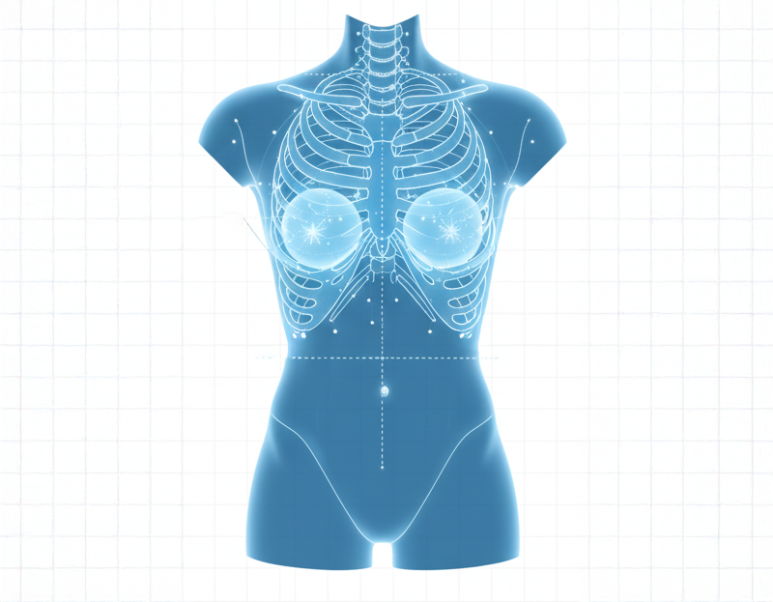
The starting point of Breast Augmentation is always a three-dimensional structure. The Breast does not exist as a flat surface like a 2D photograph. It is a three-dimensional anatomical structure positioned over the skin, fat, Mammary tissue, muscle, and ribs; when an Implant is placed within this structure, the entire landscape is rearranged, including the existing axis, footprint, volume distribution, and skin tension.
Therefore, the key to augmentation is not “which manufacturer's Implant to use,” but interpreting the question, “What is the structure of this patient's body, and what is the safe range permitted by that structure?”
More Important Than the Implant Is ‘Pocket Design’
Many patients first ask, “Which Implant do you use?” However, the Implant is simply closer to the final result. The actual shape and stability are determined by the pocket.
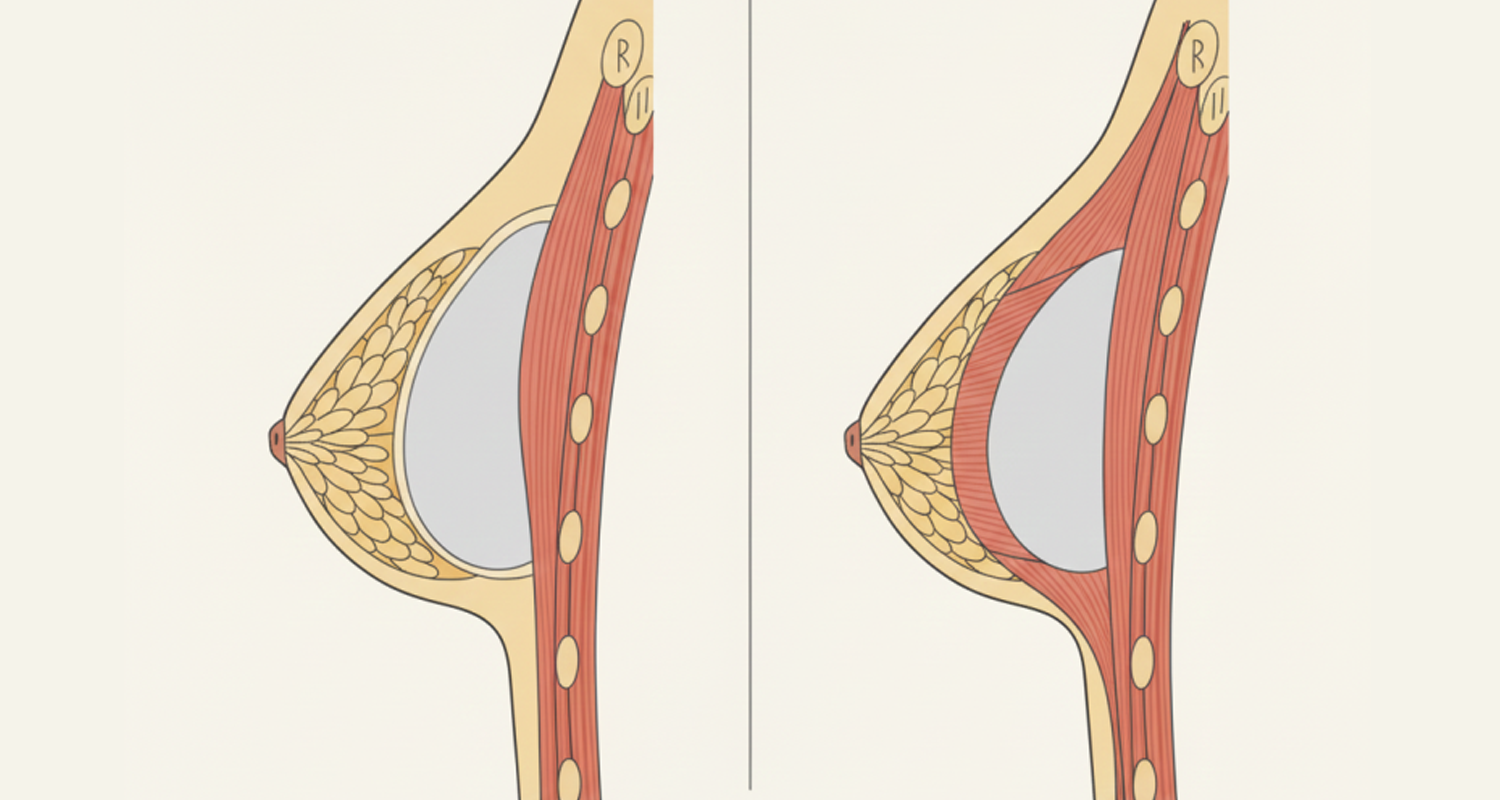
1) The Pocket Is the ‘Home’ Where the Implant Rests
The structure of this home is determined by analyzing the following factors: · Muscle thickness and elasticity · Amount of Mammary tissue · Skin extensibility and degree of sagging · Curvature of the Rib cage · Desired upper and lower contours
The combination of these factors determines the level at which the Implant will be positioned.
2) Changes That Occur When Pocket Boundaries Are Inappropriate
If the pocket is excessively wide or narrow, the following may occur: · Implant rotation · Double bubble · Excessive upper-pole volume · Changes in shape over time · Discomfort caused by increased tissue tension
In other words, the key to safe surgery is not the Implant itself, but how precisely the pocket's direction, depth, and boundaries are established. Pocket design affects the result, safety, and long-term durability. Therefore, designing the pocket first requires an understanding of the underlying structure.
Skin Elasticity Must Be Considered
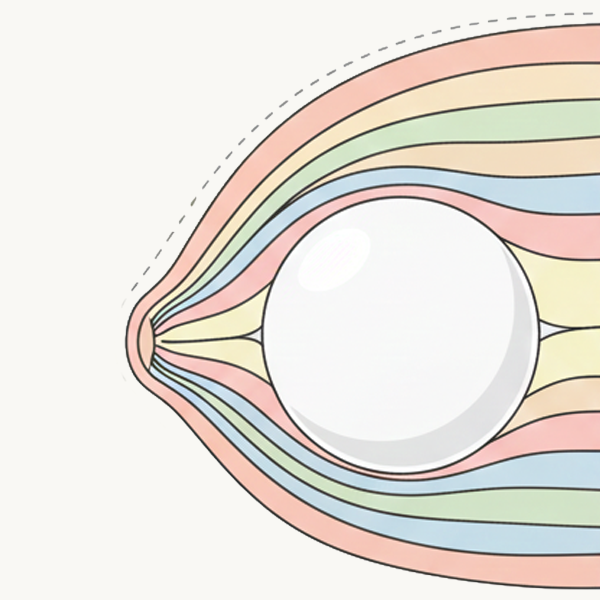
Augmentation surgery is a procedure in which the skin is stretched. However, the extent to which it can stretch differs for each patient. · History of pregnancy and Breastfeeding · Skin thickness · Collagen density · Amount of Mammary tissue · Age These factors determine elasticity.
If an excessively large Implant is placed in a body type with firm skin, the inner and outer contours can become tight and unnatural. Conversely, if the Implant is too small for a body type with highly extensible skin, the volume spreads out, and sagging may occur more quickly over time. Therefore, the size chosen for augmentation surgery is determined not by the “desired size,” but by the “tension the skin can accommodate.”
The Nipple–Cone Axis (NAC–Cone Axis) Determines Three-Dimensional Stability
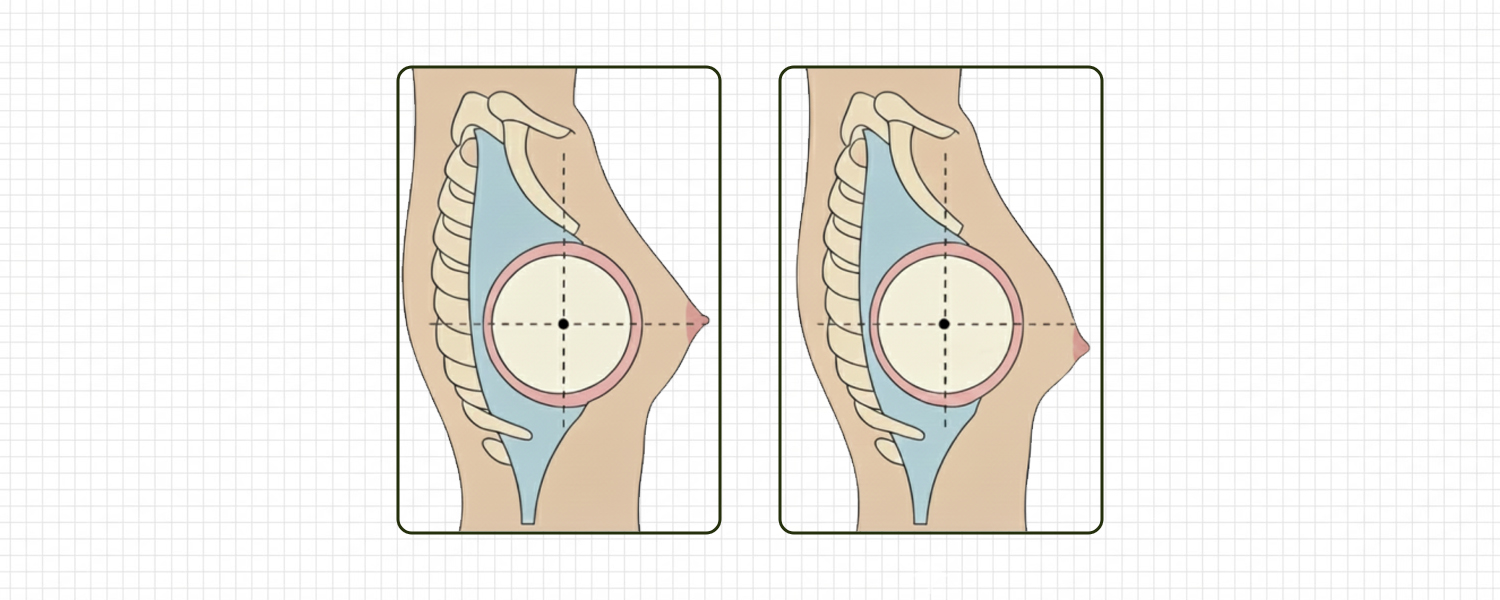
The Nipple–Cone Axis is a reference line used to adjust the position and axis so that the Nipple is located at the exact center of the new three-dimensional form created by the Implant.
1) The Breast Is Not ‘Volume Placed on Top,’ but a Three-Dimensional Form With an Axis
When we pour water into a cup, the surface of the water naturally settles quietly toward the center. The Breast follows a similar principle. · When an Implant is placed, a new cone-shaped three-dimensional form is created. · A central axis is formed within that structure. · The Nipple appears most natural when positioned at its center.
When the Nipple is off-center, the appearance gradually becomes awkward; when the axis is properly aligned, the shape settles into a stable form.
2) Nipple Direction Varies From Person to Person
Some point slightly outward, while others point inward or downward. Therefore, Implants cannot be placed in the same position for everyone.
The process of adjusting the Implant position upward, downward, inward, and outward so that the Nipple is positioned at the center of the overall volume is the NAC–Cone Axis. When this axis is properly aligned, left-right orientation becomes natural, contours appear symmetrical, the shape remains stable over time, and an impression of beauty is quietly achieved.
Asymmetry Must Be ‘Accurately Predicted’ Before Surgery
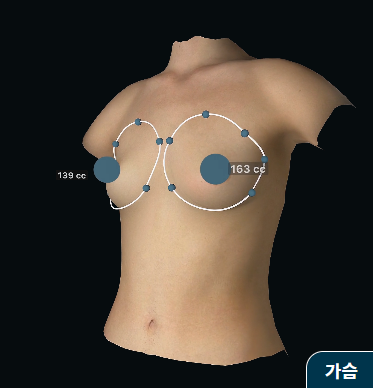
Image source: Crisalix, crisalix.com
The Breasts are almost always asymmetrical. Asymmetry is not simply a difference in Mammary tissue size; the following six factors work together: 1. Rotation of the Rib cage 2. Direction of rib protrusion 3. Inclination of the Nipple axis 4. Mammary tissue volume 5. Muscle thickness 6. Skin thickness and elasticity
Asymmetry cannot be completely eliminated through surgery. However, how accurately it is predicted and planned changes the result. Mamms Surgical Plastic Surgery simulates each patient's Rib cage asymmetry and the changes that occur when Implants are placed using the Crisalix 3D system.
3D analysis accurately reveals differences that cannot be seen in 2D photographs. Predictability is safety.
Implant Selection: Using Only the Safest and Most Proven Implants
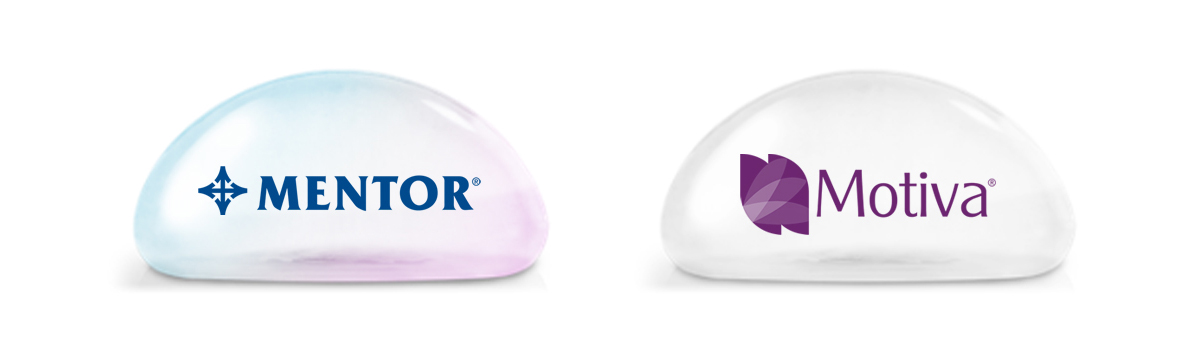
There are many types of Implants, and technology advances every year. However, the standards at Mamms Surgical Plastic Surgery are simple: – Choose only Implants that are the safest, – have sufficient long-term data, and – best match the patient's body structure.
More important than the brand are the footprint width, pocket design, and long-term stability.
Collaborative System Between Plastic Surgery and Breast Surgery
At Mamms Surgical Plastic Surgery, we operate a collaborative system that combines surgery (structure) and plastic surgery (sculpting), based on principles for interpreting three-dimensional anatomy.

Director Seung Han Shin / Director Jin Hye Bae, Mamms Surgical Plastic Surgery
Surgery (Structure) × Plastic Surgery (Sculpting) = Consistent Results
Division of roles Surgery: Director Seung Han Shin, board-certified plastic surgeon Pre- and postoperative structural assessment and safety evaluation: Director Jin Hye Bae, breast surgery specialist
Only when these two pillars come together can stable beauty be created even in a Rib cage with asymmetry.
 MAMMS Clinic