
Autologous Rib Cartilage
Price upon consultation
This is a rhinoplasty procedure that uses the patient’s own costal cartilage (cartilage from beneath the chest) for the nasal bridge, columella, and nasal tip. It may be an alternative for individuals who are uncomfortable with or unable to use synthetic implants, and its strong structural support and durability make it suitable for patients with insufficient nasal tissue or those requiring correction of a contracted nose or short nose.
Surgery Overview
Autologous Cartilage (Autologous Rib Cartilage) rhinoplasty is a procedure that harvests your own Rib Cartilage (cartilage beneath the Breast) for use in the Nasal Bridge, columella, and Nasal Tip. It can be an alternative for those who are uncomfortable with or unable to use an Implant, and its strong support and durability also make it useful for patients with an underdeveloped nose or those requiring correction of a contracted nose or Short Nose Correction.

A natural, dimensional nasal line with strong, sturdy Rib Cartilage Are you concerned about rhinoplasty side effects? For those who are afraid of Implants or are realistically unable to use them, Autologous Rib Cartilage rhinoplasty is an excellent alternative. Because support and structural strength are important, the expertise of a specialist is essential.
Recommended for
· Those who are afraid of using an Implant or are realistically unable to use one · Those whose nose is anatomically underdeveloped and requires firm support · Those who require correction of a contracted nose or Short Nose Correction · Those who want to reduce concerns about side effects such as inflammation
3 Points of Urban Autologous Cartilage Rhinoplasty
Point 1. A Natural, Beautiful Nasal Line
Durable Rib Cartilage creates a natural and beautiful nasal line.
Point 2. Firm Support
A sufficient amount of Cartilage can be obtained, providing firm support to create a well-defined nasal line.
Point 3. Minimized Concerns About Inflammation and Side Effects
By not using an Implant, concerns about inflammation and side effects are reduced.
What Is Rib Cartilage?
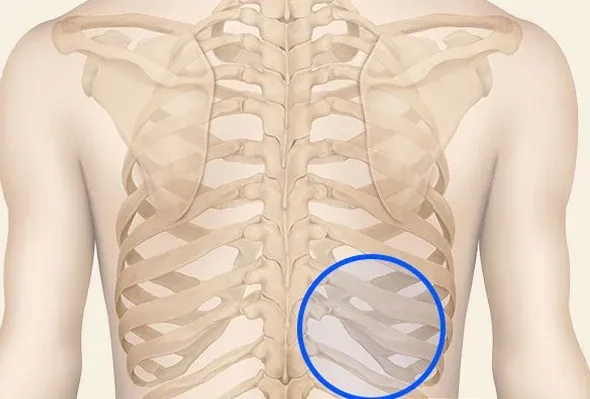
Located beneath the Breast, this Cartilage offers stronger support and durability than other types of Cartilage used in rhinoplasty, allowing for a well-defined nasal line even when the nose is anatomically underdeveloped. The blue circle in the illustration above indicates the Rib Cartilage harvest site. · As living tissue, there is very little risk of inflammatory side effects. · It is more abundant and stronger than Septal Cartilage or Ear Cartilage. · It can be shaped for a variety of uses. · It is an excellent material for the columella in correction of a contracted nose or Short Nose Correction.
Autologous Rib Cartilage vs. Donor Rib Cartilage
Autologous Rib Cartilage
Cartilage from the end of your own rib, which can be obtained in the amount needed for rhinoplasty. Generally, the 6th to 10th Rib Cartilage is commonly used. · Advantages: It has a lower risk of side effects than an Implant, and a sufficient amount can be used to improve everything from the Nasal Tip to the Nasal Bridge. · Disadvantages: A separate procedure is required to harvest the Rib Cartilage, leaving a small scar beneath the Breast.
Donor Rib Cartilage
Donated rib Cartilage is treated with radiation to eliminate cartilage cells before use. · Advantages: No separate procedure is needed for harvesting, so there is no harvest scar. · Disadvantages: Costs increase depending on the amount of Cartilage needed, and there is a risk of infection compared with Autologous Rib Cartilage.
Surgical Method
Among Autologous Tissue, it can be obtained in a sufficient quantity and is strong, allowing it to be used for the Nasal Bridge, columella, and Nasal Tip to create a firm, beautiful nasal line.
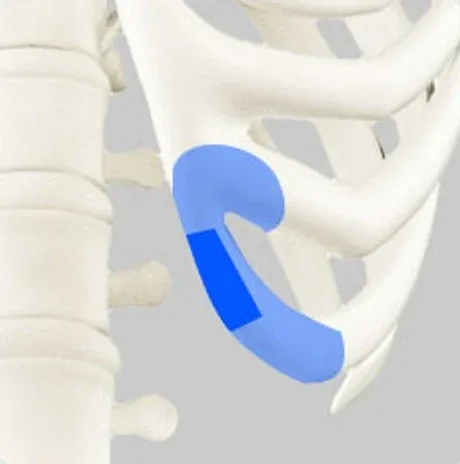
STEP 1. Partial Harvest of Lower Rib Cartilage
Rather than Cartilage around the conventional sixth rib, lower Rib Cartilage is partially harvested.
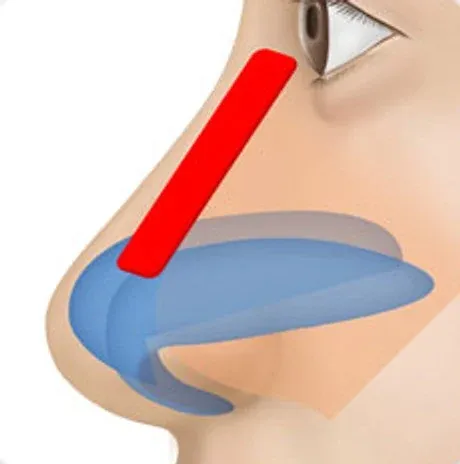
STEP 2. Create Nasal Bridge Volume
Rib Cartilage is used to create well-defined volume in a low Nasal Bridge.
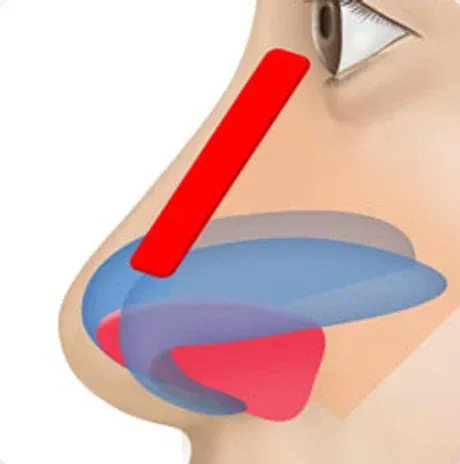
STEP 3. Columella Reinforcement
The columella is reinforced with Rib Cartilage to strengthen support.
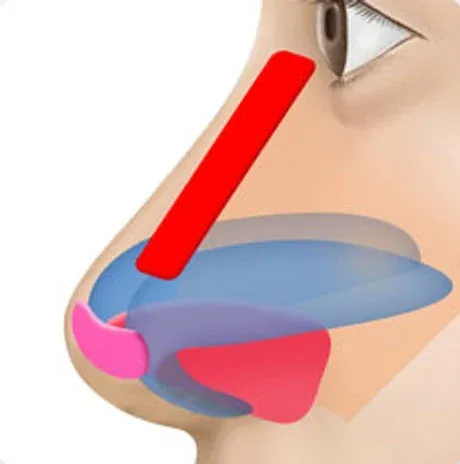
STEP 4. Nasal Tip Correction
A sunken-looking Nasal Tip is elevated with Rib Cartilage for a refined, well-defined appearance.
Urban's Rhinoplasty System
Board-certified plastic surgeons possess the skills and expertise for rhinoplasty, including nasal conditions. Your assigned specialist is responsible for every stage of care, from surgery through postoperative management. · Consultation and surgery by experienced rhinoplasty specialists · High patient satisfaction through experience, know-how, and expertise · Improvement of both aesthetic appearance and function · Development and research for advanced plastic surgery services
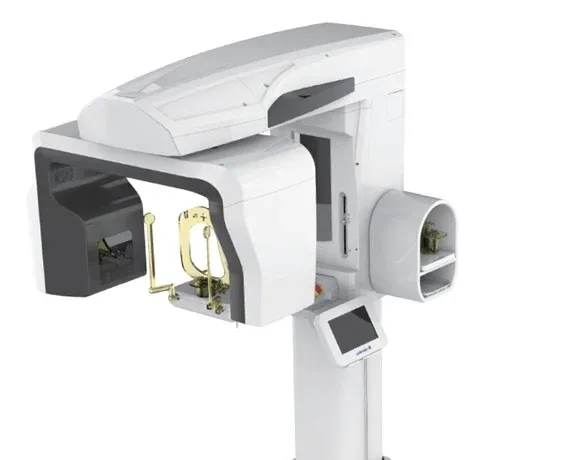
Detailed Analysis Through 3D CT
3D CT provides a detailed assessment of both the outside and inside of the nose, enabling a surgical plan that considers both aesthetic and functional aspects. Breathing issues and structural problems involving the Septal Cartilage can be identified and corrected at the same time. For Rhinoplasty Revision, the position and size of the Implant and the extent of Nasal Tip Cartilage deformation can be assessed in advance for a more stable procedure.
Surgical Information
| Surgery time: Approximately 2 hours | Anesthesia: Sedation or general anesthesia | Hospitalization: Not required | Suture removal: After 7–10 days | Follow-up visits: 2–3 times | Recovery period: 7–10 days
Pre- and Postoperative Precautions
Before Surgery
· Please inform us in advance if you are taking any medications. Depending on the medication, you may need to stop taking it before surgery. · Please notify us in advance if you have a surgical history or conditions such as high blood pressure, asthma, allergies, or adverse drug reactions. · To prevent burns from electrical devices used during surgery, remove all metal accessories and piercings, and remove nail polish or nail art from your hands and feet. · To prevent infection at the surgical site, wash thoroughly before surgery and wear clothing that is easy to put on and take off. · Fasting for at least 6 hours before surgery is required, including water, gum, candy, and coffee. For general anesthesia, begin fasting from midnight the night before surgery.
After Surgery
· You may shower starting the day after suture removal. Avoid irritating the surgical area and refrain from heavy makeup on the area for approximately 3 weeks. · Swelling care varies depending on the type of surgery, so please follow the hospital's instructions. · Avoid alcohol and smoking for at least 1 month after surgery, as they may delay recovery and cause infection. · For approximately 1 week after surgery, keep your head elevated above your heart, and avoid strenuous exercise for approximately 3 weeks.
Please Be Sure to Check
Surgery time and recovery period may vary depending on the patient's condition and the treatment method, and surgical results may vary according to individual circumstances. The surgical method is determined through consultation with a specialist.
 URBAN PLASTIC SURGERY