
Alar Base Reduction
From 390,000 KRW/ surgery
Delicately refines wide, flared nostrils to balance the nasal tip and alar base, creating a more refined nasal contour.
Surgery Overview
AI-generated information for reference only. Please consult a doctor for accurate, personalized advice.
Alar Reduction
A natural, refined nasal tip—not a round, wide nose

When is alar reduction needed?
If these are your concerns, Check!

✓ When your nose spreads widely sideways when you smile ✓ When asymmetrical nostrils bother you ✓ When your nasal bridge is high but your nose appears low from the front ✓ When your nose looks round and blunt, like a bulbous nose ✓ When the width of your nostrils is greater than the distance between your eyes ✓ When you have large nasal lobules ✓ When large nostrils make your nose appear wide
A blunt-looking impression due to wide nostrils? 10-second self-assessment
From a pyramid shape with a wide lower portion to a bulbous nose that is thick overall. Identifying your alar type is the first step toward successful alar reduction.
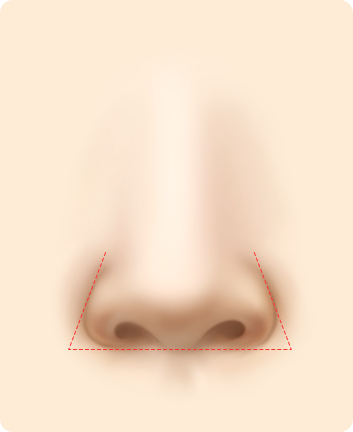
Pyramid Type
Wide lower nasal alae
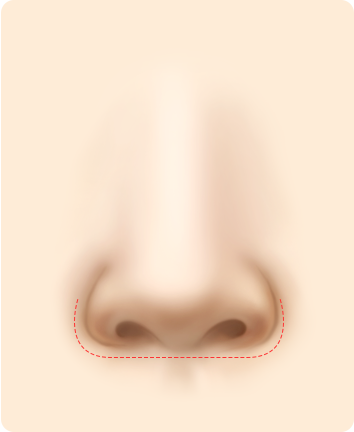
Round Type
Wide midportion of the nasal alae
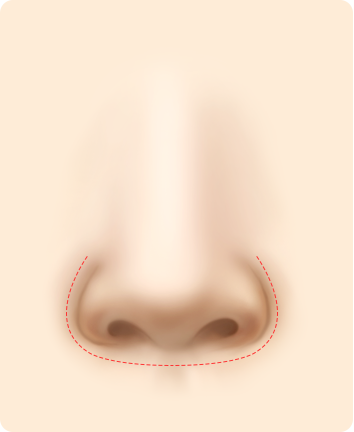
Jar Type
Nasal alae that are wide up to the upper portion
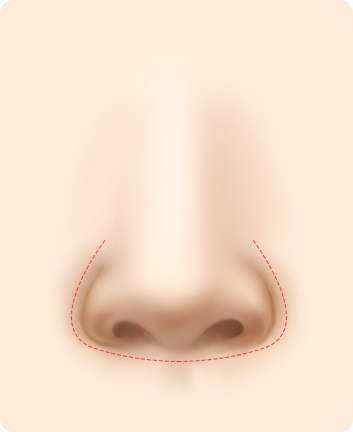
Bulbous Nose Type
Nasal alae that are wide overall
Slim wide nasal lobules and define the center of the face
Alar Reduction
The cause of the bluntness that obscures refined facial features is wide nasal alae. No matter how much the nasal bridge is raised, a broad, flared nasal base will not eliminate its characteristic coarse appearance. Alar reduction alone can change the impression of your face and nose.

✓ Surgery time: 1 hour 30 minutes
✓ Anesthesia: Local anesthesia/sedation anesthesia
✓ Follow-up visits: 2–3 times
✓ Hospitalization: Not required
✓ Recovery period: 3 days–1 week
✓ Stitch removal: After 7 days
Candidates for Alar Reduction Surgery
✓ When the nose is large overall
✓ When the nasal tip is bulbous and low
✓ When the nasal alae are wide and flared
✓ When the skin and fat of the nasal alae are thick
✓ When a slim, refined nasal line is desired
✓ When the nose appears compressed relative to the nasal bridge
✓ When the alar cartilages are widely spread to the sides
No two noses are alike: alar reduction methods by type
Case 01 (Incisional Type): When alar skin is thick
When the outer circumference of the nasal ala is wide, a portion of alar tissue is removed and sutured.
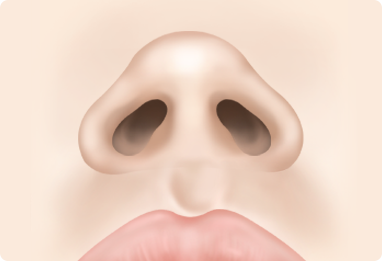
❶ Wide nasal alae, large nostrils
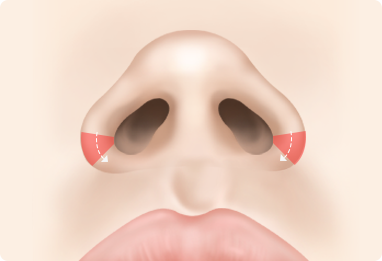
❷ External nostril incision
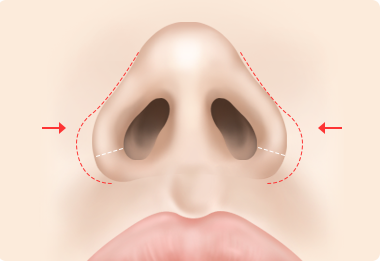
❸ Suturing after incision
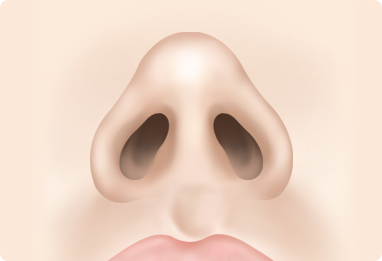
❹ Slim nasal alae completed
Case 02 (Incisional Type): When the lower part of the nostrils is wide
When the nostril base is wide, a portion of the inner nasal ala is removed and sutured.
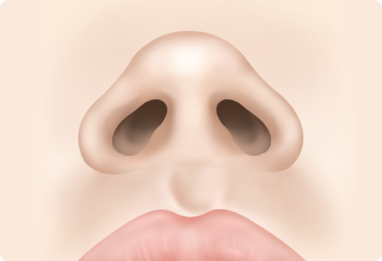
❶ Wide nostril base
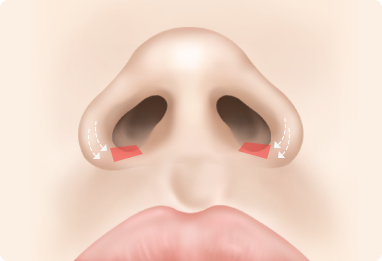
❷ Internal nostril incision
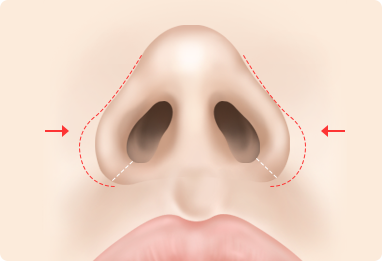
❸ Suturing after incision
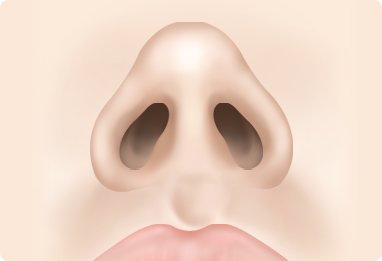
❹ Slim nasal alae completed
Case 03 (Non-incisional Type): When the nostril base is wide
When the nostril base is wide, a portion of the inner nasal ala is removed and sutured.
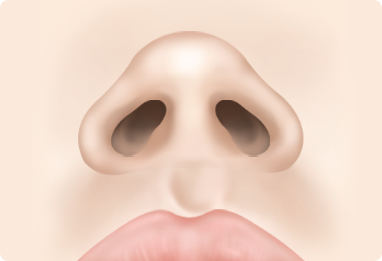
❶ Wide nasal alae
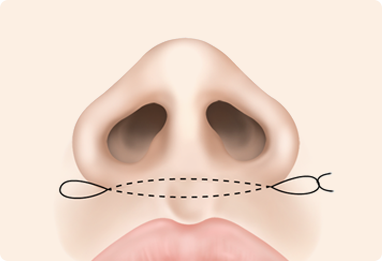
❷ Small incisions on both sides of the nasal alae and insertion of special sutures
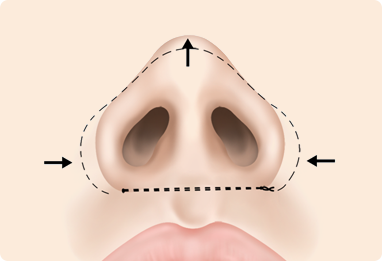
❸ Approximate the nostrils and suture
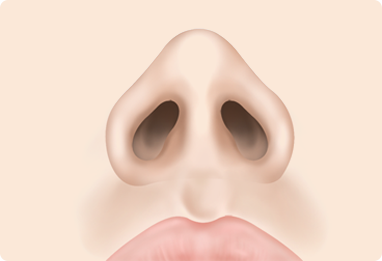
❹ Slim nasal alae completed
Perfect nasal alae from every angle
If the nasal alae are wider than the distance between the eyes, they can look blunt; if too narrow, the face can appear long. Based on the vertical line descending from the inner corner of the eye, the optimal width that is balanced and precise is designed.
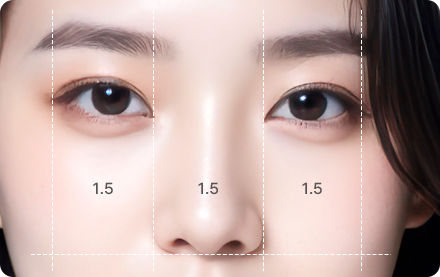
Viewed from the front
The distance between the nasal alae matches the distance between the eyes
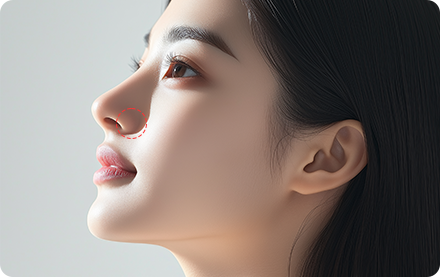
Viewed from the side
A smooth alar line without upturning or drooping
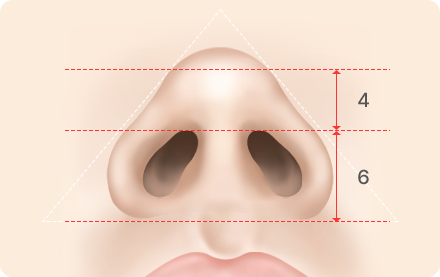
Viewed from below
An equilateral triangle shape, with the nostrils and nasal tip height in a 6:4 ratio
The standard for a successful first rhinoplasty: a deeper level of analysis.
For a successful first rhinoplasty, choose Vance Plastic Surgery
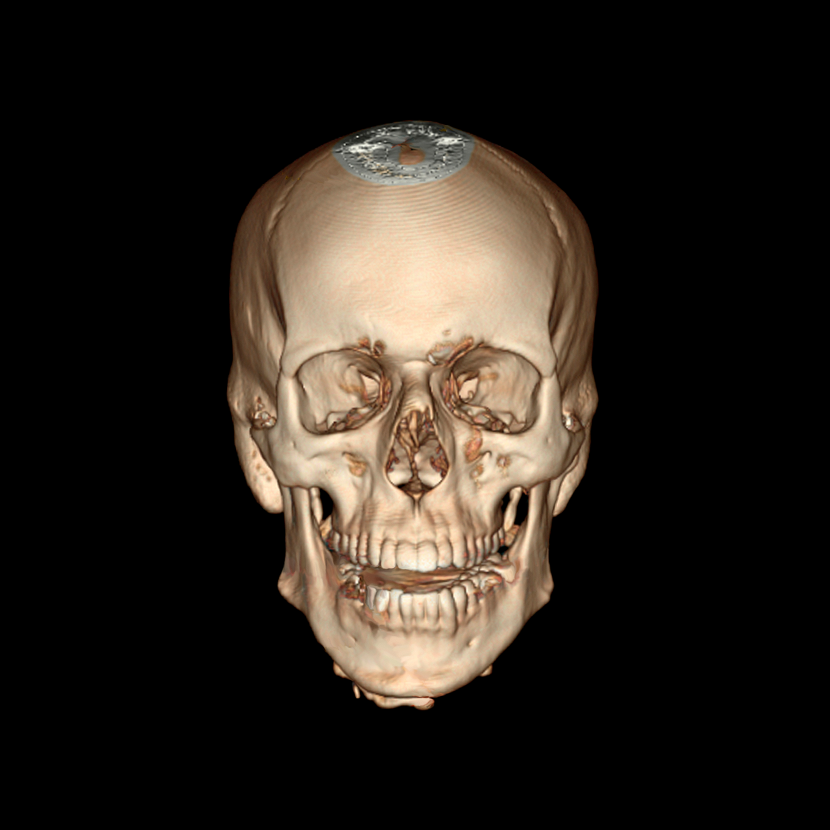
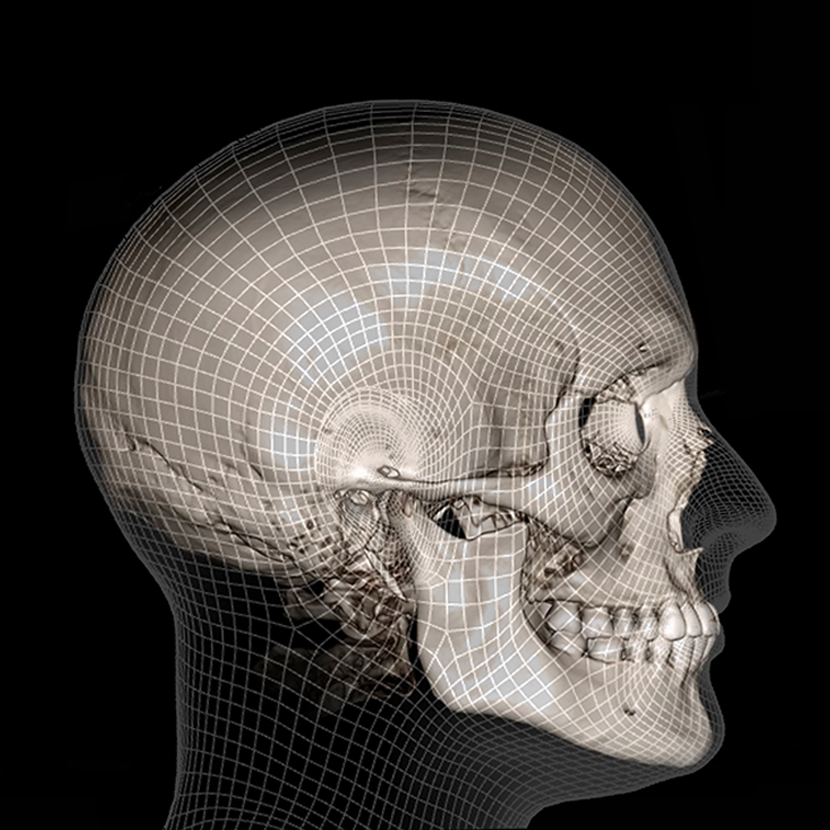
Surgery based only on outward appearance has a high likelihood of failure. Because the nose has a complex three-dimensional structure, accurately understanding the condition of the bones and cartilage hidden beneath the skin is the first step toward success. Vance Plastic Surgery uses advanced 3D CT equipment to closely assess even internal structures that cannot be seen with the naked eye, enhancing surgical precision and safety.
❶ Precise Diagnosis
Before surgery, we precisely analyze the thickness and width of each person's nasal bones and the condition of their skin tissues. This helps prevent potential intraoperative variables in advance and enables the procedure to proceed according to the planned design.
❷ Septal Diagnosis
We assess in advance the size, shape, and degree of deviation of septal cartilage, a key material in primary rhinoplasty. By accurately predicting the amount of cartilage available for harvesting, we establish a safe surgical plan without unnecessary additional cartilage harvesting.
❸ Functional Diagnosis
We diagnose functional internal nasal issues at once, including deviated septum and inferior turbinate hypertrophy, which can cause nasal obstruction. In addition to visible beauty, we improve the nose's natural function to enhance satisfaction after surgery.
Vance Plastic Surgery promises a satisfying first rhinoplasty, so that your first can be your last.

Board-Certified Plastic Surgeon
Lee Seung-jun, Chief Director of Vance Plastic Surgery
Rather than simply raising the nasal bridge, we design it with consideration of its proportions to the forehead, chin tip, and cheekbones. We create a three-dimensional line that looks most natural on your face and never becomes outdated, even as trends change over time. We create a nasal line you will be satisfied with whenever you see it and feel confident showing in profile photos.
Six details that make a difference in results: this is rhinoplasty at Vance Plastic Surgery.
It is not simply about raising the nasal bridge. From ideal line design and invisible functional improvements to a safe surgical environment, Vance meets the standards required for rhinoplasty.
❶ A Profile You Want to Show Off
Through thorough consultations and examinations, we assess your desired nasal bridge line and nasal tip shape. We perform a satisfying primary rhinoplasty that considers your face shape and aesthetic preferences.
❷ Glamour and Naturalness
For primary rhinoplasty, we design with consideration of the degree of glamour and naturalness preferred by the patient.
❸ Precise 3D CT Analysis
We precisely assess even areas not visible to the naked eye, including bone size, septal cartilage shape, and degree of deviation.
❹ Three-Dimensional Design
We consider not only the nose, but all overall factors, including the forehead, glabella height, nasal bridge line, nasal tip, nasolabial angle, and chin.
❺ Surgery by the Chief Director
The chief director, who understands the patient's needs, oversees the entire process from consultation through performing the surgery. This reduces anxiety and increases satisfaction.
❻ Functional Improvement
The nose should be beautiful, but its essential role as a breathing organ is also important. We also address functional causes of nasal obstruction, such as septal deviation and nasal valve stenosis.
Vance Q&A
Q. Will my nose look smaller with alar reduction alone?
A. Yes. Because the nasal alae determine the width of the nose, refining the alae alone can make the entire nose appear slimmer. This is why your overall impression can change even without nasal bridge surgery.
Q. Will alar reduction look obvious?
A. When adjusted to suit your facial proportions, it can improve the appearance naturally without looking excessive or artificial. In many cases, the change gives an impression of being “refined” rather than simply “smaller.”
Q. Will scars be noticeable?
A. In most cases, incisions are made inside the nostrils or within natural creases so that scars are not easily visible externally. After recovery, they can be adequately covered with makeup.
Q. Will rhinoplasty scars be noticeable?
A. Most procedures are performed through incisions inside the nose, so external scars are barely visible. Even when an external incision is necessary, it heals over time to become inconspicuous.
Q. Will it feel awkward to smile or make facial expressions after alar reduction?
A. There may be a pulling or unfamiliar sensation initially, but you will adapt naturally over time. It does not significantly affect everyday facial expressions.
Q. Can the nasal alae widen again after alar reduction?
A. This may vary depending on individual skin elasticity and the surgical method, but the procedure refines and secures the tissues to minimize the possibility of re-widening.
Q. Do alar reduction and nasal bridge or nasal tip surgery need to be performed together?
A. They do not necessarily need to be performed together. If the issue is limited to the nasal alae, satisfactory improvement is possible with alar reduction alone; the most appropriate extent of surgery is determined through consultation.
 DOY JUN Plastic Surgery